
Pregnancy-Safe Skincare: What to Use & What to Avoid
Most pregnancy skincare advice is either a panicked list of bans or a brand telling you their product is fine. Here’s what the evidence actually supports, ingredient by ingredient — including where it’s genuinely uncertain.
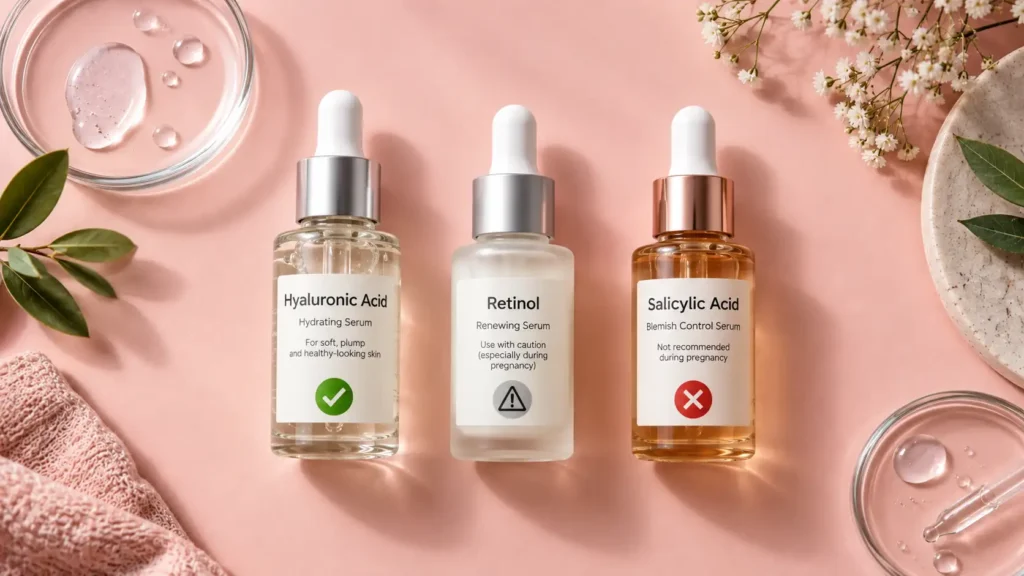
The short answer: most of a normal routine can stay. The ingredients to stop are retinoids in every form, hydroquinone, and high-strength salicylic acid peels. Azelaic acid, niacinamide, vitamin C, glycolic and lactic acid, benzoyl peroxide in moderate use, and mineral sunscreens are all widely considered compatible with pregnancy. Everything else is a question of dose and common sense — and anything you’re unsure about should be checked with your obstetrician or dermatologist, who knows your history.
Why Pregnancy Changes the Calculation at all
Topical skincare is not systemic medication. Most cosmetic ingredients penetrate the upper layers of the skin and very little reaches the bloodstream — that’s the whole design problem of skincare, and it’s also the reason the vast majority of products are unremarkable during pregnancy.
The caution exists for a narrower reason. A small number of ingredients either absorb meaningfully, or belong to a drug class with a documented record of causing birth defects when taken orally. In those cases the profession applies a precautionary standard: because you cannot ethically run a controlled trial on pregnant women, the absence of harm data is not treated as evidence of safety.
That distinction matters when you read ingredient lists. “Avoid during pregnancy” on a label usually means we have not tested this and we are not taking the liability, not this is known to be dangerous. Understanding which of the two you’re looking at is most of what this guide does.
How to read the evidence in this guide: where something is contraindicated, there is a real mechanism or a documented risk. Where something is cautionary, the ingredient is probably fine but hasn’t been studied in pregnancy. Where something is fine, there is either good safety data or negligible absorption. I’ve said which is which throughout rather than flattening everything into one warning.
The Full Pregnancy Skincare Ingredient Chart
| Ingredient | Status | Reasoning |
|---|---|---|
| Retinol, retinaldehyde, tretinoin, adapalene, tazarotene | Stop | Oral retinoids are established teratogens. Topical absorption is low, but the class risk means universal avoidance is the standard. |
| Hydroquinone | Stop | Unusually high systemic absorption for a topical — roughly 35–45% by some estimates. Not worth the unknown. |
| Oral isotretinoin | Absolutely not | Severe, well-documented teratogen. Requires pregnancy prevention programmes for a reason. |
| High-strength salicylic acid peels (20%+) | Stop | Salicylates at high dose over large areas. Low-concentration leave-on and washes are a different question — see below. |
| Salicylic acid 0.5–2% (cleansers, spot treatment) | Generally fine, limited use | Widely considered acceptable in small areas. Many clinicians still prefer you switch. Ask yours. |
| Azelaic acid | Fine | One of very few actives with a reassuring pregnancy profile. Works on acne and pigmentation both. |
| Niacinamide | Fine | A form of vitamin B3. Negligible concern, broad utility. |
| Vitamin C (L-ascorbic acid and derivatives) | Fine | An antioxidant vitamin. No pregnancy concern at cosmetic concentrations. |
| Glycolic and lactic acid | Fine at cosmetic strength | Minimal absorption at over-the-counter concentrations. Professional deep peels are a separate conversation. |
| Benzoyl peroxide | Generally fine | Breaks down rapidly; long record of use. Usually considered acceptable at 2.5–5%. |
| Hyaluronic acid, glycerin, ceramides, squalane | Fine | Humectants and barrier lipids. No mechanism of concern whatsoever. |
| Mineral sunscreen (zinc oxide, titanium dioxide) | Fine — and important | Sits on the skin surface. The preferred option in pregnancy. |
| Chemical UV filters | Mostly fine; oxybenzone debated | Most modern filters are uncontroversial. Oxybenzone is the one many people choose to avoid. |
| Peptides | Generally fine | Large molecules, poor penetration, no known mechanism of concern. |
| Essential oils (high concentration) | Caution | Some are advised against in pregnancy and several are common sensitisers regardless. |
| Formaldehyde releasers, high-dose phthalates | Reasonable to avoid | Not a pregnancy-specific emergency, but easy to sidestep. |
What to Stop, and the Actual Reason
Retinoids — the one genuine hard stop
This is not precautionary vagueness. Oral retinoids cause a recognised pattern of birth defects, and the entire class is treated as off-limits during pregnancy as a result.
A 2024 Nordic cohort study of women exposed to topical retinoids in pregnancy found no increased risk of major congenital malformations, though researchers still advised avoidance given the limitations of the data.
Topical absorption is low enough that the real-world risk from a nightly retinol is likely small — but “likely small” is not the standard anyone applies here, and there’s no upside that justifies the uncertainty.
Stop all of them: prescription tretinoin, adapalene, tazarotene, and cosmetic retinol, retinal and retinyl esters.
If you want to understand what you’re giving up and why the swap below works, the mechanism is covered in how retinol works at the cellular level — it explains why the substitutes target the same pathways from a different angle.
Hydroquinone — the absorption problem
Hydroquinone is the most effective topical pigment inhibitor available. Estimates place hydroquinone’s systemic absorption at roughly 35–45% after topical use — unusually high for a cosmetic topical — which is why it’s set aside during pregnancy despite the absence of confirmed harm in the data available.
Strong peels and aggressive exfoliation
Deep chemical peels, high-percentage salicylic peels, and anything that compromises the barrier across a large surface area should wait. Pregnancy skin is frequently more reactive than usual, and an irritated barrier will make pigmentation worse, not better.
If you’re recalibrating your exfoliation, the ultimate guide to face exfoliation covers how to get results at gentler frequencies.
Talk to your clinician, not a comment section. If you have a diagnosed skin condition, are on prescription treatment, or used a retinoid before you knew you were pregnant, speak to your obstetrician or dermatologist. They have your history and can give you an answer specific to you. This article cannot, and any source that claims otherwise is overreaching.
What you can keep using
The list of things you lose is short. The list of things that carry on working is long, and it includes most of what actually maintains skin.
Niacinamide is the workhorse of a pregnancy routine: it supports barrier function, moderates oil, calms visible redness, and has a mild effect on pigment transfer. It’s also unusually well tolerated, which matters when skin is behaving unpredictably. If you’re choosing one, the best niacinamide serums for sensitive skin covers what separates a good formula from a padded ingredient list.
Vitamin C stays, and becomes more useful than usual. As an antioxidant it reduces the oxidative load that drives pigmentation, which is why it pairs so well with daily sun protection — how vitamin C and sunscreen work together explains the mechanism behind that pairing.
Barrier ingredients — ceramides, cholesterol, fatty acids, glycerin, hyaluronic acid, squalane — carry no concern at all, and pregnancy is a good time to lean on them. Skin often becomes drier and more reactive.
If yours is struggling, how to repair a damaged skin barrier is the practical version, and ceramide vs niacinamide for the skin barrier covers which does what.
Sunscreen is not optional here — it’s the single highest-value product in a pregnancy routine, for reasons covered under melasma below.
Direct Swaps for the Actives you’re Losing
You’re giving up two things: a retinoid and, if you were using it, hydroquinone. Both have workable substitutes.
| What you stopped | Swap to | What to expect |
|---|---|---|
| Retinol/tretinoin for texture and fine lines | Azelaic acid + peptides + consistent lactic or glycolic acid | Slower, gentler turnover support. Not equivalent, but it maintains rather than regresses. |
| Retinoid for acne | Azelaic acid, benzoyl peroxide, low-dose salicylic cleanser | Comparable results for inflammatory acne in many people. |
| Hydroquinone for pigmentation | Azelaic acid + vitamin C + niacinamide, with rigorous SPF | Slower fade, but a genuinely effective stack when used consistently. |
| Strong peels | Low-percentage AHA two to three times weekly | Less dramatic, far less risk of post-inflammatory hyperpigmentation. |
Azelaic acid is the one to understand properly. It’s the rare active that covers acne and pigmentation simultaneously and carries a reassuring pregnancy profile. Only about 3.6–4% of topically applied azelaic acid is absorbed systemically, and animal studies have found no teratogenic effect even at high doses — though controlled human pregnancy studies are still lacking.
Azelaic acid inhibits tyrosinase, is antibacterial, and calms inflammation — which is why it replaces two different products at once. The detail is in azelaic acid for melasma during pregnancy and azelaic acid for hyperpigmentation, and if you want to see what realistic progress looks like before committing, azelaic acid before and after results sets expectations honestly.
One practical caution: azelaic acid, vitamin C and an AHA in the same routine is a lot of acid for skin that may already be more reactive than usual. How to layer skincare actives without irritation covers the sequencing that keeps this manageable.
Melasma: the Problem that Gets Worse during Pregnancy
Melasma — the symmetrical brown patching across the cheeks, forehead and upper lip — affects an estimated 36% to 75% of pregnancies, depending on the population studied, making it one of the most common skin changes of pregnancy. It’s hormonally driven, and pregnancy supplies exactly the hormonal conditions that trigger it. This is the cruel part of the timing: the condition most likely to appear is the one whose strongest treatment you’ve just had to stop.
Three things matter, in this order.
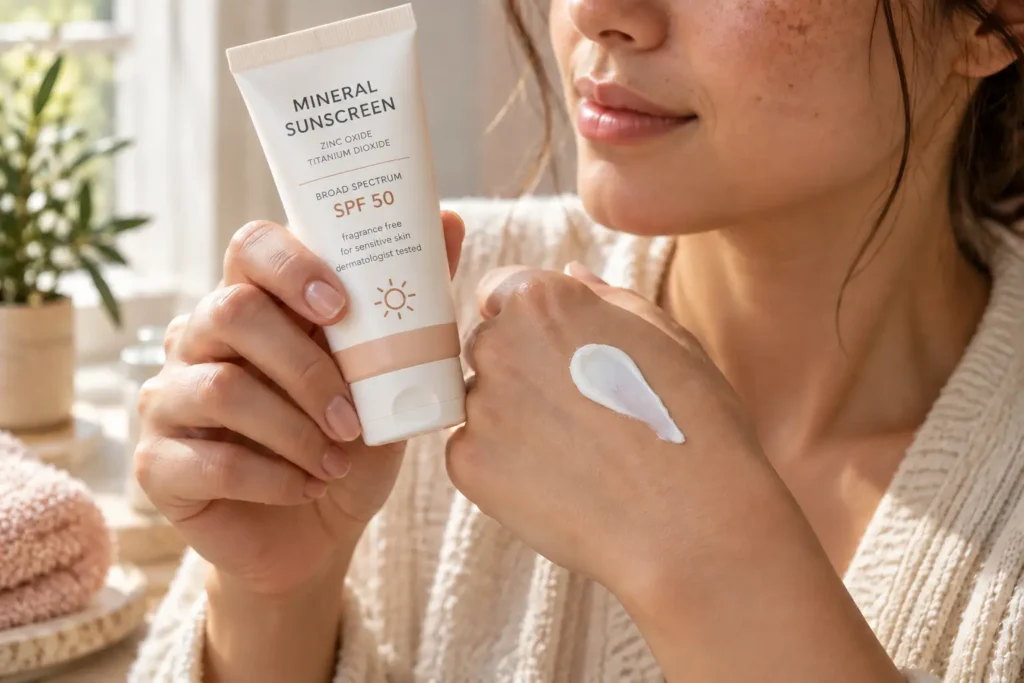
Sun protection, without exception. UV and visible light both drive melanocyte activity, and melasma responds to light more readily than ordinary pigmentation. Daily broad-spectrum SPF 30 or higher, reapplied, is not a supporting measure here — it’s the primary treatment. Tinted mineral formulas add iron oxides, which give some protection against visible light that a clear sunscreen does not. Start with the best sunscreen ingredients for sensitive skin, and if you’re deciding between formats, physical vs chemical sunscreen lays out the trade-offs.
Gentle, consistent pigment inhibition. Azelaic acid daily, vitamin C in the morning, niacinamide throughout. Slow and consistent beats aggressive and irritating — irritation itself produces more pigment. The full picture is in the complete science-backed guide to melasma.
Realistic expectations. Pregnancy melasma often lightens substantially in the months after delivery as hormones settle. It doesn’t always resolve completely, and it recurs readily with sun exposure. Managing it during pregnancy is about preventing it from deepening, not clearing it — and that reframe saves a lot of frustration.
If you’re unsure whether what you’re seeing is melasma or something else, acne scars vs post-inflammatory hyperpigmentation covers how to tell pigment types apart, and the best skincare ingredients for hyperpigmentation sets out which actives target which mechanism.
Pregnancy Acne, without the Usual Toolkit
Hormonal shifts can trigger breakouts even in people who have never had acne, often concentrated along the jaw and chin. The standard first-line treatment is a retinoid, which you no longer have.
What works instead:
- Azelaic acid, again — antibacterial and anti-inflammatory as well as anti-pigment.
- Benzoyl peroxide at 2.5–5%, generally considered acceptable in pregnancy and effective against inflammatory lesions. Only about 5% of topical benzoyl peroxide is absorbed through the skin, and it’s metabolized into benzoic acid — a common food additive — before being excreted, which is why most dermatologists consider it acceptable during pregnancy despite the absence of pregnancy-specific trials.
- A low-percentage salicylic cleanser, used as a wash-off, if your clinician is comfortable with it.
- Barrier support, because over-drying pregnant skin produces more oil and more post-inflammatory marks.
What not to do: escalate. The instinct when acne appears is to strip, and stripping is how a manageable breakout becomes months of pigmentation. What causes hormonal acne covers why this type behaves differently, and the ultimate guide to acne care is the broader framework. If you’re rebuilding a cleanser step, gentle cleansers for sensitive skin is the safer starting point than anything marketed as deep-cleansing.
A complete Pregnancy Skincare Routine
Morning
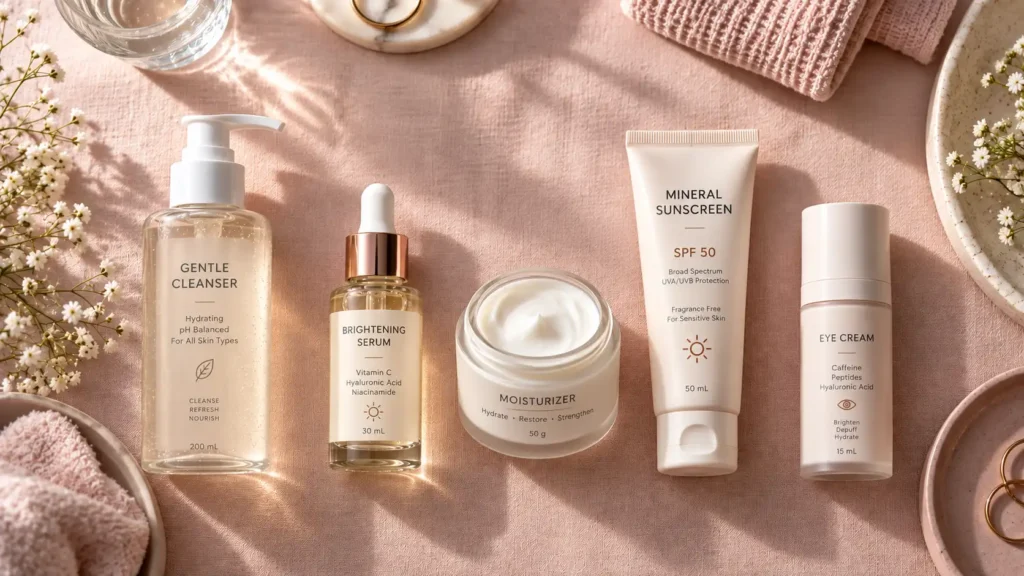
- Gentle cleanser — or just water if skin is dry.
- Vitamin C serum — antioxidant defence, supports pigment control.
- Niacinamide — either its own step or built into your moisturiser.
- Moisturiser with ceramides or glycerin.
- Mineral SPF 30+, tinted if you’re managing melasma. Reapply if you’re outdoors.
Evening
- Cleanse — double cleanse only if you wore sunscreen or makeup.
- Azelaic acid — the workhorse step, for acne, pigment or both.
- Hydrating layer — a hydrating toner or hyaluronic serum on damp skin.
- Moisturiser, richer than your morning one.
- Occlusive on dry patches if needed.
Two to three times weekly
- Lactic or glycolic acid, low percentage, in place of azelaic acid that evening.
If your skin has become reactive: pregnancy commonly brings increased sensitivity, and the right response is to shrink the routine rather than troubleshoot it product by product. Cleanser, moisturiser, sunscreen — hold there for two weeks, then reintroduce one active at a time. The best skincare ingredients for sensitive skin covers what to rebuild with, and the skin microbiome guide explains why aggressive routines backfire on reactive skin.
Breastfeeding: What Changes
Less than most people expect. The main considerations are keeping active ingredients away from the chest area where an infant feeds, and checking any prescription treatment with your clinician before restarting.
Many people do reintroduce topical retinoids after delivery while breastfeeding, on the reasoning that systemic absorption is minimal — but this is a decision to make with your doctor, not from an article. Hydroquinone is more commonly kept on pause. If you’re rebuilding a routine postpartum, the top skincare ingredients that actually work is a reasonable place to reassess what’s worth keeping.
FAQs: Pregnancy-Safe Skincare
I used retinol before I knew I was pregnant. Should I be worried?
Speak to your obstetrician, who can give you a real answer based on your circumstances. What can be said generally: topical retinoid absorption is low, and brief incidental use before a pregnancy is known is a common situation clinicians are used to addressing. Stop using it and raise it at your next appointment.
Is salicylic acid safe during pregnancy?
Low concentrations — 0.5% to 2% in a cleanser or targeted spot treatment — are widely considered acceptable over small areas. High-strength peels are not. Many clinicians prefer you switch to azelaic acid or benzoyl peroxide simply to avoid the question, which is a reasonable position given there are good alternatives.
What is the best pregnancy-safe active for pigmentation?
Azelaic acid, used consistently alongside daily broad-spectrum sunscreen. It inhibits tyrosinase, the enzyme central to melanin production, and has a reassuring pregnancy profile. Vitamin C and niacinamide support it from different angles.
Are chemical sunscreens safe in pregnancy?
Most modern UV filters are not considered a pregnancy concern. Oxybenzone is the one that attracts debate, and many people choose mineral formulas during pregnancy to sidestep the question entirely. Zinc oxide and titanium dioxide remain on the skin surface, which makes them the straightforward choice.
Can I get professional treatments while pregnant?
Facials and gentle, superficial treatments are generally fine. Deep chemical peels, laser, microneedling and injectables are typically deferred. Tell your provider you’re pregnant before booking — a reputable clinic will adjust the protocol without being asked twice.
Will pregnancy melasma go away after I give birth?
It often lightens considerably in the months after delivery as hormone levels settle, though it doesn’t always resolve completely and it recurs readily with sun exposure. Consistent sun protection during and after pregnancy makes the biggest difference to how it resolves.
Do I need to throw out all my products and start again?
No. Read your labels for retinoids and hydroquinone, set those aside, and keep everything else. The vast majority of a normal routine — cleanser, moisturiser, sunscreen, hydrating serums, niacinamide, vitamin C — carries on unchanged.

About Subhan Usafzai
Evidence-Based Skincare Educator & Formulation Specialist
I'm Subhan Usafzai (Fazli Subhan), an Evidence-Based Skincare Educator and Formulation Specialist. My background includes first-hand experience as a technician and research support in skin departments across tertiary military hospitals since 2006, and since 2008 I've focused on researching and translating clinical and formulation science into practical, evidence-based guidance. My formal training includes Coursera's Introduction to Cosmetic and Skincare Science and the four-course Introduction to Cosmetic Science and Ingredients specialization (Cosmetic Formulation Science, Cosmetic Product Development, and Quality Control and Regulatory in Cosmetic Science), authorized by Olay. Every article I write is checked against current research and reviewed by our medical team before publishing.
✅ Medically reviewed by Dr. Muhammad Khurram Ahmad, MD, Board-Certified Dermatologist · 📅 Last updated: September 2026
Medical Disclaimer
For Educational Purposes Only: This article is written by Subhan Usafzai, an Evidence-Based Skincare Educator and Formulation Specialist, for educational and informational purposes only. The information draws on scientific research, peer-reviewed studies, and dermatological literature available as of September 2026.
Not Medical Advice: This content does not constitute medical advice, diagnosis, or treatment. It is not a substitute for consultation with a qualified healthcare professional or dermatologist.
Individual Results May Vary: Skin conditions and responses to skincare products vary according to individual characteristics, skin type, hormonal factors, and environmental exposure.
Consult Your Healthcare Provider: Seek professional guidance before changing your skincare regimen, particularly during pregnancy or breastfeeding, or if you have a diagnosed skin condition, take medication, have sensitive skin, or receive dermatological treatment.
Product Safety: Consider patch testing new products. Discontinue use if irritation or an adverse reaction occurs, and seek medical advice when needed.
Affiliate Disclosure
Amazon Associates Disclosure: As an Amazon Associate I earn from qualifying purchases.
Editorial Independence: Affiliate relationships do not determine our product reviews or recommendations. We aim to provide balanced, research-informed information to help readers make informed skincare choices.
Supporting Glow Guide Hub: Qualifying purchases through affiliate links may earn us a commission at no additional cost to you.