
What Is the Skin Microbiome? How to Protect It: Complete Science-Backed Guide
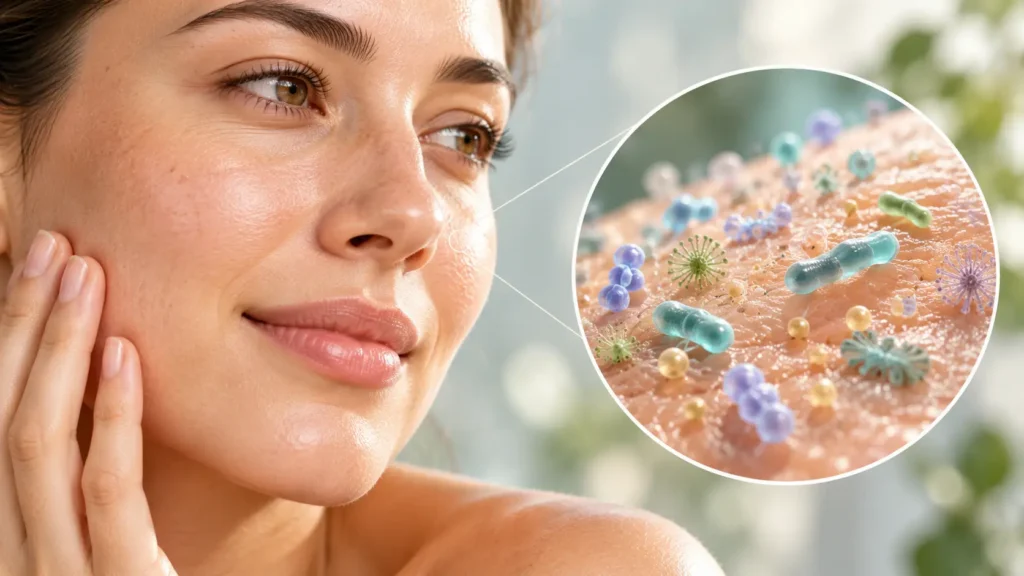
Your skin hosts a complex community of bacteria, fungi, viruses, and other microorganisms. Together, these organisms form the skin microbiome, which interacts with your skin barrier, immune system, and surrounding environment.
Keeping your skin healthy does not mean eliminating every microorganism. Instead, it means caring for the skin barrier, avoiding unnecessary irritation, and choosing products suited to your skin’s needs.
Everyday skincare habits can influence skin comfort and barrier function. Harsh cleansing, excessive exfoliation, and irritating products may contribute to problems, while the effects of specialized microbiome-focused ingredients depend on the formulation and supporting evidence.
In brief: Use a gentle cleanser, moisturize when needed, protect your skin from UV exposure, and avoid introducing too many irritating products at once. Prebiotic, probiotic, and postbiotic skincare products may offer additional benefits, but they aren’t necessary for everyone and shouldn’t be assumed to restore the skin microbiome.
This guide explains what the skin microbiome does, which factors may affect it, how to choose skincare products responsibly, and what current research can—and cannot—tell us about restoring microbial balance.
What Is the Skin Microbiome?
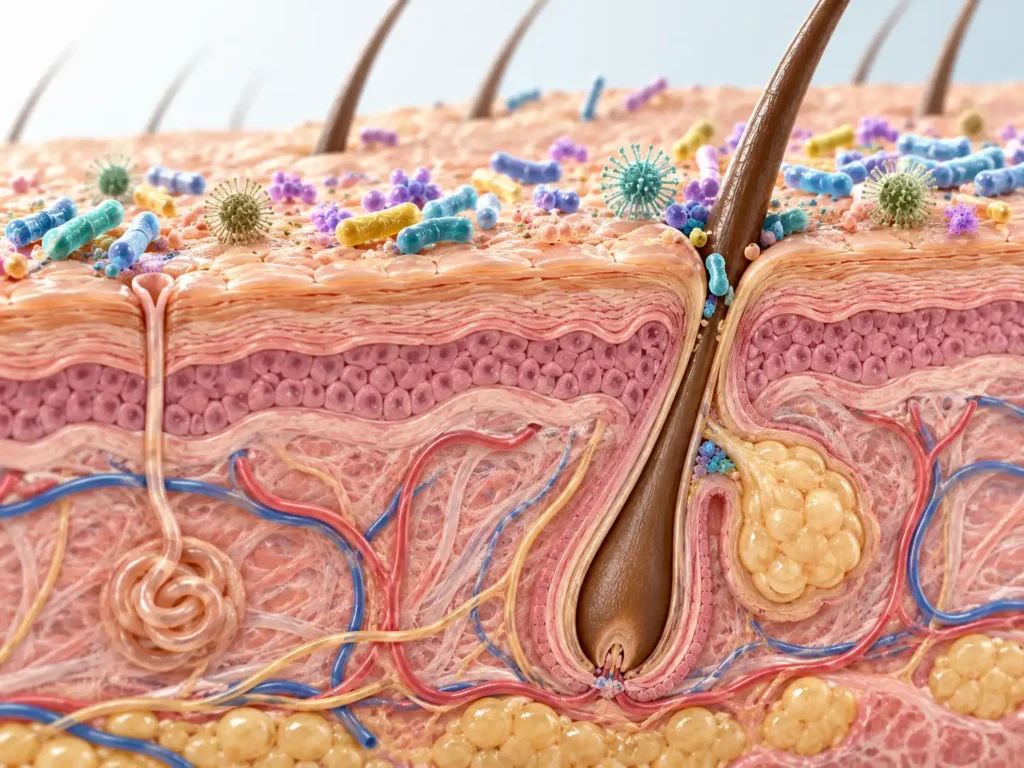
The skin microbiome is the community of microorganisms that live on and within the skin’s outer layers. These include bacteria, fungi, viruses, and other microscopic organisms. Its composition varies between people and across different body areas.
Many resident microorganisms coexist with the skin and participate in its normal biological environment. Some can limit the growth of certain harmful organisms, while interactions among microbes, skin cells, and immune responses support the skin’s protective functions.
Why Does the Skin Microbiome Vary Across the Body?
Different skin regions provide different conditions for microorganisms. Oily areas, such as parts of the face and back, differ from moist areas, such as the armpits, and drier areas, such as the forearms. Sebum, moisture, temperature, skin pH, age, environment, and personal care practices can all influence the microbial communities found at these sites (Grice et al., 2009).
No single microbial profile applies to every healthy person. Several interacting factors shape a person’s skin microbiome, and differences in microbial composition do not automatically mean the skin is unhealthy.
How Does Skin pH Relate to the Microbiome?
The skin’s surface is generally mildly acidic, although pH varies by body site and individual circumstances. This acidic environment supports normal barrier function and shapes the conditions in which skin microorganisms live.
Some cleansers can temporarily change skin surface pH or affect its protective barrier. However, a product’s pH alone does not determine whether it will be gentle; the full formulation and how it interacts with the skin also matter.
For further reading, see the scientific review Innovative Approaches for Maintaining and Enhancing Skin Health and Managing Skin Diseases through Microbiome-Targeted Strategies.
What Does the Skin Microbiome Do?
The skin microbiome supports a broader protective system that includes the skin barrier, immune cells, surface lipids, and the skin’s chemical environment. Research has identified several ways resident microorganisms interact with the skin, though the importance of specific microbes can vary by person, body site, and skin condition.
1. It Helps Limit the Growth of Certain Harmful Microorganisms
Resident microorganisms can compete with other organisms for nutrients and space. Some also produce substances that inhibit particular microbes (Nakatsuji et al., 2017). These interactions are part of the skin’s defense system, but they don’t mean every resident microorganism is beneficial or that more microbial diversity is always better.
2. It Interacts with the Skin’s Immune System
Skin microorganisms and skin cells communicate with the immune system. These interactions help shape normal immune responses and are an active area of dermatological research. Researchers have observed changes in microbial communities in several inflammatory skin conditions (Byrd et al., 2018), but the relationship between microbiome changes and disease is complex.
3. It Exists Alongside the Skin Barrier
The skin barrier helps limit water loss and protects the body from external irritants. The microbiome and the barrier influence one another, so gentle cleansing and appropriate moisturization can be useful parts of a basic skincare routine.
These relationships do not establish that a particular cosmetic product can restore a universally ideal microbiome. For now, routine skin care should focus on established skin-health practices, while specialized microbiome-targeted products should be assessed according to the evidence for their particular formulations.
If dryness, irritation, or barrier damage is your main concern, see our guide on how to repair a damaged skin barrier.
Signs of Skin Microbiome Disruption: What Can You Actually Tell?
Dysbiosis describes an alteration in a microbial community. In skin research, it can refer to changes in which microorganisms are present, how abundant they are, or how they interact with their environment. Researchers continue to investigate what these changes mean for different skin conditions.
Redness, dryness, flaking, sensitivity, acne, and persistent irritation can occur for many reasons. These symptoms do not prove that the skin microbiome is disrupted, and they cannot identify which microorganisms may be involved.
Can Skin Symptoms Confirm Dysbiosis?
No. No reliable visual checklist currently allows someone to diagnose a skin microbiome imbalance at home. Similar symptoms can occur with irritation, allergic contact dermatitis, acne, eczema, rosacea, and other conditions that may require different approaches to care.
Skin conditions such as acne can have multiple contributing factors, so you shouldn’t automatically attribute symptoms to microbiome imbalance. For practical guidance on managing breakouts, see our ultimate guide to acne care.
How Are the Microbiome and Skin Conditions Connected?
Research has identified associations between changes in skin microbial communities and conditions such as atopic dermatitis, acne, rosacea, and psoriasis (Byrd et al., 2018). However, the relationship differs between conditions. Microbial changes may contribute to some disease processes, result from changes in the skin environment, or occur alongside other factors.
For example, Staphylococcus aureus is associated with atopic dermatitis (Kong et al., 2012), while differences in Cutibacterium acnes strain populations are relevant to acne research (Fitz-Gibbon et al., 2013).
These examples do not mean that one organism alone explains either condition or that a cosmetic microbiome product can replace standard treatment.
When Should You Seek Professional Advice?
Consider speaking with a qualified healthcare professional if redness, itching, swelling, persistent breakouts, flaking, or discomfort continues despite sensible skin care. Seek medical advice sooner if symptoms are severe, painful, spreading, or associated with signs of infection.
If stress appears to aggravate an existing skin condition, our guide on how stress affects pre-existing skin conditions provides additional context. Stress may affect skin health, but that doesn’t mean every stress-related flare is caused by a proven microbiome imbalance.
What Can Affect the Skin Microbiome?
The skin microbiome is influenced by the skin’s natural environment, personal care practices, medications, and external exposures. Some factors can also affect the skin barrier, which closely influences the conditions in which microorganisms live. Their effects depend on the individual, the product or exposure, and the body site involved.
1. Harsh or Excessive Cleansing
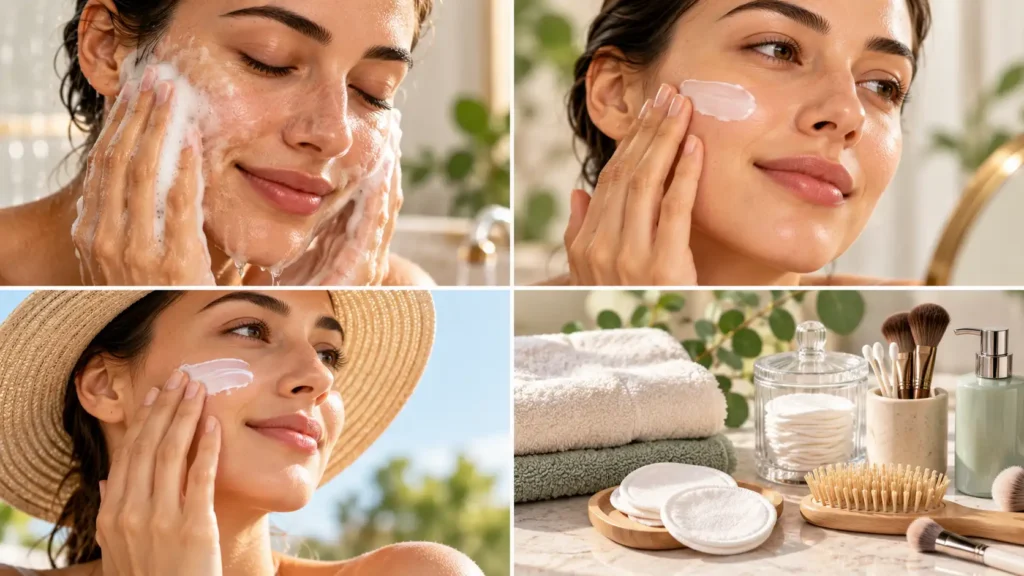
Cleansing removes dirt, sweat, oil, and product residue, but some cleansers can also increase dryness, irritation, or shift skin surface pH. These effects depend on the cleanser’s full formulation and how you use it.
Rather than avoiding every foaming cleanser or every product with a particular surfactant, choose a cleanser that leaves your skin comfortable and doesn’t cause persistent tightness, stinging, or dryness. The review Skin Cleansing without or with Compromise: Soaps and Syndets discusses differences between soap-based and synthetic-detergent cleansing products.
2. Excessive Exfoliation and Irritating Products
Frequent scrubbing, excessive exfoliation, or introducing multiple irritating products can contribute to skin discomfort and barrier damage. Fragrance ingredients can also irritate some people or cause allergic contact dermatitis. However, irritation does not automatically demonstrate that a product has damaged the skin microbiome.
Adjust your routine based on how your skin responds, and don’t treat every active ingredient as harmful. If exfoliation causes persistent burning, redness, or peeling, reduce the exposure and seek professional guidance if symptoms continue. Learn more in our complete guide to face exfoliation and how to layer skincare actives without irritation.
3. Antibiotics and Other Medications
Some systemic antibiotics can alter skin microbial communities. A human study published in Science Translational Medicine reported changes in skin microbiome composition and the expansion of antibiotic-resistant bacteria after certain systemic antibiotic regimens. The findings are important, but they do not establish that every antibiotic produces the same effect or that all changes persist for a fixed length of time.
Antibiotics remain important treatments when medically indicated. Do not stop, shorten, or avoid a prescribed course because of microbiome concerns. Discuss any concerns about the medication, its duration, and possible alternatives with the prescribing clinician.
4. UV Exposure and Environmental Conditions
UV exposure can damage skin and contribute to premature skin aging and skin cancer risk. Sun protection is therefore an important part of general skin care.
Research also examines how environmental exposures influence skin microorganisms (Grant et al., 2024), but the evidence does not support claims that a particular sunscreen directly restores or protects every person’s microbiome. One small study found that skin microbiome composition stayed stable for 24 hours after sunscreen application.
Use sun protection appropriate to your needs. Our sun protection and anti-aging guide explains sunscreen’s broader role in skin health.
5. Lifestyle and Other Influences
Age, hormones, skin conditions, climate, sweating, and personal care practices can all influence the skin environment. Researchers are also studying relationships between stress, diet, the gut microbiome, and skin health. These topics are complex, and findings about gut microorganisms or general inflammation should not automatically be presented as proof of a specific effect on the skin microbiome.
A practical approach is to maintain a consistent routine, avoid products that repeatedly irritate your skin, and seek professional advice for persistent symptoms rather than attempting to diagnose a microbial imbalance yourself.
How to Protect Your Skin Microbiome: 7 Practical Strategies
Protecting your skin microbiome does not require an expensive routine or a shelf full of specialized products. Start by maintaining the skin barrier, minimizing unnecessary irritation, and using products that suit your skin.
Strategy 1: Choose a Gentle Cleanser
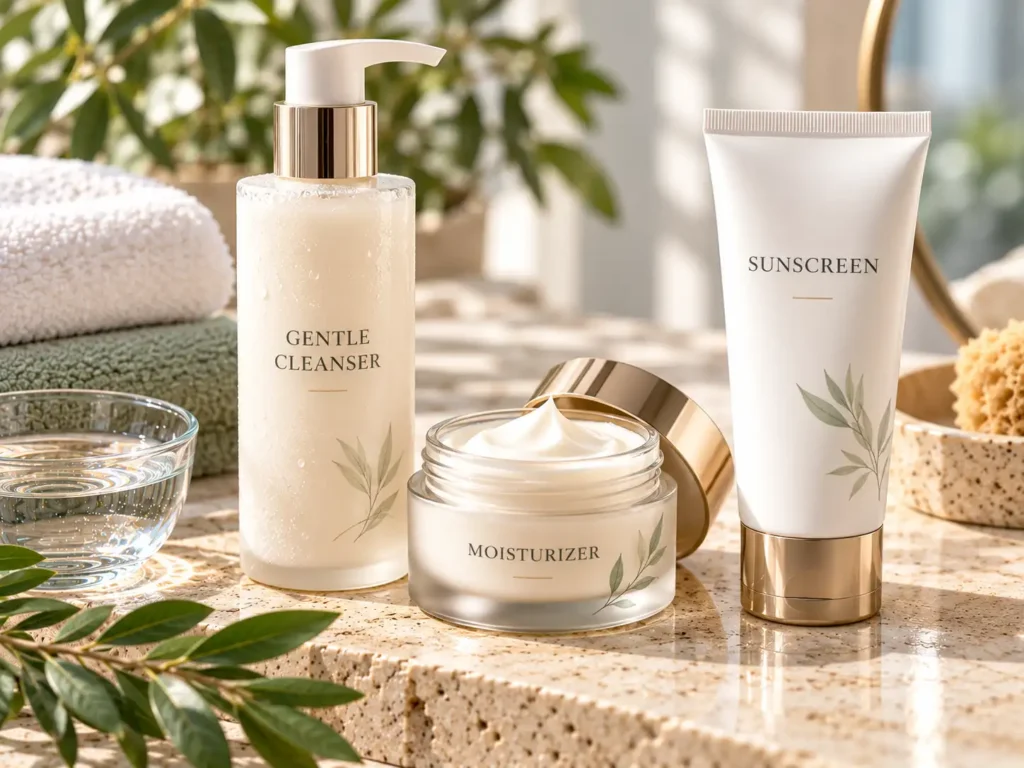
Choose a cleanser that removes dirt, oil, and product residue without leaving your skin persistently tight, dry, or irritated. Some people tolerate foaming cleansers well, while others prefer cream or lotion cleansers. No single cleanser type is best for everyone.
Use lukewarm water and avoid scrubbing too hard. Wash as often as your skin and activity level allow; twice a day is common, but people with dry or sensitive skin may need a simpler schedule.
If you are looking for a suitable cleanser, explore our guide to organic face washes for sensitive skin.
Two widely available examples of simple, fragrance-free cleansers are CeraVe Hydrating Facial Cleanser (a lotion-style cleanser) and Vanicream Gentle Facial Cleanser (formulated for sensitive skin). Neither is a “microbiome” product; they are simply examples of gentle, no-frills cleansing. Check the ingredient list against any known sensitivities.
Remember that “organic” does not automatically mean gentler or less likely to cause an allergic reaction.
Strategy 2: Moisturize to Support the Skin Barrier
Moisturizers help reduce water loss and improve skin comfort. Depending on the formulation, they may contain humectants, emollients, occlusives, or barrier-supporting ingredients such as ceramides.
Choose a product that suits your skin type and concerns. A moisturizer may help maintain barrier function, but it isn’t proven to directly change the skin microbiome. Avoid assuming that every ceramide-rich formula has a microbiome-specific benefit.
For a straightforward ceramide-containing option, CeraVe Moisturizing Cream is a common example. It is a barrier-supporting moisturizer, not a proven microbiome treatment.
If your skin barrier is already irritated or damaged, see our guide to repairing a damaged skin barrier.
Strategy 3: Avoid Excessive Exfoliation and Unnecessary Irritation
Exfoliating products can help with specific skin concerns, but using them too often or combining too many active ingredients can cause irritation. No universal exfoliation schedule suits every skin type.
If your skin becomes persistently red, dry, or uncomfortable, reassess your routine instead of adding more products. Our guides to face exfoliation and layering skincare actives without irritation provide further guidance.
Strategy 4: Protect Your Skin from UV Exposure
Sun protection is a standard part of skincare because ultraviolet radiation contributes to skin damage, premature aging, and skin cancer. The American Academy of Dermatology recommends a broad-spectrum sunscreen with SPF 30 or higher, alongside shade and protective clothing.
These are established sun-protection recommendations; they do not prove that sunscreen directly restores or maintains a particular microbial community.
For a simple daily option, Vanicream Facial Moisturizer SPF 30 is a zinc oxide mineral sunscreen. Before buying any sunscreen, confirm the label says “broad spectrum” and SPF 30 or higher.
For practical guidance, read our sun protection and anti-aging guide.
Strategy 5: Evaluate Prebiotic, Probiotic, and Postbiotic Products Carefully
These terms describe different approaches, and they should not be treated as interchangeable.
- Prebiotics: Ingredients intended to provide a resource that particular beneficial microorganisms can use. Their effects depend on the ingredient, the formulation, and the conditions in which it is used.
- Probiotics: Live microorganisms that confer a health benefit when administered in adequate amounts (ISAPP consensus, 2014). In topical cosmetics, product formulation, microbial viability, stability, and safety are important considerations.
- Postbiotics: Preparations of inanimate microorganisms or their components that may provide a health benefit (ISAPP consensus, 2021). Cosmetic products containing microbial lysates or fermentation-derived ingredients shouldn’t automatically be assumed to provide a proven microbiome benefit.
Early research on microbiome-focused cosmetics is promising, but studies vary in design, ingredients, sample size, and outcomes measured. A product’s label alone can’t prove it restores microbial diversity, repairs the skin microbiome, or treats a skin condition.
You do not need to use all three categories. For differences and current evidence, read our detailed guide to prebiotic versus postbiotic skincare.
Strategy 6: Keep Everyday Skin-Contact Items Clean
Clean towels, makeup tools, pillowcases, and other skin-contact items as appropriate. Allow damp items to dry properly and follow the manufacturer’s washing instructions. Clean makeup brushes and applicators regularly, especially when they are shared or visibly dirty.
These are sensible hygiene practices, but they aren’t proven methods for restoring the skin microbiome. Cleanliness supports general skin care; it doesn’t replace treatment for a diagnosed skin condition.
Strategy 7: Make Medication Decisions with Your Healthcare Professional
Some medications, including certain antibiotics, can affect microbial communities. However, their benefits may outweigh these concerns when you need them to treat an infection or another medical condition.
Take prescribed medication as directed. If you are concerned about microbiome effects, ask your prescriber about the reason for treatment, the planned duration, potential side effects, and appropriate alternatives. Do not stop or replace prescribed treatment with a cosmetic product or supplement without medical guidance.
The goal is not to eliminate every possible influence on the skin microbiome. The goal is to protect skin health while making informed decisions based on available evidence.
Can You Restore Your Skin Microbiome? What the Evidence Says
The skin microbiome is dynamic, and its composition can change in response to the skin environment, personal care practices, medication, and other factors. However, no single, clinically established recovery timetable applies to everyone, every skin condition, or every type of disruption.
It is important to distinguish between improving skin comfort, repairing the skin barrier, and demonstrating a measurable change in the microbiome. These are related but different outcomes. A product or routine that helps dryness doesn’t necessarily prove microbial diversity has been restored.
How Long Does Skin Microbiome Recovery Take?
The answer depends on the original cause, the microorganisms involved, the body site, and what you’re measuring. Some microbial changes may be temporary, while others can persist. Research on systemic antibiotics has found lasting changes in particular circumstances (Jo et al., 2021), but these findings do not establish a universal recovery timeline for everyone.
For that reason, don’t treat fixed estimates, such as a two-to-four-week recovery period for mild disruption or a three-to-six-month recovery period after antibiotics, as established general rules.
Should You Follow a Two-Week Microbiome Reset?
No universal microbiome-reset protocol exists. If a routine causes irritation, temporarily simplify it to identify triggers and reduce unnecessary exposure to irritating products.
A basic routine may include a gentle cleanser, a moisturizer suited to your skin, and sunscreen during daytime exposure. Whether you need each step, and which products work best, depends on your skin type, treatment plan, and symptoms.
Do not automatically stop prescribed acne treatments, retinoids, antibiotics, or other medications as part of a supposed reset. If a treatment is causing a reaction, discuss it with the prescribing clinician before changing it.
Can Postbiotics Help the Skin Recover?
Researchers are studying topical formulations containing microbial lysates, fermentation-derived ingredients, and other postbiotic preparations. Some studies suggest potential benefits for skin hydration, barrier function, or inflammatory responses, but results depend on the particular formulation and the outcome measured.
Postbiotic ingredients should not be described as universally safe for compromised skin or as proven methods for rebuilding the microbiome. A product may still cause irritation or an allergic reaction, and including a fermentation-derived ingredient does not guarantee clinical benefit.
Can Oral Probiotics Restore Skin Microbiome Health?
Researchers are investigating how oral probiotics and the gut-skin microbiome relationship may affect certain skin conditions. Findings vary by strain, dose, population, and condition, and results from one study cannot automatically be applied to every supplement or skin concern.
Oral probiotics should not be presented as a guaranteed way to restore the skin microbiome or as a replacement for dermatological treatment. Speak with a healthcare professional before using supplements to manage a skin condition, particularly if you have an underlying medical condition or take medication.
Practical takeaway: Start by avoiding known irritants, maintaining a suitable skincare routine, and addressing persistent skin problems appropriately. Specialized microbiome products may be worth exploring, but no product or routine can guarantee an ideal microbial balance.
How to Choose Skincare Products Without Being Misled by Microbiome Claims
Terms such as “microbiome-friendly,” “prebiotic,” “probiotic,” and “postbiotic” appear on skincare products, but these terms alone don’t prove a product improves skin health or restores microbial balance. Scientific evidence depends on the ingredient, formulation, study design, population, and measured outcome.
1. Start with the Product’s Main Purpose
Choose a product for a clear reason, such as gentle cleansing, moisturizing dry skin, or treating a specific concern. A basic skincare routine can support normal skin barrier function without needing a product marketed specifically for the microbiome.
When comparing cleansers, focus on how your skin responds rather than relying on terms like “natural,” “organic,” or “sulfate-free” alone. Our guide to organic face washes for sensitive skin can help you explore options.
2. Evaluate Ingredient Claims Carefully
Ingredients such as ceramides, humectants, and emollients commonly support hydration and barrier function. Prebiotic ingredients and fermentation-derived ingredients are also being studied in microbiome-focused cosmetics.
However, an ingredient list alone cannot establish how well the finished product works. The full formulation, ingredient concentrations and stability, how it is used, and relevant clinical evidence all matter.
3. What About Fermented Ingredients?
Cosmetic products may contain ingredients identified by terms such as ferment, ferment filtrate, or lysate. These names refer to different ingredients and processes; they do not all indicate live microorganisms or a clinically proven microbiome benefit.
Research on these ingredients is developing, but findings from one formulation don’t apply to every product with a similar ingredient. Look for reliable evidence for the specific benefit claimed, rather than assuming all fermented products strengthen the skin barrier or restore microbial balance.
4. Be Cautious with Absolute Marketing Claims
Be skeptical of claims that a cosmetic product can completely restore the microbiome overnight, eliminate all harmful bacteria without affecting beneficial microbes, or treat several skin diseases on its own. Skin microbial communities are complex, and outcomes vary by individual and formulation.
Likewise, do not automatically treat every ingredient that may cause irritation in some circumstances as a microbiome-destroying ingredient. Assess fragrance, preservatives, surfactants, and other formulation components in context. If a product repeatedly causes irritation, discontinue it and consider seeking professional advice.
5. Test New Products Carefully
A product marketed as gentle or microbiome-friendly can still cause a reaction. The American Academy of Dermatology recommends testing new skincare products on a small area of skin. Its guidance recommends applying the product to a test spot twice daily for seven to ten days, following the product’s directions.
If you develop redness, itching, swelling, or another reaction, stop using the product. A home test cannot rule out every possible reaction, and people with persistent or severe symptoms should seek appropriate medical guidance.
6. When Should You Ask a Dermatologist?
If your skin problem persists, worsens, hurts, or is hard to identify, a professional assessment is more useful than repeatedly buying new microbiome-focused products. Acne, eczema, rosacea, and contact dermatitis require different approaches, and you shouldn’t assume a cosmetic product can treat them.
Conclusion: How to Protect Your Skin Microbiome
The skin microbiome is a complex community of microorganisms that interacts with the skin barrier and immune system. Researchers are continuing to investigate how these communities differ between people and how changes relate to skin health and disease.
For most people, a sensible starting point is straightforward: cleanse gently, moisturize when needed, protect your skin from UV exposure, and avoid products or habits that repeatedly cause irritation. Specialized prebiotic, probiotic, and postbiotic products may offer benefits, but evidence varies by formulation, and they aren’t essential for every skincare routine.
Don’t assume redness, dryness, acne, or sensitivity proves your microbiome is unhealthy. If symptoms persist or worsen, seek appropriate professional advice rather than relying on a microbiome reset or an unverified product claim.
The goal is to support healthy skin with practical, evidence-informed care—not to eliminate every microorganism or chase a supposedly perfect microbial balance.
Frequently Asked Questions About the Skin Microbiome
What Is the Skin Microbiome?
The skin microbiome is the community of microorganisms, including bacteria, fungi, viruses, and other microscopic organisms, that live on and within the outer layers of the skin. These organisms interact with skin cells, the immune system, and the skin barrier. Their composition varies between people and across different body sites.
What Can Disrupt the Skin Microbiome?
Skin pH, cleansing practices, medications, environmental conditions, and the skin’s underlying condition can influence the skin microbiome. Some skincare products and habits can also irritate the skin or damage its barrier. Effects vary, and not every irritating product necessarily changes the microbiome in a measurable way.
Can You Tell If Your Skin Microbiome Is Unbalanced?
Not reliably from appearance alone. Dryness, redness, sensitivity, flaking, and acne can have many causes and do not confirm microbiome imbalance. If symptoms persist, worsen, or interfere with daily life, seek advice from a qualified healthcare professional.
How Can I Protect My Skin Microbiome?
Start with gentle cleansing, a moisturizer suited to your skin, and appropriate sun protection. Avoid unnecessary scrubbing, and watch for products that repeatedly irritate your skin. You do not need a specialized microbiome-focused product to maintain a sensible basic skincare routine.
Do Prebiotics, Probiotics, and Postbiotics Work in Skincare?
Research into these ingredients is promising, but evidence varies by ingredient, formulation, and outcome. The presence of a prebiotic, probiotic, postbiotic, lysate, or ferment ingredient doesn’t automatically mean the finished product restores the skin microbiome or treats a skin condition. See our guide to prebiotic versus postbiotic skincare for more detail.
How Long Does It Take for the Skin Microbiome to Recover?
There is no universal recovery timeline. The answer depends on what changed, the microorganisms involved, the body site, and what you’re measuring. Some changes may be temporary, while others can persist. Research on certain systemic antibiotic regimens has found lasting effects (Jo et al., 2021), but it does not establish a fixed recovery period for everyone.
Can Diet Restore the Skin Microbiome?
A varied, nutritious diet supports general health, and researchers are studying the relationship between gut microorganisms and skin conditions. However, no specific foods or supplements have been proven to restore the skin microbiome. Dietary changes are not a replacement for appropriate treatment of skin disease.
Should I Stop Antibiotics to Protect My Skin Microbiome?
No. Antibiotics can affect microbial communities, but they may be necessary to treat infections and other medical conditions. Take prescribed medicines as directed and discuss concerns about side effects, treatment duration, or alternatives with the prescribing clinician. Do not stop treatment or replace it with skincare products without medical guidance.
References and Further Reading
The skin microbiome is an active area of research. The following sources provide background on skin microbial communities, cleansing, antibiotic-related changes, sun exposure, and microbiome-focused skincare. Interpret findings from laboratory studies, clinical trials, and reviews according to their study designs and limitations.
- Innovative Approaches for Maintaining and Enhancing Skin Health and Managing Skin Diseases through Microbiome-Targeted Strategies: A review of microbiome-targeted approaches, including prebiotics, probiotics, postbiotics, and emerging treatments.
- Alterations of Human Skin Microbiome and Expansion of Antimicrobial Resistance after Systemic Antibiotics: Human research examining changes in skin microbial communities after certain systemic antibiotic regimens.
- The Skin Acid Mantle: An Update on Skin pH: A review of the relationship between skin pH, barrier integrity, inflammation, and the microbiome.
- Skin Cleansing without or with Compromise: Soaps and Syndets: A review of cleansing products and their potential effects on skin structure, function, pH, and barrier integrity.
- The Skin Microbiome Revolution: The Science and Challenges of Prebiotics, Probiotics, and Postbiotics in Skincare: A 2026 review of emerging cosmetic approaches and limitations in the available clinical evidence.
- Cosmetic Interventions for Skin Microbiome Modulation: Current Strategies and Future Directions: A 2026 review of strategies for modulating the skin microbiome with cosmetics.
- American Academy of Dermatology: Face Washing 101: Practical dermatology guidance on gentle cleansing.
- American Academy of Dermatology: How to Select Sunscreen: Guidance on broad-spectrum sunscreen and SPF.
- American Academy of Dermatology: How to Test Skin Care Products: Guidance on patch-testing a new product.
- Byrd AL, Belkaid Y, Segre JA. The human skin microbiome. Nature Reviews Microbiology, 2018.
- Grice EA, et al. Topographical and Temporal Diversity of the Human Skin Microbiome. 2009.
- Kong HH, et al. Temporal shifts in the skin microbiome associated with disease flares and treatment in children with atopic dermatitis. Genome Research, 2012.
- Fitz-Gibbon S, et al. Propionibacterium acnes strain populations in the human skin microbiome associated with acne. Journal of Investigative Dermatology, 2013.
- Nakatsuji T, et al. Antimicrobials from human skin commensal bacteria protect against Staphylococcus aureus and are deficient in atopic dermatitis. 2017.
- Hill C, et al. Expert consensus document: The ISAPP consensus statement on the scope and appropriate use of the term probiotic. 2014.
- Salminen S, et al. The ISAPP consensus statement on the definition and scope of postbiotics. Nature Reviews Gastroenterology & Hepatology, 2021.
- Salem I, Ramser A, Isham N, Ghannoum MA. The Gut Microbiome as a Major Regulator of the Gut-Skin Axis. Frontiers in Microbiology, 2018.
- Makrgeorgou A, et al. Probiotics for treating eczema. Cochrane Database of Systematic Reviews, 2018.
- Grant GJ, Kohli I, Mohammad TF. A narrative review of the impact of ultraviolet radiation and sunscreen on the skin microbiome. Photodermatology, Photoimmunology & Photomedicine, 2024.
- Smith M, et al. The Human Skin Microbiome Remains Unchanged After 24 Hours of Sunscreen Application. Applied and Environmental Microbiology, 2026.
These sources provide scientific context; they do not establish that every product marketed as microbiome-friendly is effective, or that a single routine can treat all microbiome-associated skin conditions.

About Subhan Usafzai
Evidence-Based Skincare Educator & Formulation Specialist
I'm Subhan Usafzai (Fazli Subhan), an Evidence-Based Skincare Educator and Formulation Specialist. My background includes first-hand experience as a technician and research support in skin departments across tertiary military hospitals since 2006, and since 2008 I've focused on researching and translating clinical and formulation science into practical, evidence-based guidance. My formal training includes Coursera's Introduction to Cosmetic and Skincare Science and the four-course Introduction to Cosmetic Science and Ingredients specialization (Cosmetic Formulation Science, Cosmetic Product Development, and Quality Control and Regulatory in Cosmetic Science), authorized by Olay. Every article I write is checked against current research and reviewed by our medical team before publishing.
✅ Medically reviewed by Dr. Muhammad Khurram Ahmad, MD, Board-Certified Dermatologist · 📅 Last updated: October 2026
Medical Disclaimer
For Educational Purposes Only: This article is written by Subhan Usafzai, an Evidence-Based Skincare Educator and Formulation Specialist, for educational and informational purposes only. The information draws on scientific research, peer-reviewed studies, and dermatological literature available as of October 2026.
Not Medical Advice: This content does not constitute medical advice, diagnosis, or treatment. It is not a substitute for consultation with a qualified healthcare professional or dermatologist.
Individual Results May Vary: Skin conditions and responses to skincare products vary according to individual characteristics, skin type, hormonal factors, and environmental exposure.
Consult Your Healthcare Provider: Seek professional guidance before changing your skincare regimen, particularly during pregnancy or breastfeeding, or if you have a diagnosed skin condition, take medication, have sensitive skin, or receive dermatological treatment.
Product Safety: Consider patch testing new products. Discontinue use if irritation or an adverse reaction occurs, and seek medical advice when needed.
Affiliate Disclosure
Amazon Associates Disclosure: As an Amazon Associate I earn from qualifying purchases.
Editorial Independence: Affiliate relationships do not determine our product reviews or recommendations. We aim to provide balanced, research-informed information to help readers make informed skincare choices.
Supporting Glow Guide Hub: Qualifying purchases through affiliate links may earn us a commission at no additional cost to you.