
Bakuchiol vs Retinol: Dermatologist Recommendations in 2026
You want smoother skin, fewer fine lines, and a more even complexion—but what if retinol leaves your skin red, dry, or peeling?
That’s often when bakuchiol enters the conversation. Marketed as a gentler, plant-derived alternative to retinol, it sounds like an easy swap. But does the science support that promise?
Retinol has a substantial body of research behind its anti-aging benefits, while bakuchiol has promising but more limited clinical evidence. One small, 12-week study compared the two ingredients and found improvements in fine wrinkles and hyperpigmentation with both, alongside more scaling and stinging among retinol users. The findings are encouraging, but they don’t prove the ingredients are interchangeable.
So, should you choose bakuchiol or retinol?
The answer depends on your skin concerns, sensitivity, and goals.
Every claim below comes from peer-reviewed research, the American Academy of Dermatology (AAD), Harvard Health Publishing, or named dermatologists. Where the science is limited, I say so.
Bakuchiol vs Retinol: The Quick Dermatologist Verdict
Retinol is the more potent, better-studied ingredient, and dermatologists generally reach for it first when skin can tolerate it. Bakuchiol is a gentler, plant-derived alternative with promising but limited evidence. It suits people who cannot tolerate retinoids, and you can also use the two together.
That split shows up in the expert commentary. Mona Gohara, MD, a board-certified dermatologist and associate clinical professor at Yale School of Medicine, told Prevention that retinol and prescription retinoids remain the most effective options for building collagen, speeding skin cell turnover, and preventing acne breakouts. She described bakuchiol as a gentle choice for smoother, brighter, firmer-looking skin with less irritation.
| If this describes you | Better starting point | Why |
|---|---|---|
| Sensitive, eczema-prone, or reactive skin | Bakuchiol | Fewer reports of stinging and scaling in the head-to-head trial |
| Fine lines and visible photoaging, skin tolerates actives | Retinol | Decades of human evidence |
| Acne-prone skin | Retinol or a prescription retinoid | Stronger acne evidence |
| First-time active user | Either, started slowly | Match to your skin’s tolerance |
| Pregnant or breastfeeding | Ask your clinician | Retinoids are usually avoided; bakuchiol data is limited |
| Wants maximum results, accepts some adjustment | Retinol, with bakuchiol as support | Potency plus a gentler daytime option |
Is bakuchiol better than retinol?
Not across the board. Bakuchiol wins on tolerability, and in one small trial it performed comparably on wrinkles and pigmentation. Retinol wins on depth of evidence, potency, and proven acne benefits. “Better” depends on whether your skin can handle a retinoid, so the sections below help you decide by concern.
(If you want to see how these ingredients fit into skincare more broadly, read our guide to the top skincare ingredients that actually work in 2026.)
What Is Retinol, and Why Do Dermatologists Trust It?
Retinol is a form of vitamin A. It belongs to a family called retinoids, the umbrella term the American Academy of Dermatology uses for vitamin A derivatives, from over-the-counter retinol to prescription tretinoin.
How retinol works
Skin enzymes convert retinol into retinoic acid, the active form. Retinoic acid binds to receptors in skin cells and changes how genes behave. Visible results include faster cell turnover, more collagen production, and more even skin tone. Gohara explained to Prevention that this conversion makes retinol an indirect, milder version of prescription retinoids, with benefits that build gradually.
Research on retinoids spans decades and includes many human trials. They can improve signs of photoaging, such as fine wrinkles, rough texture, and uneven pigmentation, and they also treat acne.
(If you want to understand what happens inside skin cells when you apply it, see our explainer on how retinol works at the cellular level and what that means for your results.)
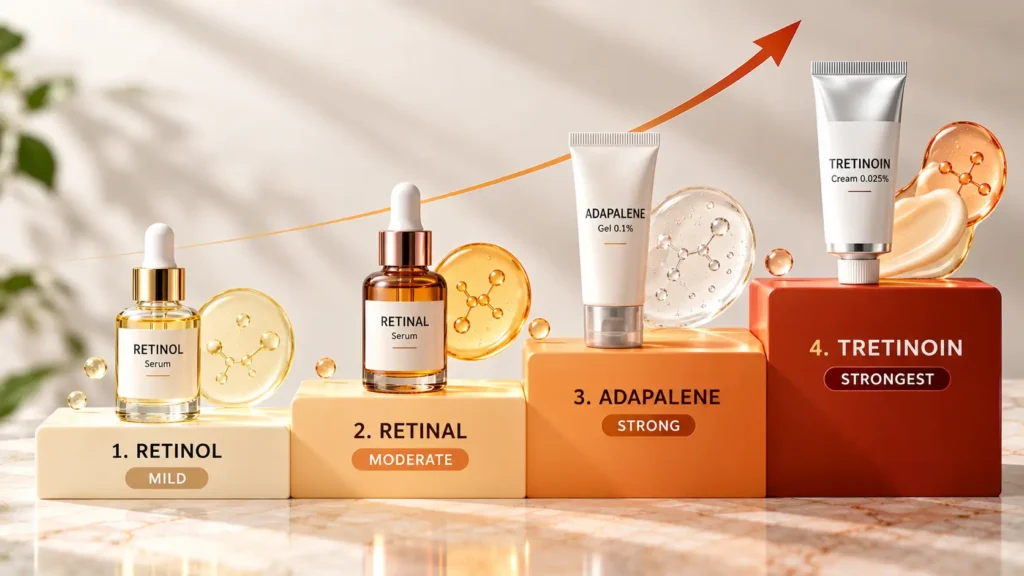
The retinoid potency ladder
| Ingredient | Availability (U.S.) | Relative strength | Notes |
|---|---|---|---|
| Retinol | Over the counter | Milder | Needs two conversion steps to become retinoic acid |
| Retinal (retinaldehyde) | Over the counter | Moderate | One conversion step from retinoic acid |
| Adapalene | Over the counter at 0.1% | Moderate to strong | Synthetic retinoid, widely used for acne |
| Tretinoin | Prescription | Strongest of these | The most studied for photoaging |
Who should avoid or be careful with retinol
People who are pregnant, planning pregnancy, or breastfeeding are usually advised to avoid retinoids and should ask their clinician. Those with eczema, rosacea, or a damaged skin barrier often need a slower approach or a different ingredient.
Common side effects
The most common are redness, dryness, peeling, and stinging. Retinoids can also make skin more sensitive to sunlight, so the plan includes daily sunscreen. Retinol works with most moisturizers, niacinamide, and hyaluronic acid, but dermatologists usually separate it from strong exfoliating acids to reduce irritation.
What does “start low and go slow” mean?
Dermatologists commonly suggest a pea-sized amount for the whole face, two to three nights per week at first, applied to dry skin and followed by moisturizer. Increase frequency only if your skin stays comfortable. This is expert practice guidance rather than a trial-tested protocol, but it reflects consistent advice from clinicians.
(If irritation does show up, our guide on how to repair a damaged skin barrier explains what to pause and what to restart first.)
What Is Bakuchiol and How Does It Work?
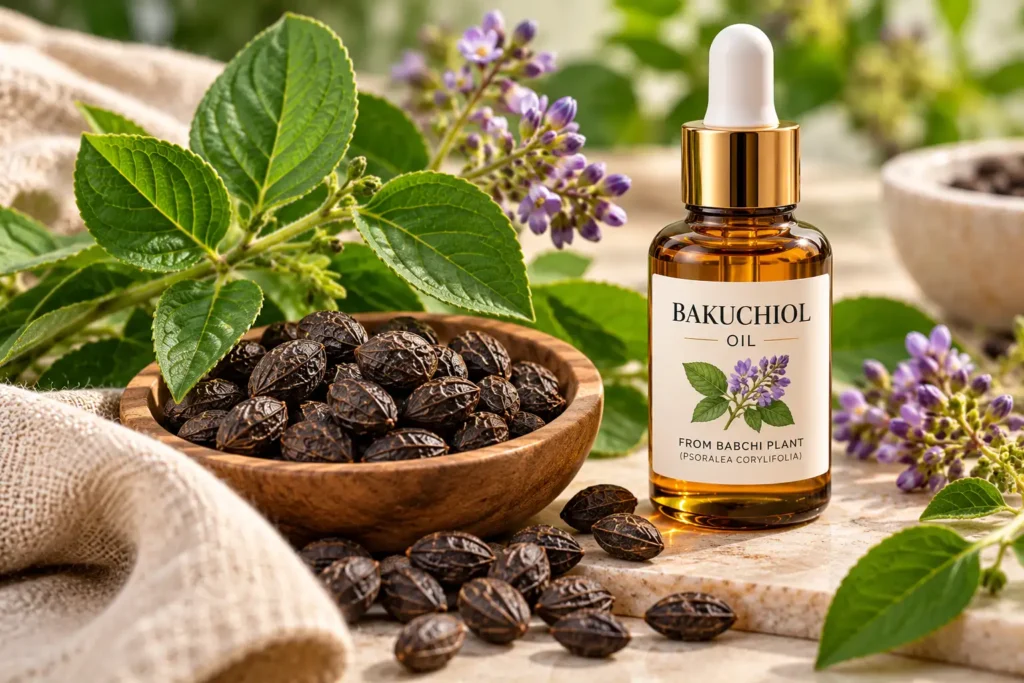
Bakuchiol (pronounced buh-KOO-chee-all) is a compound extracted from the seeds of Psoralea corylifolia, also called the babchi plant. The plant has a long history in Ayurvedic and traditional Chinese medicine. In skincare, bakuchiol is sold as a “natural retinol alternative,” a phrase that needs some unpacking.
Not a retinoid, but a retinol-like effect
Bakuchiol isn’t a vitamin A derivative and doesn’t structurally resemble retinoids. A 2022 systematic review in the Journal of Cosmetic Dermatology describes it as acting like a retinol analog by regulating gene expression in a retinol-like way, including genes tied to collagen. Gohara adds that bakuchiol doesn’t convert to retinoic acid, so it reaches similar downstream targets through a different route. It also has antioxidant and anti-inflammatory activity.
So “natural retinol” is a marketing shortcut. Its effects overlap with retinol, but the chemistry differs, which may explain the lower irritation.
Who benefits, and who should be careful
Bakuchiol is most useful for people who want anti-aging or tone-evening benefits but cannot tolerate retinoids: those with sensitive, reactive, or eczema-prone skin, and anyone who wants a daytime-friendly active. It does not appear to make skin more sun-sensitive, but daily sunscreen is still important for everyone.
Allergic reactions are rare but real. The 2022 review found one adverse event report in the literature, and a 2026 case report in Contact Dermatitis described allergic contact dermatitis from a bakuchiol product. Anyone with a history of reactions to botanical ingredients should patch test first.
Concentrations and compatibility
Clinical studies have used roughly 0.5% to 1% bakuchiol. No optimal concentration has been established, and effectiveness also depends on the full formula. Bakuchiol is generally described as compatible with most other ingredients, including vitamin C, niacinamide, peptides, hyaluronic acid, and retinoids.
(If you want a broader view of how plant-derived and peptide-based ingredients fit into an anti-aging routine, our ultimate anti-aging skincare guide covers the science-backed options.)
Does Bakuchiol Work as Well as Retinol? What the Clinical Evidence Shows
In one small randomized trial, bakuchiol and retinol improved wrinkles and pigmentation similarly over 12 weeks. That is the strongest head-to-head evidence available, and it is still one study with 44 people. Here is what it found, and what it cannot tell us.
The key trial: Dhaliwal et al., 2019
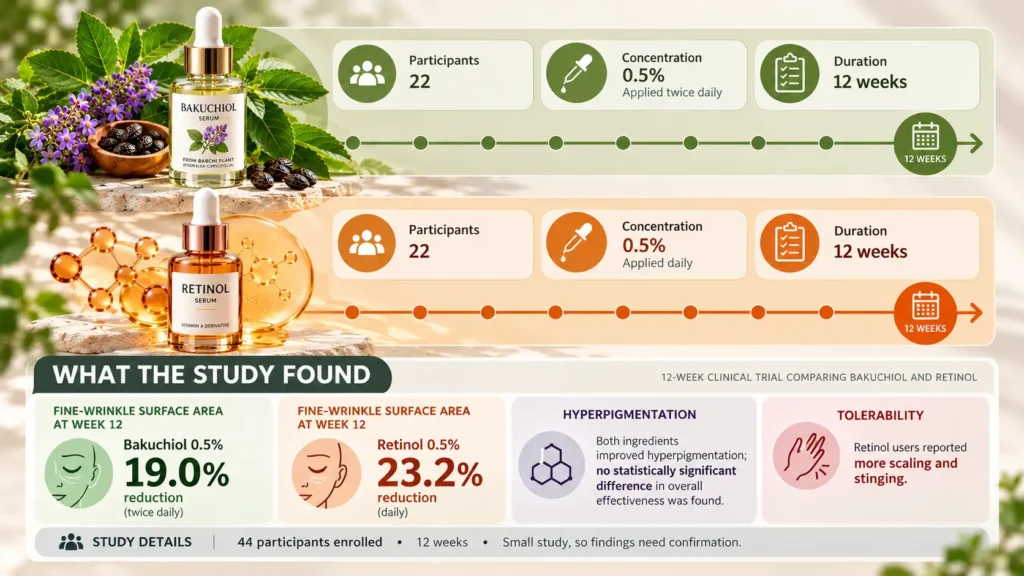
The study was published in a randomized, double-blind trial in the British Journal of Dermatology. Participants with facial photoaging applied either 0.5% bakuchiol cream twice daily or 0.5% retinol cream once daily for 12 weeks.
- Both groups had significant reductions in wrinkle surface area and hyperpigmentation.
- The difference between the two treatments was not statistically significant.
- Retinol users reported more facial scaling and stinging.
Why “comparable in one small study” is not “proven equal”
Harvard Health Publishing notes that the trial included only 44 participants, and several dropped out. Small studies can miss real differences. The two products were also dosed differently (twice daily versus once daily), and 12 weeks says little about long-term outcomes or safety.
Other research is supportive but thinner. A 60-woman trial of a bakuchiol cleanser and moisturizer reported improved smoothness and reduced signs of aging in older women with sensitive skin, and a JAAD conference abstract examined bakuchiol on sensitive skin. A three-in-one product combining bakuchiol, melatonin, and a vitamin C derivative improved wrinkles and firmness over 12 weeks, but because it combined ingredients, the result cannot be credited to bakuchiol alone.
The 2022 systematic review found only 30 relevant papers: 16 were pre-clinical, and just seven were clinical studies. The authors concluded that bakuchiol is a retinol alternative with anti-aging, antibacterial, and anti-inflammatory properties, a measured conclusion rather than a claim of equivalence.
Where dermatologists still say retinoids win
Retinoids have stronger evidence for acne, deeper or long-standing photoaging, and long-term results. Tretinoin in particular has been studied in large trials for decades. If your main goal is acne treatment or maximum wrinkle reduction, a retinoid is the evidence-based first choice.
How strong is the evidence? A quick scorecard
| Claim | Evidence level |
|---|---|
| Retinoids improve photoaging, texture, and acne | Established (many human trials over decades) |
| Bakuchiol is comparable to retinol for wrinkles and pigmentation | Emerging (one small randomized trial plus smaller studies) |
| Bakuchiol is better tolerated | Emerging (consistent across small studies) |
| Bakuchiol is “safe for everyone” | Not established (long-term and special-population data are limited) |
| “It aged me backward” testimonials | Anecdotal (cannot be generalized) |
(If you are curious about newer retinoid alternatives beyond bakuchiol, see our comparison of exosomes vs. traditional retinoids to see how the evidence stacks up.)
Bakuchiol vs Retinol Side Effects and Skin Sensitivity
Retinol is more likely to cause irritation, and bakuchiol is generally better tolerated, but neither is risk-free. The tolerability gap is the main reason people switch, and it is the most consistent finding across the bakuchiol studies.
| Retinol | Bakuchiol | |
|---|---|---|
| Common effects | Redness, dryness, peeling, stinging, itching | Mild irritation is uncommon |
| Sun sensitivity | Increased; daily sunscreen essential | Not photosensitizing per dermatologist commentary |
| Adjustment period | Often needed; may include temporary breakouts | Usually none |
| Allergy | Possible | Rare, but case reports exist |
| Long-term data | Extensive | Limited |
Retinol irritation and the “purge”
Retinol irritation depends on dose and frequency, which is why dermatologists recommend introducing it gradually. Some people also notice a temporary increase in breakouts as cell turnover speeds up. Distinguishing a true purge from a bad reaction matters, because one passes and the other means you should stop.
(If you are not sure which one you are seeing, our guide to skin purging vs. breakout explains the timing and location clues.)
Is bakuchiol good for sensitive or eczema-prone skin?
It is a reasonable option. In the 2019 trial, bakuchiol users reported less scaling and stinging than retinol users, and Gohara calls it an excellent option for sensitive or eczema-prone skin. That said, “gentler” is relative. Online skincare communities include plenty of people who tolerate retinol well and some who react to bakuchiol. Those accounts are anecdotal and shouldn’t outweigh clinical data, but they remind us that skin varies from person to person.
Does bakuchiol make skin sun sensitive?
Gohara notes that, unlike retinol, bakuchiol isn’t photosensitizing, so you can use it during the day. Even so, the AAD and nearly every dermatologist recommend daily broad-spectrum sunscreen because UV exposure drives the photoaging you are trying to treat.
(If you are choosing a sunscreen to pair with either active, our guide to sunscreen ingredients for sensitive skin covers what to look for.)
Which Should You Choose? A Dermatologist-Style Decision Guide
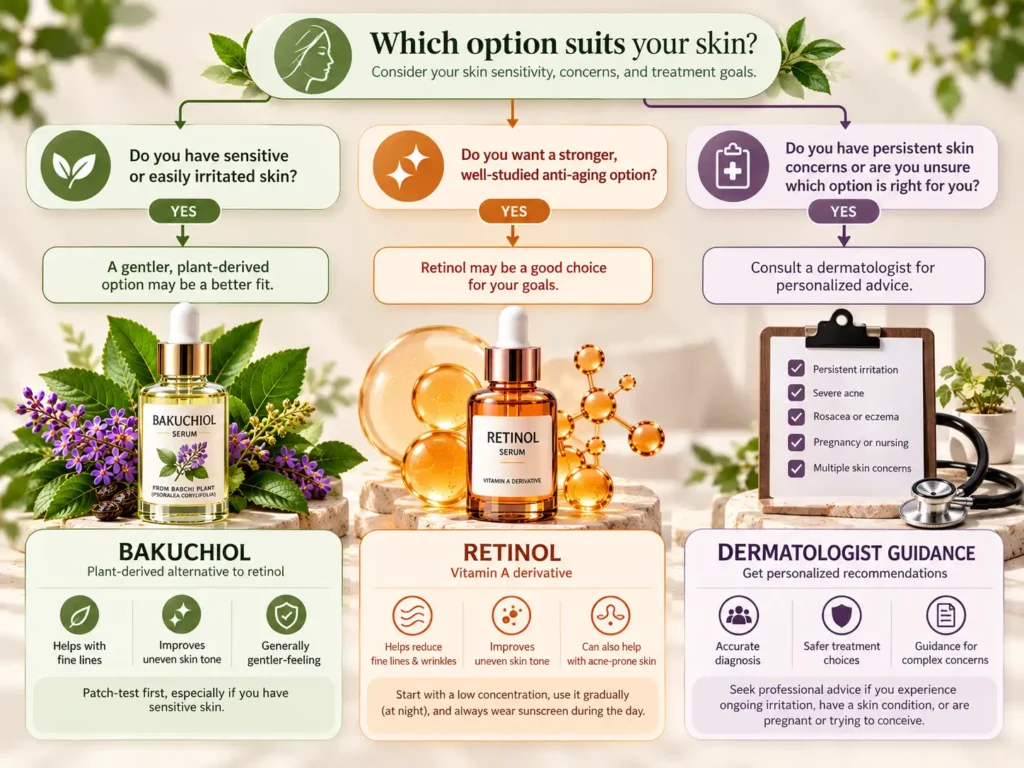
Choose based on your skin’s tolerance and the concern you want to treat. The guidance below reflects the published evidence and dermatologist commentary, but it is not a substitute for an exam, especially if you have a diagnosed skin condition.
Sensitive skin or past retinol intolerance
Bakuchiol is the logical first step. The 2019 trial found fewer irritation complaints, and dermatologists such as Gohara recommend it for people who cannot tolerate retinoids. Start once daily, patch test first, and build to twice daily if your skin stays calm.
(If your skin reacts easily to many products, our list of the best skincare ingredients for sensitive skin can help you build a gentler routine around it.)
Fine lines, wrinkles, and photoaging
If your skin tolerates it, retinol or a stronger retinoid has the deeper evidence. Bakuchiol is a reasonable alternative if irritation is a barrier, but results may be gradual and long-term data are limited. Many dermatologists would also say sunscreen does more to prevent photoaging than any serum.
Acne-prone skin
Retinoids are a first-line acne treatment, and adapalene is available over the counter. Bakuchiol has shown antibacterial and anti-inflammatory activity in lab and early clinical research, but the acne evidence is much thinner. For persistent or inflammatory acne, see a dermatologist rather than relying on either serum alone.
(For ingredients with stronger acne evidence, read our guide to acne-fighting ingredients for oily skin.)
Hyperpigmentation and dark spots
Both ingredients reduced pigmentation in the 2019 trial, so either is a reasonable supporting ingredient. Sun protection is non-negotiable, since UV exposure can darken spots. Stubborn melasma or post-inflammatory marks often need targeted treatment beyond either.
(Our guide to the best skincare ingredients for hyperpigmentation compares those options.)
First-time active users
Either works if you go slowly. Many dermatologists suggest starting with the gentler option when you don’t know how your skin responds, then stepping up to a retinoid later if you want faster or stronger results. Introduce one new active at a time so you can identify what caused any reaction.
Vegan and plant-based preferences
Bakuchiol is plant-derived, which appeals to many shoppers. But do not assume retinol is automatically off the table: many retinol ingredients used in cosmetics are made synthetically, and vegan status depends on the specific product. Check the manufacturer’s information rather than relying on a general claim in either direction.
Is Bakuchiol Safe During Pregnancy?
Bakuchiol is widely viewed as a lower-risk option than retinoids during pregnancy and breastfeeding, but it cannot be called proven safe. Published safety data in these groups is limited, so ask your obstetric provider or dermatologist before using it.
The retinoid side of the question is clearer. Dermatologists, including Gohara, advise avoiding retinol and other retinoids during pregnancy. The caution largely comes from oral retinoids such as isotretinoin, which can cause birth defects. Topical products are absorbed far less, but because the margin for error is small, clinicians generally recommend skipping them as a precaution.
Some beauty publications and brand blogs state flatly that bakuchiol is “pregnancy safe.” That wording goes further than the evidence. A more accurate statement is that bakuchiol isn’t a vitamin A derivative, has no known link to the harms seen with oral retinoids, and hasn’t been formally studied for pregnancy outcomes. Many clinicians are comfortable with it, but the decision is yours and your provider’s.
What can you use during pregnancy instead?
Dermatology guidance commonly points to a short list of gentler options: daily mineral sunscreen, a good moisturizer, and, for dark spots or acne, azelaic acid. Confirm each product with your clinician, since formulations vary.
(If dark patches are your main concern, see our guide to azelaic acid for melasma during pregnancy for a safer routine overview.)
How to Use Bakuchiol in Your Skincare Routine
Apply bakuchiol after cleansing and before moisturizer, either morning or night. Because it is not known to increase sun sensitivity, it fits into daytime routines more easily than retinol, though sunscreen still goes on last in the morning.
A simple beginner routine
| Step | Morning | Evening |
|---|---|---|
| 1 | Gentle cleanser | Gentle cleanser |
| 2 | Bakuchiol serum (optional) | Bakuchiol serum |
| 3 | Moisturizer | Moisturizer |
| 4 | Broad-spectrum sunscreen, SPF 30 or higher | None |
Start with once-daily use for the first one to two weeks, then add the second application if your skin is comfortable. Introduce only one new active at a time. Bakuchiol pairs well with vitamin C in the morning, niacinamide, hyaluronic acid, and peptides.
(For the correct nighttime sequence, see our guide to the right nighttime skincare routine order.)
Do not skip sunscreen
Whichever ingredient you choose, UV protection does more to prevent visible aging than any serum. Dermatologists recommend a broad-spectrum sunscreen with SPF 30 or higher every day, including cloudy days.
Can You Use Bakuchiol and Retinol Together?
Yes, many people do, and no known interaction rules out combining them. Some products even contain both. The practical caution is that adding two actives increases irritation risk, and clinical evidence for the combination is limited, so start slowly.
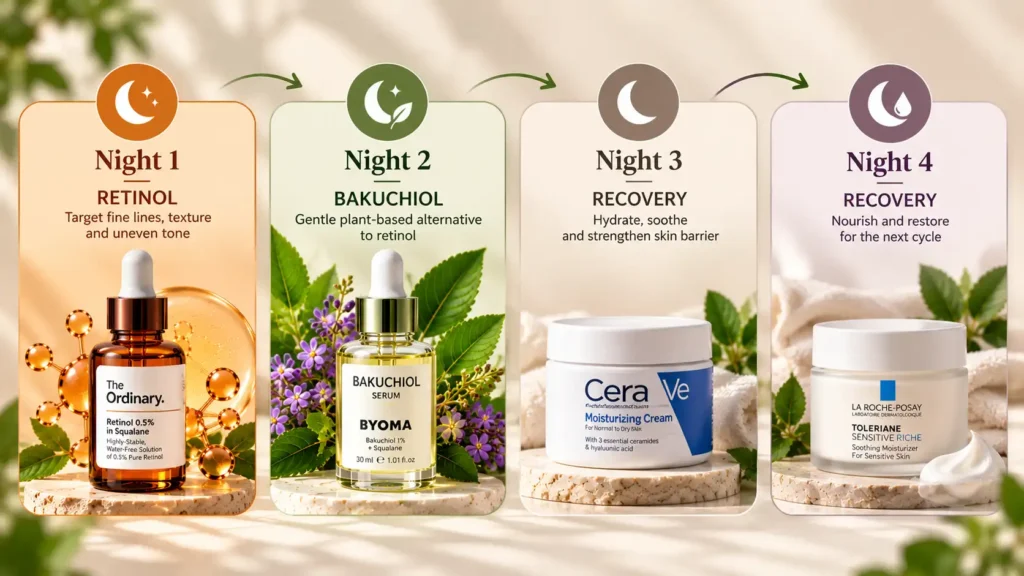
There are two common approaches. The first is to use bakuchiol in the morning and a retinoid at night, spreading the load throughout the day. The second is to alternate on different nights, which suits people still building retinol tolerance. Gohara compares retinol to a power tool and bakuchiol to a good manual tool: both get the job done, but one works faster and with more force.
A sample four-night skin cycle
|
Night |
Routine |
|---|---|
| 1 | Retinol, then moisturizer |
| 2 | Bakuchiol, then moisturizer |
| 3 | Moisturizer only (recovery) |
| 4 | Moisturizer only (recovery) |
Dermatologists have popularized skin cycling, a rotation of actives and rest nights, but it is a practical strategy rather than a trial-tested protocol. Adjust it to how your skin responds.
(For more on safely combining active ingredients, see our guide on how to layer skincare actives without irritation.)
How Often to Use Each and How Long Results Take
Bakuchiol is typically used once or twice daily, while retinol usually starts at two to three nights per week. Visible changes with either ingredient generally take weeks to months, and the main clinical comparison measured results at 12 weeks.
| Retinol | Bakuchiol | |
|---|---|---|
| Typical starting frequency | 2 to 3 nights per week | Once daily |
| Typical maintenance | Nightly, if tolerated | Once or twice daily |
| Time of day | Evening | Morning, evening, or both |
| When studies measured results | 12 weeks (2019 trial) | 12 weeks (2019 trial) |
How long should you wait before deciding a product is not working?
Give a well-tolerated product at least 12 weeks of consistent use before judging it, matching the key trial length. If your skin is irritated, don’t push through. Reduce the frequency first rather than quitting at once.
Signs to stop and see a dermatologist
Stop using the product and seek advice if you develop swelling, blistering, hives, severe burning, or a rash that spreads or does not improve within a few days of stopping. Also see a clinician for worsening acne, new or changing moles, and any skin symptoms while pregnant.
Dermatologist-Backed Product Examples and How to Choose
I do not recommend products just because they are popular. A board-certified dermatologist, Mona Gohara, MD, named the two examples below in Prevention. Treat them as starting points, then confirm texture, fragrance status, and the current ingredient list on the manufacturer’s page, since formulas change.
| Product | Why it was selected | Key ingredients (per the dermatologist’s comments) | Best for | Limitation |
|---|---|---|---|---|
| The INKEY List Bakuchiol Moisturizer | Gohara noted it delivers bakuchiol at an effective 1% concentration | Bakuchiol (1%), squalene | Sensitive skin that needs barrier support | Single-ingredient evidence is limited; no retinoid-level data |
| Neutrogena Collagen Bank Moisturizer | Gohara noted it blends collagen-building peptides with bakuchiol | Bakuchiol, peptides | Sensitive skin that wants a moisturizer-style format | Effects cannot be attributed to bakuchiol alone because peptides are also present |
How to choose any bakuchiol or retinol product
- Concentration. Studies used roughly 0.5% to 1% bakuchiol. For retinol, start with a lower strength and work your way up.
- Packaging. Opaque, airtight pump or tube packaging protects retinol, which breaks down with light and air.
- Fragrance and irritants. Fragrance-free or low-fragrance formulas suit sensitive skin. Check for essential oils if you react easily.
- Supporting ingredients. Squalane, glycerin, ceramides, and niacinamide help comfort and barrier function.
- Claims. Be skeptical of “works like retinol” or “results in two weeks” claims. Look for named studies on the specific formula.
If you want a prescription option, a dermatologist can prescribe tretinoin and tailor the strength to your skin.
Bakuchiol vs. Retinol: Frequently Asked Questions
Is bakuchiol as effective as retinol?
Bakuchiol may improve wrinkles and uneven pigmentation, but current evidence does not establish that it is as effective as retinol. A small 12-week clinical trial found improvements in wrinkles and hyperpigmentation with both ingredients, with participants using bakuchiol reporting less scaling and stinging. However, retinol has a broader research base, and one trial isn’t enough to establish equivalent effectiveness across products, concentrations, and skin concerns. Retinol is better studied, while bakuchiol may suit people who find retinoids irritating.
How do you use bakuchiol in a skincare routine?
Apply bakuchiol as directed, after cleansing and before moisturizer when using a serum. You can generally use bakuchiol in the morning or evening, depending on the formulation and your skin’s tolerance. Start with one application daily, introduce other active ingredients gradually, and patch-test the product before applying it to your face. In the morning, finish with a broad-spectrum sunscreen of SPF 30 or higher to protect against UV-related skin damage and premature aging.
Can you use bakuchiol and retinol together?
Yes, you can use bakuchiol and retinol in the same skincare routine, but you don’t need to combine them to get benefits from either ingredient. You can apply bakuchiol in the morning and retinol at night, or alternate nights, as long as both products suit your skin. However, clinical evidence showing that this combination produces better results than either ingredient alone remains limited. If you experience persistent redness, burning, or peeling, reduce use or discontinue the product causing irritation.
How often should you use bakuchiol or retinol?
Many people use bakuchiol once or twice daily, while retinol is best introduced gradually, starting with two or three nights per week. Follow the instructions for your particular product, since concentrations and formulations differ. If your skin tolerates retinol without persistent dryness, stinging, or peeling, you can gradually increase the frequency. Bakuchiol may be better tolerated by some people, but it may still cause irritation. Use broad-spectrum SPF 30+ sunscreen during the day, especially when treating signs of photoaging.
How long does bakuchiol or retinol take to show results?
Use consistently for at least 8–12 weeks to see early changes in skin texture, fine lines, and uneven pigmentation. A clinical trial comparing bakuchiol with retinol evaluated outcomes after 12 weeks, so that period provides a useful reference point rather than a guarantee of results. Improvement varies with the ingredient concentration, formulation, skin concern, and consistency of use. More noticeable changes in wrinkles or pigmentation may take several months, and neither ingredient can guarantee complete wrinkle removal or perfectly even skin tone.
Conclusion: Bakuchiol vs Retinol
The dermatologist recommendation on bakuchiol vs retinol comes down to tolerance and evidence. Retinol is proven, potent, and the stronger choice for acne and long-term photoaging. Bakuchiol is promising and gentler, and the one head-to-head trial found comparable wrinkle and pigmentation results, but the research base is small. They are also not mutually exclusive.
If your skin handles retinoids, start there, slowly. If it doesn’t, bakuchiol is a reasonable, lower-irritation substitute, as long as you keep expectations realistic and patch test first. Either way, the most important habit is daily sunscreen.
Your next step: choose one product, patch test it for a few days, and use it consistently for 12 weeks before judging it. If you are pregnant, have persistent acne, or react to products, check with a board-certified dermatologist first.
(To build either ingredient into a full plan, see our complete anti-aging skincare routine.)
References
- Dhaliwal S, Rybak I, Ellis SR, et al. Prospective, randomized, double-blind assessment of topical bakuchiol and retinol for facial photoageing. British Journal of Dermatology. 2019;180(2):289-296. PubMed and full text via Wiley.
- Puyana C, Chandan N, Tsoukas M. Applications of bakuchiol in dermatology: Systematic review of the literature. Journal of Cosmetic Dermatology. 2022;21(12):6636-6643. PubMed.
- Harvard Health Publishing. Bakuchiol: Does it make skin look younger?
- American Academy of Dermatology. Retinoid or retinol?
- Sánchez-Arjona M, Rosell-Díaz ÁM, Castaño-Fernández JL, Elosua-González M. Allergic contact dermatitis to bakuchiol used for photodamage prevention: a case report. Contact Dermatitis. 2026;95(2):229-230. Record (DOI 10.1111/COD.70169).
- Gunt H, Draelos ZD, Levy SB. Topical effects of a natural retinol alternative: a clinical assessment of bakuchiol on sensitive skin. Journal of the American Academy of Dermatology. 2020;83(6):AB171 (conference abstract). Record.
- Gina Way. Retinol vs. bakuchiol: a dermatologist explains which you should use (interview with Mona Gohara, MD). Prevention. December 3, 2025.

About Subhan Usafzai
Evidence-Based Skincare Educator & Formulation Specialist
I'm Subhan Usafzai (Fazli Subhan), an Evidence-Based Skincare Educator and Formulation Specialist. My background includes first-hand experience as a technician and research support in skin departments across tertiary military hospitals since 2006, and since 2008 I've focused on researching and translating clinical and formulation science into practical, evidence-based guidance. My formal training includes Coursera's Introduction to Cosmetic and Skincare Science and the four-course Introduction to Cosmetic Science and Ingredients specialization (Cosmetic Formulation Science, Cosmetic Product Development, and Quality Control and Regulatory in Cosmetic Science), authorized by Olay. Every article I write is checked against current research and reviewed by our medical team before publishing.
✅ Medically reviewed by Dr. Muhammad Khurram Ahmad, MD, Board-Certified Dermatologist · 📅 Last updated: October 2026
Medical Disclaimer
For Educational Purposes Only: This article is written by Subhan Usafzai, an Evidence-Based Skincare Educator and Formulation Specialist, for educational and informational purposes only. The information draws on scientific research, peer-reviewed studies, and dermatological literature available as of October 2026.
Not Medical Advice: This content does not constitute medical advice, diagnosis, or treatment. It is not a substitute for consultation with a qualified healthcare professional or dermatologist.
Individual Results May Vary: Skin conditions and responses to skincare products vary according to individual characteristics, skin type, hormonal factors, and environmental exposure.
Consult Your Healthcare Provider: Seek professional guidance before changing your skincare regimen, particularly during pregnancy or breastfeeding, or if you have a diagnosed skin condition, take medication, have sensitive skin, or receive dermatological treatment.
Product Safety: Consider patch testing new products. Discontinue use if irritation or an adverse reaction occurs, and seek medical advice when needed.
Affiliate Disclosure
Amazon Associates Disclosure: As an Amazon Associate I earn from qualifying purchases.
Editorial Independence: Affiliate relationships do not determine our product reviews or recommendations. We aim to provide balanced, research-informed information to help readers make informed skincare choices.
Supporting Glow Guide Hub: Qualifying purchases through affiliate links may earn us a commission at no additional cost to you.