
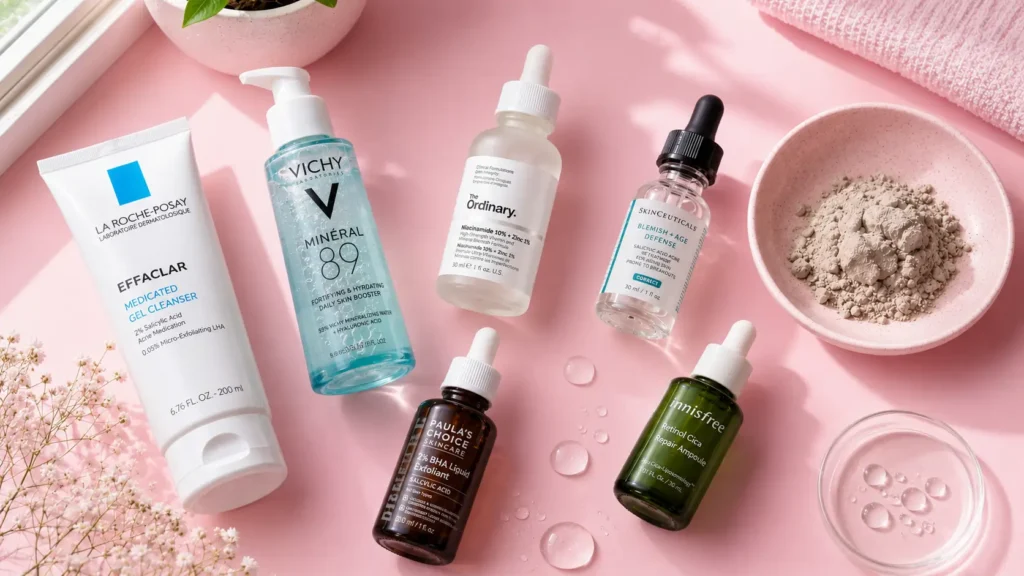
Top Acne-Fighting Ingredients for Oily Skin: Dermatologist-Recommended Picks in 2026
Acne affects roughly 50 million people in the United States every year, making it the most common skin condition dermatologists treat. If your skin is also oily — shiny by noon, prone to clogged pores, resistant to whatever miracle serum went viral last month — the frustration tends to double. You are not just managing breakouts; you are managing breakouts and a surface that seems to work against every product you put on it.
Here is the part most oily-skin routines get wrong: the instinct to strip, scrub, and dry out the skin usually backfires. Aggressive cleansing and harsh astringents can damage the skin barrier, and a damaged barrier often responds by producing more oil, not less. Oil isn’t the enemy. Excess, trapped oil — mixed with dead skin cells and bacteria inside a pore — is.
This guide breaks down the ingredients that have evidence supporting their use for oily, acne-prone skin: salicylic acid, benzoyl peroxide, niacinamide, azelaic acid, retinoids, zinc PCA, sulfur, and clay.
For each one, you will find what it does, how strong a formula you actually need, who should be cautious, and how it fits alongside the others — not a list of products to buy, but the ingredient-level knowledge to choose your own with confidence.
Want the bigger picture beyond acne? Our guide to the ingredients that actually work breaks down the actives that are worth your money for every skin type.
If your skin is oily in some areas and dry or normal in others, this approach may need adjusting — see a routine built for combination skin instead.
Why Oily Skin Breaks Out More Often (The Oil-Acne Connection)
What Causes Excess Sebum Production
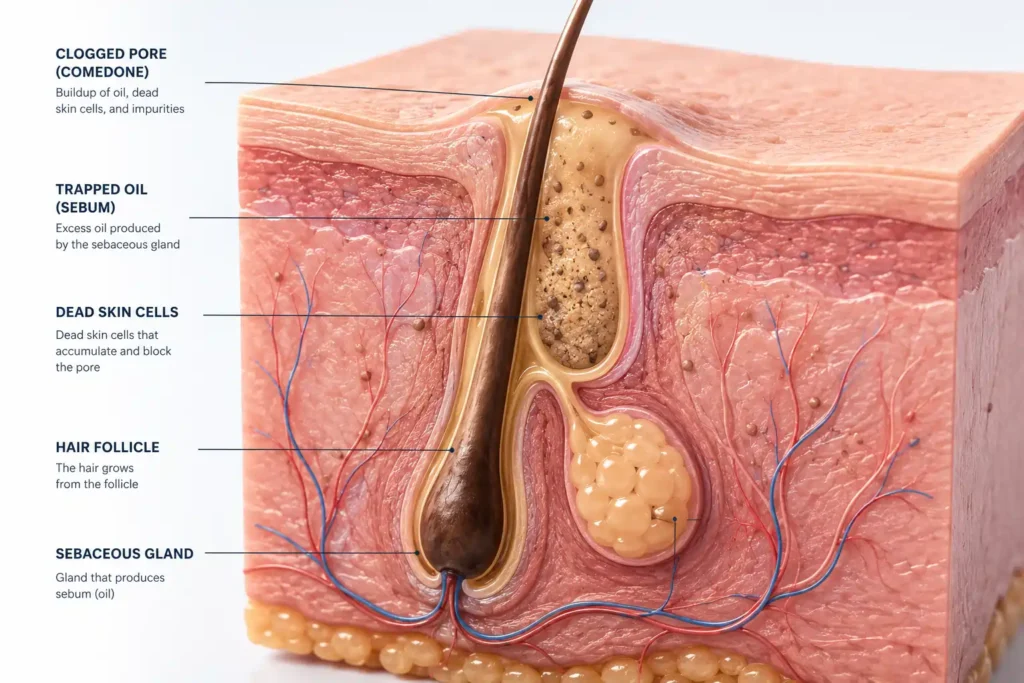
Sebum is the oily substance produced by sebaceous glands attached to hair follicles. It is not inherently bad — it helps waterproof the skin and keep it flexible. Acne develops when several factors converge: androgen hormones stimulate the sebaceous glands to produce more oil than the skin needs, dead skin cells shed abnormally inside the follicle instead of rising cleanly to the surface, and Cutibacterium acnes (the bacterium long associated with acne, formerly called Propionibacterium acnes) proliferates in that oxygen-poor, oil-rich environment.
Genetics influence how sensitive your sebaceous glands are to hormonal signals, which is part of why acne tends to run in families. Environmental factors — humidity, occlusive products, friction from masks or helmets — can compound the problem, but they are rarely the root cause on their own.
How Trapped Oil, Dead Skin Cells, and Bacteria Clog Pores
A pore becomes a comedone (the clinical term for a clogged pore, whether it shows up as a blackhead or a whitehead) when the follicle opening narrows faster than the oil and dead skin inside it can clear.
Once a comedone forms, the trapped material creates an environment where C. acnes thrives, and the immune system responds to that bacterial activity with inflammation — which is what turns a simple clogged pore into a red, tender papule or pustule.
This is why effective acne care usually targets more than one mechanism at once: clearing the pore (exfoliation), reducing bacteria and inflammation (antibacterial and anti-inflammatory agents), and slowing the abnormal shedding that starts the cycle (retinoids).
Myth-Busting: Why Harsh Cleansing Makes Oily Acne Worse
It is tempting to treat oily skin like a problem to be scrubbed away. But the skin barrier — the outermost layer that keeps water in and irritants out — does not distinguish between “excess” oil and the oil it needs to function. Strip that barrier with harsh sulfates, alcohol-heavy toners, or abrasive scrubs, and the skin often compensates by ramping up oil production and becoming more reactive to every other product in your routine.
The Mayo Clinic notes that gentle, consistent care — not aggressive stripping — is what allows acne treatments to actually work, since irritated skin is less tolerant of active ingredients, not more receptive to them.
Salicylic Acid (BHA) — The Pore-Clearing MVP for Oily Skin
What is Salicylic acid?
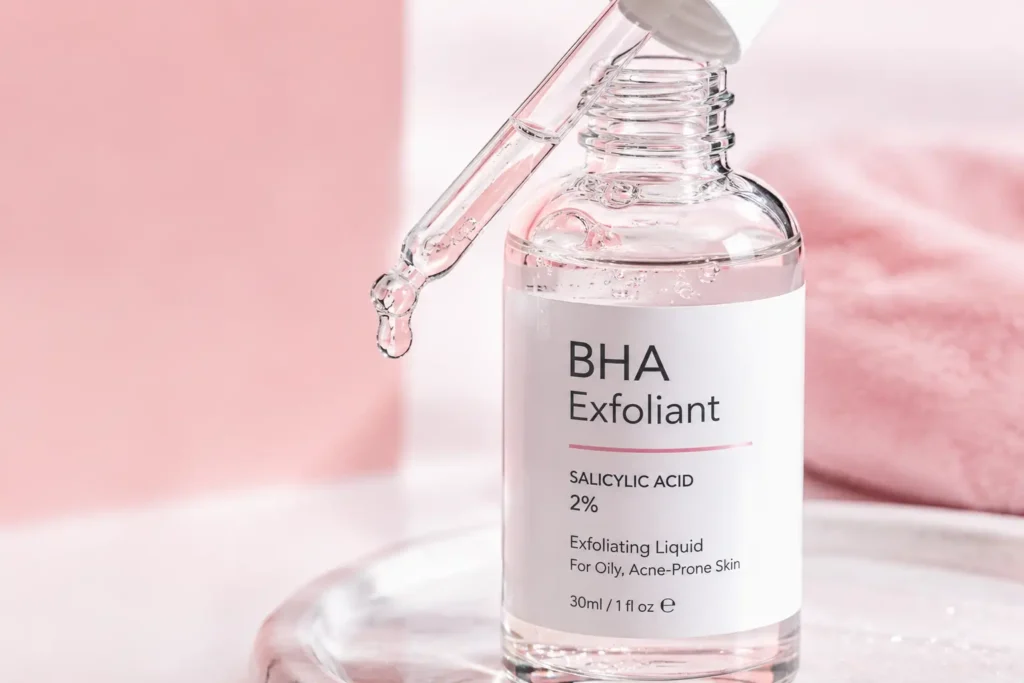
Salicylic acid is a beta hydroxy acid (BHA) derived from willow bark, though most skincare formulations use a synthesized version. It is one of the most widely available over-the-counter acne ingredients and a longstanding staple in oily-skin routines.
How Salicylic Acid Works
Unlike alpha hydroxy acids (AHAs), which are water-soluble and work primarily on the skin’s surface, salicylic acid is oil-soluble. That means it can penetrate into the sebum-filled pore lining itself, where it loosens the bonds between dead skin cells and helps break down the debris that forms blackheads and whiteheads. This is the core reason it is so consistently recommended for oily, congested skin: it goes where the oil is.
Who benefits from Salicylic acid?
People with blackheads, whiteheads, and mild inflammatory acne, especially those with oilier skin types that tolerate exfoliating acids reasonably well.
Who should avoid Salicylic acid?
People with very dry, thin, or reactive skin, and anyone with a salicylate allergy or aspirin sensitivity should check with a physician first, since salicylic acid is chemically related to aspirin.
Recommended concentrations of Salicylic acid
Over-the-counter formulations typically range from 0.5% to 2%. According to a 2024 clinical summary of the American Academy of Dermatology’s acne guideline, this 0.5%–2% range is standard for leave-on and rinse-off OTC products, while higher concentrations (10%–30%) are reserved for in-office chemical peels performed by trained professionals. Beginners generally do best starting at the lower end of that range, two to three times per week, and building up as tolerated.
Cleanser vs. leave-on treatment
A salicylic acid cleanser has limited contact time with the skin — it is rinsed off within seconds — so its exfoliating effect is milder. A leave-on toner, serum, or spot treatment stays on the skin and has more time to work into the pores, making it the more effective format for clearing congestion, though it’s also the one most likely to cause dryness or irritation if overused.
Compatibility of Salicylic acid
Salicylic acid pairs well with niacinamide and lightweight, noncomedogenic moisturizers. It is best not to layer benzoyl peroxide or retinoids directly, since combining multiple exfoliating or drying actives at once increases the risk of irritation without necessarily improving results.
Evidence strength of Salicylic acid
The 2024 guidelines of the American Academy of Dermatology give salicylic acid a conditional recommendation with low certainty of evidence — meaning it can be a reasonable option, particularly for milder or comedonal acne, but the supporting research base is smaller than for benzoyl peroxide or topical retinoids, which carry strong recommendations.
Salicylic acid is only one piece of the exfoliation puzzle. See our full comparison of exfoliation methods for every skin type to decide what belongs in your routine alongside it.
Benzoyl Peroxide — The Bacteria-Fighting Powerhouse
What is Benzoyl Peroxide?
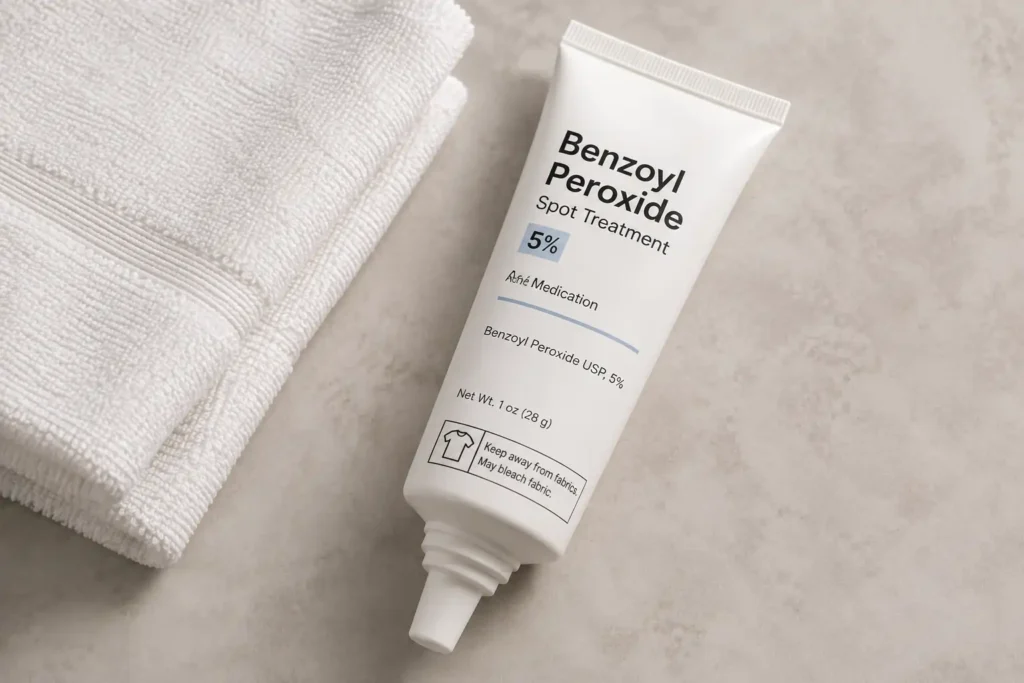
Benzoyl peroxide is an antibacterial and mildly exfoliating compound that has been a first-line acne treatment for decades, available both over the counter and in prescription-strength combination products.
How does benzoyl peroxide work?
Benzoyl peroxide releases oxygen into the pore, creating an environment hostile to C. acnes, which thrives in oxygen-free conditions. It also has a mild keratolytic (skin-shedding) effect that helps clear debris from pores, and it reduces inflammation associated with active breakouts. Because it works through oxidation rather than a targeted biological pathway, bacteria cannot develop resistance to it — which is precisely why dermatologists often combine it with topical or oral antibiotics.
Who benefits from Benzoyl peroxide?
Anyone with inflammatory acne — red, swollen papules and pustules, not just blackheads — tends to see the clearest benefit, since benzoyl peroxide’s primary strength is antibacterial and anti-inflammatory rather than purely exfoliating.
Who should avoid Benzoyl peroxide?
People with very sensitive or already compromised skin barriers may find it overly drying at higher strengths. It can also bleach fabric, towels, and hair, so application technique matters.
How to know if benzoyl peroxide is too strong?
Formulations commonly range from 2.5% to 10%. Research comparing these strengths has repeatedly found that higher percentages are not necessarily more effective — 2.5% and 5% formulations often perform comparably to 10% for many users, with substantially less dryness and irritation.
Starting at 2.5%–5% and applying once daily, then adjusting frequency based on tolerance, is a reasonable approach for most people rather than assuming stronger is faster.
Side Effects of Benzoyl Peroxide
Evidence strength of Benzoyl Peroxide
The American Academy of Dermatology’s 2024 guideline gives benzoyl peroxide a strong recommendation, placing it — along with topical retinoids — among the best-supported topical acne treatments available, whether used alone or combined with a retinoid or antibiotic.
Niacinamide — Oil Control Without the Irritation
What is Niacinamide?
Niacinamide, also called nicotinamide, is the amide form of vitamin B3. It has become one of the most studied ingredients in cosmetic dermatology, valued for its oil-regulating, anti-inflammatory, and barrier-supporting effects.
How does niacinamide work?
Niacinamide reduces sebum output by modulating sebaceous gland activity, rather than simply absorbing oil sitting on the skin’s surface, as a mattifying powder would.
A frequently cited double-blind, placebo-controlled trial found that topical 2% niacinamide measurably reduced sebum excretion rates over eight weeks in both Japanese and Caucasian study populations.
Separately, niacinamide supports the skin’s barrier by encouraging the production of ceramides, ex the lipids that help skin retain moisture and resist irritation — a useful trait for anyone also using drying acne actives like benzoyl peroxide.
Curious which one your barrier actually needs? Our breakdown of ceramide vs. niacinamide for barrier repair settles the debate.
Who benefits from Niacinamide?
People with oily, acne-prone skin who also deal with barrier sensitivity, redness, or irritation from stronger actives. It is a good entry point for beginners who want oil control without the dryness risk of salicylic acid or benzoyl peroxide.
Who should avoid Niacinamide?
True intolerance of Niacinamide is uncommon, but very high concentrations (well above 10%) have occasionally been associated with flushing or mild irritation in sensitive individuals.
What is the ideal concentration of Niacinamide?
Clinical research most consistently supports the 2%–5% range for sebum regulation and anti-inflammatory benefits. Formulations marketed at 10% have become common, but evidence that 10% meaningfully outperforms 5% specifically for oil control is limited — a well-formulated 2%–5% product is often sufficient for daily use.
Why does niacinamide pair well with other actives?
Niacinamide’s anti-inflammatory and barrier-supporting properties make it a natural complement to salicylic acid and benzoyl peroxide, both of which can be drying. Using niacinamide in the morning while reserving stronger exfoliating or antibacterial actives for the evening is a common, well-tolerated approach.
Its Evidence strength
Niacinamide is not part of the AAD’s core acne guideline recommendations in the same way benzoyl peroxide or retinoids are, but it has a solid and growing body of controlled clinical research specifically around sebum reduction, making it a reasonable supporting ingredient rather than a standalone acne treatment.
If your oily skin also runs sensitive, formulation matters as much as concentration. See our picks for niacinamide serums for sensitive skin before you buy.
Azelaic Acid — The Gentle Multitasker for Breakouts and Redness
What is Azelaic acid?
Azelaic acid is a naturally occurring dicarboxylic acid found in grains like wheat, rye, and barley, available in over-the-counter formulations as well as higher-strength prescription creams and gels.
How does azelaic acid work?
Azelaic acid has antibacterial activity against C. acnes, mild comedolytic (pore-clearing) properties, and anti-inflammatory effects. It also inhibits tyrosinase, an enzyme involved in melanin production, which is why it is frequently recommended for the dark marks and redness that can linger after a breakout clears — not just the active blemish itself.
Who benefits from Azelaic acid?
People with both acne and post-inflammatory hyperpigmentation or persistent redness, and those with sensitive-but-oily skin who find salicylic acid or benzoyl peroxide too harsh.
Dealing with lingering dark marks as much as active breakouts? Our dedicated guide to azelaic acid for hyperpigmentation goes deeper on dosing and timelines.
Who should avoid Azelaic acid?
Azelaic acid is generally well tolerated, though it can cause mild tingling, itching, or dryness on first use, particularly at higher concentrations.
Typical OTC strength of Azelaic acid
Over-the-counter formulations are commonly available around 10%, with prescription options reaching 15%–20%. New users typically start with a lower-frequency introduction — every other day for the first one to two weeks — before moving to daily use.
Which strength of azelaic acid is best?
The 2024 AAD acne guideline gives azelaic acid a conditional recommendation with moderate certainty of evidence, reflecting solid but somewhat more limited research compared to benzoyl peroxide or retinoids, while still supporting its use as part of a combination routine.
Torn between azelaic acid & niacinamide? Our head-to-head comparison of niacinamide vs. azelaic acid breaks down which one best fits your skin’s specific concerns.
Retinoids (Adapalene and Retinol) — Preventing Pores From Clogging in the First Place
What are Retinoids?
Retinoids are vitamin A derivatives. Adapalene and tretinoin are FDA-approved topical retinoids specifically indicated for acne, while retinol is a milder, over-the-counter derivative more commonly marketed for general anti-aging and texture benefits.
How do retinoids work?
Retinoids normalize the way skin cells shed inside the follicle, which reduces the formation of microcomedones — the earliest, invisible stage of a clogged pore — before they ever become a visible blackhead or pimple. This makes retinoids fundamentally preventive rather than purely reactive: they are working on breakouts that have not happened yet, which is why consistent use over several weeks matters more than spot-treating an active pimple.
Who benefits from Retinoids?
Anyone dealing with recurring blackheads, whiteheads, and mild-to-moderate inflammatory acne, especially as a long-term maintenance ingredient rather than a quick fix.
Who should avoid Retinoids?
Retinoids are not recommended during pregnancy or breastfeeding without medical guidance. People with very reactive or compromised skin barriers should introduce them slowly.
OTC adapalene vs. prescription options
Adapalene 0.1% gel became available without a prescription in the United States in 2016, making it the first new over-the-counter acne active ingredient approved by the FDA in more than three decades. It remains one of the best-studied, best-tolerated topical retinoids for acne.
Prescription-strength options include higher-concentration adapalene, tretinoin, tazarotene, and trifarotene, along with fixed-dose combinations pairing a retinoid with benzoyl peroxide for people who need a stronger, multi-mechanism approach.
Easing in without irritation
Starting two to three nights a week, applying a pea-sized amount to a fully dry face, and following with a noncomedogenic moisturizer (a technique sometimes called buffering) all reduce the redness, peeling, and dryness that commonly occur in the first several weeks. Most people need eight to twelve weeks of consistent use before seeing the full benefit.
Evidence strength
Topical retinoids carry a strong recommendation in the AAD’s 2024 acne guideline, on the same tier as benzoyl peroxide, and are described as a cornerstone of acne treatment for their comedolytic and anti-inflammatory effects.
Want the deeper science behind that cell turnover? Our explainer on how retinol works at a cellular level unpacks the mechanism in more detail.
Zinc PCA and Sulfur — Underrated Oil-Absorbing Ingredients
What’s Zinc PCA, and what’s its role?
Zinc PCA is a salt form of zinc combined with pyrrolidone carboxylic acid, a naturally occurring humectant. In skincare formulations, it is included for its seboregulating (oil-balancing) and mild antibacterial properties, and it is often better tolerated than harsher oil-control ingredients because it does not have a significant exfoliating or drying effect on its own.
Sulfur for very oily, breakout-prone skin
Sulfur has a long history in acne treatment, valued for antibacterial and mild keratolytic effects that help dry out active blemishes. It is FDA-recognized as safe and effective in OTC acne products at concentrations of 3%–10%, often paired with resorcinol. The trade-off is a distinctive sulfur smell that some formulations mask more successfully than others, and it can be drying if overused.
Where do Zinc PCA & Sulfur ingredients typically show up?
Zinc PCA is common in toners, serums, and mattifying moisturizers aimed at oily skin. Sulfur is more often found in spot treatments and masks intended for occasional, targeted use on active breakouts rather than all-over daily application.
Clay and Kaolin — A Natural Ingredient for Mattifying Oily Skin
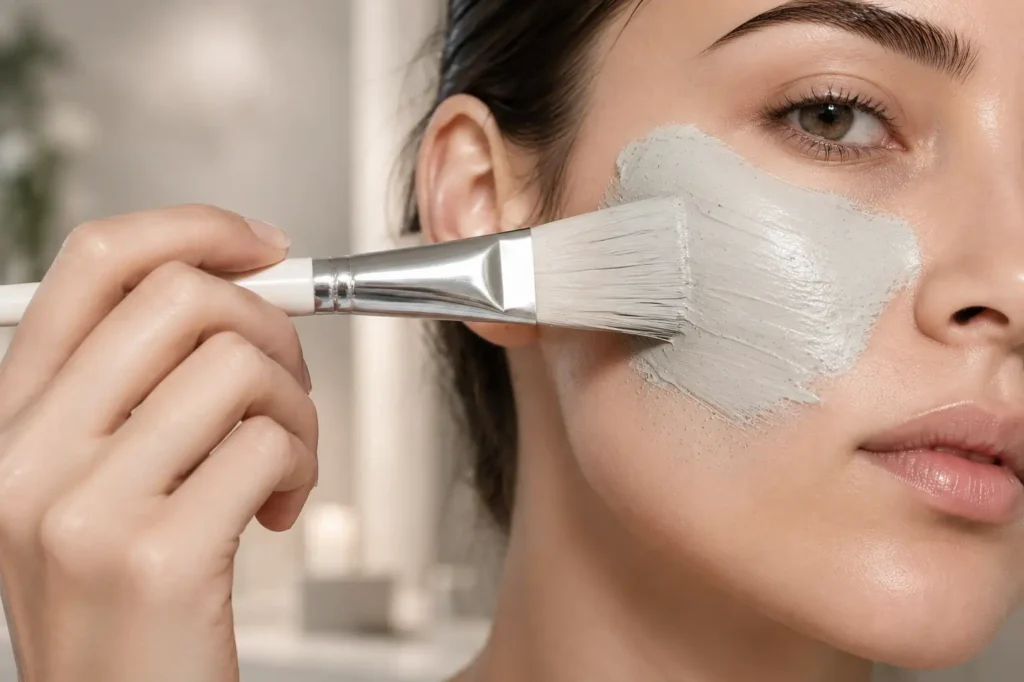
How do clay masks absorb oil?
Clays like kaolin and bentonite have a porous, negatively charged structure that binds to and absorbs excess surface oil and impurities without the exfoliating action of an acid. This makes clay masks a useful once- or twice-weekly addition for oily skin, rather than a daily treatment.
Kaolin vs. bentonite for sensitivity-prone oily skin
Kaolin is a milder clay that absorbs oil while remaining relatively gentle, making it a reasonable choice for sensitivity-prone oily skin. Bentonite has a stronger absorptive and swelling capacity, which can make it more effective for very oily skin but also more likely to feel tight or drying if left on too long or used too frequently.
How often to use clay masks?
One to two times per week is a reasonable starting frequency for most oily, acne-prone skin. Overuse can strip the skin barrier in the same way harsh cleansing does, which — as covered earlier — tends to trigger a rebound in oil production rather than solving the problem.
How to Combine These Ingredients Without Irritating Your Skin
Stacking several active ingredients feels efficient, but oily, acne-prone skin often responds better to a smaller number of well-chosen actives used consistently than to an aggressive multi-step routine.
Safe pairings:
- Niacinamide plus salicylic acid, typically niacinamide in the morning and salicylic acid at night
- Benzoyl peroxide followed by a noncomedogenic moisturizer to offset dryness
- Azelaic acid alongside niacinamide, since both are relatively gentle and anti-inflammatory
Skincare ingredient combinations to avoid stacking in the same application
- Always avoid applying retinoids and benzoyl peroxide at the same time, since benzoyl peroxide can degrade some retinoid formulations, and the combined drying effect is often too much for skin still adjusting to either ingredient. (Alternating morning and night, or alternating nights, is generally better tolerated — and fixed-dose combination products formulated specifically to pair the two, like adapalene-benzoyl peroxide gels, are designed to sidestep this issue.)
- Also avoid multiple exfoliating acids (for example, salicylic acid and a glycolic or lactic acid) layered in the same routine, which increases irritation risk without a proportional increase in benefit
Introducing one skincare active at a time at the start
When starting a new ingredient, patch test on a small area — like the inner forearm or behind the ear — for 24 to 48 hours before applying it to the face. After that, introduce actives one at a time, spaced roughly one to two weeks apart, so that if irritation occurs, it is clear which ingredient caused it.
These pairings are just the starting point. Our guide to layering active ingredients safely walks through a framework you can apply to any combination, not just acne actives.
Ingredients and Habits That Can Trigger Breakouts on Oily Skin
Comedogenic oils and heavy silicones
Certain ingredients are more likely to clog pores in acne-prone individuals, including coconut oil, cocoa butter, and some heavier occlusive silicones. Comedogenicity varies from person to person, but checking ingredient labels — especially in makeup, sunscreen, and hair products that can migrate onto the face — is worth the extra minute.
Not every plant-derived oil behaves the same way on oily skin. Our guide to essential oils for different skin types can help you tell the helpful ones from the pore-clogging ones.
Why noncomedogenic and oil-free labels matter
These labels indicate that a product has been formulated (and sometimes tested) to minimize the potential for pore clogging. They are not regulated with the same rigor as drug claims, so they are not a guarantee, but they are a reasonable filter when choosing moisturizers, sunscreens, and makeup for oily, breakout-prone skin.
Overwashing, harsh scrubs, and hair product transfer
Washing the face more than twice daily, using gritty physical scrubs, and letting styling products, dry shampoo, or conditioner residue drip onto the hairline and jaw are all common, underappreciated contributors to persistent breakouts along the forehead and jawline.
Overwashing is just the start. Check our full list of skincare mistakes you’re making without realizing it to see what else might be working against your routine.
A Simple AM/PM Routine for Oily, Acne-Prone Skin
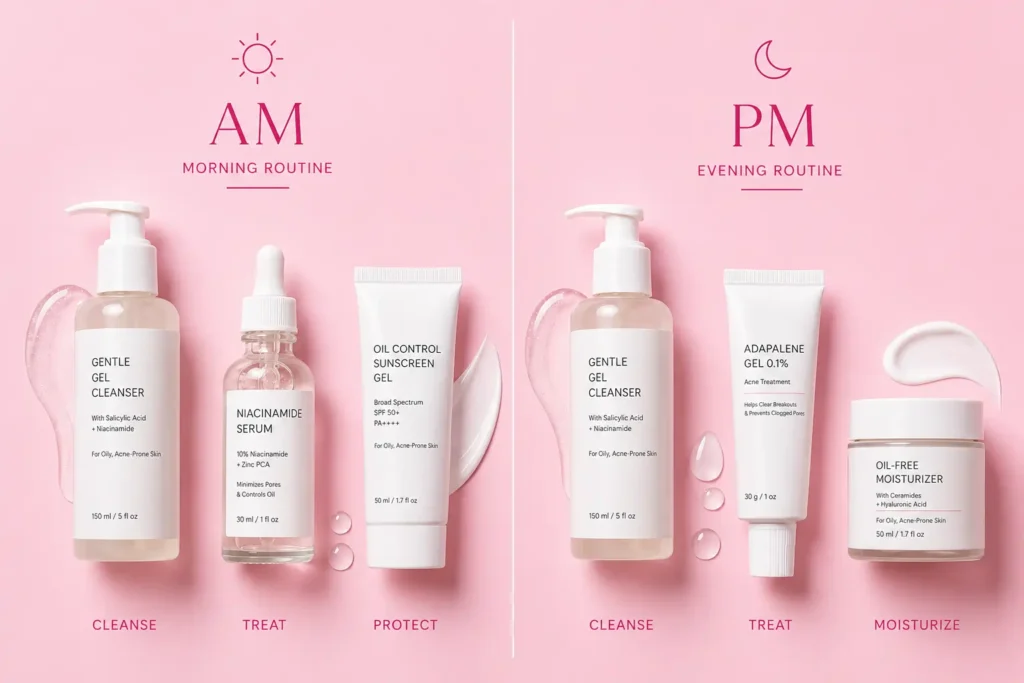
| Time | Step | Purpose |
|---|---|---|
| Morning | Gentle, low-foaming cleanser | Removes overnight oil without stripping the barrier |
| Morning | Niacinamide serum (2%–5%) | Oil regulation, calming, barrier support |
| Morning | Oil-free, noncomedogenic SPF 30+
Still deciding on a formula? Our comparison of physical vs. chemical sunscreen can help you pick one that won’t make you shine. |
Sun protection without added shine or pore-clogging |
| Evening | Same gentle cleanser | Removes sunscreen, sebum, and debris |
| Evening | Salicylic acid or benzoyl peroxide (alternate with retinoid nights) | Pore-clearing and antibacterial action |
| Evening | Lightweight, noncomedogenic moisturizer | Prevents over-drying and barrier disruption |
Not sure which cleanser earns a spot in this routine? Our roundup of cleansers for oily skin that control shine narrows down the options.
Layering order matters as much as the products themselves. Confirm you’re applying everything correctly with our guide to the right nighttime skincare routine order.
Rotating skincare actives across the week
A common, well-tolerated pattern is: salicylic acid or benzoyl peroxide two to three nights per week, a retinoid two to three nights per week, and one „recovery” night of just moisturizer, adjusting frequency based on how the skin tolerates it. This staggered approach reduces the cumulative irritation from applying multiple strong actives every night.
A realistic timeline for skincare ingredients
According to the American Academy of Dermatology, most acne treatments take six to eight weeks to show visible improvement, and three to four months to reach full effect. Stopping a routine after two weeks because nothing is happening is one of the most common reasons people never see results from ingredients that would have worked.
When to See a Dermatologist for Oily, Acne-Prone Skin
Signs OTC ingredients aren’t enough
Deep, painful cystic or nodular acne, breakouts that leave persistent scarring or dark marks, or acne that has not improved after several months of consistent OTC treatment are all signals that it’s time for a professional evaluation rather than continuing to self-treat.
What a board-certified dermatologist can add
Dermatologists can prescribe higher-strength topical retinoids, oral antibiotics, hormonal therapies such as combined oral contraceptives or spironolactone for hormonally driven acne, or oral isotretinoin for severe, scarring, or treatment-resistant acne.
The 2024 AAD guideline specifically notes that combining treatments with different mechanisms of action — rather than relying on a single ingredient — tends to produce better outcomes and helps limit antibiotic resistance when antibiotics are part of the plan.
FAQ: Acne-Fighting Ingredients for Oily Skin
What ingredient is best for oily, acne-prone skin?
Benzoyl peroxide and topical retinoids like adapalene carry the strongest clinical evidence for oily, acne-prone skin, per the American Academy of Dermatology. Niacinamide serum for oily skin is a well-tolerated addition for sebum-regulating support without added irritation. Most dermatologists recommend combining two mechanisms rather than relying on a single ingredient for lasting results.
What are the top 3 acne-fighting ingredients?
Benzoyl peroxide, topical retinoids, and salicylic acid are the top three acne-fighting ingredients backed by strong or conditional AAD recommendations. Benzoyl peroxide targets acne-causing bacteria, retinoids like adapalene prevent clogged pores, and salicylic acid dissolves oil-based buildup inside pores. Together, they address bacteria, cell turnover, and pore-clearing simultaneously.
How to fight acne with oily skin?
Fighting acne on oily skin means clearing pores with salicylic acid or a retinoid, reducing bacteria with benzoyl peroxide, and regulating sebum production naturally with niacinamide, without over-cleansing. Pair actives with a lightweight, noncomedogenic moisturizer and oil-free sunscreen for acne-prone skin, and give any routine six to eight weeks to show results.
What is the best acne treatment for oily skin?
For mild-to-moderate acne, combining benzoyl peroxide or adapalene 0.1 percent over the counter with a noncomedogenic moisturizer offers the strongest evidence-based results. For severe, cystic, or scarring acne, a dermatologist can prescribe stronger prescription retinoids or hormonal therapy. There’s no single best treatment — the right combination depends on acne severity and skin sensitivity.
How to repair oily, acne-prone skin?
Repairing oily, acne-prone skin means restoring the barrier while continuing treatment, not stopping actives. Use a ceramide-rich, noncomedogenic moisturizer, avoid over-exfoliating, and reintroduce actives like salicylic acid gradually if skin feels reactive. Signs you’re over-exfoliating oily skin include tightness, redness, and increased breakouts, which signal it’s time to scale back.
For a full recovery plan, see our step-by-step guide to repairing a damaged skin barrier once your acne treatment is underway.
Which ingredients trigger acne?
Comedogenic ingredients to avoid include coconut oil, cocoa butter, and heavy occlusive silicones, which clog pores in acne-prone skin. Overly harsh, drying products can also trigger a rebound in oil production. Checking labels for noncomedogenic or oil-free claims on moisturizers, sunscreen, and makeup helps limit skincare ingredients that clog pores.
Is niacinamide good for acne?
Yes. Clinical studies show topical niacinamide, typically at 2 to 5 percent, reduces sebum production and calms inflammation associated with acne. It’s not a standalone cure but works well alongside salicylic acid or benzoyl peroxide. Niacinamide also supports barrier repair, making it a gentle option for beginners starting active ingredients for the first time.
Conclusion: Acne-Fighting Ingredients for Oily Skin
Oily, acne-prone skin does not respond to a single miracle ingredient — it responds to a targeted combination: salicylic acid or benzoyl peroxide to clear what’s already clogged, niacinamide or azelaic acid to calm inflammation and regulate oil, and a retinoid working quietly in the background to stop the next breakout before it starts. The myth worth retiring for good is that oily skin needs to be stripped into submission; hydration and gentleness are not optional extras, they are part of what makes the active ingredients work in the first place.
If you take one thing from this guide, let it be this: pick one or two actives, patch test, introduce them slowly, and give the routine two full months before deciding whether it’s working. Consistency, not intensity, is what actually clears oily, acne-prone skin over time.

About Subhan Usafzai
Evidence-Based Skincare Educator & Formulation Specialist
I'm Subhan Usafzai (Fazli Subhan), an Evidence-Based Skincare Educator and Formulation Specialist. My background includes first-hand experience as a technician and research support in skin departments across tertiary military hospitals since 2006, and since 2008 I've focused on researching and translating clinical and formulation science into practical, evidence-based guidance. My formal training includes Coursera's Introduction to Cosmetic and Skincare Science and the four-course Introduction to Cosmetic Science and Ingredients specialization (Cosmetic Formulation Science, Cosmetic Product Development, and Quality Control and Regulatory in Cosmetic Science), authorized by Olay. Every article I write is checked against current research and reviewed by our medical team before publishing.
✅ Medically reviewed by Dr. Muhammad Khurram Ahmad, MD, Board-Certified Dermatologist · 📅 Last updated: July 2026
Medical Disclaimer
For Educational Purposes Only: This article is written by Subhan Usafzai, an Evidence-Based Skincare Educator and Formulation Specialist, for educational and informational purposes only. The information draws on scientific research, peer-reviewed studies, and dermatological literature available as of July 2026.
Not Medical Advice: This content does not constitute medical advice, diagnosis, or treatment. It is not a substitute for consultation with a qualified healthcare professional or dermatologist.
Individual Results May Vary: Skin conditions and responses to skincare products vary according to individual characteristics, skin type, hormonal factors, and environmental exposure.
Consult Your Healthcare Provider: Seek professional guidance before changing your skincare regimen, particularly during pregnancy or breastfeeding, or if you have a diagnosed skin condition, take medication, have sensitive skin, or receive dermatological treatment.
Product Safety: Consider patch testing new products. Discontinue use if irritation or an adverse reaction occurs, and seek medical advice when needed.
Affiliate Disclosure
Amazon Associates Disclosure: As an Amazon Associate I earn from qualifying purchases.
Editorial Independence: Affiliate relationships do not determine our product reviews or recommendations. We aim to provide balanced, research-informed information to help readers make informed skincare choices.
Supporting Glow Guide Hub: Qualifying purchases through affiliate links may earn us a commission at no additional cost to you.