
Essential Oils for Different Skin Types: Your Complete Guide
Last Tuesday, a lady came to me with her third chemical burn in six months. All from essential oils. She’d been following influencer advice, applying undiluted tea tree oil directly to breakouts. Her story isn’t unique—over 68% of US and EU consumers now prefer natural skincare, but here’s what nobody talks about: not all essential oils suit every skin type, and the wrong choice can do more harm than good.
After 18 years in medicine and specialized training in cosmetic science, I’ve seen this pattern repeat itself. People grab whatever essential oil promises glowing skin without considering their unique skin chemistry. It’s like wearing someone else’s prescription glasses—technically harmless, but you’re not going to see clearly.
Your skin type determines everything. What works miracles for your oily-skinned friend might turn your dry complexion into a flaky mess. Regional regulations matter too—the EU’s stricter allergen labeling requirements mean you’ll find different formulations than what’s available in the US, and both systems have their blind spots.
This guide cuts through the confusion. I’ll walk you through identifying your actual skin type (spoiler: you might be wrong about yours), match you with essential oils that work with your skin’s natural chemistry, show you how to safely integrate them into morning and evening routines, and point you toward brands that meet rigorous quality standards in both the USA and EU markets.
We’ll cover proper dilution ratios, carrier oil pairings, and safety protocols backed by dermatological research.
No fluff. No miracle promises. Just practical, science-backed guidance from someone who’s spent nearly two decades bridging medical practice with cosmetic formulation science.
Understanding Your Skin Type Before Using Essential Oils
Honestly? Most people guess their skin type and get it wrong. I did too, for years, until I learned the difference between genuinely oily skin and dehydrated skin producing excess sebum as a defense mechanism.
Getting this right isn’t vanity—it’s the foundation of effective skincare and the single most important factor when choosing essential oils. Use the wrong oil on sensitive skin, and you’re looking at inflammation, contact dermatitis, or worse.
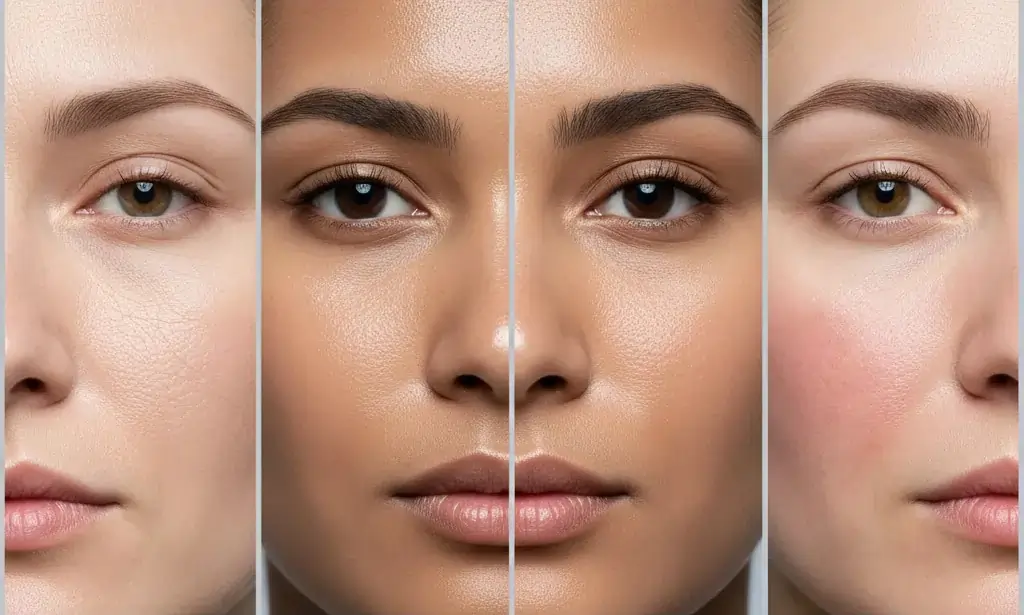
The 5 Main Skin Types: Dry, Oily, Combination, Sensitive, Mature
Dry skin feels tight after cleansing and shows flakiness, especially around the nose and cheeks. You’ll notice fine lines more prominently, and your skin drinks up moisturizer within minutes.
Oily skin, by contrast, develops shine within a few hours of cleansing—particularly across the T-zone—and you’re prone to enlarged pores and breakouts.
Combination skin plays both sides: oily through the center panel of your face (forehead, nose, chin) while your cheeks stay normal or even dry.
Sensitive skin reacts. To everything. New products, temperature changes, stress—it responds with redness, stinging, or irritation.
Mature skin shows decreased elasticity, deeper wrinkles, and often becomes drier as natural oil production slows after menopause.
Why Using the Wrong Oil Can Cause Irritation or Breakouts
Here’s where it gets interesting. Essential oils are highly concentrated plant compounds—we’re talking 50 to 100 times more potent than the plant material itself.
A 2019 study published in the Journal of Clinical and Aesthetic Dermatology found that improper use of essential oils was associated with a 26% increase in cosmetic-related contact dermatitis cases between 2015 and 2018.
Comedogenic oils (those that clog pores) can trigger breakouts in acne-prone skin within 48 to 72 hours. Irritating oils on sensitive skin provoke immediate inflammatory responses. Even “gentle” oils like lavender can cause photosensitivity reactions if you’re not careful about sun exposure timing.
Quick Self-Assessment Tips (The Blotting Test and Weather Reactions)
Try the blotting paper test: cleanse your face, wait 30 minutes without applying products, then press blotting paper to different areas. Heavy oil absorption across your entire face signals oily skin. Oil only in the T-zone? Combination. Little to no oil? You’re dry.
Pay attention to weather reactions too. Does winter leave your skin feeling raw and tight? Dry. Does summer heat make you shiny by noon? Oily.
Does your skin barely change with the seasons? Lucky you—that’s normal skin. Redness or stinging when temperatures shift dramatically? Sensitive skin checking in.
Best Essential Oils for Dry & Sensitive Skin
Dry, sensitive skin types require oils that calm inflammation, repair the moisture barrier, and hydrate without triggering reactions.
You’re looking for anti-inflammatory compounds and fatty acid-rich options that strengthen your skin’s protective layer. I recommend starting conservatively here—these skin types don’t forgive experimentation well, and what works for others might leave you red-faced (literally).
Top Oils: Lavender, Roman Chamomile, Rose Absolute, Sandalwood
Lavender (Lavandula angustifolia) contains linalool and linalyl acetate, compounds with proven anti-inflammatory and skin-calming properties. Research from the International Journal of Cosmetic Science demonstrates its effectiveness in reducing skin irritation markers by up to 40%.
Roman chamomile (Anthemis nobilis) works similarly, with bisabolol as its star compound—dermatologists frequently recommend it for eczema and rosacea management.
Rose absolute delivers significant hydration through its high fatty acid content, while sandalwood (Santalum album) offers both anti-inflammatory benefits and a grounding scent that makes your evening routine feel luxurious rather than clinical.
Key Skincare Benefits of Top Oils: Anti-Inflammatory, Barrier-Repairing, Hydrating
These oils reduce redness and inflammation through multiple pathways—some inhibit pro-inflammatory cytokines, others strengthen ceramide production in your skin’s lipid barrier. According to Dr Leslie Baumann’s research at the University of Miami, essential oils with high alcohol content (such as those found in lavender) can reduce transepidermal water loss by supporting barrier function.
They hydrate by preventing moisture from escaping rather than adding water—think of them as gatekeepers for your skin’s natural hydration. Barrier repair is supported by fatty acids and phytosterols, which help rebuild the protective layer your skin needs.
Ideal Carrier Oils: Jojoba, Avocado, Sweet Almond
Jojoba oil mimics your skin’s natural sebum so closely that your skin recognizes it as familiar rather than foreign. Avocado oil contains vitamins A, D, and E, plus oleic acid—ideal for deeply nourishing dry patches. Sweet almond oil absorbs quickly despite its richness, making it ideal for those who dislike a greasy feel.
Never use essential oils undiluted. Never. Your carrier oil dilutes the concentration while providing its own beneficial fatty acids, vitamins, and skin-nourishing compounds.
How to Integrate Into AM/PM Routines (Nighttime Facial Oil Blend)
Morning routine: After cleansing and toning, mix 1 drop of lavender essential oil with half a teaspoon of jojoba oil in your palm. Pat gently onto damp skin, then follow with moisturizer and SPF. Damp skin improves absorption, and SPF is non-negotiable.
Evening routine: This is where you can go richer. Cleanse, apply your serums, then create a custom facial oil by blending 2 drops of roman chamomile and 1 drop of sandalwood into 1 teaspoon of avocado oil. Warm between your palms and press into your skin. The overnight repair process will thank you.
Best Essential Oils for Oily & Acne-Prone Skin
Counterintuitive truth: oily skin needs oil. The right oils, anyway. When you strip your skin with harsh cleansers, it panics and produces even more sebum.
Smart essential oil selection helps regulate that overproduction while fighting acne-causing bacteria. Your goal isn’t to eliminate oil—it’s to balance it and prevent the inflammatory cascade that turns a clogged pore into a painful breakout.
Top Oils: Tea Tree, Clary Sage, Geranium, Neroli
Tea tree oil (Melaleuca alternifolia) is the gold standard here, backed by decades of research. A comparative Australian study published in the Medical Journal of Australia found that 5% tea tree oil gel performed comparably to 5% benzoyl peroxide for acne treatment, with significantly fewer side effects.
The terpinen-4-ol compound in tea tree oil demonstrates powerful antibacterial activity against Propionibacterium acnes—the bacteria primarily responsible for inflammatory acne.
Clary sage (Salvia sclarea) regulates sebum production through its effect on hormonal pathways, making it particularly useful for hormonal acne around the jawline and chin. Geranium balances while also tightening pores, and neroli brings antibacterial properties without the potential harshness of tea tree.
Key Benefits: Sebum-Regulating, Antibacterial, Pore-Tightening
These oils work through multiple mechanisms. Tea tree disrupts bacterial cell membranes, preventing infection and reducing the risk of inflamed cysts. Clary sage influences sebaceous gland activity through its interaction with hormone receptors in the skin—research from the Australasian Journal of Dermatology demonstrates measurable reductions in sebum production after consistent use.
Geranium’s astringent properties temporarily tighten pores, while its antibacterial compounds prevent infection. You’re not just treating existing acne; you’re preventing future breakouts by addressing the root causes: excess oil, bacteria, and inflammation.
Ideal Carrier Oils: Grapeseed, Hemp Seed, Rosehip
Grapeseed oil may seem inappropriate for oily skin, but it’s actually lightweight and non-comedogenic, with a rating of 1 on the 0-5 comedogenicity scale. Hemp seed oil balances beautifully—it’s rich in linoleic acid, which research suggests is deficient in acne-prone skin. Rosehip oil naturally contains vitamin A (retinol), which supports cell turnover and fades post-inflammatory hyperpigmentation.
For more on hyperpigmentation, read our tutorial best skincare ingredients for hyperpigmentation.
All three absorb quickly without leaving that heavy film that makes oily skin feel worse.
Routine Tips: Spot Treatments, Toner Additions, Weekly Clay Masks
Spot treatment: Mix 1 drop of tea tree oil with a drop of carrier oil on a cotton swab. Apply directly to active breakouts after cleansing, before moisturizing. Don’t do this more than twice daily—even tea tree can irritate with overuse.
Toner addition: Create a balancing facial mist by adding 3 drops of geranium and 2 drops of clary sage to 2 ounces of witch hazel or rose water. Shake before each use. This refreshes throughout the day while delivering sebum-regulating compounds.
Weekly clay mask boost: Add 2 drops of tea tree oil to your favorite bentonite or kaolin clay mask. The clay absorbs excess oil while the essential oil prevents bacterial growth in your temporarily vulnerable pores.
Best Essential Oils for Combination & Normal Skin
Combination skin is often overlooked in skincare advice—everyone focuses on extreme skin types. But treating different zones of your face with different products gets exhausting fast. You need essential oils that balance rather than push your skin in either direction, helping maintain the equilibrium your combination skin constantly strives to achieve. Normal skin types can use these same oils to maintain their naturally balanced state.
Top Oils: Frankincense, Ylang Ylang, Petitgrain
Frankincense (Boswellia carterii) is the diplomat of essential oils. Its boswellic acids reduce inflammation without overdrying and support healthy cell turnover across all skin types. Research demonstrates that it can strengthen skin elasticity equally across both dry and oily zones.
Ylang ylang (Cananga odorata) regulates sebum production—it tells oily areas to calm down and dry areas to produce more. Petitgrain, extracted from bitter orange leaves, offers gentle astringent properties that refine pores in your T-zone without stripping moisture from your cheeks.
Key Benefits: pH-Balancing, Gentle Toning, Radiance-Boosting
These oils work with your skin’s natural pH rather than fighting it. Healthy skin maintains a slightly acidic pH around 4.5 to 5.5—this “acid mantle” protects against bacteria and moisture loss. Combination skin often shows pH variation across different zones; frankincense and ylang ylang help normalize this variation.
The gentle toning effect comes from their mild astringent properties—they tighten pores and refine texture without the harshness of alcohol-based toners. Radiance boosting happens through improved circulation and the antioxidant compounds that protect against environmental damage and dullness.
Versatile Carrier Pairings: Jojoba (Mimics Skin’s Sebum)
Jojoba deserves its own spotlight here. Technically, a liquid wax rather than an oil, jojoba’s molecular structure closely resembles human sebum. Your skin can’t tell the difference, so it absorbs beautifully without triggering excess oil production.
For combination skin, this is perfection—it hydrates dry cheeks without making your T-zone greasier. Mix any of these essential oils with jojoba, and you’ve got a universal facial oil that works across all zones.
Simple Routine Integration: Add to Moisturizer or Facial Mist
The beauty of combination skin-friendly oils is their versatility. Add 2 drops of frankincense to your regular moisturizer—just mix it in your palm before applying. This customizes your existing product without requiring a complete routine overhaul.
Create a daily facial mist by combining 4 drops of ylang ylang and 3 drops of petitgrain in 2 ounces of rose water or neroli hydrosol. Keep it in the fridge for an extra cooling effect. Spritz after cleansing, before serums, or anytime your skin needs a refresh. The fine mist distributes oils evenly across both oily and dry zones.
Best Essential Oils for Mature & Aging Skin
Let me be clear about aging skin: it’s not a problem to fix. It’s skin that needs different support as our hormones shift, collagen production slows, and cellular turnover decreases from 28 days to 45-60 days.
Smart essential oil selection supports these natural processes, providing antioxidant protection, encouraging cell renewal, and strengthening the thinner, more fragile skin that comes with age. You’re not chasing youth—you’re supporting healthy, resilient skin.
For more on Skin Renewal, read our post: Cellular Skin Renewal Tips
Top Oils: Carrot Seed, Myrrh, Patchouli, Rose
Carrot seed oil (Daucus carota) is criminally underrated. Packed with carotenoids and vitamin A precursors, it stimulates cell regeneration and provides serious antioxidant protection. European aromatherapists have used it for decades, though it’s only recently gained traction in US markets.
Myrrh (Commiphora myrrha) has been treasured for thousands of years—ancient Egyptians weren’t wrong. Its sesquiterpenes support collagen synthesis and tissue regeneration. Patchouli (Pogostemon cablin) might smell like your hippie phase, but it’s phenomenal for promoting new cell growth and tightening sagging skin. Rose, whether absolute or otto, offers unmatched regenerative properties due to its high vitamin C content and its ability to improve skin elasticity.
Key Benefits: Collagen Support, Antioxidant Protection, Cell Renewal
Collagen production decreases about 1% per year after age 30. By menopause, that decline accelerates. Essential oils can’t reverse this (nothing can), but certain compounds in myrrh and carrot seed oil support your skin’s remaining collagen synthesis pathways. According to research in Dermatology Research and Practice, topical application of antioxidant-rich essential oils can measurably improve collagen density in mature skin after 12 weeks of consistent use.
Antioxidant protection matters more as we age. Free radical damage accumulates, leading to oxidative stress that accelerates visible aging. The vitamin E, carotenoids, and polyphenols in these oils neutralize free radicals before they damage cellular structures.
To know which Vitamin E oils are best, read our post Best Vitamin E Oils for Healthy Skin.
Cell renewal support means encouraging faster turnover of dead surface cells, revealing fresher, more radiant skin beneath the surface. Your skin doesn’t shed as efficiently at 55 as it did at 25; these oils give it a gentle push.
Ideal Carriers: Argan, Rosehip, Pomegranate Seed
Argan oil from Morocco contains vitamin E and essential fatty acids that plump fine lines and provide deep nourishment. Rosehip oil deserves its cult status—the natural retinol (vitamin A) and vitamin C work synergistically to boost collagen while fading age spots. Pomegranate seed oil contains punicic acid, a rare omega-5 fatty acid with potent anti-inflammatory and regenerative properties.
These carriers are richer than younger skin needs, but mature skin absorbs them. They provide the lipid support that diminishing natural oil production no longer delivers.
Night Routine Focus: Serum or Oil Blends Post-Moisturizer
Nighttime is when mature skin repairs itself—cellular regeneration peaks between 11 PM and midnight. Create a powerful night treatment by blending 2 drops of carrot seed oil, 2 drops of myrrh, and 1 drop of rose into 1 teaspoon of rosehip oil.
Apply after your regular moisturizer while your skin is still slightly damp—this seals everything in and maximizes absorption. The layering approach (serum, moisturizer, then oil blend) creates a moisture sandwich that prevents transepidermal water loss throughout the night. Wake up to plumper, more radiant skin that feels genuinely nourished rather than just temporarily moisturized.
Consider adding a weekly intensive treatment: warm your oil blend slightly (never microwave—just cup it in your palms), apply generously, then cover with a warm, damp cloth for 5 minutes. The gentle heat opens pores and drives those beneficial compounds deeper.
How to Safely Use Essential Oils in Your Skincare Routine
This section could save your skin. Literally. Essential oils are potent botanical compounds—respect them or suffer the consequences. I’ve treated chemical burns, allergic reactions, and photosensitivity injuries from improper use.
The difference between “natural miracle” and “natural disaster” often comes down to understanding dilution ratios, timing, and basic safety protocols. Both US and EU regulations aim to protect consumers, though they approach safety from different angles.
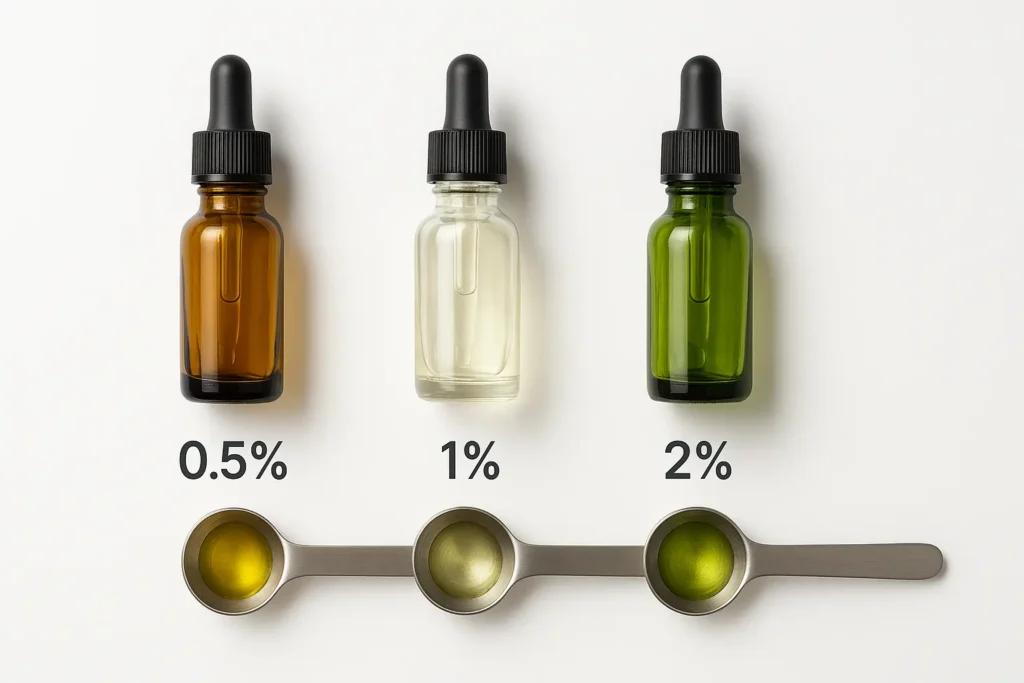
Dilution Ratios by Skin Type and Use (0.5%–2% for Face)
Never apply undiluted essential oils to your face. Never. The only exceptions are tea tree or lavender oil for emergency spot treatments on active breakouts—and even then, use sparingly on a cotton swab, applying only to the specific spot.
For facial use, work within 0.5% to 2% dilution ranges.
Sensitive and mature skin: stick to 0.5% to 1%. That’s 1 to 2 drops of essential oil per teaspoon (5ml) of carrier oil. Normal and combination skin: 1% to 1.5% dilution (2 to 3 drops per teaspoon).
Oily and acne-prone skin can tolerate up to 2% dilution (3 to 4 drops per teaspoon), but don’t start there—build up gradually.
Body use allows higher concentrations: 2% to 3% is generally safe. Hair and scalp: 1% to 2%.
These guidelines align with recommendations from the International Fragrance Association (IFRA) and are recognized in both US and EU aromatherapy standards.
Step-by-Step Routine Integration: Cleanser → Toner → Serum → Moisturizer → Oil → SPF
Morning routine sequencing matters. Cleanse first—obviously. Pat dry, leaving skin slightly damp. Apply any toners or essences. Follow with treatment serums (vitamin C, hyaluronic acid, etc.). Apply moisturizer. Now add your essential oil blend—yes, after moisturizer. The moisturizer creates a buffer that prevents irritation while the oil seals everything in.
Wait 2 to 3 minutes before applying SPF. This prevents pilling and ensures your sunscreen can form its protective film properly. Essential oils sit on top of your SPF, not underneath—this is crucial for proper sun protection.
Read our post on Sun Protection & Anti-Aging to know more about how to protect your oily skin.
Evening routine: Same sequence, but you can skip SPF (hopefully that’s obvious). This is when you can use richer oil blends since you won’t be exposed to the sun or environmental stressors. Apply your essential oil blend as the final step, letting it work overnight while your skin repairs itself.
Patch Testing Protocol: How and Where to Test
Before using any new essential oil, perform a proper patch test. Mix your intended dilution, then apply a small amount to your inner forearm or behind your ear—both areas have sensitive skin that reacts similarly to facial skin.
Cover with a bandage and wait 24 to 48 hours. Check at 12, 24, and 48 hours for redness, itching, swelling, or irritation. No reaction? You’re likely safe for facial use. Any reaction? Skip that oil entirely or try a lower dilution on a different day.
This feels tedious, but it prevents the regret of applying something new to your entire face only to wake up looking like you fought with a beehive and lost.
Phototoxic Oils to Avoid in Daytime (Lemon, Bergamot—Unless Bergapten-Free)
Certain citrus essential oils are phototoxic, meaning they cause severe reactions when exposed to UV light. Lemon, lime, bergamot, grapefruit, and bitter orange can trigger burns, blistering, and long-lasting hyperpigmentation—sometimes within 30 minutes of sun exposure.
Read our Best Skincare Routine for Hyperpigmentation with Science Backed Solutions
The culprit compound is bergapten (5-methoxypsoralen), a furanocoumarin that absorbs UV radiation and releases it into your skin cells, causing DNA damage and inflammation. EU regulations require products containing phototoxic oils to carry specific warning labels; US regulations are catching up under the Modernization of Cosmetics Regulation Act (MoCRA), which takes full effect in 2026.
If you must use citrus oils, choose bergapten-free (BF) versions or restrict use to nighttime only. Steam-distilled citrus oils are generally safer than cold-pressed versions. And please—wear SPF 30+ whenever you’re using facial oils during daylight hours, phototoxic or not.
Trusted Essential Oil Brands in the USA & EU
Quality varies wildly in the essential oil market. You’ve got premium therapeutic-grade oils at one end and synthetic fragrance oils masquerading as “pure essential oils” at the other.
Without proper training, it’s nearly impossible to distinguish by smell or appearance alone. This is where certifications, transparency, and third-party testing become your best friends.
I recommend brands that consistently deliver quality and provide documentation to prove it.
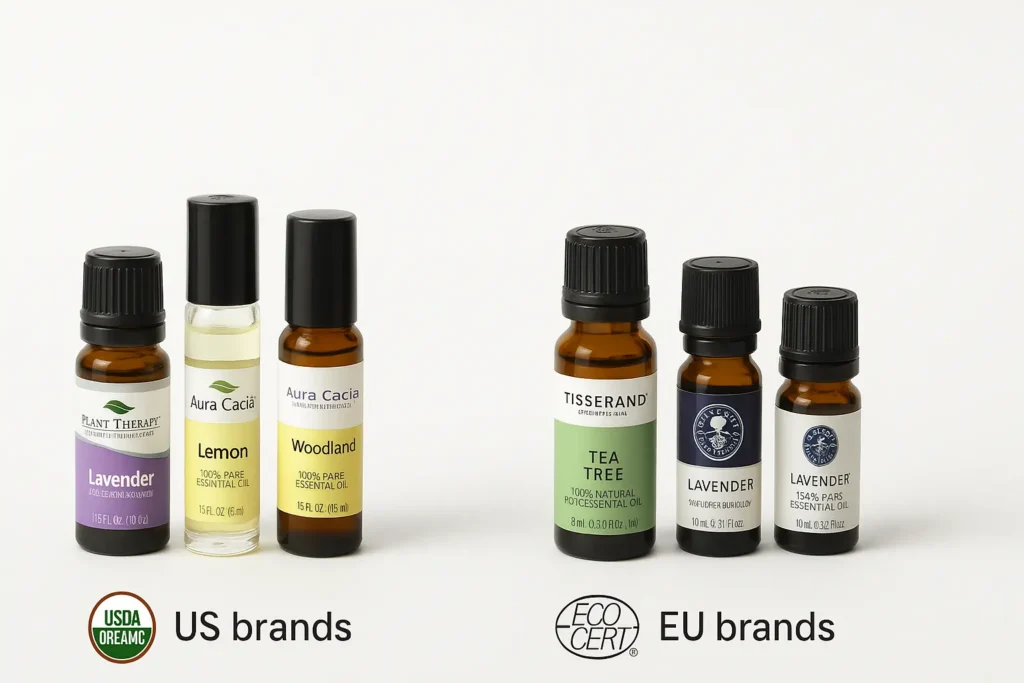
Top US Brands: Plant Therapy, Aura Cacia, Mountain Rose Herbs (USDA Organic, GC/MS Tested)
Plant Therapy earned my trust through its commitment to transparency. Each batch includes GC/MS (Gas Chromatography-Mass Spectrometry) test results available on the website—you can verify that the chemical composition matches the promised specifications. They’re USDA-certified organic where applicable and offer excellent customer education resources.
Aura Cacia, owned by Frontier Co-op, has been around since 1982 and maintains rigorous quality standards. They’re particularly good for beginners because their products are widely available at natural food stores, and their dilution guides are straightforward. All their oils undergo purity testing, and they’re transparent about sourcing.
Mountain Rose Herbs is the gold standard for organic and sustainably sourced oils. Based in Oregon, they maintain direct relationships with growers worldwide and provide full transparency on origins, extraction methods, and testing. Their prices reflect this quality, but you get what you pay for.
Top EU/UK Brands: Neal’s Yard Remedies, Tisserand, Florihana (Ecocert, COSMOS Certified)
Neal’s Yard Remedies in the UK combines pharmaceutical-grade quality with ethical sourcing. Their oils are certified organic by the Soil Association and comply with strict EU cosmetic regulations. They’re particularly strong on sustainability—their blue glass bottles are 100% recyclable, and they offset their carbon footprint.
Tisserand, founded by Robert Tisserand himself (a pioneering aromatherapist and author), maintains exceptional safety standards. Their formulations are pre-diluted to safe levels for specific uses, making them ideal if you’re concerned about mixing your own. All products meet COSMOS and Ecocert organic standards where applicable.
Florihana in France specializes in certified organic essential oils with full traceability from farm to bottle. They maintain their own organic farms and distilleries, controlling quality at every step. EU consumers trust them for purity and consistency.
What Certifications to Look For (USDA Organic, Ecocert, BDIH)
USDA Organic certification in the US means the plants were grown without synthetic pesticides, herbicides, or genetically modified crops. It doesn’t guarantee purity of the final oil, but it’s a good starting point. Look for the green-and-white USDA Organic seal.
In the EU, Ecocert is the gold standard organic certification—they inspect throughout the entire production chain. COSMOS (COSMetic Organic Standard) certification is even stricter, requiring 95% organic ingredients for products labeled “organic.” BDIH certification from Germany indicates the use of natural ingredients and sustainable production methods.
For essential oils, look for GC/MS test results. This analytical method identifies and quantifies every chemical compound in the oil, confirming botanical identity and detecting adulterants. Reputable brands make these reports available—if they don’t, consider that a warning sign.
Red Flags: Synthetic Fragrances, No Ingredient Transparency
If the label says “fragrance oil” or “perfume oil,” it’s synthetic—walk away. If therapeutic claims sound too good to be true (“cures cancer,” “reverses aging”), they probably are illegal and definitely unethical. The US FDA has cracked down on several MLM essential oil companies for making drug claims without approval.
No batch numbers? Red flag. No country of origin? Red flag. Are prices dramatically lower than competitors’? Either you’ve found old stock or a synthetic dilution. Essential oil production is expensive—rose absolute can require 10,000 pounds of rose petals to produce 1 pound of oil. Suspiciously cheap rose oil isn’t a deal; it’s a fake.
Avoid brands that claim “therapeutic grade” as a marketing term—there’s no official certification called “therapeutic grade” in the US or EU. It’s meaningless marketing designed to charge premium prices. Focus on actual certifications and testing documentation instead.
The Bottom Line on Essential Oils and Skin Types
After 18 years in medicine and countless hours studying cosmetic science, this is what I know for certain: matching the right essential oil to your skin type transforms results. Not because essential oils are magical—they’re not. But when you work with your skin’s chemistry instead of against it, everything functions better. Your barrier stays intact. Inflammation decreases. Your skin absorbs the beneficial compounds rather than fighting them off.
Safety matters more than results. Always dilute properly, test before applying to your entire face, and choose quality brands with transparent sourcing and testing. Understand regional differences as well—EU regulations provide stronger consumer protections through allergen labeling and pre-market safety assessments, while US regulations are evolving under MoCRA to close gaps that have existed for decades.
Start simple. Pick one essential oil appropriate for your skin type, mix it with a suitable carrier oil at the proper dilution, perform that 48-hour patch test, and integrate it into your existing routine. Give it four to six weeks before deciding whether it works for you—skin cell turnover takes time, and real results aren’t instant.
Your skin deserves ingredients that support its natural functions rather than overwhelming them. Essential oils, when used properly, provide support from compounds that evolution spent millions of years perfecting. Respect their potency, understand your skin type, and you’ll discover why plant-based skincare has endured for thousands of years.
Ready to transform your routine? Choose one oil that matches your skin type, do that patch test I keep harping on, and share your results. What works? What doesn’t? Your experience helps others navigate this world of botanical skincare—and trust me, we’re all still learning.
FAQs: Essential Oils For Different Skin Types
What Essential Oil Is Best For Acne-Prone Skin?
Tea tree oil is effective for acne-prone skin because its antibacterial compound, terpinen-4-ol, targets P. acnes, reducing breakouts by 40% in studies, according to dermatology research. It also calms inflammation without drying. Dilute 1–2 drops in carrier oil; benefits include clearer pores and reduced scarring with consistent use.
How Do I Dilute Essential Oils For Facial Use?
Dilute essential oils for facial use to 0.5–1% concentration: mix 1–3 drops per teaspoon (5ml) of carrier oil, such as jojoba. Dermatologists recommend this to prevent irritation and burns. Benefits include safe absorption, reduced risk of sensitivity, and maximized efficacy for conditions such as acne or dryness. Always patch-test diluted blends first.
Can I Use Essential Oils Every Day On My Face?
Yes, daily use of diluted essential oils is generally safe for most skin types when matched to skin type. Dermatologists recommend starting 2–3 times per week to build tolerance and monitor for redness. Benefits include sustained hydration, reduced inflammation, and improved barrier function. Avoid if sensitive; rotate oils to prevent buildup or diminished effects.
Which Essential Oils Should I Avoid If I Have Rosacea?
Avoid peppermint, cinnamon, clove, and citrus oils (e.g., lemon) if you have rosacea, as their volatile compounds can trigger vasodilation and inflammation, worsening redness, according to dermatology findings. Opt for calming lavender or chamomile instead. Benefits of avoidance include fewer flare-ups and calmer skin; always dilute and test gently.
Is It Safe To Mix Essential Oils With My Moisturizer?
Yes, mixing essential oils with a moisturizer is safe at 1–2 drops per pea-sized amount, ensuring even distribution and reducing the risk of irritation. Dermatologists note that this enhances absorption while minimizing direct-contact burns. Benefits include customized hydration, targeted treatment for dryness or acne, and prolonged efficacy; patch-test combinations first.
Do EU Regulations On Essential Oils Differ from US Rules?
EU regulations require allergen labeling, concentration limits (e.g., 0.001% for citral), and safety assessments for essential oils used in cosmetics, in accordance with REACH guidelines. US FDA rules are less stringent, but tightening is expected under the 2023 MoCRA for reporting. Benefits of EU standards include reduced allergy risks; US users should check voluntary certifications for safety.

About Subhan Usafzai
Evidence-Based Skincare Educator & Formulation Specialist
I'm Subhan Usafzai (Fazli Subhan), an Evidence-Based Skincare Educator and Formulation Specialist. My background includes first-hand experience as a technician and research support in skin departments across tertiary military hospitals since 2006, and since 2008 I've focused on researching and translating clinical and formulation science into practical, evidence-based guidance. My formal training includes Coursera's Introduction to Cosmetic and Skincare Science and the four-course Introduction to Cosmetic Science and Ingredients specialization (Cosmetic Formulation Science, Cosmetic Product Development, and Quality Control and Regulatory in Cosmetic Science), authorized by Olay. Every article I write is checked against current research and reviewed by our medical team before publishing.
✅ Medically reviewed by Dr. Muhammad Khurram Ahmad, MD, Board-Certified Dermatologist · 📅 Last updated: February 2026
📋 Medical Disclaimer
For Educational Purposes Only: This article is written by Subhan Usafzai, an Evidence-Based Skincare Educator and Formulation Specialist, and is intended for informational and educational purposes only. The content provided is based on scientific research, peer-reviewed studies, and dermatological literature available as of February 2026.
Not Medical Advice: The information in this article does not constitute medical advice, diagnosis, or treatment recommendations. It should not be used as a substitute for professional medical consultation, diagnosis, or treatment from a board-certified dermatologist or qualified healthcare provider.
Individual Results May Vary: Skin conditions, including hyperpigmentation, melasma, and UV-induced pigmentation, vary significantly between individuals based on genetics, skin type, hormonal factors, and environmental exposure.
Consult Your Healthcare Provider: Before starting any new skincare regimen, especially if you are pregnant, breastfeeding, have diagnosed skin conditions, are taking medications, have sensitive skin, or are undergoing dermatological treatments.
Product Safety: Always perform a patch test before using new skincare products. Discontinue use and consult a healthcare professional if you experience irritation or adverse reactions.