
Natural Anti-Aging Mechanisms: How Skin Ages and What Actually Slows It
Skin ages through four overlapping processes: a built-in slowdown in collagen and cell renewal (intrinsic aging), damage from the environment, mainly UV light (extrinsic aging or photoaging), oxidative stress, and glycation. Of these, UV exposure is the one you can change the most, which is why daily sun protection beats every serum. Natural and plant-derived ingredients such as bakuchiol, vitamin C, niacinamide and peptides can support collagen, tone and barrier function, but their evidence is thinner than the evidence for retinoids and sunscreen, and they work on a timeline of months, not days.
Most pages on this topic hand you a list of “anti-aging ingredients” without explaining what each one is supposed to fix. That makes it hard to judge a product, because a vitamin C serum and a peptide cream are not doing the same job.
This guide works the other way around. We start with what actually changes inside aging skin, then match each natural option to the mechanism it targets, and say plainly how strong the evidence is.
Key takeaways
- Roughly speaking, intrinsic aging is the part you inherit and extrinsic aging is the part you influence. Sun exposure is the largest modifiable factor.
- Broad-spectrum SPF 30 or higher, used every day, has the best human evidence among all “natural” and non-prescription anti-aging habits.
- Bakuchiol is the best-studied plant-derived retinol alternative, but the trials are small and short. Retinol itself still has the larger evidence base.
- Collagen supplements may modestly improve skin hydration and elasticity in trials, but they do not reliably reduce wrinkles.
- “Natural” does not mean gentler or safer. Essential oils, lemon juice and some DIY masks are common causes of irritation.
How Skin Ages: The Four Core Mechanisms
Aging is not one process. Researchers describe it as the result of several overlapping ones, which is why a single ingredient never “reverses” it. A 2022 review of natural compounds and aging notes that scientists increasingly prefer the term healthy aging to anti-aging, because the realistic goal is to keep skin functioning well, not to stop time (Bjørklund et al., 2022).
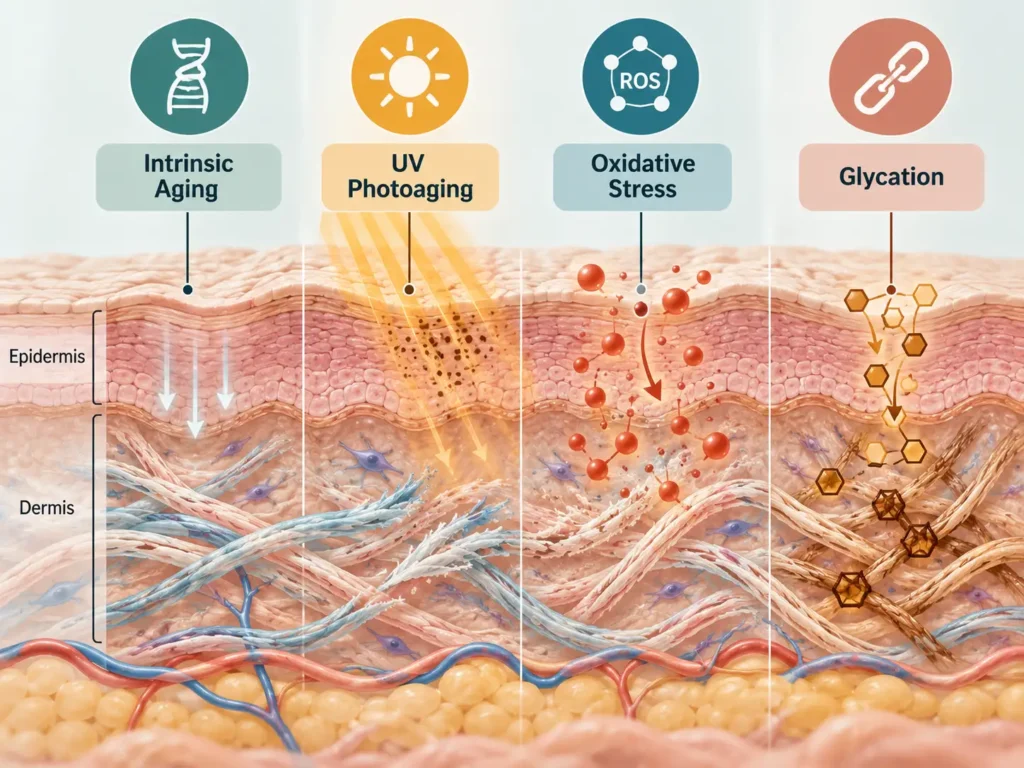
1. Intrinsic aging: the clock inside the skin
Intrinsic (chronological) aging is driven by genetics and time. Fibroblasts, the cells that make collagen and elastin, become less active. Cell turnover slows, the skin holds less water, and the dermis thins. The result is finer, drier skin that wrinkles more easily and recovers more slowly. You can support this process, but you cannot switch it off.
2. Extrinsic aging: what the environment adds
Extrinsic aging comes from exposure. UV radiation is the main driver, and it breaks down collagen and elastin in a process called photoaging. Smoking and air pollution are also associated with more wrinkles and uneven pigmentation in observational research. Because extrinsic factors are the ones you can change, this is where prevention pays off most. You will often see the claim that sun causes “up to 80%” of visible facial aging. It comes from observational work in Caucasian women (Flament et al., 2013). Treat it as a useful estimate of scale, not a fixed law, and note that it was not measured across all skin tones.
3. Oxidative stress: the free-radical connection
Skin cells constantly produce reactive oxygen species (ROS), and UV light and pollution add more. In small amounts ROS act as signals. In excess they damage lipids, proteins and DNA, and they switch on enzymes that degrade collagen. Antioxidants such as vitamin C and polyphenols neutralize ROS, which is the logic behind antioxidant serums and antioxidant-rich diets.
One honest caveat:
The free-radical theory is the most widely cited explanation of aging, but even reviewers describe it as incomplete, and eating or applying antioxidants does not guarantee a visible result.
4. Glycation: sugar and collagen
Glycation happens when sugars bind to proteins such as collagen and form advanced glycation end products (AGEs). Glycated collagen is stiffer and less repairable, and UV exposure speeds the process. The mechanism is well described (Danby, 2010), but the proof that cutting sugar visibly reduces wrinkles in people is still limited. A reasonable reading: a diet low in refined sugar is good for your health overall and plausibly helps skin, but it is not a proven wrinkle treatment.
Which mechanism can you actually change?
| Mechanism | Main driver | How modifiable | Best-supported lever |
|---|---|---|---|
| Intrinsic aging | Genetics, time, hormones | Low | Retinoids (including retinol) for collagen and turnover |
| Photoaging (extrinsic) | UV light, smoking, pollution | High | Daily broad-spectrum sunscreen, shade, not smoking |
| Oxidative stress | UV, pollution, metabolism | Moderate | Topical vitamin C, antioxidant-rich diet, sunscreen |
| Glycation | High blood sugar, UV | Moderate | Balanced diet; evidence for visible skin benefit is limited |
What “Natural” Can and Can’t Promise
Plant-derived does not mean mild, and lab-made does not mean harsh. Poison ivy is natural. Squalane is often made from sugarcane and is among the gentlest moisturizers available. What matters is the evidence for a specific ingredient at a specific concentration in a specific formula. That is how the ingredients below are ranked. If you want the wider picture of ingredient sourcing, our guide to organic skincare covers what labels like “organic” and “natural” do and do not guarantee.
Natural Anti-Aging Ingredients, Ranked by Evidence
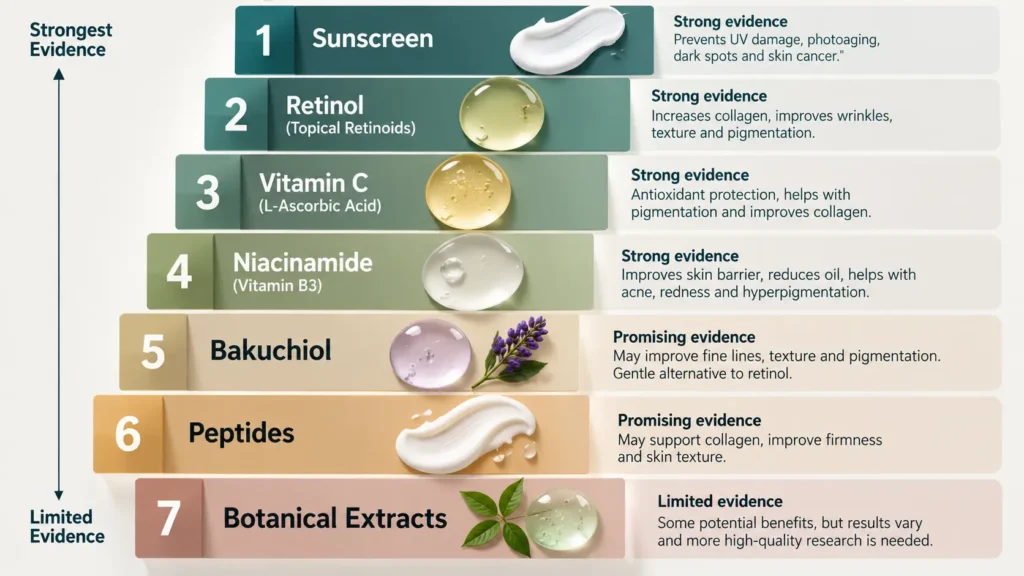
| Ingredient | Mechanism it targets | Evidence in people | Main caution |
|---|---|---|---|
| Sunscreen (SPF 30+) | Prevents photoaging | Strong (randomized trial) | Needs daily, adequate use |
| Retinol (vitamin A) | Collagen, cell turnover | Strong (many RCTs) | Irritation; avoid in pregnancy |
| Vitamin C | Antioxidant, collagen synthesis | Moderate (small trials) | Stability; stinging at low pH |
| Niacinamide | Barrier, tone, fine lines | Moderate | Rare flushing at high strengths |
| Bakuchiol | Retinol-like signaling | Limited but promising | Few long-term or pregnancy data |
| Peptides | Collagen signaling | Limited, often manufacturer-funded | Results depend on formula |
| Green tea, other botanicals | Antioxidant | Limited | Variable potency; can sensitize |
| Squalane, plant oils | Hydration, barrier | Supports comfort, not collagen | Some oils can clog pores |
Sun protection: the foundation
The strongest direct evidence that anything slows visible aging comes from a randomized trial of 903 Australian adults under 55. People assigned to daily sunscreen use showed no detectable increase in skin aging over 4.5 years, compared with people who used sunscreen at their own discretion (Hughes et al., 2013). The American Academy of Dermatology recommends a broad-spectrum, water-resistant sunscreen of SPF 30 or higher, reapplied about every two hours outdoors.
Mineral and chemical filters both work. Our comparison of physical vs chemical sunscreen helps you choose, and if you react easily, see the best organic sunscreens for sensitive skin.
Retinol: the benchmark everything is compared to
Retinol is a form of vitamin A. It is not exotic or plant-exclusive, but it is the standard against which natural alternatives are judged. In a 24-week vehicle-controlled study of naturally aged skin in elderly volunteers, topical retinol improved fine wrinkles and increased markers of collagen production (Kafi et al., 2007).
A 2025 network meta-analysis of 23 randomized trials (3,905 participants) ranked retinoids, including retinol and tretinoin, among the most effective topical options for fine wrinkles, while also warning that the trials were mostly in Caucasian participants and that commercially funded trials tended to report less irritation (Sci Rep, 2025).
Retinoids can cause dryness and peeling, increase sun sensitivity, and are not recommended during pregnancy. Start two or three nights a week. Our explainer on how retinol works at the cellular level goes deeper, and layering actives without irritation covers how to add it to a routine.
Bakuchiol: the plant-derived alternative
Bakuchiol comes from the seeds of Psoralea corylifolia. In a 12-week, double-blind trial of 44 people, 0.5% bakuchiol applied twice daily reduced wrinkle surface area and pigmentation about as much as 0.5% retinol applied once daily, and participants using retinol reported more scaling and stinging (Dhaliwal et al., British Journal of Dermatology, 2019). That is encouraging, but it is a single small, short trial. It does not show that bakuchiol works through the same pathway as retinol, and long-term data are lacking.
Some brands call bakuchiol “pregnancy-safe,” but reliable safety data in pregnancy are limited, so ask your doctor first. It is a sensible choice if retinol irritates you, not proof that you can drop retinol for better results.
Vitamin C: antioxidant and collagen cofactor
Your skin needs vitamin C to build collagen, and it also neutralizes free radicals generated by UV light (Pullar et al., Nutrients, 2017). Topical L-ascorbic acid has improved photoaged skin in controlled trials (Humbert et al., 2003), and a 2023 systematic review found it promising for photoaging and melasma while noting that many studies are small and short (Correia et al., 2023).
L-ascorbic acid oxidizes quickly and can sting on sensitive skin, so a serum that has turned dark orange has lost potency. Vitamin C also works best under sunscreen; see how vitamin C and sunscreen work together.
Not sure whether you need vitamin C or niacinamide?
This comparison helps you decide.
Niacinamide: the quiet multitasker
Niacinamide (vitamin B3) supports the skin barrier by encouraging ceramide production and can help even out tone and soften the look of fine lines. A manufacturer-funded 12-week trial of 5% niacinamide reported improvements in fine lines, hyperpigmentation and elasticity (Bissett et al., 2005). It is well tolerated by most people, which makes it a good first active. If barrier support is your priority, read ceramide vs niacinamide.
Peptides: promising signals, uneven proof

Peptides are short chains of amino acids. Some, applied to skin, appear to signal fibroblasts to make more collagen in lab studies, and small human studies report improvements in firmness and wrinkles.
A review of topical peptides concluded that results are real but that many studies are small and funded by manufacturers (Schagen, 2017). Peptides are gentle and layer well with other actives, so they suit sensitive skin. Our guides to peptide serums and organic peptide serums explain how to choose one.
Botanical antioxidants and plant oils
Green tea, pomegranate and grape-derived polyphenols are antioxidants in the lab, but human trials of topical botanical extracts are mostly small, and potency varies between products. Treat them as a supporting layer, not a primary treatment.
Plant oils and squalane are moisturizers: they reduce water loss and make skin look smoother, but they do not rebuild collagen. Rosehip oil contains small amounts of vitamin A compounds, but the amount in a finished oil is variable, and it should not be treated as a retinol substitute.
If you use essential oils, remember they are among the most common natural causes of contact irritation.
Lifestyle Mechanisms: What You Do Beyond the Bottle
Diet
A review of nutrition and skin aging found that diets rich in antioxidants and healthy fats are associated with better skin outcomes, but also that high-quality trials are still needed (Schagen et al., 2012). A practical pattern is plenty of colorful fruit and vegetables, oily fish or other omega-3 sources, adequate protein, and fewer refined sugars. Our guide to fruits for glowing skin gives specific ideas.
Collagen supplements: what the trials show
This is a common question. A 2026 meta-analysis of 35 randomized trials (2,534 participants) found that oral collagen peptides improved skin hydration (standardized mean difference 0.44) and elasticity (0.62), mostly after about 12 weeks.
The apparent wrinkle benefit did not hold up once outliers and heterogeneity were accounted for, and the authors detected publication bias (J Cosmet Dermatol, 2026). In plain terms, collagen peptides may help skin feel more hydrated and springy. They are not a proven wrinkle remover. Eating bone broth is not the same as taking tested collagen peptides, and no study I reviewed shows that eating collagen-rich foods raises collagen in your face.
Sleep
In a small study of 60 women, poor sleepers showed more signs of intrinsic aging and slower recovery of the skin barrier after UV exposure than good sleepers (Oyetakin-White et al., 2015). That is an association in a small, industry-supported sample, not proof that sleep hours change your wrinkles. Sleep is still worth protecting. If you work nights, our guide to skincare for night shift workers adapts the routine.
Stress
Chronic stress affects the skin barrier and inflammation, and it can flare conditions like eczema and acne, which we cover in how stress affects pre-existing skin conditions. Direct evidence that stress management reduces wrinkles in people is thin. Reduce stress for the wider health benefit, and treat any skin payoff as a bonus.
Exercise, smoking and alcohol
Regular activity supports circulation and overall health, and early research suggests benefits for skin structure in older adults, but this evidence is still preliminary. Smoking is the clearest lifestyle accelerator of facial wrinkling, so quitting is one of the most effective extrinsic-aging steps available.
Common Natural Anti-Aging Claims, Checked
| Claim | What the evidence supports |
|---|---|
| “Gua sha and facial massage reduce wrinkles” | May temporarily reduce puffiness and feel relaxing. I found no robust trials showing lasting wrinkle reduction. |
| “Eat seaweed or sweet potato for hyaluronic acid” | Dietary hyaluronic acid is broken down during digestion. Food does not deliver it to your skin in a controlled way. |
| “Bone broth boosts facial collagen” | Not demonstrated. Collagen peptide supplements have trial data; broth does not. |
| “Deep sleep releases growth hormone that repairs skin” | Growth hormone is released in deep sleep, but a direct skin-repair effect measured as fewer wrinkles is not established. |
| “Ashwagandha detoxes skin” | “Detox” is not a meaningful skin concept, and evidence for ashwagandha and skin aging is minimal. |
| “Lemon juice brightens skin” | It can irritate and, with sun exposure, cause burns or dark marks (phytophotodermatitis). Avoid. |
| “Silk pillowcases prevent wrinkles” | They may reduce friction and hair frizz. Evidence for wrinkle prevention is lacking. |
| “Natural products suit sensitive skin better” | Not reliably. Fragrance, essential oils and plant extracts are leading allergens. Patch-test everything. |
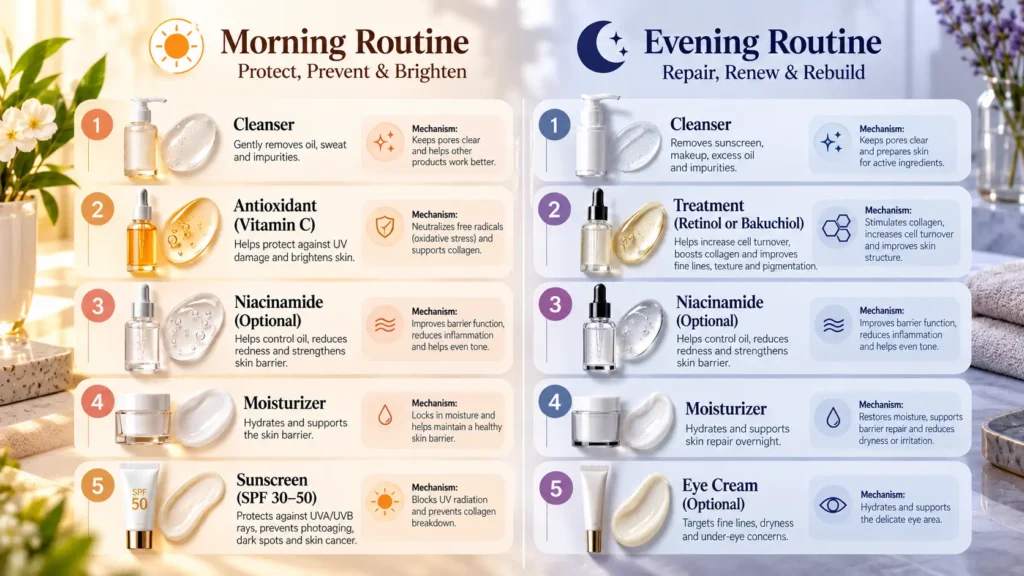
Building a Routine Around the Mechanisms
You do not need ten steps. Match each product to a job:
| Time | Step | Mechanism it covers |
|---|---|---|
| Morning | Gentle cleanser or water rinse | Barrier preservation |
| Morning | Vitamin C serum (optional) or niacinamide | Oxidative stress, tone |
| Morning | Moisturizer | Hydration, barrier |
| Morning | Broad-spectrum SPF 30+ | Photoaging |
| Evening | Cleanser | Removes sunscreen and pollution |
| Evening | Retinol or bakuchiol (start 2–3 nights per week) | Collagen signaling, turnover |
| Evening | Peptide moisturizer or barrier cream | Firmness, hydration |
Introduce one new active at a time and wait about two weeks so you can tell which product caused a reaction. For a fuller, step-by-step regimen, see our complete anti-aging skincare routine. If you are in your twenties, preventing wrinkles in your 20s needs far fewer products.
If your skin is dry or mature
Lean on a creamy cleanser, a humectant serum such as hyaluronic acid or glycerin, a ceramide or shea-based moisturizer, and a mineral sunscreen. Add retinol slowly, or use bakuchiol if retinol is too drying. If your barrier already feels raw, repair it first with our guide to repairing a damaged skin barrier.
If your skin is sensitive
Choose fragrance-free formulas, patch-test on the inner forearm or behind the ear for several days, and start with niacinamide, peptides or bakuchiol before retinol. Avoid essential oils and citrus.
How Long Until You See Results?
| Approach | Typical timeframe in studies | What changes first |
|---|---|---|
| Moisturizer, humectants | Days to 2 weeks | Smoothness, comfort |
| Niacinamide | 8–12 weeks | Tone, barrier |
| Retinol or bakuchiol | 12–24 weeks | Fine lines, texture |
| Vitamin C | Months | Brightness; firmness is slower |
| Oral collagen peptides | About 12 weeks | Hydration, elasticity |
| Daily sunscreen | Years | Slower accumulation of damage |
These ranges come from study designs, not guarantees. Individual results differ with age, skin type, sun exposure and consistency.
Where Professional Treatments Fit
Natural approaches work gradually and mainly on prevention and maintenance. If your concern is deeper wrinkles, volume loss or significant sun damage, procedures and prescription products act more strongly than anything you can buy over the counter.
These include prescription retinoids such as tretinoin, chemical peels, laser and light treatments, and injectables. They carry real risks and belong in the hands of a board-certified dermatologist, who can also assess skin tone-specific risks such as pigmentation after treatment. For a broader overview of how these options compare with topical care, see our ultimate anti-aging skincare guide.
Safety: Patch Testing, Pregnancy and Red Flags
- Patch test new products on a small area for several days. Irritation (stinging, redness) and allergy (itching, rash, swelling) are different, and an allergy means stopping that product permanently.
- Pregnancy and breastfeeding: avoid retinoids unless a doctor says otherwise. Ask about bakuchiol and other actives.
- Sun sensitivity: retinoids and exfoliating acids make daily sunscreen even more important.
- See a dermatologist for any spot that is new, changing, bleeding, or scaly. Do not try to fade it with a serum.
The Practical Takeaway: Natural Anti-Aging Mechanisms
If you do only one thing, wear broad-spectrum SPF 30 or higher every day. If you add a second, make it a nightly retinol or, if your skin rejects retinol, bakuchiol, introduced slowly. Vitamin C, niacinamide and peptides are reasonable supporting players, and a balanced diet, enough sleep, and not smoking help in ways that are real but harder to measure on a face.
The evidence does not support dramatic claims about natural methods “reversing” aging, and no ingredient on this page replaces sun protection. Choose two or three products you will use consistently for at least three months, take a photo in the same light today, and compare. If you want one next step, start with our complete anti-aging skincare routine, then look at top skincare ingredients that actually work to pick your products.
FAQs: Natural Anti-Aging Mechanisms
1. What are natural anti-aging mechanisms in the skin?
Natural anti-aging mechanisms refer to the biological processes that help protect, repair, and maintain healthy skin as it ages. These include antioxidant defenses, cellular repair, collagen production, and the skin’s natural barrier function. However, intrinsic aging, UV exposure, oxidative stress, and glycation gradually affect these processes over time.
You can support your skin’s natural defenses through daily sunscreen use, a balanced diet, adequate sleep, avoiding smoking, and using evidence-based skincare ingredients such as retinoids and antioxidants. These measures help maintain healthier-looking skin but cannot stop the natural aging process.
2. Can natural anti-aging methods reverse skin aging?
Natural anti-aging methods cannot completely reverse skin aging, but they can help reduce the appearance of fine lines, uneven skin tone, dryness, and other visible signs of aging.
Consistent sunscreen use helps prevent additional UV-related damage, while ingredients such as retinol and bakuchiol may improve the appearance of fine lines and pigmentation with continued use. Visible improvements generally take several weeks to months, depending on the ingredient and individual skin response.
For deeper wrinkles, significant skin laxity, or more advanced signs of aging, professional dermatological treatments may offer more noticeable results.
3. Is bakuchiol as effective as retinol for anti-aging?
Bakuchiol is a plant-derived skincare ingredient that may help improve the appearance of fine lines, wrinkles, and uneven pigmentation. A small 12-week clinical trial involving 44 participants found that bakuchiol and retinol produced comparable improvements in wrinkles and hyperpigmentation, while bakuchiol was associated with less scaling and stinging.
However, this was a relatively small study, and more large-scale clinical research is needed to establish how well bakuchiol compares with retinol over the long term. Retinol currently has a stronger body of scientific evidence for improving visible signs of skin aging.
Bakuchiol may be an option for people who find retinol irritating, although it can still cause skin reactions. Neither ingredient should be assumed to be suitable for everyone.
4. Do collagen supplements really work for skin aging?
Collagen supplements may offer modest improvements in certain skin characteristics, including hydration and elasticity, but evidence for their anti-wrinkle benefits remains inconsistent.
Some clinical trials and meta-analyses have reported improvements after approximately 8–12 weeks of supplementation. However, study quality, supplement formulations, and results vary. A 2026 meta-analysis reported modest benefits for hydration and elasticity but did not find reliable evidence of wrinkle reduction, while also identifying concerns about publication bias.
Collagen supplements are not a guaranteed way to restore lost collagen or reverse skin aging. A balanced diet, adequate protein intake, sun protection, and a consistent skincare routine remain important foundations of skin health.
5. What is the best natural anti-aging skincare routine for dry, mature skin?
The best anti-aging routine for dry, mature skin focuses on hydration, barrier protection, and preventing further sun damage. Choose gentle, moisturizing products that support your skin without causing unnecessary irritation.
Morning routine:
- Gentle cleanser: Use a creamy, fragrance-free cleanser to remove impurities without stripping natural oils.
- Hydrating serum: Apply a serum containing hyaluronic acid or glycerin to help attract and retain moisture.
- Moisturizer: Choose a ceramide-rich or shea butter-based moisturizer to support the skin barrier and reduce moisture loss.
- Broad-spectrum sunscreen: Apply SPF 30 or higher every morning to protect against UV-related premature aging. A mineral sunscreen containing zinc oxide or titanium dioxide is one option for sensitive skin.
Evening routine:
- Gentle cleanser: Remove sunscreen, makeup, and daily impurities.
- Targeted treatment: Consider retinol or bakuchiol to improve the appearance of fine lines and uneven skin tone. Start slowly, using the product on a limited number of nights per week.
- Nourishing moisturizer: Finish with a barrier-supporting moisturizer to reduce dryness and irritation.
Introduce one active ingredient at a time, and adjust the routine according to your skin’s tolerance. If you are pregnant or trying to conceive, avoid retinoids and consult a healthcare professional about suitable alternatives.
6. Does poor sleep accelerate skin aging?
Poor sleep may negatively affect skin barrier recovery and its ability to repair everyday environmental damage. Some research has linked inadequate sleep with increased signs of skin aging, reduced skin barrier function, and slower recovery from environmental stress.
However, much of the available research is limited, and a direct causal relationship between poor sleep and the development of wrinkles has not been conclusively established.
Maintaining a consistent sleep schedule, getting sufficient rest, and following healthy sleep habits can support overall health and may help maintain healthier-looking skin over time.
7. Do DIY face masks made with honey and turmeric help prevent wrinkles?
DIY face masks containing honey or turmeric may provide temporary cosmetic benefits, but there is limited clinical evidence that they prevent wrinkles, stimulate collagen production, or reverse skin aging.
Honey acts as a humectant, helping attract moisture to the skin, which may temporarily make it feel softer and smoother. Turmeric contains curcumin, a compound studied for its antioxidant and anti-inflammatory properties, but evidence supporting turmeric face masks as an effective anti-aging treatment is insufficient.
DIY masks can also cause irritation or allergic reactions, particularly on sensitive skin. Turmeric may stain the skin and fabrics, while lemon juice can cause irritation and increase the risk of sun-related reactions.
For a safer approach, use well-formulated moisturizers and evidence-based skincare products. You can also explore our homemade face masks for dull skin guide for gentle options.
References
- Bjørklund G, et al. Natural Compounds and Products from an Anti-Aging Perspective. Molecules. 2022. PMC9610014.
- Flament F, et al. Effect of the sun on visible clinical signs of aging in Caucasian skin. Clin Cosmet Investig Dermatol. 2013.
- Danby FW. Nutrition and aging skin: sugar and glycation. Clin Dermatol. 2010;28(4):409-411.
- Hughes MCB, et al. Sunscreen and prevention of skin aging: a randomized trial. Ann Intern Med. 2013.
- Kafi R, et al. Improvement of naturally aged skin with vitamin A (retinol). Arch Dermatol. 2007.
- Comparative efficacy of topical interventions for facial photoaging: a network meta-analysis. Sci Rep. 2025.
- Dhaliwal S, et al. Prospective, randomized, double-blind assessment of topical bakuchiol and retinol for facial photoageing. Br J Dermatol. 2019.
- Pullar JM, et al. The roles of vitamin C in skin health. Nutrients. 2017.
- Humbert PG, et al. Topical ascorbic acid on photoaged skin: double-blind study vs placebo. Exp Dermatol. 2003.
- Correia G, et al. Efficacy of topical vitamin C in melasma and photoaging: a systematic review. J Cosmet Dermatol. 2023.
- Bissett DL, et al. Niacinamide: a B vitamin that improves aging facial skin appearance. Dermatol Surg. 2005.
- Schagen SK. Topical peptide treatments with effective anti-aging results. Cosmetics. 2017.
- Schagen SK, et al. Discovering the link between nutrition and skin aging. Dermatoendocrinol. 2012.
- Oral collagen peptides and skin rejuvenation: systematic review and updated meta-analysis of RCTs. J Cosmet Dermatol. 2026.
- Oyetakin-White P, et al. Does poor sleep quality affect skin ageing? Clin Exp Dermatol. 2015.
- American Academy of Dermatology. How to decode a sunscreen label.

About Subhan Usafzai
Evidence-Based Skincare Educator & Formulation Specialist
I'm Subhan Usafzai (Fazli Subhan), an Evidence-Based Skincare Educator and Formulation Specialist. My background includes first-hand experience as a technician and research support in skin departments across tertiary military hospitals since 2006, and since 2008 I've focused on researching and translating clinical and formulation science into practical, evidence-based guidance. My formal training includes Coursera's Introduction to Cosmetic and Skincare Science and the four-course Introduction to Cosmetic Science and Ingredients specialization (Cosmetic Formulation Science, Cosmetic Product Development, and Quality Control and Regulatory in Cosmetic Science), authorized by Olay. Every article I write is checked against current research and reviewed by our medical team before publishing.
✅ Medically reviewed by Dr. Muhammad Khurram Ahmad, MD, Board-Certified Dermatologist · 📅 Last updated: October 2026
Medical Disclaimer
For Educational Purposes Only: This article is written by Subhan Usafzai, an Evidence-Based Skincare Educator and Formulation Specialist, for educational and informational purposes only. The information draws on scientific research, peer-reviewed studies, and dermatological literature available as of October 2026.
Not Medical Advice: This content does not constitute medical advice, diagnosis, or treatment. It is not a substitute for consultation with a qualified healthcare professional or dermatologist.
Individual Results May Vary: Skin conditions and responses to skincare products vary according to individual characteristics, skin type, hormonal factors, and environmental exposure.
Consult Your Healthcare Provider: Seek professional guidance before changing your skincare regimen, particularly during pregnancy or breastfeeding, or if you have a diagnosed skin condition, take medication, have sensitive skin, or receive dermatological treatment.
Product Safety: Consider patch testing new products. Discontinue use if irritation or an adverse reaction occurs, and seek medical advice when needed.
Affiliate Disclosure
Amazon Associates Disclosure: As an Amazon Associate I earn from qualifying purchases.
Editorial Independence: Affiliate relationships do not determine our product reviews or recommendations. We aim to provide balanced, research-informed information to help readers make informed skincare choices.
Supporting Glow Guide Hub: Qualifying purchases through affiliate links may earn us a commission at no additional cost to you.