
Best Anti-Aging Products for Prevention in Your 20s: Top Science-Backed Solutions
Sun exposure is widely considered the biggest controllable cause of visible skin aging, and the habits you build in your 20s add up. In one Australian randomized trial of 903 adults under 55, people who used broad-spectrum sunscreen every day had 24% less skin aging after 4.5 years than people who used it only when they chose to. That is why this guide starts with sunscreen and builds a simple routine from there.
Plenty of “anti-aging” products promise more than the evidence supports, especially for young skin. So this guide separates what is well supported from what is optional. You will find the ingredients worth knowing, ten product picks, a step-by-step routine, lifestyle factors, and the safety points that are easy to miss.
That’s why we created a comprehensive guide to the Best Anti-Aging Products for Prevention in your 20s, to help you make the best choices for your skin’s future.
I’m here to help you navigate preventive skincare and share the best anti-aging products your 20-something skin needs. As a skincare expert with over 18 years of experience, I’ve seen firsthand how early prevention can make a stunning difference.
If you are in your 30s or older, also see our guide: complete anti-aging skincare routine.
Short answer
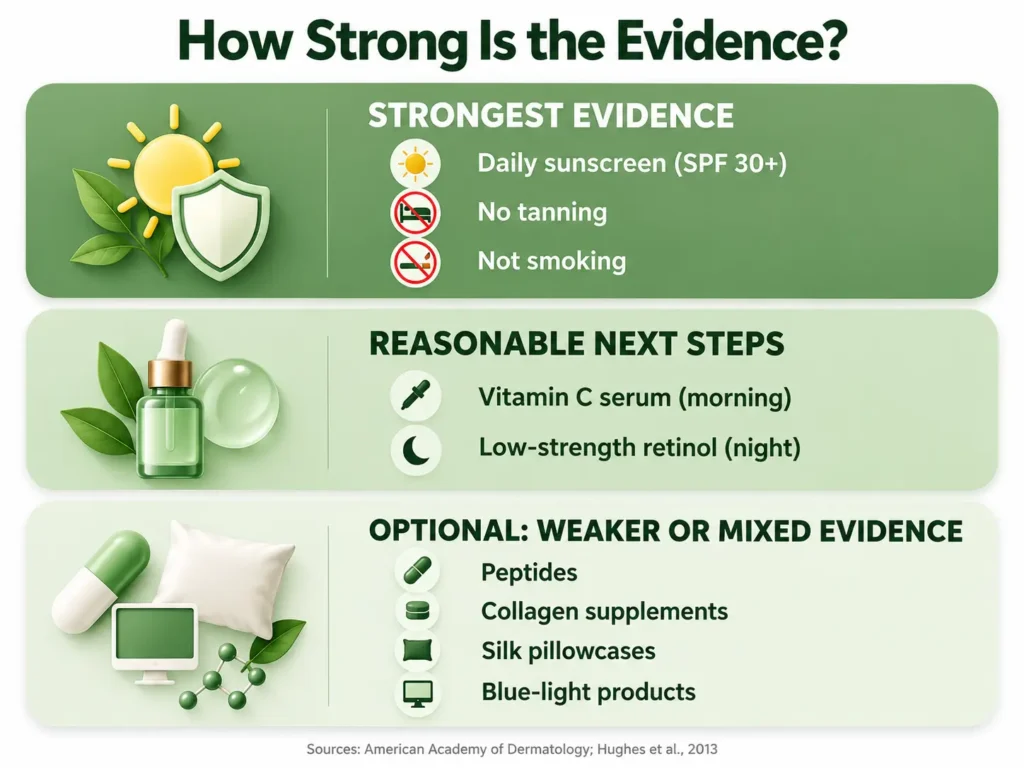
- Strongest evidence: use broad-spectrum sunscreen (SPF 30 or higher) every day, don’t tan, and don’t smoke.
- Reasonable next steps: a vitamin C serum in the morning and a low-strength retinol at night. Skip retinol if you are pregnant, trying to conceive, or breastfeeding, and ask your doctor first.
- Optional, with weaker or mixed evidence: peptides, collagen supplements, silk pillowcases, and “blue-light” products.
- Realistic expectations: in your 20s, “prevention” means protecting the skin you have. It is not a transformation, and no product reverses sun damage that has not happened yet.
 Let’s explore the products that can help you maintain a youthful glow well into your 30s and beyond!
Affiliate disclosure: Some links in this guide are Amazon affiliate links. If you buy through them, we may earn a commission at no extra cost to you. It does not decide which products we include. As an Amazon Associate I earn from qualifying purchases.
Medical note: This guide is educational and is not medical advice. If you have acne, rosacea, eczema or any skin condition, are pregnant or breastfeeding, or take prescription medication, check with a doctor or dermatologist before starting new active ingredients.
Why Start Anti-Aging Products for Prevention in Your 20s?
Think of your 20s as the perfect launchpad for lifelong skin health. While your skin may look its best now, subtle changes are already beginning beneath the surface.
Understanding why early prevention is important can help you make informed decisions about your skincare routine and protect your skin’s long-term health.
Scientific Evidence Behind Early Prevention
Skin ages in two ways: intrinsic aging (genetics and time) and photoaging (damage that builds up from sun exposure). Dermatology groups consistently point to UV exposure as the main controllable aging factor, which is why sun protection sits at the top of every credible prevention plan. Collagen in the skin declines gradually with age, and UV exposure speeds up its breakdown.
Read more about how skin renews itself in our guide to cellular skin renewal.
Key Signs of Early Aging That Appear in Your 20s
Many young adults are surprised by the first hints of aging. You might notice fine lines around your eyes when you smile or subtle changes in skin texture after a poor night’s sleep.
Expression lines on your forehead may take longer to disappear, and your skin might not bounce back as quickly as it used to. These early signs, though subtle, indicate the beginning of significant changes in your skin’s structure.
Understanding Collagen Production
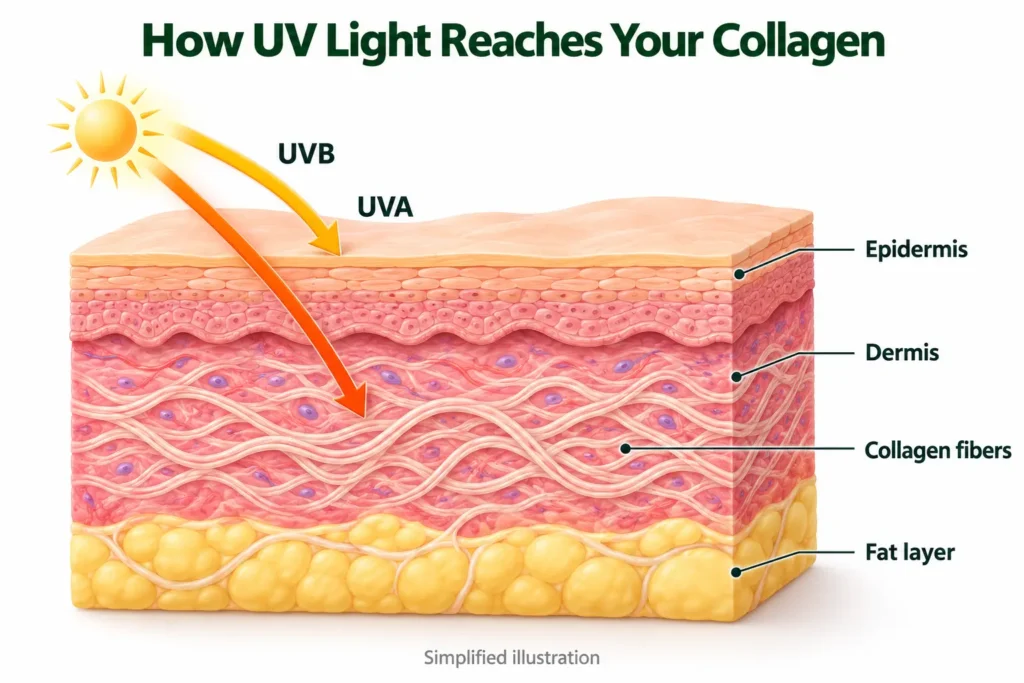
Collagen is the dermis’s main structural protein, the layer that gives skin its firmness. Over time, collagen is lost faster than it is replaced, and sun exposure accelerates this. In your 20s, the change is usually too small to see, which is exactly why prevention focuses on protecting what you have rather than correcting damage.
Environmental Factors Affecting Young Skin
Your environment plays a crucial role in how your skin ages. Daily UV exposure, even on cloudy days, contributes significantly to premature aging.
For a deeper look at what drives skin aging, see our guide to natural anti-aging mechanisms.
Urban pollution, screen time, stress, and lifestyle choices like diet and sleep patterns impact skin health. Modern life exposes young skin to more aging factors than it did for previous generations.
Benefits of Early Intervention
Starting anti-aging care in your 20s offers multiple advantages. Early prevention helps maintain natural collagen levels, allowing the skin barrier to function more effectively for longer. Preventing damage is more cost-effective than correcting it later.
Building good skincare habits early can deliver better long-term results and significantly delay signs of aging. Investing in prevention in your 20s pays dividends for decades.
How to Prevent Wrinkles in Your 20s?
Wrinkle prevention in your 20s comes down to a few habits: protect your skin from the sun, keep it moisturized, and add active ingredients slowly. Wrinkles come from a mix of age, genetics, repeated facial movement, and, above all, cumulative sun damage.
Start With Daily Sunscreen
Sun protection is the habit with the strongest evidence. In the Australian trial mentioned above, daily sunscreen users had 24% less skin aging progression than people who used it only when they chose to (Hughes et al., 2013). The American Academy of Dermatology recommends a broad-spectrum, water-resistant sunscreen with SPF 30 or higher (AAD). Apply it every morning as the last step of your skincare and before makeup, even on cloudy days.
Moisturize and Protect Your Skin Barrier
Moisturizer won’t remove wrinkles, but dry, irritated skin makes fine lines more noticeable, and a healthy barrier helps your skin tolerate active ingredients later. Choose a gentle moisturizer suited to your skin type, and avoid scrubbing or over-exfoliating, which can damage the barrier. If your skin already feels tight or stings, start with our guide to repairing a damaged skin barrier.
Add One Active Ingredient at a Time
Once sunscreen and moisturizer are part of your routine, you can add one active ingredient if you want. Two common choices are vitamin C in the morning and retinol at night. Introduce only one at a time, give it at least 30 days before judging it, and stop if your skin becomes irritated. If you are pregnant, trying to conceive, or breastfeeding, skip retinol and ask your doctor first. To compare the two, read about vitamin C vs niacinamide and how retinol works.
Build Habits That Protect Your Skin Long Term
Products matter less than daily habits. The AAD advises against tanning, including indoor tanning, which it says can cause wrinkles, brown spots, and skin cancer. Seek shade, wear a hat, and wear sunglasses; a dermatologist quoted by the AAD says these can help prevent fine lines around the eyes. Not smoking also helps, since smoking is linked to premature wrinkling.
What Products Cannot Do?
No product can promise to “stop” wrinkles. Expression lines are shaped partly by repeated facial movement and genetics, and no cream fully prevents them. Realistic goals for your 20s are to protect your skin from sun damage and keep it healthy, so any early lines stay mild. For a deeper, step-by-step explanation, see our full guide on how to prevent wrinkles in your 20s. The sections below focus on which products and ingredients are worth buying.
Essential Anti-Aging Ingredients for Your 20s
Certain ingredients are must-haves when building your anti-aging skincare routine in your 20s. These scientifically backed Best Anti-Aging Products for Prevention in Your 20s work together to protect, nourish, and maintain your skin’s youthful structure.
Understanding key ingredients helps you make smarter choices in your skincare journey and ensures your skin gets exactly what it needs during this crucial preventive period.
Role of Antioxidants in Prevention
Antioxidants neutralize free radicals, unstable molecules generated by UV light and pollution. Vitamin C is the best-known topical antioxidant. Dermatologists at the American Academy of Dermatology describe it as a morning step used after cleansing and before sunscreen, with research suggesting it can help with signs of skin aging and dark spots (AAD: skin care in your 20s).
Other antioxidants you will find in products include vitamin E, green tea, and niacinamide. Antioxidants add to sunscreen. They never replace it. If you are deciding between vitamin C and niacinamide, our comparison of vitamin C vs niacinamide explains the differences.
Importance of SPF and Sun Protection
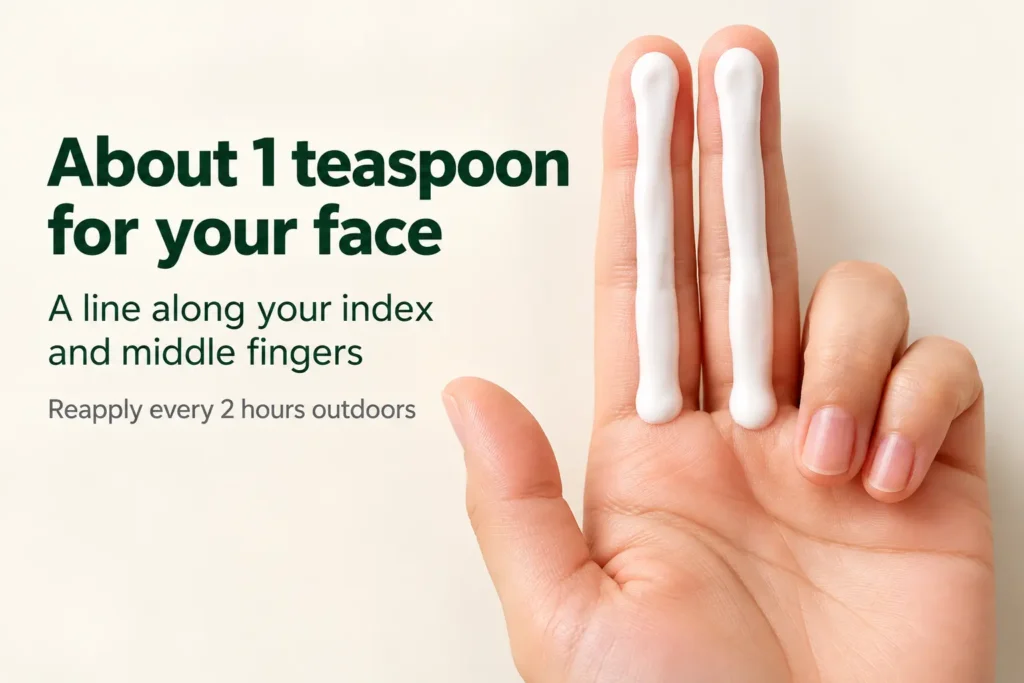
Sun protection is the most important anti-aging step. The AAD recommends a broad-spectrum, water-resistant sunscreen with SPF 30 or higher. Apply it after your other skincare and before makeup, about 15 minutes before going outside, and reapply about every two hours outdoors and after swimming or sweating.
In the Nambour trial, daily sunscreen users showed no detectable increase in skin aging over 4.5 years and 24% less skin aging progression than people who used sunscreen only when they chose to (Hughes et al., 2013).
For help choosing, see physical vs chemical sunscreen.
If you have deeper skin tones, the AAD notes that tinted sunscreens can be a good option.
Retinol: How to Start Safely in Your 20s
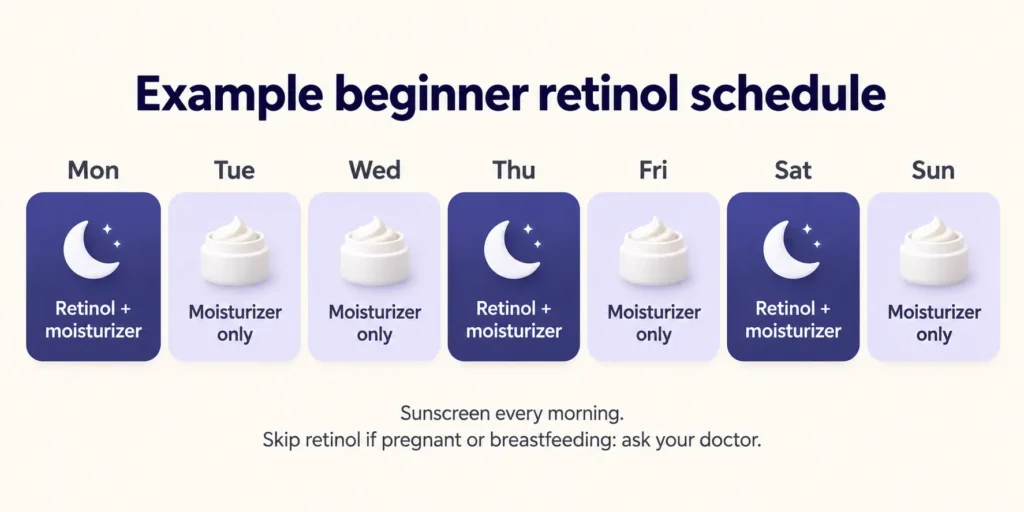
Retinol is one of the most studied ingredients for improving the look of sun-damaged skin. Most of that research focuses on adults who already have visible aging, so in your 20s it is best seen as an optional, long-term habit rather than a must-have. If you want to try it, start low: pick a low-strength over-the-counter product, use it at night 2 or 3 nights a week, apply moisturizer afterward, and wait at least 30 days before judging it.
Stop if your skin becomes irritated. Because retinol can dry out and sensitize your skin, wear sunscreen every morning.
Our guide to how retinol works at the cellular level goes deeper, and bakuchiol vs retinol covers an alternative.
Pregnancy and breastfeeding: Generally, avoid retinoids during pregnancy and breastfeeding. If you are pregnant, trying to conceive or breastfeeding, talk to your doctor before using retinol, and see our guide to pregnancy-safe skincare.
Hydrating Ingredients for Barrier Protection
A well-hydrated skin barrier is essential for preventing premature aging. Key ingredients like hyaluronic acid, glycerin, and ceramides help maintain optimal moisture levels.
These hydrating heroes work together to strengthen your skin’s natural barrier function. Proper hydration keeps skin plump and resilient, minimizing the appearance of fine lines.
Peptides and Their Preventive Benefits

Peptides are short chains of amino acids used in many serums and moisturizers. They are generally well tolerated, and some formulas are pleasant to use, but human evidence is thinner than for sunscreen or retinoids, so treat them as optional. If you want to explore them, start with our guide to peptide serums.
Top 10 Best Anti-Aging Products for Prevention in Your 20s
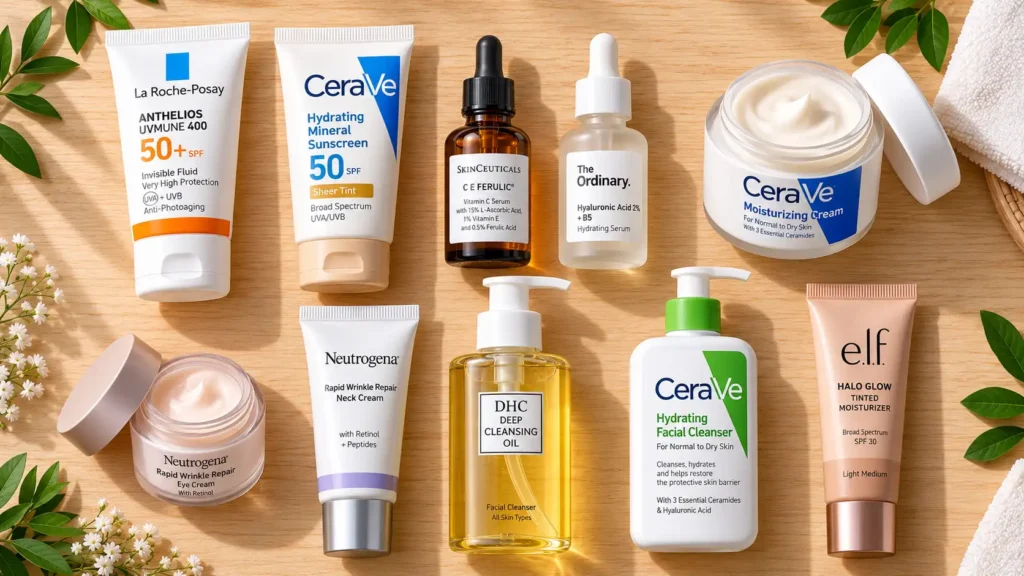
We looked for ingredients with published support, beginner-friendly strengths, price, and wide availability. We have tested these products. Labels such as “dermatologist-recommended” or “award-winning” are the brands’ own claims, not independent endorsements, so we do not rely on them. Check the label for ingredients, strengths, and fragrance before you buy, and patch test anything new.
Here’s our carefully curated list of the best products to start your anti-aging journey in your 20s.
Best Overall Preventive Moisturizer

CeraVe PM Facial Moisturizing Lotion is a lightweight night moisturizer that combines niacinamide with ceramides, which support the skin barrier. It is labeled non-comedogenic and widely available at a modest price, making it an easy first step. Pair it with our guide to the right nighttime skincare routine.
You do not need a product labeled “anti-aging cream” in your 20s: a gentle moisturizer like this one, used with daily sunscreen, covers the basics for most people.
Top-Rated Sunscreen for Daily Use
La Roche-Posay Anthelios UV Correct SPF 70 is a broad-spectrum chemical sunscreen that also contains niacinamide. The best sunscreen is one you will wear every day, so try a few textures. If you are unsure whether you need a mineral or a chemical formula, read sunscreen or sunblock: which is better.
Gentle Retinol Serum for Beginners

The Ordinary sells its retinol-in-squalane serum in several strengths. For a first retinoid, choose the lowest strength available, not the 1% version.
Use it at night, start with two or three nights a week, and follow with moisturizer. Skip retinoids if you are pregnant or breastfeeding, and see pregnancy-safe skincare.
Best Anti-Aging Serum for Your 20s
Paula’s Choice Super Antioxidant Concentrate Serum provides a potent blend of antioxidants to combat free radical damage and help prevent premature aging.
Enhanced with vitamins C and E, this serum helps brighten skin while protecting against environmental stressors. Its lightweight formula absorbs quickly and works well under other skincare products.
Budget-Friendly Options
The Ordinary Buffet is a low-cost serum that combines hyaluronic acid with several peptide ingredients. Peptides are optional (see above), but it is an inexpensive way to try them.
Optional Splurge
Sunday Riley Good Genes is a lactic-acid treatment that exfoliates the skin’s surface. It is not necessary for prevention, and acids can irritate, so use it sparingly, avoid using it the same night as retinol, and wear sunscreen every morning.
Best Eye Cream for Early Prevention
RoC Retinol Correxion Eye Cream is a retinol eye product. Because it contains a retinoid, skip it if you are pregnant or breastfeeding, and introduce it slowly. Eye creams are optional. A daily sunscreen and sunglasses do more for the eye area than any cream. If dark circles are your main concern, see our guide to eye serums for dark circles.
Top-Rated Neck Cream
Revision Skincare Nectifirm is a neck-focused cream with peptides and antioxidants. Neck products are optional. The most reliable neck care is the same as for your face: apply sunscreen to your neck every day.
Best Vitamin C Serum
Timeless 20% Vitamin C + E Ferulic Acid Serum is a high-strength vitamin C product. High strengths can irritate, so start by using it every other day and patch test first. Use it in the morning, before sunscreen. If your skin is sensitive, a lower-strength vitamin C is a sensible alternative. For oily skin, see Is vitamin C good for oily skin?.
Multi-tasking Products for Simplified Routines
First Aid Beauty Ultra Repair Moisturizer combines moisturizer, light coverage, and SPF 30 in one step, making it easier to stick to a daily routine. If you rely on a moisturizer with SPF, apply it generously, because people often use less than the amount tested.
It is perfect for busy twenty-somethings who want to streamline their routine without compromising on anti-aging benefits.
How to Build a Prevention Routine in Your 20s?
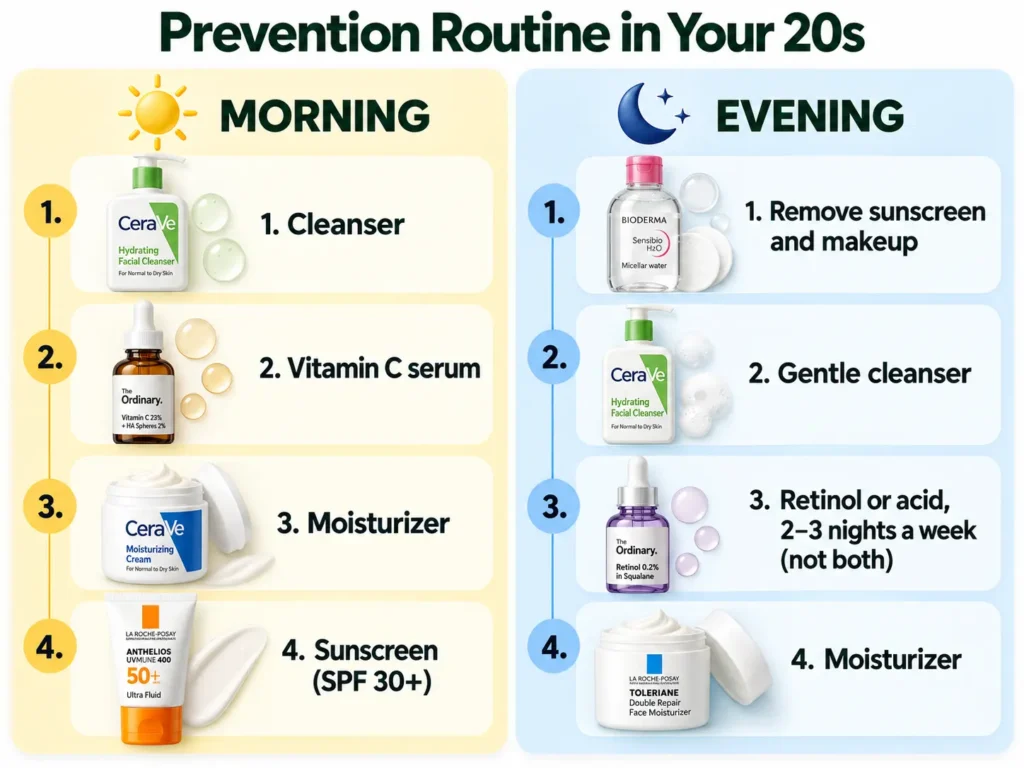
Building an effective anti-aging routine in your 20s takes more than the right products—it takes using them in the right order and at the right frequency.
A well-structured skincare routine maximizes each product’s benefits while ensuring they work synergistically. Here’s your comprehensive guide to creating an effective, sustainable, prevention-focused skincare routine.
Morning Skincare Sequence
Start your day with a gentle cleanser like the CeraVe Hydrating Facial Cleanser to remove overnight buildup without stripping your skin. Follow with an antioxidant serum, focusing on vitamin C products to fight free radicals and brighten skin.
Apply a lightweight moisturizer and always finish with cruelty-free sunscreens for oily skin or other broad-spectrum protection. This non-negotiable step protects against UV damage, the primary cause of premature aging. Layer your products from thinnest to thickest consistency for optimal absorption.
Evening Routine Steps
Step 1: Remove sunscreen and makeup. If you wore makeup or water-resistant sunscreen, start with a cleansing oil or balm, such as DHC Deep Cleansing Oil.
Step 2: Cleanse. Follow with a gentle water-based cleanser. On lighter days, one cleanse is enough. To dig deeper, see our guide: face wash for sensitive skin
Step 3: Treatment. Start 2-3 nights a week. Use retinol or an exfoliating acid, not both on the same night, and skip retinoids if you are pregnant or breastfeeding.
Step 4: Moisturize. Add an eye cream only if you want one.
Weekly Treatment Schedule
Exfoliate no more than two or three times a week, and less if your skin is dry or sensitive. Over-exfoliating damages the skin barrier. Our guide to face exfoliation explains how to choose between acids and scrubs.
Use Paula’s Choice 2% BHA Liquid for gentle chemical exfoliation that removes dead skin cells and improves product absorption.
Schedule more intensive treatments, such as retinol and chemical exfoliants, on alternate nights to prevent irritation. Save hydrating masks for days when your skin needs extra moisture, typically after exfoliation.
Product Layering Guide
Master product layering to maximize effectiveness. Always apply water-based products before oil-based ones, starting with the thinnest consistency and moving to the thickest.
Wait 30-60 seconds between layers to allow proper absorption. When using multiple active ingredients, separate them between morning and evening routines to prevent interactions and potential irritation.
For more on combining actives, see our guide: how to layer skincare actives without irritation.
Common Mistakes to Avoid
Avoid using multiple active ingredients simultaneously. Introduce new products gradually to minimize the risk of skin irritation. A simple way to avoid irritation is to use vitamin C in the morning and retinol at night, as the AAD also recommends.
Never skip sunscreen, even on cloudy days or when you are mostly indoors near windows. Nothing else in this guide, including masks, serums, and supplements, replaces it. For more routine errors, see our list of common skincare mistakes.
Using products inconsistently or in the wrong order can significantly reduce their effectiveness. Remember that more products don’t mean better results—use the recommended amount for optimal benefits.
Lifestyle Factors That Support Anti-Aging Prevention In Your 20s
While the best anti-aging products can help prevent premature aging, lifestyle choices can significantly impact skin health and appearance. Understanding and applying these lifestyle factors can strengthen your anti-aging efforts and improve your skincare routine.
Here’s a comprehensive guide to the lifestyle elements that help maintain youthful, healthy skin.
Sleep Habits Impact on Skin in Your 20s
Sleep matters for overall health, and some research links poor sleep to skin changes, but it isn’t a proven anti-aging treatment, so aim for consistent, sufficient sleep without expecting visible results. A silk pillowcase may feel nicer and reduce friction, but little good evidence shows it prevents wrinkles, so treat it as optional.
Dietary Choices for Skin Health in Your 20s
A balanced diet with plenty of fruit, vegetables, and protein supports general health, and the AAD advises limiting added sugar. Oral collagen supplements are popular, but the evidence is disputed. A 2025 meta-analysis of 23 randomized trials (1,474 participants) in The American Journal of Medicine concluded that no clinical evidence currently supports collagen supplements for preventing or treating skin aging, while industry groups disagree with the analysis. If you try one, treat it as an optional extra, not a replacement for sunscreen.
Exercise Benefits for Skin
Regular physical activity improves circulation and oxygen delivery to skin cells, promoting a natural, healthy glow. Exercise also helps regulate hormones that can affect skin health and reduce inflammation. Use a sweat-resistant sunscreen like Neutrogena Sport Face Oil-Free Lotion during outdoor workouts. Cleanse your skin promptly after exercising to prevent breakouts and keep it clear and healthy.
After sweaty workouts, cleanse and calm your skin. Our guide to post-workout face masks covers barrier-friendly options.
Stress Management
Stress can aggravate existing skin conditions such as acne and eczema. See our detailed guide for more insights on how stress affects pre-existing skin conditions.
Daily relaxation habits such as walking, breathing exercises, or meditation can benefit you whether or not they change your skin. Practice daily relaxation techniques like meditation, yoga, or deep-breathing exercises.
Set boundaries between work and personal time to keep stress levels healthy and prevent skin-related issues.
Environmental Protection Tips
Sun is the main environmental factor to manage: use sunscreen, seek shade, wear sunglasses and a hat, and avoid tanning. Pollution may also contribute to skin aging, but the best evidence for prevention still points to sun protection. Evidence that phone and computer screens age skin is limited, so you do not need a dedicated “blue-light” product.
For a full routine, see our complete anti-aging skincare routine.
Signs Your Prevention Products Are Working in Your 20s
Knowing how to evaluate your anti-aging prevention routine is crucial for staying motivated and making necessary adjustments.
Results don’t happen overnight, but you can look for specific signs and timelines when using the best anti-aging prevention products in your 20s.
Here’s a comprehensive guide to tracking progress and ensuring your anti-aging routine delivers the results you want.
Timeline for Visible Results
Give any new product at least 30 days before judging it, as the AAD advises. Moisturizers can make skin feel better right away. Retinoids and vitamin C often take longer to show visible changes, and what you notice may be smoother texture or fewer new lines, not a dramatic difference. Take a photo in the same lighting every month if you want to see progress. Prevention is about maintaining what you have, not transformation.
When to Adjust Your Routine
If your skin is irritated, stop the newest product first and keep the routine simple until it calms down. If you don’t see any change after about 12 weeks and your skin isn’t irritated, decide whether the product is worth keeping. Use lighter textures in summer and richer ones in winter. Persistent tightness, shininess, or stinging can signal over-exfoliation.
Red Flags to Watch For
Immediate irritation, redness, or burning after applying a product signals potential sensitivity or an allergic reaction.
If you notice persistent redness, burning, or breakouts, pause new actives and focus on a simple routine: a gentle cleanser, moisturizer, and sunscreen. Our guide to repairing a damaged skin barrier can help.
See a dermatologist if irritation does not settle, or if you have a persistent rash, severe acne, or any skin change that worries you.
Conclusion – Best Anti-Aging Products for Prevention in Your 20s
The best anti-aging plan in your 20s is simple: daily broad-spectrum sunscreen, a gentle cleanser and moisturizer, and one or two well-chosen actives if you want them. Everything else is optional. If you want to go further, read our ultimate anti-aging skincare guide and our complete anti-aging skincare routine. Consistency matters more than the number of products you use.
FAQs: Anti-Aging Products for Prevention in Your 20s
When should I start using anti-aging products?
Start sun protection now. There’s no fixed age for other products. Many people in their mid-20s begin with a vitamin C serum or a low-strength retinol. Daily sunscreen matters most at any age.
Are wrinkles in your early 20s normal?
Faint fine lines, especially expression lines around the eyes and forehead, are common in your early 20s and are not usually a sign of a problem. Deeper lines that stay visible when your face is relaxed are less typical at this age and can be linked to heavy sun exposure, tanning, or smoking.
Wrinkles come from a mix of genetics, repeated facial movement, and cumulative sun damage. The American Academy of Dermatology says tanning, including indoor tanning, can cause wrinkles (AAD), and Mayo Clinic Care Network content says smoking can speed up skin aging and contribute to wrinkles (Mayo Clinic Care Network).
To prevent more lines, wear sunscreen every day, avoid tanning and smoking, and keep your skin moisturized. See a dermatologist if lines appear suddenly, look deeper than expected for your age, or worry you. For a full prevention plan, read our guide on preventing wrinkles in your 20s.
Do anti-aging products actually work?
Some do. Daily sunscreen has the strongest evidence: in a randomized trial, daily users showed 24% less skin aging progression than those who used sunscreen only when they chose to (Hughes et al., 2013). Dermatologists widely use retinoids and vitamin C, though much of the research focuses on adults with existing sun damage. Evidence for many other products, such as peptides and collagen supplements, is weaker or mixed.
Can I use anti-aging products too early?
Not if you choose gentle products. In your 20s, sunscreen and a moisturizer are enough for most people. Retinol, strong acids, and high-strength vitamin C are optional, and they are more likely to irritate young skin if you start with a strong version or use several at once. Add one product at a time, start with a low strength, and stop if your skin becomes irritated.
What is the best anti-aging product?
Sunscreen. Pair it with a moisturizer. If you want to add an active ingredient, a vitamin C serum in the morning is a reasonable next step, and a low-strength retinol at night is another. Skip retinol if you are pregnant or breastfeeding.
Do I need an anti-aging cream in my 20s?
No, most people in their 20s do not need a dedicated anti-aging cream. A gentle moisturizer plus a daily broad-spectrum sunscreen (SPF 30 or higher) covers the basics, because sun protection is the best-supported way to slow visible skin aging. In one randomized trial, daily sunscreen users had 24% less skin aging progression over 4.5 years than people who used it only when they chose to (Hughes et al., 2013).
Anti-aging creams mostly differ from regular moisturizers by adding active ingredients such as retinol, peptides, or vitamin C. In your 20s, these are optional. If you want to try one, add a single active at a time, start with a low strength, and give it at least 30 days before judging it. Skip retinol if you are pregnant, trying to conceive, or breastfeeding, and ask your doctor first.
Are there any anti-aging skincare hacks for your 20s?
Yes, a few small habits help:
- Remove sunscreen and makeup before bed.
- Apply sunscreen to your neck and the backs of your hands, not just your face.
- Apply hyaluronic acid to damp skin.
- Introduce one new product at a time.
Is retinol safe during pregnancy?
Retinoids are generally avoided during pregnancy and breastfeeding. If you are pregnant, trying to conceive, or breastfeeding, ask your doctor before using retinol. See our guide to pregnancy-safe skincare for more detail on this.
Do I need anti-aging products if I have oily or acne-prone skin?
You still need sunscreen. Look for non-comedogenic formulas, and introduce active ingredients slowly. If you have acne, a dermatologist can suggest products that treat acne and aging at the same time. See our acne care guide for more detailed insights.
Do people with deeper skin tones need sunscreen?
Yes. Everyone benefits from sun protection. The American Academy of Dermatology notes that tinted sunscreens can be a good choice for deeper skin tones, and our guide to sunscreen ingredients for sensitive skin may help you choose.
Should I use anti-aging products in my 30s if I skipped them in my 20s?
Yes. It is never too late to protect your skin. Sunscreen, retinoids, and antioxidants are still the foundation. See our complete anti-aging skincare routine for deeper insights.
References
- Hughes MCB, Williams GM, Baker P, Green AC. Sunscreen and prevention of skin aging: a randomized trial. Annals of Internal Medicine. 2013.
- American Academy of Dermatology. Dermatologist-recommended skin care for your 20s. Last updated February 23, 2023.
- American Academy of Dermatology. How to apply sunscreen. Last updated August 15, 2025.
- Schneider J. The teaspoon rule of applying sunscreen. Archives of Dermatology. 2002;138(6). Abstract.
- Myung SK, Park Y. Effects of collagen supplements on skin aging: a systematic review and meta-analysis of randomized controlled trials. The American Journal of Medicine. 2025. Summary and industry responses, NutraIngredients.
- Mayo Clinic Care Network. Smoking: does it cause wrinkles?
- UPMC HealthBeat. Is retinol safe during pregnancy? March 6, 2023.

About Subhan Usafzai
Evidence-Based Skincare Educator & Formulation Specialist
I'm Subhan Usafzai (Fazli Subhan), an Evidence-Based Skincare Educator and Formulation Specialist. My background includes first-hand experience as a technician and research support in skin departments across tertiary military hospitals since 2006, and since 2008 I've focused on researching and translating clinical and formulation science into practical, evidence-based guidance. My formal training includes Coursera's Introduction to Cosmetic and Skincare Science and the four-course Introduction to Cosmetic Science and Ingredients specialization (Cosmetic Formulation Science, Cosmetic Product Development, and Quality Control and Regulatory in Cosmetic Science), authorized by Olay. Every article I write is checked against current research and reviewed by our medical team before publishing.
✅ Medically reviewed by Dr. Muhammad Khurram Ahmad, MD, Board-Certified Dermatologist · 📅 Last updated: October 2026
Medical Disclaimer
For Educational Purposes Only: This article is written by Subhan Usafzai, an Evidence-Based Skincare Educator and Formulation Specialist, for educational and informational purposes only. The information draws on scientific research, peer-reviewed studies, and dermatological literature available as of October 2026.
Not Medical Advice: This content does not constitute medical advice, diagnosis, or treatment. It is not a substitute for consultation with a qualified healthcare professional or dermatologist.
Individual Results May Vary: Skin conditions and responses to skincare products vary according to individual characteristics, skin type, hormonal factors, and environmental exposure.
Consult Your Healthcare Provider: Seek professional guidance before changing your skincare regimen, particularly during pregnancy or breastfeeding, or if you have a diagnosed skin condition, take medication, have sensitive skin, or receive dermatological treatment.
Product Safety: Consider patch testing new products. Discontinue use if irritation or an adverse reaction occurs, and seek medical advice when needed.
Affiliate Disclosure
Amazon Associates Disclosure: As an Amazon Associate I earn from qualifying purchases.
Editorial Independence: Affiliate relationships do not determine our product reviews or recommendations. We aim to provide balanced, research-informed information to help readers make informed skincare choices.
Supporting Glow Guide Hub: Qualifying purchases through affiliate links may earn us a commission at no additional cost to you.