
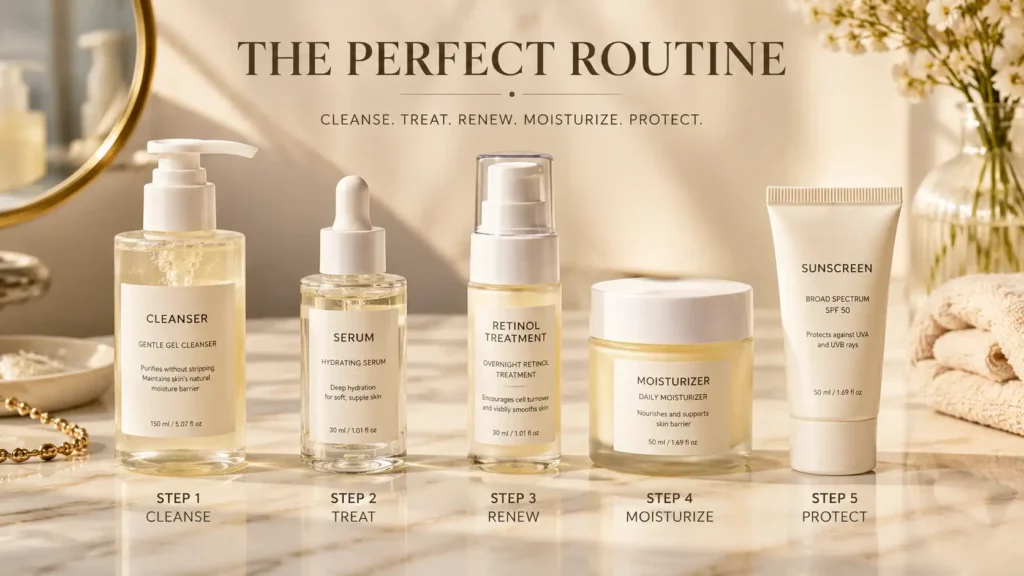
The Complete Anti-Aging Skincare Routine: Dermatologist-Backed Guide
Slathering on five different serums won’t reverse aging — it might not even help, and layered incorrectly, it can actively backfire. After nearly two decades formulating skincare and working alongside board-certified dermatologists, the biggest mistake I consistently see isn’t a missing product. It’s the wrong order, or too many active ingredients competing on the same face at once.
Here’s the reassuring part: an effective anti-aging skincare routine isn’t complicated. It comes down to a small set of ingredients with real evidence behind them, applied consistently, in a sequence that actually lets them work.
This guide walks through exactly what to use each morning and night, how that routine should shift as your skin ages, and which ingredient combinations to avoid — grounded in guidance from the American Academy of Dermatology (AAD) and peer-reviewed research, not whatever ingredient is trending this week.
One thing worth saying up front: nothing here reverses aging or erases it. Skin aging is driven by two things — the passage of time (intrinsic aging) and cumulative sun exposure (photoaging) — and the second one is the part you actually have significant control over. A well-built routine slows visible aging and improves skin texture and tone. It does not stop the clock.
Why the Order of Your Anti-Aging Routine Matters
How Layering Affects Ingredient Absorption
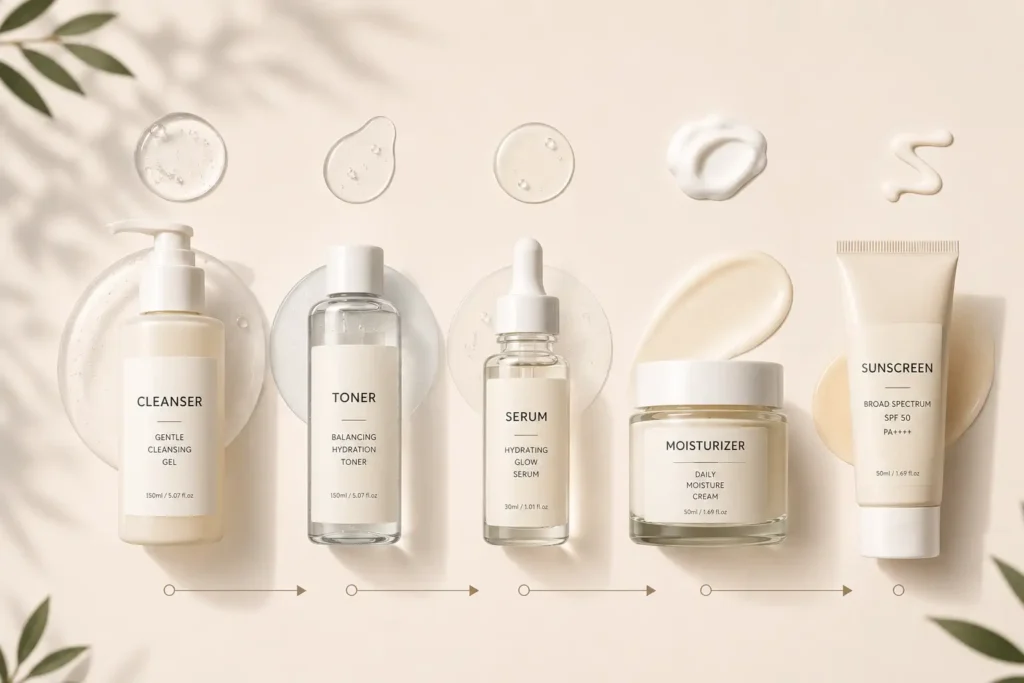
Skincare products are designed to be absorbed through the outermost layer of skin, the stratum corneum. Applying products in the wrong order can physically block a later product from reaching the skin at all — a heavy, oil-based moisturizer applied before a water-based serum, for example, can prevent that serum from penetrating.
The Thinnest-to-Thickest Rule
The standard dermatological guideline is to apply products from the thinnest, most watery texture to the thickest, most occlusive one: cleanser, then toner or essence (if used), then serums, then moisturizer, then — during the day — sunscreen as the final step. Sunscreen should always sit on top, since it needs to form a continuous film on the skin’s surface to work.
Which Actives Cancel Each Other Out
Not every combination of “good” ingredients works well together. One common mistake is layering vitamin C and retinol in the same routine. Both can be irritating on their own, and using them together may increase skin sensitivity.
A practical approach is to separate them by time of day: use vitamin C in the morning and retinol at night.
For more guidance on combining and separating active ingredients, see our complete guide to layering skincare actives without irritation.
Your Morning Anti-Aging Skincare Routine, Step by Step
Step 1 — Gentle Cleanser
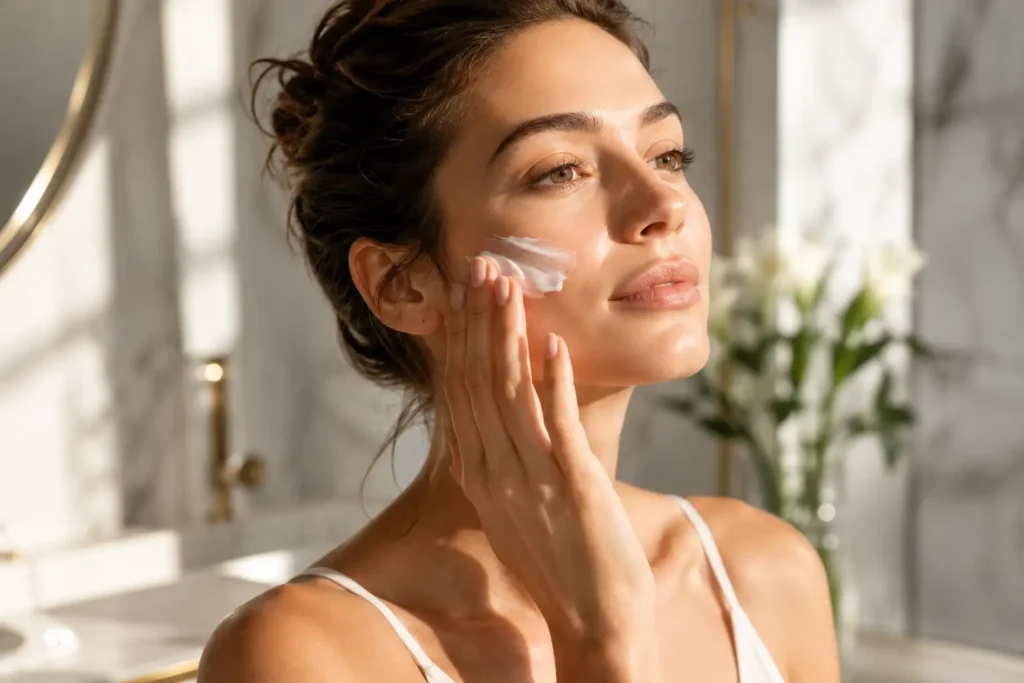
Morning cleansing removes overnight oil buildup without stripping the skin. A sulfate-free, pH-balanced formula is generally better tolerated than a foaming, high-pH cleanser, particularly for anyone also using retinol at night, since retinol already increases sensitivity.
Step 2 — Antioxidant Serum (Vitamin C)
Vitamin C (most commonly formulated as L-ascorbic acid) is one of the more evidence-backed daytime antioxidants: it helps neutralize free-radical damage from UV and pollution exposure and supports a more even skin tone over time. Concentrations in the 10–20% range are typical in over-the-counter formulas; higher isn’t automatically better, and very high concentrations increase the risk of irritation without proportionally more benefit.
Who benefits: most skin types, especially those concerned with dullness or uneven tone.
Who should be cautious: very reactive or eczema-prone skin, where a lower concentration or buffered formula (paired with ferulic acid or vitamin E) is usually better tolerated.
Step 3 — Moisturizer with Hyaluronic Acid
Hyaluronic acid is a humectant — it draws moisture to the skin’s surface.
Worth noting: the widely repeated marketing claim that hyaluronic acid “holds 1,000 times its weight in water” has not held up under recent lab analysis; independent testing has found water-binding closer to the tens, not thousands, of times its weight. That doesn’t make it a poor ingredient — it’s still one of the more effective, well-tolerated hydrators available — but the specific multiplier is marketing, not measured fact.
Step 4 — Broad-Spectrum SPF 30 or Higher
This is the single most important step in any anti-aging routine, full stop. The American Academy of Dermatology recommends a broad-spectrum sunscreen with an SPF of 30 or higher, applied daily regardless of weather.
If you’re unsure whether a mineral or chemical formula suits your skin better, our guide breaks down the pros and cons of each.
Your Nighttime Anti-Aging Skincare Routine, Step by Step
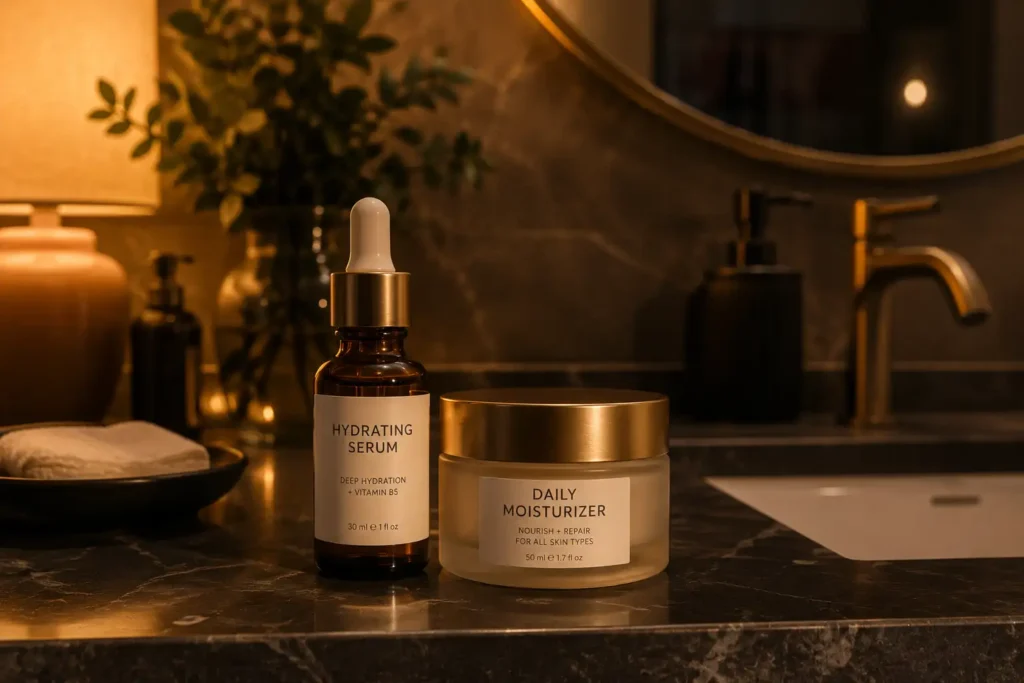
Nighttime is when your skin does most of its repair work, which makes the order of this routine just as important as the morning one.
For a full breakdown of why sequence matters at night specifically, see our guide to the right nighttime skincare routine order.
Step 1 — Double Cleanse or Makeup Removal
Nighttime is when you’re removing the day’s buildup — sunscreen, makeup, pollution particulates — before treatment actives go on. Skipping this step means those actives are competing with residue rather than reaching clean skin.
Step 2 — Treatment Actives (Retinol and Peptides)
Retinoids are the most extensively studied anti-aging ingredient category available. Per the American Academy of Dermatology, topical retinoids work by increasing skin cell turnover and stimulating collagen production, which is why they remain a first-line recommendation among dermatologists.
If you want to understand the mechanism in more depth, we cover exactly how retinol works at the cellular level in a separate guide.
| Retinoid Type | Availability | Strength | Best For |
|---|---|---|---|
| Retinol | Over-the-counter | Mildest | Beginners, sensitive skin |
| Retinaldehyde | Over-the-counter | Moderate | Those who’ve tolerated retinol well |
| Tretinoin | Prescription | Strongest | Established users, dermatologist-supervised |
Peptides are a gentler complementary option: short chains of amino acids that signal skin to support its own collagen production. They’re generally well tolerated and often used alongside retinol rather than instead of it.
We go deeper into the specific benefits in our full guide to peptide serums.
Who should avoid or delay starting retinoids: Pregnant or breastfeeding individuals (per AAD and OB-GYN guidance, retinoids are generally avoided during pregnancy), and anyone with active eczema flare-ups, until skin has stabilized.
Read our full guide: The Ultimate Anti-Aging Skincare Guide
Step 3 — Barrier-Repair Night Moisturizer
A heavier, ceramide-containing moisturizer at night helps offset the temporary barrier disruption that retinoids can cause, especially in the first several weeks of use.
If your barrier already feels compromised, start with our guide on how to repair a damaged skin barrier before adding retinol into the mix.
How to Introduce Retinol Without Irritation
Start at one to two nights per week for the first two to three weeks, and only increase frequency as tolerance builds. This “start low, go slow” approach is consistently recommended across dermatology sources and is the single most effective way to avoid the peeling, redness, and purging that cause most people to quit retinol prematurely.
Weekly Additions: Exfoliation and Masks
How Often Should You Exfoliate?
Two to three times per week with a chemical exfoliant — glycolic or lactic acid for texture and tone, or salicylic acid for oilier, congested skin — is the general guidance dermatologists give.
For a full breakdown of methods and frequency, see our complete guide to face exfoliation.
When a Mask Actually Helps
Hydrating masks (look for hyaluronic acid, glycerin, or ceramides) can offer a short-term hydration boost, which is genuinely useful before an event or after sun exposure. They’re a supplement to a routine, not a substitute for the daily steps above — no mask replaces consistent SPF or a treatment active over time.
Anti-Aging Skincare Routine by Age
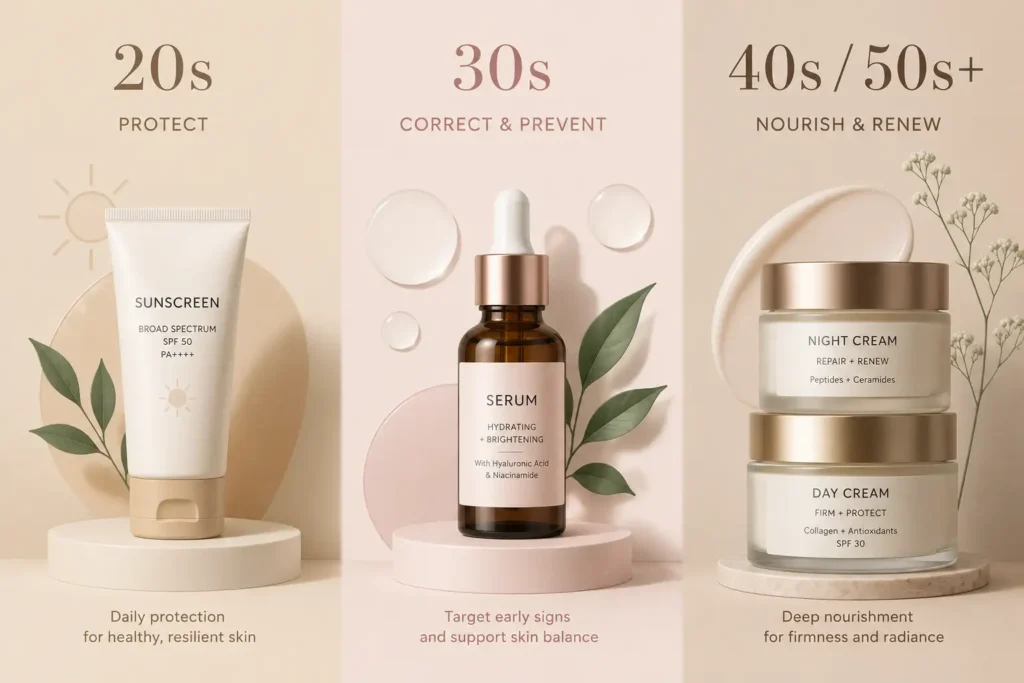
In Your 20s: Prevention-Focused Routine
The AAD’s guidance for skin in your 20s centers on prevention rather than correction: daily sunscreen, avoiding tanning beds, and steering clear of harsh scrubbing.
We’ve put together specific product picks for this stage in our guide to the best anti-aging products for prevention in your 20s.
In Your 30s: Introducing Retinoids and Targeted Treatment
This is typically when collagen production begins a gradual, measurable decline, and fine lines start becoming visible. A retinoid becomes a more central part of the routine here, alongside continued vitamin C and consistent hydration.
In Your 40s and 50s: Repair, Replenishment, and Hormonal Shifts
The AAD notes that an effective anti-aging plan in this decade still starts with the same foundation — sun protection — but benefits from richer, barrier-supporting moisturizers and, for many people, an increase in retinoid strength or frequency as skin becomes more tolerant.
For women, perimenopause and menopause bring a documented acceleration in collagen loss, which is why dermatologists often recommend more consistent use of barrier-repair ingredients (ceramides, fatty acids) during this stage.
Anti-Aging Routine by Skin Type
Oily and Acne-Prone Skin
Favor lightweight, gel-based moisturizers and a salicylic acid exfoliant. Niacinamide is well tolerated here — it helps regulate sebum without adding heaviness.
If you’re deciding between actives, our comparison of vitamin C versus niacinamide walks through which suits oilier skin best.
Dry and Mature Skin
Cream-based, ceramide-rich moisturizers outperform gels for this skin type. Layer hyaluronic acid on slightly damp skin before sealing in with a heavier cream to maximize hydration retention.
Sensitive, Reactive Skin
Introduce one active ingredient at a time, and space out new products by at least a week so you can identify what’s causing any reaction. Fragrance-free formulations and a lower starting retinoid concentration (or retinaldehyde instead of retinol, which some find gentler) are reasonable starting points.
Common Anti-Aging Skincare Mistakes to Avoid
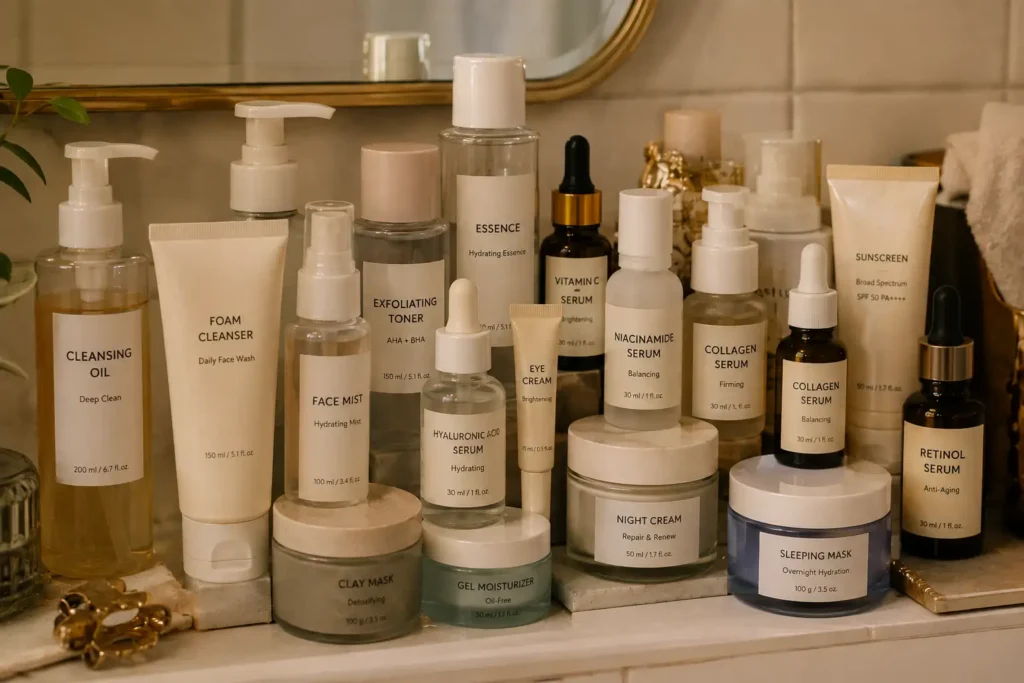
Over-layering too many actives at once.
Combining retinol, an AHA/BHA exfoliant, and vitamin C in the same routine without spacing them out is one of the most common causes of a compromised skin barrier.
Skipping sunscreen on cloudy or indoor days.
UV rays penetrate cloud cover, and UVA rays pass through window glass — daily use matters more than perfect weather.
Combining retinol and vitamin C incorrectly.
As covered above, separate these by time of day rather than skipping one.
Expecting overnight results.
Skin cell turnover takes roughly four to six weeks, and visible improvement from a new active ingredient often takes eight to twelve weeks of consistent use before it’s fair to judge whether it’s working.
FAQ: Complete Anti-Aging Skincare Routine
What is the most effective anti-aging skincare routine?
Daily broad-spectrum SPF 30+, a nighttime retinoid, and consistent hydration are the three elements with the strongest evidence behind them. More advanced additions — peptides, specialized serums, in-office treatments — matter less than doing these three consistently, according to dermatology guidance from the American Academy of Dermatology.
What anti-aging routine is right for your skin?
It depends primarily on your skin type and current tolerance. Oily or acne-prone skin generally tolerates retinol and exfoliating acids well; dry or sensitive skin needs a slower introduction with more barrier support. Age also matters — see the routine-by-age section above for decade-specific guidance.
What is the Japanese secret to anti-aging?
There isn’t a single secret ingredient. Traditional Japanese skincare emphasizes gentle, consistent cleansing, layered hydration, and diligent daily sun avoidance — habits that align closely with what dermatologists recommend generally, rather than a proprietary technique or ingredient unavailable elsewhere.
What is the best anti-aging skincare set?
There’s no single “best” set — the right combination depends on your skin type, age, and current concerns. Look for a set that covers the core categories (cleanser, vitamin C or antioxidant, retinoid, moisturizer, SPF) rather than one built around a single trending ingredient.
What do Koreans use for anti-aging?
Korean skincare culture is known for multi-step, hydration-focused routines and early, consistent sunscreen use — not a single distinct ingredient. Its popularity largely reflects the same fundamentals recommended by Western dermatologists: gentle layering, daily SPF, and prevention starting at a younger age.
How to take 10 years off your face?
No skincare product removes a decade of visible aging on its own. The single highest-impact habit is consistent daily sun protection, since most visible facial aging comes from cumulative UV exposure rather than time alone; a retinoid and consistent hydration meaningfully improve texture and fine lines over months, not overnight.
Which two serums cannot be used together?
Retinol and vitamin C (L-ascorbic acid) are the most commonly flagged combination — layering them in the same application can increase irritation and reduce the stability of both. The practical solution is timing, not avoidance: vitamin C in the morning, retinol at night.
Conclusion: Real Anti-Aging Skincare Routine
A real anti-aging routine isn’t about chasing the newest ingredient on social media — it’s about consistency, the right sequence, and matching your routine to your current age and skin type. Get the fundamentals right first: gentle cleanser, an antioxidant in the morning, a retinoid at night, consistent hydration, and daily SPF. Everything else is a refinement, not a replacement.
Start with the morning routine above tomorrow, and give any new active ingredient eight to twelve weeks before judging whether it’s working — that’s genuinely how long skin needs to show a measurable difference.

About Subhan Usafzai
Evidence-Based Skincare Educator & Formulation Specialist
I'm Subhan Usafzai (Fazli Subhan), an Evidence-Based Skincare Educator and Formulation Specialist. My background includes first-hand experience as a technician and research support in skin departments across tertiary military hospitals since 2006, and since 2008 I've focused on researching and translating clinical and formulation science into practical, evidence-based guidance. My formal training includes Coursera's Introduction to Cosmetic and Skincare Science and the four-course Introduction to Cosmetic Science and Ingredients specialization (Cosmetic Formulation Science, Cosmetic Product Development, and Quality Control and Regulatory in Cosmetic Science), authorized by Olay. Every article I write is checked against current research and reviewed by our medical team before publishing.
✅ Medically reviewed by Dr. Muhammad Khurram Ahmad, MD, Board-Certified Dermatologist · 📅 Last updated: August 2026
📋 Medical Disclaimer
For Educational Purposes Only: This article is written by Subhan Usafzai, an Evidence-Based Skincare Educator and Formulation Specialist, and is intended for informational and educational purposes only. The content provided is based on scientific research, peer-reviewed studies, and dermatological literature available as of August 2026.
Not Medical Advice: The information in this article does not constitute medical advice, diagnosis, or treatment recommendations. It should not be used as a substitute for professional medical consultation, diagnosis, or treatment from a board-certified dermatologist or qualified healthcare provider.
Individual Results May Vary: Skin conditions, including hyperpigmentation, melasma, and UV-induced pigmentation, vary significantly between individuals based on genetics, skin type, hormonal factors, and environmental exposure.
Consult Your Healthcare Provider: Before starting any new skincare regimen, especially if you are pregnant, breastfeeding, have diagnosed skin conditions, are taking medications, have sensitive skin, or are undergoing dermatological treatments.
Product Safety: Always perform a patch test before using new skincare products. Discontinue use and consult a healthcare professional if you experience irritation or adverse reactions.