
What the FDA’s First New UV Filter in 20 Years Means for Your Skin
Why Your Sunscreen Has Felt So Far Behind
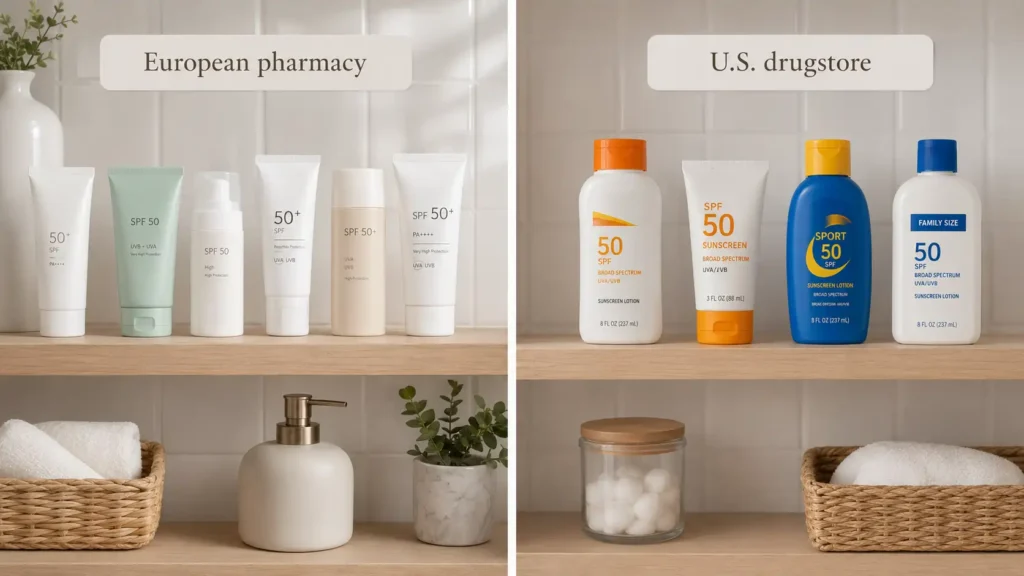
If you’ve ever wondered why your European friend’s sunscreen feels like a luxury serum while yours feels like a zinc paste from 1997 — you’re about to get your answer.
It’s not that American brands don’t care about texture. It’s not that the science wasn’t there. The truth is more frustrating than that: for over two decades, the regulatory system governing what goes into U.S. sunscreens hasn’t approved a single new UV filter. Not one. While European and Asian consumers were layering on sheer, skin-tint-ready, photostable formulas, Americans were essentially stuck with the same ingredient roster from the Clinton era.
That just changed.
On June 9, 2026, the FDA officially added bemotrizinol to the U.S. over-the-counter sunscreen monograph — making it the first new UV filter approved for American sunscreens since the late 1990s.
According to the FDA’s press announcement, it’s also the first successful addition under the streamlined process created by the CARES Act. And this isn’t just a regulatory footnote. It’s the kind of shift that ripples forward into every SPF moisturizer, skin tint, and daily sunscreen you’ll buy in the years ahead.
The textures are going to get better. The protection is going to get broader. And the gap between what American consumers have access to and what the rest of the world has been enjoying for decades? It’s finally starting to close.
What Just Changed — and Why It Took So Long
Here’s something most people don’t realize: in the United States, sunscreens are regulated as over-the-counter drugs, not cosmetics. That’s different from how most of Europe and Asia handle them. Drug classification means a much higher evidence bar, longer review timelines, and a process — the OTC monograph system — that, until recently, was essentially stuck in administrative limbo.
The Sunscreen Innovation Act of 2014 tried to fix this. It didn’t fully work. It took the broader regulatory overhaul embedded in the 2020 Coronavirus Aid, Relief, and Economic Security (CARES) Act to finally create a functional pathway — one where manufacturers could submit requests and actually receive timely decisions.
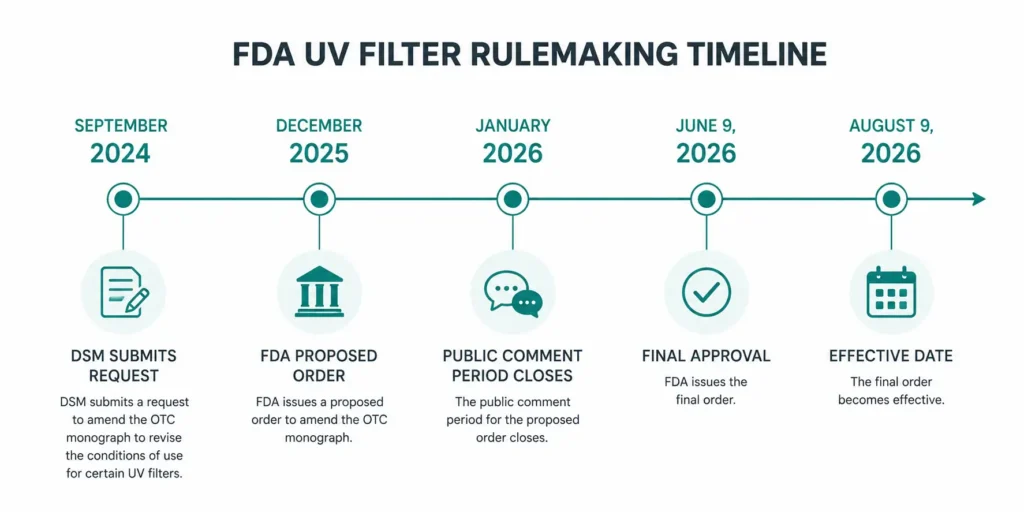
DSM Nutritional Products LLC submitted its request to add bemotrizinol in September 2024. The FDA issued a proposed order in December 2025, accepted public comments through January 2026, and issued the final approval on June 9, 2026.
The full process from proposed order to final decision took approximately seven months. According to CIRS Group’s regulatory analysis, the final order — OTC000039 — takes effect on August 9, 2026.
That’s an unusually fast timeline by FDA standards, and it could signal a real shift in how future sunscreen ingredients get reviewed.
What Is Bemotrizinol, Exactly?
Chemically, it’s called bis-ethylhexyloxyphenol methoxyphenyl triazine, or BEMT. You might also see it labeled as Tinosorb S or Parsol Shield — the latter being the commercial name used by DSM-Firmenich, the ingredient’s manufacturer.
It’s a broad-spectrum organic (chemical) UV filter. It absorbs both UVA radiation (320–400 nm) and UVB radiation (280–320 nm), converting that energy into harmless heat before it can damage skin cells. That sounds like what every sunscreen does — but the specifics matter a lot here.
According to the FDA’s determination, bemotrizinol is GRASE — generally recognized as safe and effective — for use in sunscreens for adults and children aged 6 months and older, at concentrations up to 6%. Critically, the FDA noted that it shows low absorption through the skin. This last point addresses one of the main concerns that has stalled other potential UV filters from advancing through the approval process.
Dr. Christopher Bunick, MD, PhD, speaking with Dermatology Times, explained it well: “It’s a larger molecule than some of our well-known chemical absorbers to date, such as avobenzone. This larger molecule of bemotrizinol doesn’t penetrate the skin as easily, so you have less systemic absorption, potentially making it safer.”
Size matters, as it turns out — at least when it comes to how much of an ingredient gets into your bloodstream.
UVA vs. UVB: Why Broad-Spectrum Coverage Matters More Than You Think
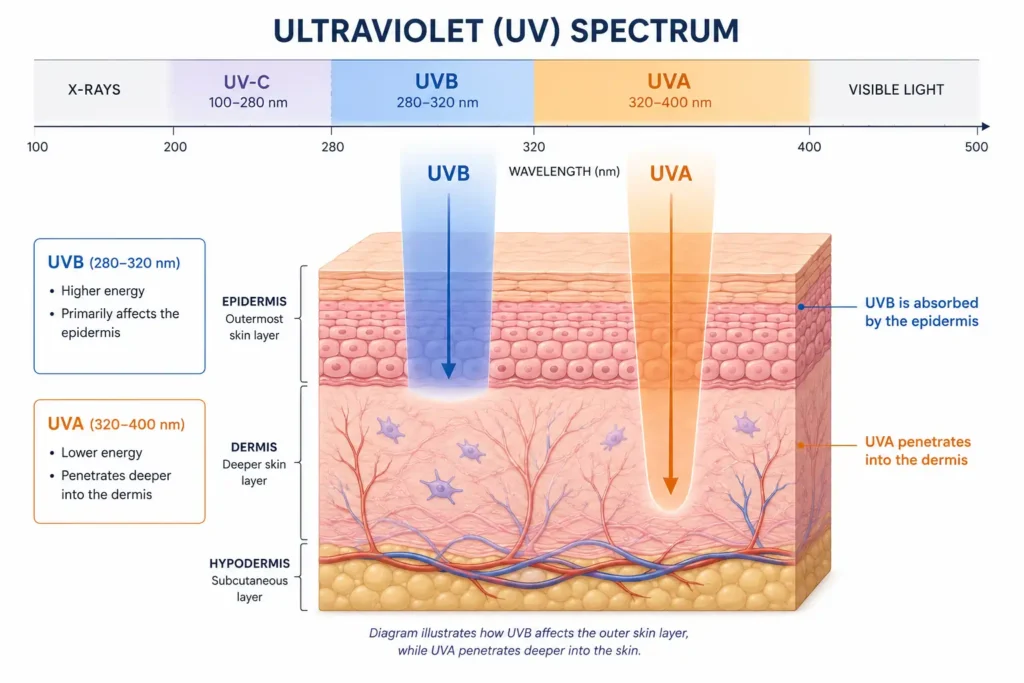
Most people know UVB causes sunburn. What fewer people fully appreciate is what UVA does. UVA rays penetrate deeper into the dermis, contributing significantly to premature aging and collagen breakdown, and — importantly — skin cancer risk. As Drugs.com’s clinical summary notes, UVA rays “penetrate deeper into the skin and are strongly linked to premature aging and cancer.”
Here’s the catch: many existing U.S. sunscreens have historically been stronger against UVB than UVA. The American Academy of Dermatology notes that skin cancer is the most common cancer in the United States, per the AAD’s statistics page. Approximately 6.1 million people are treated for it every year, according to the CDC. Better UVA protection is not a cosmetic luxury — it’s a public health issue.
Bemotrizinol helps close that gap. Its absorption range covers both UV spectra robustly, and because it can stand alone as a broad-spectrum filter, formulators won’t need to stack as many separate ingredients to achieve full coverage.
The Photostability Advantage
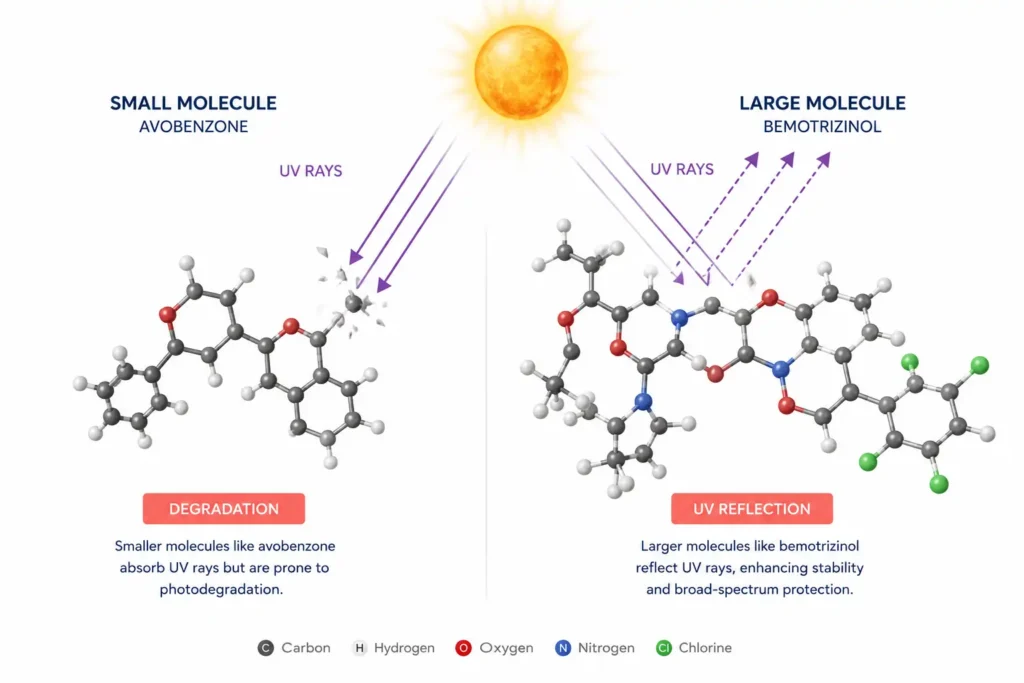
One of the more underrated problems in sunscreen chemistry is photodegradation — the process by which UV filters break down under the very sunlight they’re supposed to block. Avobenzone, the most widely used UVA filter in U.S. sunscreens right now, is notoriously unstable and requires pairing with photostabilizers like octocrylene to function reliably.
Bemotrizinol doesn’t have that problem. It’s considered highly photostable, maintaining its protective efficacy even during prolonged sun exposure. Dr. Bunick confirmed this to Dermatology Times: “Chemical absorbers such as avobenzone require stabilizers to maintain efficacy in sunlight, while bemotrizinol’s molecular structure allows it to last longer without breaking down.”
In practical terms, a sunscreen built around bemotrizinol should hold up better over a long day at the beach than many of the formulas Americans currently rely on.
How This Approval Actually Happened — The Regulatory Story
Honestly, this is worth understanding because it explains both how long the problem persisted and why the solution matters beyond just this one ingredient.
Before the CARES Act reforms, the U.S. OTC monograph process was slow, underfunded, and legally complicated. Sunscreen manufacturers — especially international ones — faced years of uncertainty as they waited for the FDA to act on ingredient applications, with no dedicated resources to speed the process.
Multiple UV filters commonly used in European and Asian markets were stuck in regulatory purgatory in the U.S. for well over a decade.
The CARES Act, signed into law in March 2020, restructured the process. It created a user-fee-based administrative order system — industry funds dedicated to reviews — and established clearer timelines. It also, per Holland & Knight’s legal analysis, allowed for more collaborative engagement between manufacturers and the FDA during the review.
Bemotrizinol is the first ingredient to successfully complete this new pathway. That precedent matters. Other UV filters — including Tinosorb M (bisoctrizole) and Mexoryl SX — have been in various stages of pending review for years. If the bemotrizinol approval signals genuine momentum, they could be next.
As HHS Secretary Robert F. Kennedy, Jr. noted in the FDA’s press release: “Bemotrizinol has been used safely in Europe for decades, and FDA’s action will increase competition and consumer confidence in sunscreen products.”
What It Means for Consumers (Practically Speaking)
Here’s where expectations need a light recalibration. This approval is meaningful — but you won’t walk into a drugstore next week and find shelves full of bemotrizinol-based sunscreens. Reformulation, stability testing, and manufacturing scale-up take time. Realistically, the first wave of U.S. products featuring bemotrizinol will likely hit the market in 2027 or beyond.
A few things to know:
- What to look for on labels: Bemotrizinol, or its full chemical name bis-ethylhexyloxyphenol methoxyphenyl triazine, or the brand designation Parsol Shield. Both will appear in the active ingredients list. If you’re still navigating which sunscreen ingredients work best for your skin, that’s a good place to start while you wait for bemotrizinol products to arrive.
- Maximum concentration: 6%, per the FDA’s final order.
- Who it’s approved for: Adults and children six months of age and older.
- Reapplication still applies: As Drugs.com emphasizes, even photostable filters don’t offer indefinite protection — reapplication every two hours during outdoor activity remains the standard guidance from dermatologists.
Don’t ditch your current sunscreen. Whatever you’re using now still works. This is an upgrade on the horizon, not a reason to stop protecting your skin today.
The longer-term implication is about product design. Bemotrizinol’s oil solubility and photostability make it well-suited for hybrid formulas — moisturizers with SPF, skin tints, lightweight daily serums — that consumers have long gotten from Korean and European brands but haven’t been able to find from domestic ones. As WebMD’s clinical summary notes, the approval is expected to encourage broader innovation across the sunscreen category.
Skin Tones, Aesthetics, and the “White Cast” Problem
This deserves its own section because it’s not just a vanity concern.
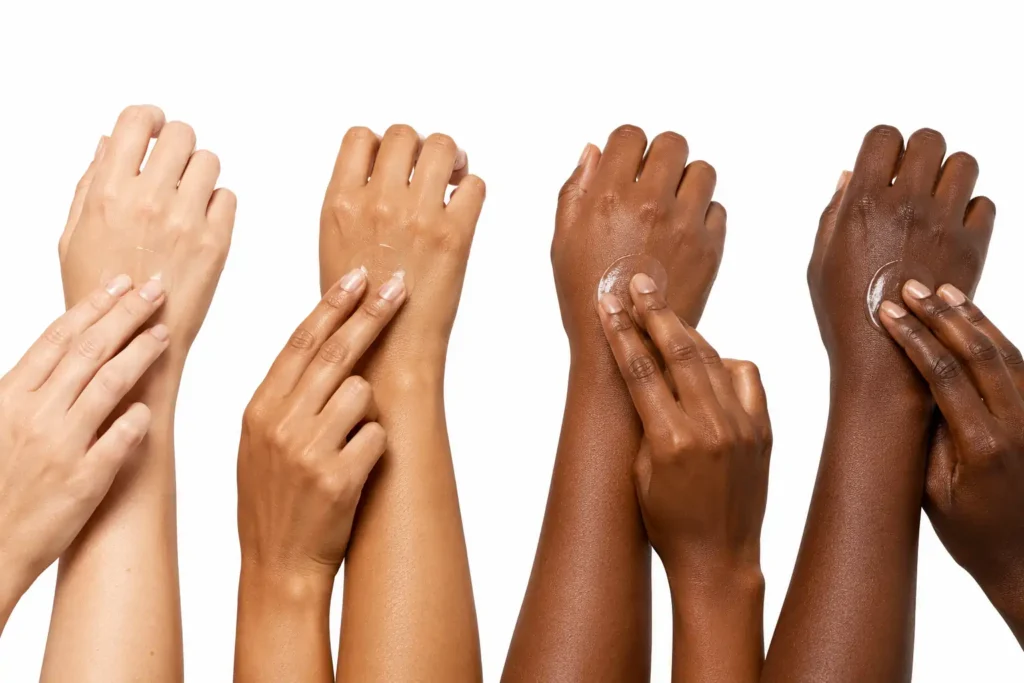
The white cast left by many U.S. mineral sunscreens — zinc oxide and titanium dioxide formulas — has historically made SPF products difficult to use comfortably on medium- to deep-toned skin. It’s contributed to lower rates of sunscreen adoption in communities already underserved by dermatology outreach. Better organic filter options like bemotrizinol, which goes on clear, could meaningfully address this.
Dr. Jane Yoo, MD, an assistant clinical professor at the Icahn School of Medicine at Mount Sinai — and someone who actively lobbied Congress for this approval — was direct about this benefit: bemotrizinol’s approval could “expand cosmetically elegant sunscreen options for diverse skin types,” particularly for patients dealing with melasma, photodamage, or photosensitive skin conditions, where consistent daily use is critical.
That matters. The best sunscreen is, as dermatologists often say, the one you’ll actually wear every day. Texture, appearance, and feel are not trivial product features — they’re adoption barriers that have real public health consequences.
A Note on What’s Still Uncertain
No major regulatory development is without nuance. A few things I cannot confirm at this stage and want to be transparent about:
The specific timeline for consumer-facing bemotrizinol products to reach the U.S. market is not yet publicly confirmed by any major brand. The August 9, 2026, effective date marks when manufacturers may begin marketing products — not when finished goods will be on shelves.
The potential approval timeline for other pending UV filters (Tinosorb M, Mexoryl SX, etc.) has not been officially stated by the FDA. While the bemotrizinol precedent is encouraging, no formal commitments have been made.
FAQ: FDA’s First New UV Filter in 20 Years
What is bemotrizinol and why is it now approved in the U.S.?
Bemotrizinol (also called BEMT, Tinosorb S, or Parsol Shield) is a broad-spectrum UV filter that blocks both UVA and UVB radiation. On June 9, 2026, the FDA added it to the OTC sunscreen monograph — the first new sunscreen active ingredient approved in the U.S. since the late 1990s — using a streamlined process created under the CARES Act. (FDA source)
Is bemotrizinol safe for children?
Yes. The FDA determined that bemotrizinol is generally recognized as safe and effective (GRASE) for use in sunscreens for adults and children aged six months and older, at concentrations up to 6%. It demonstrates low skin absorption, which was central to the FDA’s safety determination. (FDA Final Administrative Order OTC000039)
When will I be able to buy sunscreens with bemotrizinol in the U.S.?
The final FDA order takes effect August 9, 2026, meaning manufacturers can legally begin marketing bemotrizinol-containing sunscreens from that date. However, actual product availability will depend on individual brands’ reformulation and launch timelines. Most new sunscreen formulas take 12–24 months from development to retail shelves.
How is bemotrizinol different from avobenzone?
Both are chemical UVA filters, but bemotrizinol has two key advantages: it’s photostable (doesn’t degrade in sunlight the way avobenzone does), and it provides broader UVA coverage. According to dermatologist Dr. Christopher Bunick, MD, PhD, bemotrizinol’s larger molecular size also means it penetrates the skin less than avobenzone. (Dermatology Times)
Does this mean my current sunscreen is no longer effective?
No. Every FDA-approved sunscreen currently on the market remains effective and safe to use. Bemotrizinol expands the options available to U.S. consumers and formulators — it doesn’t replace or invalidate existing products. Continue using whatever sunscreen you’re currently wearing and reapplying every two hours during outdoor activity.
Will bemotrizinol help reduce white cast from sunscreen?
Likely yes, for many formulas. As an organic (chemical) filter, bemotrizinol is oil-soluble and goes on clear, unlike zinc oxide or titanium dioxide, which are the primary causes of white cast in mineral sunscreens. Its addition should enable lighter, clearer-finish formulas, particularly in hybrid SPF products like tinted moisturizers and skin tints.

About Subhan Usafzai
Evidence-Based Skincare Educator & Formulation Specialist
I'm Subhan Usafzai (Fazli Subhan), an Evidence-Based Skincare Educator and Formulation Specialist. My background includes first-hand experience as a technician and research support in skin departments across tertiary military hospitals since 2006, and since 2008 I've focused on researching and translating clinical and formulation science into practical, evidence-based guidance. My formal training includes Coursera's Introduction to Cosmetic and Skincare Science and the four-course Introduction to Cosmetic Science and Ingredients specialization (Cosmetic Formulation Science, Cosmetic Product Development, and Quality Control and Regulatory in Cosmetic Science), authorized by Olay. Every article I write is checked against current research and reviewed by our medical team before publishing.
✅ Medically reviewed by Dr. Muhammad Khurram Ahmad, MD, Board-Certified Dermatologist · 📅 Last updated: June 2026
📋 Medical Disclaimer
For Educational Purposes Only: This article is written by Subhan Usafzai, an Evidence-Based Skincare Educator and Formulation Specialist, and is intended for informational and educational purposes only. The content provided is based on scientific research, peer-reviewed studies, and dermatological literature available as of June 2026.
Not Medical Advice: The information in this article does not constitute medical advice, diagnosis, or treatment recommendations. It should not be used as a substitute for professional medical consultation, diagnosis, or treatment from a board-certified dermatologist or qualified healthcare provider.
Individual Results May Vary: Skin conditions, including hyperpigmentation, melasma, and UV-induced pigmentation, vary significantly between individuals based on genetics, skin type, hormonal factors, and environmental exposure.
Consult Your Healthcare Provider: Before starting any new skincare regimen, especially if you are pregnant, breastfeeding, have diagnosed skin conditions, are taking medications, have sensitive skin, or are undergoing dermatological treatments.
Product Safety: Always perform a patch test before using new skincare products. Discontinue use and consult a healthcare professional if you experience irritation or adverse reactions.