
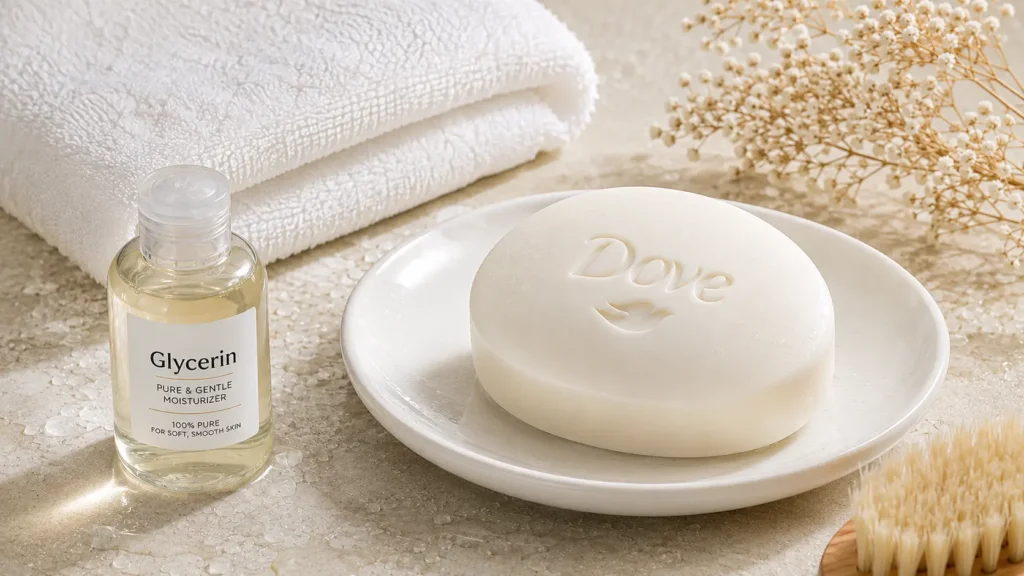
Best Dry Skin Soap for Face: 2026 Dermatologist-Recommended Picks
If your face feels tight and papery an hour after you wash it, that “squeaky clean” feeling isn’t a sign your soap worked well. It’s usually a sign your soap worked too well — stripping away the oils and lipids your skin needs to hold onto water in the first place.
I hear this from readers constantly: they keep buying new cleansers, and their skin keeps getting drier. The product isn’t the problem. The type of product often is.
The good news is that choosing the right dry skin soap for face use isn’t complicated once you understand what your skin barrier actually needs.
This guide breaks down the science of why some soaps make dryness worse, which ingredients genuinely help, which products dermatologists tend to recommend, and how to adjust your washing routine so you stop undoing your moisturizer’s work every time you cleanse.
Everything below is grounded in guidance from board-certified dermatologists, the American Academy of Dermatology (AAD), and peer-reviewed dermatology research — not marketing claims.
For a broader look at gentle cleansing options, check out our complete guide to the 10 Best Soaps for Dry Skin.
What Makes a Soap Good (or Bad) for Dry Facial Skin?
Why Traditional Bar Soap Can Strip Your Skin
Classic bar soap is made through saponification — combining fats or oils with an alkali, which produces a cleanser with a naturally high pH, typically between 9 and 10. That alkalinity is exactly what makes old-fashioned soap so good at cutting through grease, but it’s also what makes it rough on facial skin.
According to DermNet, soap and surfactant-based cleansers can trigger irritant contact dermatitis — redness, dryness, and chafing — particularly in people whose skin is already compromised or dry. The AAD echoes this in its guidance, noting that dry skin is essentially damaged skin, and it recommends applying just enough cleanser to remove dirt and oil rather than working up a thick lather.
What Is Your Skin’s pH, and Why Does It Matter?
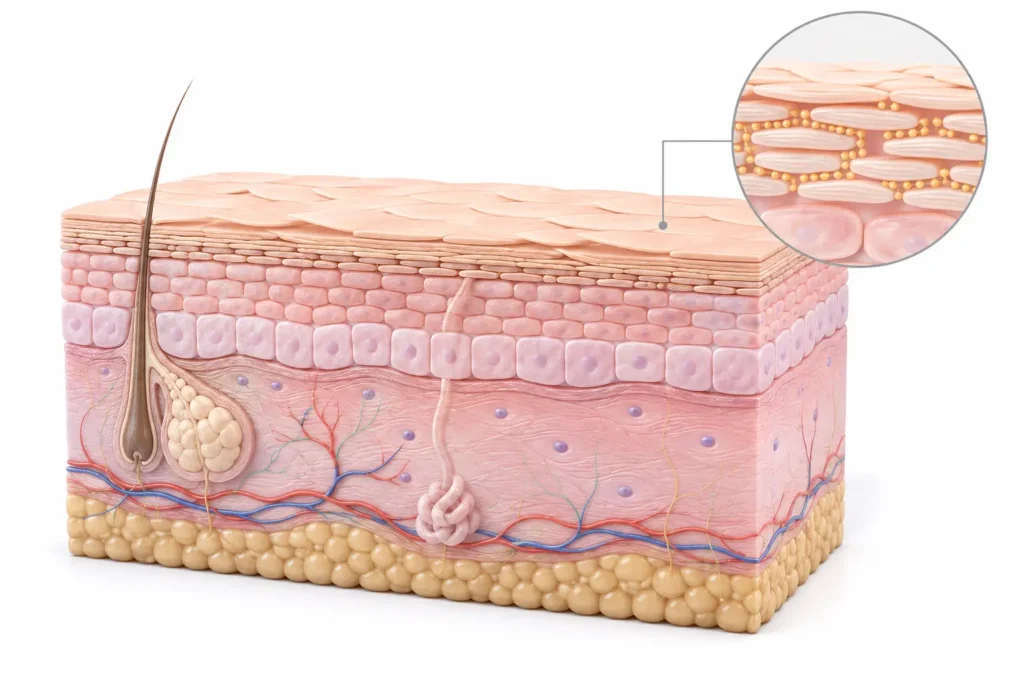
Healthy skin sits at a mildly acidic pH, generally cited in dermatology literature as being around 4.5 to 5.5. This “acid mantle” supports the enzymes responsible for building the skin’s lipid barrier and helps regulate the microbiome that lives on the skin’s surface.
Research on the stratum corneum — the outermost layer of skin — has found that when surface pH rises too high, it increases the activity of enzymes that break down protective lipids, which in turn worsens barrier dysfunction and inflammation.
In plain terms: a soap that pushes your skin’s pH too far above its natural range can actively work against your barrier repair, even if the soap “looks” gentle in the bottle.
For a deeper look at how your skin microbiome works—and how to keep it balanced—read our complete guide to protecting the skin microbiome.
Ingredients That Make Dryness Worse
Not every ingredient marketed for cleansing is dry-skin friendly. Sodium lauryl sulfate (SLS), a common foaming anionic surfactant, has been shown in dermatology sources to compromise the stratum corneum and increase transepidermal water loss — the technical term for water escaping through the skin faster than it should.
DermNet also notes that sodium lauryl sulfate is more irritating than its milder cousin, sodium laureth sulfate. Beyond sulfates, denatured alcohol, synthetic fragrance, and antibacterial/deodorant additives are common triggers for irritation in people with dry or sensitive facial skin.
Key Ingredients to Look for in a Dry Skin Soap for Face
Ceramides — Rebuilding the Skin Barrier
Ceramides are lipid molecules that make up roughly half of the fats found in the stratum corneum, where they help form the “mortar” that holds skin cells together and prevents water loss. People with chronically dry or eczema-prone skin often have measurably lower ceramide levels, and research shows ceramide content in the skin correlates directly with barrier strength.
Topical products that supply ceramides — or the fatty acids and cholesterol needed to help skin rebuild its own — are consistently associated in dermatology literature with strengthened barrier function.
Who benefits
Nearly anyone with dry, flaky, or barrier-compromised skin, including people with eczema or atopic dermatitis.
Who should be cautious?
Ceramides are broadly well tolerated; irritation is uncommon, though a fragranced ceramide product could still cause reactions in fragrance-sensitive skin.
Compatibility
Ceramides pair well with cholesterol and fatty acids, which is why many formulas combine all three in a ratio that mimics the skin’s natural lipid composition.
Curious how ceramides compare with niacinamide for supporting the skin barrier? Our Ceramide vs Niacinamide guide breaks down the differences and helps you choose the right ingredient for your skin.
Glycerin, Hyaluronic Acid, and Other Humectants
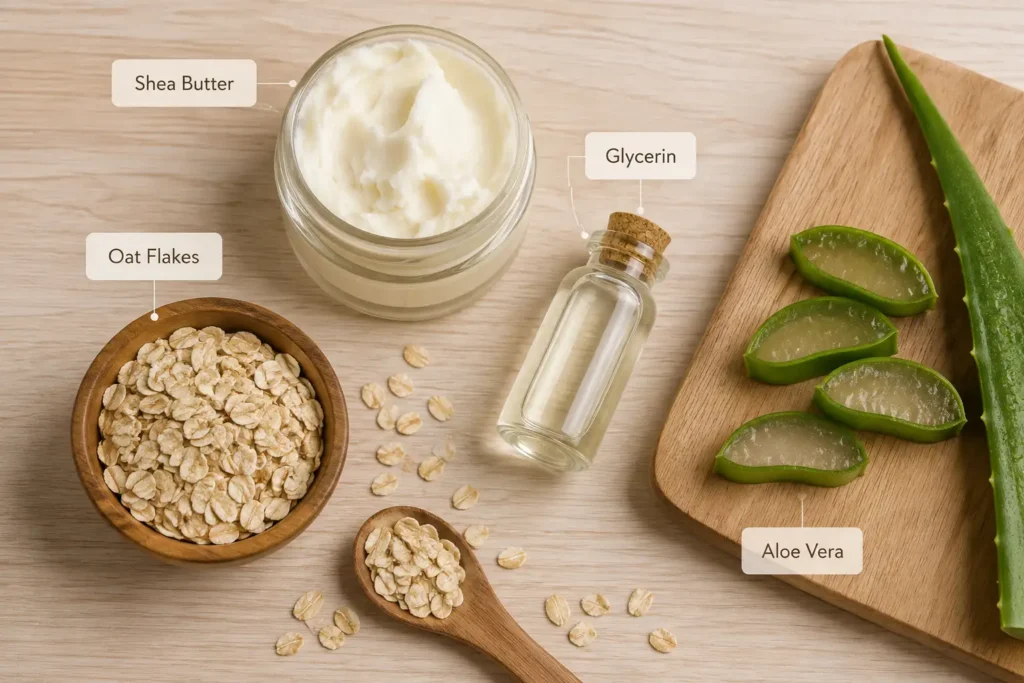
Humectants pull water into the skin’s outer layer rather than replacing lost oils. Glycerin is one of the most studied and well-tolerated humectants in skincare, and it’s frequently added to cleansing bars specifically to offset the drying effect of surfactants.
Hyaluronic acid works in the same way but at the skin’s surface, drawing in moisture and giving a temporary plumping effect.
Both ingredients are considered low-risk for irritation, though in very dry, low-humidity climates, humectants used alone (without an occlusive layer on top) can occasionally pull moisture from deeper skin layers if there’s not enough ambient humidity to draw from — which is one reason dermatologists recommend applying a moisturizer immediately after cleansing.
Shea Butter, Oils, and Emollients That Lock in Moisture
Emollients such as shea butter, lanolin, and various plant oils fill in the gaps between skin cells, smoothing rough or flaky texture and reducing the sensation of tightness. DermNet classifies these as core ingredients in “moisturizing soap substitutes,” which it recommends over traditional soap for people with dry or sensitive skin.
Is Fragrance-Free Always Better?
Not necessarily “better,” but generally safer for compromised skin. Synthetic fragrance is one of the more common triggers of allergic and irritant contact dermatitis. If you have known dry, sensitive, or eczema-prone skin, choosing a fragrance-free formula reduces one obvious variable.
That said, fragrance-free doesn’t guarantee gentleness — you still need to check the surfactant and pH profile of the product.
Ingredient Quick-Reference Table
| Ingredient | Function | Best For | Use With Caution If |
|---|---|---|---|
| Ceramides | Rebuilds lipid barrier | Chronic dryness, eczema-prone skin | Rarely an issue; check for added fragrance |
| Glycerin | Humectant, draws in water | Most dry skin types | Very low-humidity climates without a moisturizer layered on top |
| Hyaluronic acid | Surface-level hydration | Dehydrated, tight-feeling skin | Same as above |
| Shea butter/plant oils | Emollient, smooths texture | Flaky, rough patches | Acne-prone skin (check comedogenicity) |
| Sodium lauryl sulfate (SLS) | Foaming surfactant | Oily/normal skin only | Dry, sensitive, or eczema-prone skin |
| Synthetic fragrance | Scent | Tolerant, non-sensitive skin | Reactive, allergy-prone, or already-irritated skin |
Best Dry Skin Soaps for Face in 2026
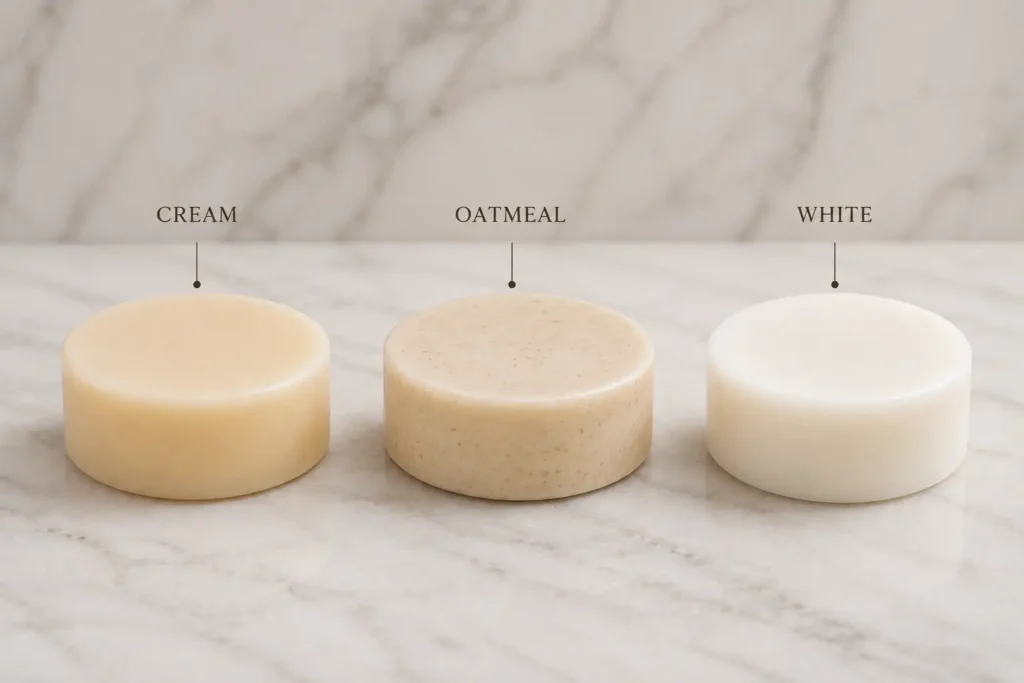
The following picks are chosen because their formulations align with the evidence above — not because they are simply popular. Always patch-test a new product on your inner forearm for 24–48 hours before applying it to your face, especially if you have a history of sensitive skin.
Cetaphil Gentle Cleansing Bar
A syndet (synthetic detergent) bar rather than true soap, formulated to be closer to skin-neutral pH than traditional bar soap. It’s fragrance-free and non-comedogenic, and consumer testing consistently notes it cleanses without leaving the tight, stripped feeling associated with alkaline soaps.
Texture: Solid bar, low lather.
Strengths: Works for face and body, minimal irritation risk.
Limitations: Very plain, clinical scent-free formula may feel “boring” to users who prefer a spa-like sensory experience.
CeraVe Hydrating Cleansing Bar / Ceramide-Based Cleansers
CeraVe’s cleansers are formulated with three essential ceramides plus hyaluronic acid, and the brand explicitly designs its dry-skin lines to avoid disrupting the barrier during cleansing.
Texture: Cream-forward, minimal foam.
Strengths: Ceramide delivery, allergy-tested, fragrance-free options available.
Limitations: Cream cleansers can leave a slight residue if not rinsed thoroughly.
Dove Beauty Bar / Dove DermaSeries
Dove’s bars are formulated with roughly one-quarter moisturizing cream to offset the drying effect of cleansing, and the brand markets several bars as gentle enough for facial use (Dove).
The DermaSeries liquid line has also been recognized by the National Eczema Association as suitable for sensitive, eczema-prone skin.
Strengths: Widely available, budget-friendly, mild fragrance options.
Limitations: Scented versions may not suit fragrance-sensitive users.
Wondering whether Dove Sensitive Skin Beauty Bar is right for you? Our complete guide to Dove Sensitive Skin Beauty Bar takes a closer look at its ingredients, benefits, and potential drawbacks.
Aveeno Moisturizing Bar — Is It Good for Face?
Aveeno’s oat-based moisturizing bar is generally considered gentle enough for facial use by consumers and reviewers, thanks to its colloidal oatmeal and emollient-rich formula. It’s a heavier, more occlusive bar than a typical foaming face wash, which makes it a reasonable option for dry or flaky skin — though people with acne-prone or very oily skin may find it too rich, and anyone with a known oat sensitivity should avoid it.
Best Budget-Friendly Pick
For readers comparing value, the Olay Beauty Bar has been highlighted in independent testing as an affordable option that still leans toward a gentler, moisturizing formula rather than a harsh, high-pH bar. It won’t match a ceramide-specific formula for barrier repair, but it’s a reasonable everyday option for mild dryness.
How to Choose the Right Soap for Your Skin Type
Bar Soap vs. Liquid Cleanser vs. Cream Cleanser — What’s the Difference?
| Format | Typical pH/Formula | Best For | Watch Out For |
|---|---|---|---|
| Traditional bar soap | High pH (alkaline) | Not recommended for dry facial skin | Stripping, tightness, irritation |
| Syndet bar (e.g., Cetaphil) | Closer to skin-neutral | Dry, sensitive facial skin | Minimal — generally well tolerated |
| Foaming liquid cleanser | Often SLS-based, can be alkaline | Oily/acne-prone skin | Can over-dry combination or dry skin |
| Cream/lotion cleanser | Low-foam, emollient-rich | Dry, dehydrated, or mature skin | May leave slight residue if under-rinsed |
Which Soap Is NOT Good for Dry Skin?
Avoid deodorant and antibacterial bar soaps — their added agents are formulated for body odor control, not facial skin, and tend to be more drying. Also steer clear of any cleanser listing sodium lauryl sulfate high on the ingredient list, bars with added alcohol, and heavily fragranced “spa” bars marketed on scent rather than skin compatibility.
If a soap leaves your face feeling tight within minutes of rinsing, that’s a reliable real-time signal it’s too harsh for your skin, regardless of what the packaging claims.
Best Options for Sensitive or Eczema-Prone Skin
For eczema-prone or highly reactive skin, DermNet’s guidance is to minimize soap and soap-like cleansers altogether, favoring “soap substitutes” — moisturizing, low- or no-foam cleansers used sparingly.
Look specifically for fragrance-free, ceramide- or emollient-based formulas, and consider washing with your fingertips instead of a washcloth or brush to minimize mechanical irritation.
If you have sensitive or easily irritated skin, explore our guide to Organic Face Wash for Sensitive Skin for gentle cleanser options.
Best Soap for Dry Skin for Older Adults
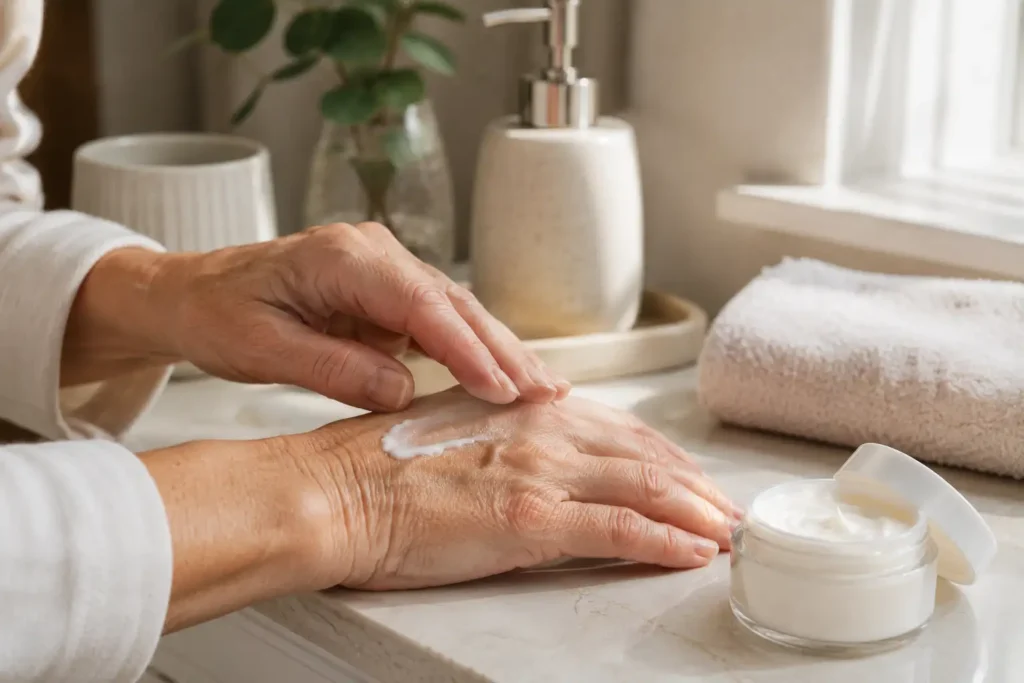
Why Skin Gets Drier with Age
Skin naturally thins and loses fat as we age, and the glands responsible for producing oil become less effective. The National Institute on Aging notes that dry skin becomes increasingly common with age, and that using too much soap, antiperspirant, or perfume — combined with hot baths — tends to make it worse (National Institute on Aging).
This isn’t just cosmetic: because older skin is thinner, scratching dry or itchy patches carries a higher risk of bleeding and secondary infection.
What Dermatologists and the NIA Recommend for Seniors
The NIA’s guidance is straightforward: bathe less frequently, use milder soap, choose warm rather than hot water, and consider a humidifier to add moisture to indoor air, which tends to be especially dry during winter heating season (National Institute on Aging).
For facial cleansing specifically, a fragrance-free, moisturizing bar or cream cleanser with glycerin, shea butter, or lanolin is a reasonable default, applied with a soft cloth or fingertips rather than anything abrasive.
Gentle Bathing Tips for Caregivers
If you’re caring for an older adult, the same mild-soap-and-moisturizer principle applies, with extra attention to drying between skin folds and checking for rashes or irritation after bathing, since older skin bruises and breaks down more easily than younger skin.
How to Properly Wash Your Face with a Dry Skin Soap
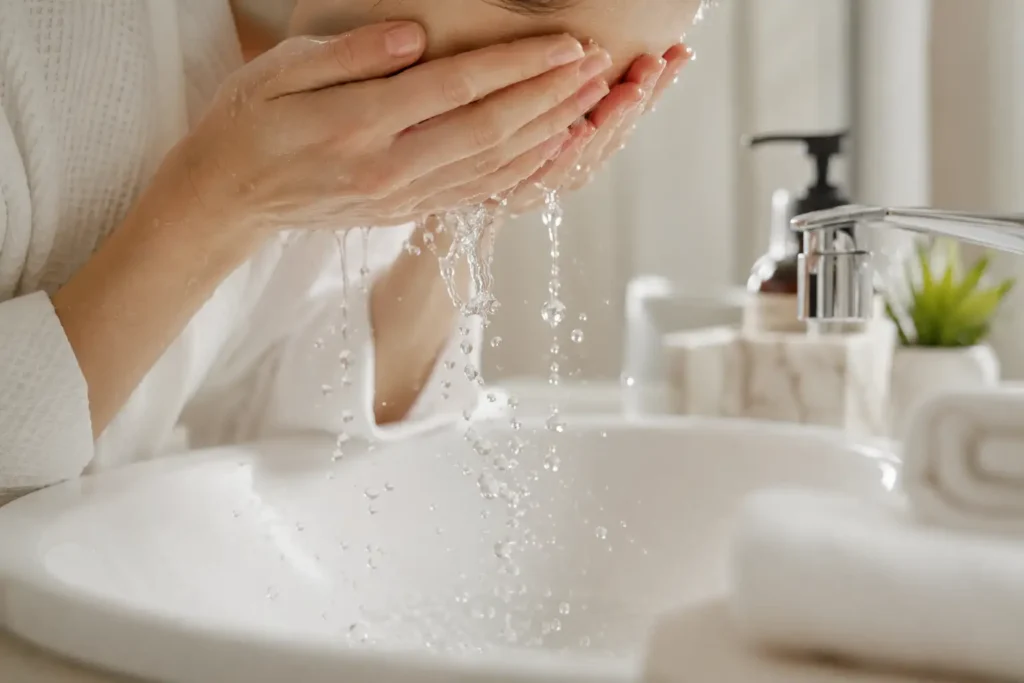
Step-by-Step Cleansing Routine
- Wet your face with lukewarm — not hot — water.
- Apply a small amount of your gentle cleanser with clean fingertips, using light, circular motions.
- Avoid working the product into a thick, heavy lather; a light lather is enough to lift dirt and oil.
- Rinse thoroughly. Leftover cleanser residue can itself be irritating.
- Pat — don’t rub — your face dry with a clean, soft towel.
- Apply moisturizer within a few minutes, while skin is still slightly damp, to help seal in water rather than let it evaporate.
This sequence reflects guidance from both the AAD and CeraVe, both of which specifically recommend patting skin dry and moisturizing promptly after cleansing to lock in hydration.
How Often Should You Wash a Dry Face?
For most people with dry skin, twice daily — morning and night — is sufficient, with an optional rinse after heavy sweating. Washing more often than that can compound dryness by repeatedly removing the skin’s natural oils before they’ve had a chance to replenish.
What to Do After Cleansing (Moisturizing Tips)
Choose a fragrance-free, non-comedogenic moisturizer and apply it to damp (not dry) skin. If your skin is especially dry or flaking, dermatology sources generally favor thicker creams or ointments over thin lotions, since ointments and creams tend to be more occlusive and less likely to cause stinging on compromised skin.
For a step-by-step approach to your evening routine, see our guide to the dermatologist-recommended Nighttime Skincare Routine Order.
Common Mistakes That Make Dry Skin Worse
Washing with Hot Water
Hot water feels good in the moment but accelerates the breakdown of the skin’s oil barrier. Dermatologists recommend keeping showers and face-washing sessions warm rather than hot, and limiting time in water to a few minutes.
Over-Cleansing or Over-Exfoliating
Washing more than twice a day, or exfoliating too aggressively or too often, doesn’t make dry skin “cleaner” — it removes the very lipids and cells your barrier needs. If your skin routinely feels tight, red, or raw after your routine, that’s a sign to scale back frequency or strength, not add another product.
Skipping Moisturizer Right After Washing
Waiting too long after cleansing to moisturize allows the water on your skin’s surface to evaporate rather than absorb, which can leave skin drier than before you washed it. The few-minutes-after-cleansing window matters more than most people realize.
Rubbing Skin Dry Instead of Patting
Vigorously rubbing a towel across dry or already-irritated skin creates friction that can worsen inflammation and, in more extreme cases, contribute to microtears. A gentle pat is enough to remove excess water while leaving a thin, beneficial layer of moisture on the surface.
If your skin is already feeling irritated or compromised, our 2026 guide to repairing a damaged skin barrier explains how to restore and protect it.
Conclusion: Dry Skin Soap for Face
The right dry skin soap for face use isn’t the one with the prettiest packaging or the biggest lather — it’s the one that respects your skin’s natural pH, avoids harsh sulfates and fragrance if your skin is reactive, and ideally replenishes ceramides and humectants as it cleans. Just as important as the product itself is the process: lukewarm water, a light touch, thorough rinsing, and a moisturizer applied within minutes of patting your face dry.
Get those fundamentals right, and even a modest, fragrance-free bar can outperform an expensive cleanser used the wrong way. If your skin is still tight, flaking, or uncomfortable after a few weeks of following this approach, that’s worth bringing to a board-certified dermatologist rather than continuing to cycle through products on your own.
FAQ: Dry Skin Soap for Face
What is the best soap for dry skin on face?
Dermatology sources generally favor fragrance-free, low-pH syndet bars or cream cleansers formulated with ceramides, glycerin, or shea butter over traditional alkaline soap. Options like Cetaphil Gentle Cleansing Bar and ceramide-based CeraVe cleansers are frequently recommended because they clean effectively while minimizing disruption to the skin’s natural moisture barrier and pH balance.
Which face wash is best for extremely dry skin?
For extremely dry or flaking skin, cream or lotion cleansers formulated with ceramides, hyaluronic acid, and glycerin tend to perform better than foaming, sulfate-based washes. These formulas cleanse gently while actively supporting barrier repair, rather than simply stripping away oil, dirt, and the lipids your skin needs to retain moisture.
What face wash do dermatologists recommend for dry skin?
Dermatologists commonly recommend fragrance-free, non-comedogenic cream or cleansing-bar formulas over foaming, sulfate-heavy washes for dry skin. Look for products labeled “for dry or sensitive skin,” ideally containing ceramides or glycerin, and apply with lukewarm water and a light touch rather than a vigorous scrub or thick lather.
What is the best soap for older people with dry skin?
For older adults, whose skin is naturally thinner and produces less oil, a mild, fragrance-free, moisturizing bar or cream cleanser containing glycerin, shea butter, or lanolin is generally recommended. The National Institute on Aging also advises using less soap overall, along with warm (not hot) water and consistent daily moisturizing.
Which soap is not good for dry skin?
Traditional high-pH bar soaps, antibacterial or deodorant soaps, and cleansers listing sodium lauryl sulfate (SLS) near the top of the ingredient list tend to be poor choices for dry skin. These formulas strip protective lipids and disrupt the skin’s natural acidic pH, which can worsen flaking, tightness, and irritation over time.
What is the best thing for older people’s dry skin?
Alongside a mild, fragrance-free cleanser, consistent daily moisturizing with a cream or ointment, shorter lukewarm baths or showers, and a humidifier for dry indoor air are widely recommended. The National Institute on Aging also cautions against excessive soap, perfume, or hot water, all of which can intensify dryness in older, thinner skin.
Which brand is best for dry skin?
No single brand suits everyone, but Cetaphil, CeraVe, Dove (DermaSeries and Beauty Bar), and Aveeno are among the most consistently recommended for dry, sensitive skin across dermatology sources and consumer testing. The best choice ultimately depends on your specific skin needs, sensitivities, and whether you prefer a bar, cream, or liquid format.
Is Aveeno moisturizing bar good for face?
Yes, Aveeno’s oat-based moisturizing bar is generally considered gentle enough for facial use, thanks to its colloidal oatmeal and emollient-rich formula. It’s richer than a typical foaming face wash, so it suits dry or flaky skin well, though those with acne-prone skin or a known oat sensitivity should patch-test or avoid it.

About Subhan Usafzai
Evidence-Based Skincare Educator & Formulation Specialist
I'm Subhan Usafzai (Fazli Subhan), an Evidence-Based Skincare Educator and Formulation Specialist. My background includes first-hand experience as a technician and research support in skin departments across tertiary military hospitals since 2006, and since 2008 I've focused on researching and translating clinical and formulation science into practical, evidence-based guidance. My formal training includes Coursera's Introduction to Cosmetic and Skincare Science and the four-course Introduction to Cosmetic Science and Ingredients specialization (Cosmetic Formulation Science, Cosmetic Product Development, and Quality Control and Regulatory in Cosmetic Science), authorized by Olay. Every article I write is checked against current research and reviewed by our medical team before publishing.
✅ Medically reviewed by Dr. Muhammad Khurram Ahmad, MD, Board-Certified Dermatologist · 📅 Last updated: August 2026
Medical Disclaimer
For Educational Purposes Only: This article is written by Subhan Usafzai, an Evidence-Based Skincare Educator and Formulation Specialist, for educational and informational purposes only. The information draws on scientific research, peer-reviewed studies, and dermatological literature available as of August 2026.
Not Medical Advice: This content does not constitute medical advice, diagnosis, or treatment. It is not a substitute for consultation with a qualified healthcare professional or dermatologist.
Individual Results May Vary: Skin conditions and responses to skincare products vary according to individual characteristics, skin type, hormonal factors, and environmental exposure.
Consult Your Healthcare Provider: Seek professional guidance before changing your skincare regimen, particularly during pregnancy or breastfeeding, or if you have a diagnosed skin condition, take medication, have sensitive skin, or receive dermatological treatment.
Product Safety: Consider patch testing new products. Discontinue use if irritation or an adverse reaction occurs, and seek medical advice when needed.
Affiliate Disclosure
Amazon Associates Disclosure: As an Amazon Associate I earn from qualifying purchases.
Editorial Independence: Affiliate relationships do not determine our product reviews or recommendations. We aim to provide balanced, research-informed information to help readers make informed skincare choices.
Supporting Glow Guide Hub: Qualifying purchases through affiliate links may earn us a commission at no additional cost to you.