
What Causes Hormonal Acne? Real Triggers, Signs & Fixes in 2026
You’re not imagining it. That deep, tender breakout that shows up on your chin like clockwork, a few days before your period, isn’t bad luck, poor hygiene, or a sign that your skincare routine has failed you. It’s biology.
If you’ve spent years scrubbing, exfoliating, and swapping cleansers only to keep breaking out in the same handful of spots, you’re dealing with something that responds to a different kind of logic than teenage acne ever did. So, what causes hormonal acne?
In short, it comes down to how your body’s androgens — a group of hormones present in everyone — interact with your skin’s oil glands. Genetics, stress, your menstrual cycle, pregnancy, PCOS, and even certain medications can all tip that balance and trigger a flare.
This guide walks through exactly what’s happening beneath the surface, how to tell hormonal acne apart from other breakouts, and what dermatologists actually recommend to bring it under control. No guesswork, no miracle cures — just the science, explained clearly.
What Is Hormonal Acne?
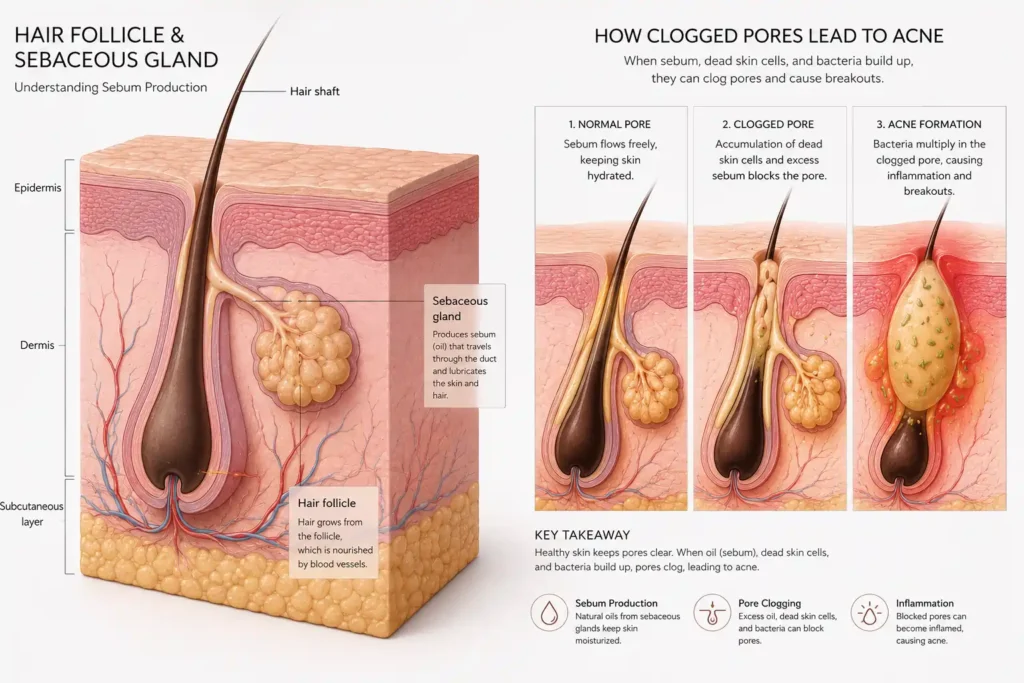
Hormonal acne is a form of acne linked to fluctuations in androgens, the hormones responsible for regulating oil (sebum) production in the skin. According to the Cleveland Clinic, hormonal acne develops when hormonal shifts increase how much oil your skin produces; that excess oil then interacts with bacteria inside hair follicles, leading to clogged pores and inflamed breakouts.
Unlike the T-zone congestion many people associate with teenage acne, hormonal acne tends to concentrate along the lower third of the face — the jawline, chin, and sometimes the neck.
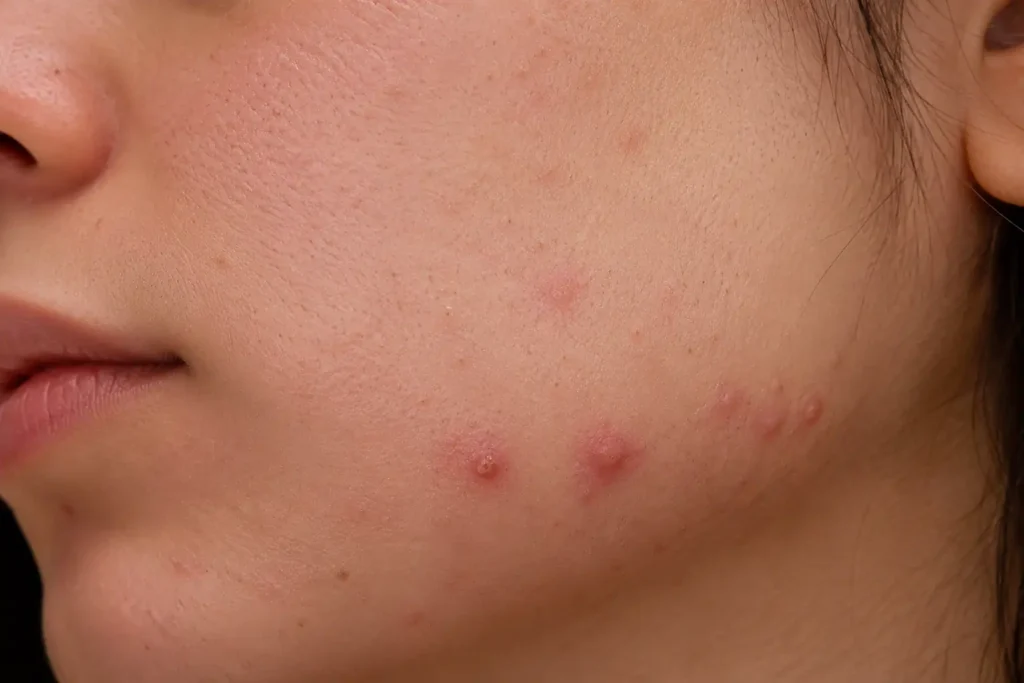
It also tends to be deeper. Rather than surface-level whiteheads or blackheads, hormonal breakouts are frequently tender, cystic nodules that sit under the skin, take longer to come to a head, and are more likely to leave post-inflammatory marks behind.
Here’s a quick side-by-side comparison to help frame the rest of this guide:
| Feature | Hormonal Acne | Typical Teenage/Non-Hormonal Acne |
|---|---|---|
| Common location | Jawline, chin, lower cheeks, neck | Forehead, nose, T-zone |
| Texture | Deep, tender, cystic | Whiteheads, blackheads, surface pustules |
| Timing | Cyclical, tied to hormonal shifts | Not necessarily cyclical |
| Typical onset | Often first appears or worsens in adulthood | Usually begins at puberty |
| Response to standard OTC treatment | Often partial; may need medical support | Frequently responds well |
Does Hormonal Acne Mean You Have a Hormonal Imbalance?
Not necessarily, and this is one of the biggest misconceptions about the condition. Board-certified dermatologist Dr. Hadley King has explained that hormonal acne flares aren’t typically a sign of a hormonal imbalance at all. Instead, they’re often a normal fluctuation of hormones that your skin happens to be more sensitive to.
Some people’s sebaceous glands are simply more genetically reactive to shifting hormone levels, meaning the same monthly hormone changes that don’t cause a single blemish in one person can trigger a full breakout in another.
What Causes Hormonal Acne? The Main Triggers
There isn’t a single cause of hormonal acne. It’s usually the result of several overlapping factors working together: rising androgen activity, menstrual cycle shifts, pregnancy or postpartum hormone changes, perimenopause, PCOS, chronic stress, certain medications, and sometimes diet. Each one can independently increase oil production and clog pores, and most people dealing with hormonal acne are affected by more than one at once. Here’s what’s typically driving the breakouts, trigger by trigger.
Androgens and Excess Sebum Production
Androgens, including testosterone and its more potent derivative DHT, bind to receptors in the skin’s sebaceous glands and stimulate oil production. When androgen activity rises, or when the skin’s receptors become more sensitive to normal androgen levels, sebum output increases. That excess oil, combined with dead skin cells, clogs pores, creates an environment where acne-causing bacteria thrive, and sets the stage for inflammation.
Research on serum androgen levels in acne patients has linked higher circulating androgen levels to greater acne severity, reinforcing why this hormonal pathway is the common thread running through nearly every trigger below.
The Menstrual Cycle and Pre-Period Breakouts
Many women notice a predictable flare in the days leading up to their period. As estrogen and progesterone drop in the days before menstruation, androgen activity becomes relatively more dominant, which can ramp up oil production and trigger the chin and jawline breakouts that many people associate with PMS.
Pregnancy and Postpartum Hormone Shifts
Pregnancy brings dramatic hormonal changes, and some people find their skin actually improves during this time, while others experience new breakouts, particularly in the first trimester. Postpartum, estrogen levels drop sharply while other hormones adjust, which can unbalance androgen activity and trigger flares that last for weeks or months after delivery.
If you’re managing pregnancy-related skin concerns and looking for ingredients considered safe to use, it’s worth reading about which actives, like azelaic acid, are generally recommended during pregnancy before adding anything new to your routine.
To know more about which treatments are actually safe during this time, read our complete guide.
Perimenopause and Menopause-Related Acne
Acne isn’t just a young person’s problem. As estrogen production declines during perimenopause, the relative influence of androgens increases, which can trigger a resurgence of breakouts — often along the jawline — in women who haven’t dealt with acne since their teens.
PCOS and Androgen Excess
Polycystic ovary syndrome (PCOS) is one of the most common medical causes of hormonal acne. A large meta-analysis covering more than 240,000 patients found that acne affects roughly 43% of women with PCOS, and that elevated levels of the androgen DHEAS play a central role in driving increased sebum production and clogged pores.
PCOS-related acne is typically more persistent and less tied to a predictable monthly cycle than standard hormonal acne, often appearing alongside other symptoms like irregular periods or excess facial hair.
Research also points to a metabolic component. Insulin resistance, which is common in PCOS, has been linked to acne severity independent of androgen levels, likely because elevated insulin can itself stimulate androgen production and oil-gland activity.
This is part of why some dermatologists and endocrinologists take a combined approach with PCOS-related acne, addressing both hormonal and metabolic factors rather than treating the skin in isolation. If your acne fits this less-cyclical, more persistent pattern, it’s worth discussing PCOS screening, including a hormone panel and pelvic ultrasound, with your doctor.
Stress, Cortisol, and Sleep
Stress doesn’t directly cause acne, but it can make hormonal breakouts worse. Chronic stress raises cortisol, the body’s primary stress hormone, which can in turn influence androgen activity and oil production. Cortisol has also been shown to slow down the skin’s barrier repair and prolong inflammation, which means stress-related breakouts may take longer to heal than they otherwise would.
Poor sleep compounds the problem by disrupting the hormonal regulation your skin relies on to repair itself overnight, including the natural dip in cortisol that’s supposed to happen during rest.
If you’ve noticed your skin gets worse during high-stress periods at work, around exams, or during major life transitions, that’s a well-documented and fairly common pattern. It’s one worth exploring further if you want to understand exactly how stress interacts with existing skin conditions, since the same mechanisms that worsen acne can also aggravate conditions like eczema and rosacea.
Want to dig deeper into this connection? Read our complete guide on how stress affects pre-existing skin conditions.
Diet and Blood Sugar
The research connecting diet to hormonal acne is still evolving, but there’s a reasonable amount of evidence linking high-glycemic diets and dairy consumption to increased breakouts in some people. High-glycemic foods, such as refined carbohydrates and sugary drinks, can spike insulin, which may in turn increase androgen activity and sebum production.
Dairy, particularly skim milk, has also been studied for a possible link to acne, though researchers haven’t fully settled on the exact mechanism; some hypothesize it relates to hormones naturally present in milk or dairy’s effect on insulin-like growth factor 1 (IGF-1).
This doesn’t mean diet is the root cause for everyone, and cutting out entire food groups isn’t necessary or advisable without guidance from a healthcare provider. It’s simply a variable worth tracking, alongside your cycle and stress levels, if you’re trying to identify your personal triggers.
Medications and Coming Off Birth Control
Certain medications, including corticosteroids, some anticonvulsants, lithium, and testosterone therapy, can trigger or worsen acne as a side effect by influencing hormone activity or altering how the skin responds to inflammation. It’s also common to experience a temporary flare, sometimes called “post-pill acne,” after stopping combined oral contraceptives, since these medications had been suppressing androgen activity.
Once discontinued, your natural hormone levels and any underlying sensitivity your skin already had before starting birth control can reassert themselves. This flare is usually temporary, though it can take several months to settle as your body’s hormone regulation stabilizes on its own.
How to Tell If Your Acne Is Hormonal
Hormonal acne tends to follow a recognizable pattern, even though it can look different from person to person.
- It clusters along the jawline, chin, and lower cheeks rather than the forehead or nose.
- Breakouts are often deep, tender, and cystic rather than surface-level whiteheads.
- Flares tend to follow a monthly rhythm tied to your menstrual cycle.
- It shows up or intensifies in adulthood, sometimes after years of clear skin.
- Standard over-the-counter treatments that worked in your teens may feel less effective.
Hormonal Acne vs. Bacterial or Fungal Acne
It’s easy to confuse hormonal acne with other types of breakouts. Fungal acne, for instance, tends to present as small, uniform, itchy whiteheads caused by an overgrowth of yeast in hair follicles, rather than the larger, inflamed cysts typical of hormonal acne.
Bacterial acne, meanwhile, is more commonly linked to clogged pores and Cutibacterium acnes overgrowth without a clear hormonal or cyclical pattern. If you’re unsure which type you’re dealing with, a dermatologist can usually tell within a single visit.
When to Suspect PCOS or Another Underlying Condition
If your acne doesn’t follow a monthly pattern, is accompanied by irregular periods, unexplained weight changes, excess facial or body hair, or thinning scalp hair, it’s worth bringing up PCOS or another endocrine condition with your healthcare provider. These symptoms together are a stronger signal than acne alone.
Who Gets Hormonal Acne?
Hormonal acne is most common in adult women, particularly those in their 20s through 40s, but it isn’t exclusive to any one group. It can also affect women during perimenopause, people with PCOS or other endocrine conditions, men undergoing testosterone therapy, and, less commonly, teens whose breakouts follow a hormonal rather than purely adolescent pattern. Genetics and skin sensitivity ultimately determine who’s most affected.
Why Adult-Onset Acne Is Rising
According to board-certified dermatologists Dr. Michele Green and Dr. Sanusi Umar, acne doesn’t discriminate by age, and adults, especially women, remain prone to breakouts well into their 30s, 40s, and even 50s, right up until menopause. This has made “adult-onset acne” an increasingly common concern in dermatology offices, distinct from the acne many people associate purely with adolescence.
It’s a different situation than the acne most teenagers deal with, which tends to respond well to more standard, science-backed routines and home remedies designed specifically for younger, oilier skin.
If you’re a teen dealing with breakouts (or a parent researching on their behalf), read our complete guide on natural acne treatment for teens.
Genetics and Family History
If a parent or sibling dealt with persistent adult acne, you’re statistically more likely to as well. Genetics influence how sensitive your sebaceous glands are to androgen activity, which helps explain why two people with similar hormone levels can have very different skin experiences.
Men and Hormonal Acne
While hormonal acne is discussed most often in the context of women’s health, men aren’t exempt. Testosterone replacement therapy and anabolic steroid use are both associated with increased acne, since they directly raise circulating androgen levels. Men undergoing these treatments may notice new breakouts on the face, chest, or back, and should mention this to the prescribing physician, since dosage adjustments or a coordinated dermatology referral can sometimes help manage the skin side effects.
What Actually Works for Hormonal Acne
There’s no single fix for hormonal acne, but a combination of topical care, medical treatment when needed, and supportive lifestyle habits gives most people meaningful improvement. Effective plans typically pair evidence-based ingredients like retinoids, salicylic acid, or azelaic acid with prescription options such as spironolactone or hormonal birth control for more persistent cases, alongside consistent sleep and stress management to support results over time.
Topical Treatments
Ingredients like salicylic acid, benzoyl peroxide, and retinoids remain foundational for most acne routines, including hormonal acne, because they address the clogged pores and inflammation that androgens set in motion.
Salicylic acid is a beta-hydroxy acid that’s oil-soluble, allowing it to penetrate into the pore and exfoliate from within, loosening the buildup of oil and dead skin that leads to clogs. It’s generally well tolerated at over-the-counter concentrations of 0.5–2%, benefits most oily and combination skin types, and pairs reasonably well with benzoyl peroxide or a retinoid, though layering too many actives at once can increase irritation.
Benzoyl peroxide works primarily by reducing acne-causing bacteria on the skin’s surface and inside the follicle. It’s available in concentrations ranging from about 2.5% to 10%, with lower concentrations generally just as effective and less irritating than higher ones. It can cause dryness or mild peeling initially and has a well-known tendency to bleach fabric, so it’s worth using a dedicated towel and pillowcase.
Retinoids (including over-the-counter adapalene and prescription-strength tretinoin) normalize how quickly skin cells turn over, which helps prevent the dead-cell buildup that contributes to clogged pores. They typically require several weeks of a “purging” adjustment period and should be introduced gradually, a few nights a week at first, since irritation and dryness are common early on. Retinoids also increase sun sensitivity, making daily SPF non-negotiable while using them.
If you’re building out a routine, it’s worth knowing which ingredients have the strongest evidence behind them for oily, acne-prone skin. Azelaic acid, in particular, is often well suited to hormonal acne because it addresses both inflammation and post-acne discoloration with a lower irritation profile than benzoyl peroxide or stronger retinoids, making it a reasonable option for sensitive or reactive skin.
For a full ingredient-by-ingredient breakdown, read our complete guide on top acne-fighting ingredients for oily skin.
Also If you’re weighing niacinamide against azelaic acid for your specific skin, read our complete comparison guide on niacinamide vs azelaic acid for acne.
| Ingredient | Best For | Typical Concentration | Main Consideration |
|---|---|---|---|
| Salicylic acid | Oily, congestion-prone skin | 0.5–2% | Can be drying if overused |
| Benzoyl peroxide | Inflamed, bacteria-driven breakouts | 2.5–5% (start low) | Bleaches fabric; can dry skin |
| Retinoids | Long-term prevention, texture | Start 2–3x/week | Sun sensitivity; initial purging |
| Azelaic acid | Sensitive skin, post-acne marks | 10–20% | Generally gentler; slower results |
Oral Treatments
For more persistent or severe cases, dermatologists may recommend hormonal therapies. Updated American Academy of Dermatology guidelines specifically recommend hormonal treatments such as combined oral contraceptives or spironolactone to address hormonal causes of acne, while noting that current evidence remains insufficient to formally recommend dietary changes or supplements as standalone treatments. Spironolactone works by blocking androgen receptors, reducing the hormonal signal that drives excess oil production, while combined oral contraceptives can help regulate the hormonal fluctuations tied to the menstrual cycle. These are prescription options and require a conversation with your doctor about your individual health history.
Lifestyle Levers
While lifestyle changes alone rarely resolve hormonal acne, they can meaningfully support other treatments. Prioritizing consistent sleep, managing chronic stress, and moderating high-glycemic or dairy-heavy foods if you notice a personal connection are all reasonable, low-risk steps.
When to See a Board-Certified Dermatologist
If over-the-counter treatments haven’t helped after two to three months, if breakouts are painful or leaving scars, or if you suspect an underlying condition like PCOS, it’s time to see a dermatologist. They can evaluate your specific pattern, rule out other causes, and discuss prescription-strength options.
How Long Does Hormonal Acne Take to Clear Up?
Patience matters here. Topical treatments typically need six to eight weeks of consistent use before you’ll see meaningful change, since skin cell turnover simply takes time. Hormonal therapies, such as spironolactone or oral contraceptives, generally take three to six months to show their full effect, since they’re working on your underlying hormone activity rather than just the surface of the skin.
Signs Your Treatment Is Working
Look for fewer new deep or cystic breakouts, shorter flare-ups around your cycle, and faster healing of any spots that do appear. Skin texture becoming smoother overall, even before breakouts fully stop, is also a good early sign.
Hormonal Acne Prevention Tips
You can’t fully control your hormones, but you can reduce how much they affect your skin.
Choosing non-comedogenic, fragrance-free products limits additional pore-clogging beyond what hormonal fluctuations already cause.
Keeping your routine consistent, rather than frequently switching products every time a new one trends online, gives your skin the stability it needs to actually respond to active ingredients over the weeks it takes to see results.
Tracking your breakouts against your cycle in a simple journal or app can also help you and your dermatologist identify patterns and fine-tune treatment timing, for example, starting a spot treatment a few days before your typical pre-period flare rather than waiting until a breakout has already formed.
It’s also worth resisting the urge to over-treat during a flare. Piling on multiple new actives at once, or exfoliating more aggressively, tends to compromise the skin barrier and can make inflammation worse rather than better.
A steady, well-tolerated routine, maintained even when skin looks clear, generally outperforms an aggressive one used only in reaction to breakouts.
Building a Hormonal-Acne-Friendly Skincare Routine
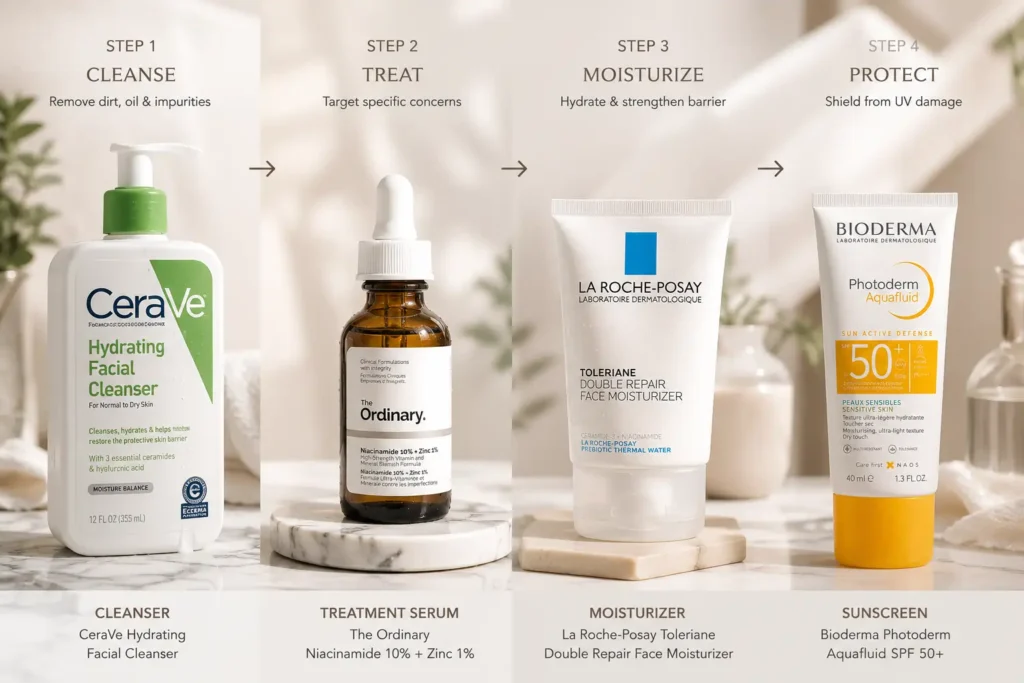
A solid baseline routine typically includes a gentle, non-stripping cleanser; one evidence-backed active (like a retinoid or salicylic acid) introduced gradually; a lightweight moisturizer to support your skin barrier; and daily SPF, since many acne treatments increase sun sensitivity. If you’re combining multiple active ingredients, understanding how to layer them without triggering irritation will help you get consistent results instead of a compromised skin barrier.
If you’re combining multiple active ingredients, read our complete guide on how to layer skincare actives without irritation to avoid compromising your skin barrier.
Conclusion: What Causes Hormonal Acne?
Hormonal acne isn’t a mystery, and it isn’t your fault. It’s a predictable biological response to androgen activity interacting with oil-sensitive skin, shaped by your cycle, stress levels, genetics, and sometimes underlying conditions like PCOS. The good news is that it responds well to the right combination of topical care, medical treatment when needed, and supportive habits — you don’t have to just wait it out.
If your current routine isn’t cutting it after a couple of months, that’s not a sign to give up; it’s a sign to bring in a board-certified dermatologist who can help you build a plan suited to your specific pattern. Consistency, not perfection, is what actually clears hormonal acne over time.
FAQs: What Causes Hormonal Acne?
Can you actually do anything about hormonal acne?
Yes. While hormonal acne is driven by biology, it responds well to a combination of topical treatment, medical options like spironolactone or birth control, and lifestyle support — most people see real improvement.
How do I know if my acne is caused by hormones?
Look for deep, tender breakouts along the jawline and chin that flare around your period, pregnancy, or menopause, especially if they showed up as an adult rather than in your teens.
How to tell if hormonal acne is getting better?
Fewer new deep or cystic breakouts, shorter flare duration around your cycle, and faster healing are all signs your treatment is working, typically over 6–12 weeks of consistent care.
How do Koreans get rid of hormonal acne?
Korean skincare approaches typically emphasize gentle double cleansing, hydration-first routines, and consistent low-irritation actives like centella or niacinamide, alongside dermatologist-guided treatment. You can see the full approach in this Korean acne skincare routine guide.
Can hormonal acne go away forever?
It can significantly improve or resolve, especially once major hormonal shifts like menopause stabilize, but flares can return during hormone-changing events like pregnancy or medication changes.
What vitamin is best for hormonal acne?
No supplement is AAD-endorsed as a proven fix. Some people explore zinc or vitamin D under medical guidance, but evidence is limited, so a dermatologist should guide any supplement use.
What are the 5 signs of hormonal imbalance?
Common signs include irregular periods, unexplained weight changes, fatigue, hair thinning or excess facial hair, and persistent jawline acne, though these can have other causes and warrant a doctor’s evaluation.
What skincare is best for hormonal acne?
Non-comedogenic cleansers, a salicylic acid or benzoyl peroxide treatment, a lightweight retinoid, and daily SPF form a solid foundation most dermatologists recommend for hormonal acne-prone skin.
How long does it take for hormonal acne to fade?
Topical treatments typically show visible results in 6–8 weeks, while hormonal therapies like spironolactone can take 3–6 months for full effect since they work on underlying hormone activity.

About Subhan Usafzai
Evidence-Based Skincare Educator & Formulation Specialist
I'm Subhan Usafzai (Fazli Subhan), an Evidence-Based Skincare Educator and Formulation Specialist. My background includes first-hand experience as a technician and research support in skin departments across tertiary military hospitals since 2006, and since 2008 I've focused on researching and translating clinical and formulation science into practical, evidence-based guidance. My formal training includes Coursera's Introduction to Cosmetic and Skincare Science and the four-course Introduction to Cosmetic Science and Ingredients specialization (Cosmetic Formulation Science, Cosmetic Product Development, and Quality Control and Regulatory in Cosmetic Science), authorized by Olay. Every article I write is checked against current research and reviewed by our medical team before publishing.
✅ Medically reviewed by Dr. Muhammad Khurram Ahmad, MD, Board-Certified Dermatologist · 📅 Last updated: July 2026
📋 Medical Disclaimer
For Educational Purposes Only: This article is written by Subhan Usafzai, an Evidence-Based Skincare Educator and Formulation Specialist, and is intended for informational and educational purposes only. The content provided is based on scientific research, peer-reviewed studies, and dermatological literature available as of July 2026.
Not Medical Advice: The information in this article does not constitute medical advice, diagnosis, or treatment recommendations. It should not be used as a substitute for professional medical consultation, diagnosis, or treatment from a board-certified dermatologist or qualified healthcare provider.
Individual Results May Vary: Skin conditions, including hyperpigmentation, melasma, and UV-induced pigmentation, vary significantly between individuals based on genetics, skin type, hormonal factors, and environmental exposure.
Consult Your Healthcare Provider: Before starting any new skincare regimen, especially if you are pregnant, breastfeeding, have diagnosed skin conditions, are taking medications, have sensitive skin, or are undergoing dermatological treatments.
Product Safety: Always perform a patch test before using new skincare products. Discontinue use and consult a healthcare professional if you experience irritation or adverse reactions.