
Best Sunscreen Ingredients for Sensitive Skin: Dermatologist-Recommended in 2026
Did you know that nearly 60% of people report having sensitive skin — yet most still use sunscreens loaded with irritating chemical filters? That’s a problem worth solving.
If you’ve ever slathered on SPF and woken up to redness, burning, or breakouts, it’s not you. It’s the ingredients. Sensitive skin doesn’t just need sunscreen protection — it needs the right kind of protection. And that starts at the ingredient level.
As a skincare content expert who has spent years researching dermatologist-backed formulations, I can tell you: not all sunscreen actives are created equal. Some are deeply soothing and barrier-friendly.
Others?
Total inflammation landmines.
Whether you’re dealing with rosacea, eczema, post-tretinoin sensitivity, or simply reactive skin, understanding which active and inactive sunscreen ingredients to seek — and which to avoid — will completely change the way your skin responds to sun protection.
In this guide, we’re going deep: from the gold-standard zinc oxide and titanium dioxide to skin-soothing bonus ingredients like niacinamide, ceramides, and allantoin, all the way to the chemical filters your sensitive skin simply doesn’t need.
Let’s get into it.
Why Sensitive Skin Needs Different Sunscreen Ingredients
Sensitive skin isn’t just a feeling — it’s a biological state. Understanding what’s actually happening beneath the surface explains why standard sunscreens often fail reactive skin, and why ingredient selection matters far more than the SPF number printed on the label.
What Makes Skin “Sensitive” in Dermatological Terms
From a clinical standpoint, sensitive skin is defined as a sensory syndrome — characterized by stinging, burning, itching, or tightness triggered by stimuli that wouldn’t normally provoke such a response in unaffected skin.
According to a 2024 review published in MDPI Cosmetics, the condition involves three primary biological mechanisms: impaired skin barrier function, a thinner stratum corneum that increases chemical penetration, and heightened activation of TRPV1 sensory nerve receptors, which amplify the skin’s pain and itch responses.
If you’re dealing with a compromised barrier, our in-depth guide on how to repair a damaged skin barrier walks you through exactly what your skin needs to rebuild its defenses.
The American Academy of Dermatology further notes that conditions such as eczema, rosacea, and contact dermatitis create structural vulnerabilities that can make the skin reactive even to well-tolerated cosmetic ingredients.
Common Signs That Your Sunscreen Ingredients Are Causing Irritation
Not every bad reaction to sunscreen is a true allergic response — and the distinction matters clinically. Stinging, redness, itching, or breakouts appearing within minutes of SPF application typically suggest contact irritant dermatitis — a non-immune reaction where an ingredient directly irritates the skin’s surface.
A delayed reaction appearing 24–72 hours later, however, points toward allergic contact dermatitis — a true immune-mediated response, most frequently linked to chemical UV filters like oxybenzone and octinoxate.
According to a ScienceDirect study on sensitive skin syndrome, individuals with a thinner stratum corneum experience increased penetration of water-soluble chemicals, placing them at a far higher risk of both types of irritation. If you’ve cycled through multiple sunscreens with the same result, stop and look at the active ingredient list first.
The Skin Barrier Connection: Why Barrier Integrity Matters for SPF Tolerance
The stratum corneum — the outermost layer of the skin — is your first line of defense against the environment. It’s a tightly organized lipid matrix made up primarily of ceramides, cholesterol, and free fatty acids; when intact, it prevents irritants from penetrating and moisture from escaping. When it’s compromised, everything changes.
Research published in the Journal of Drugs in Dermatology confirms that disruption of the epidermal barrier leads directly to increased skin reactivity and sensitivity. Chemical UV filters — which are designed to penetrate skin tissue — can penetrate much deeper into barrier-compromised skin, reaching nerve endings and triggering immune cells.
Dr. Marisa Garshick, MD, board-certified dermatologist and clinical assistant professor at Weill Cornell Medical College, has emphasized in expert commentary that patients with compromised barriers are at substantially higher risk of SPF-related irritation and should prioritize non-penetrating mineral formulas.
Chemical vs. Mineral Sunscreens: The Core Difference for Sensitive Skin
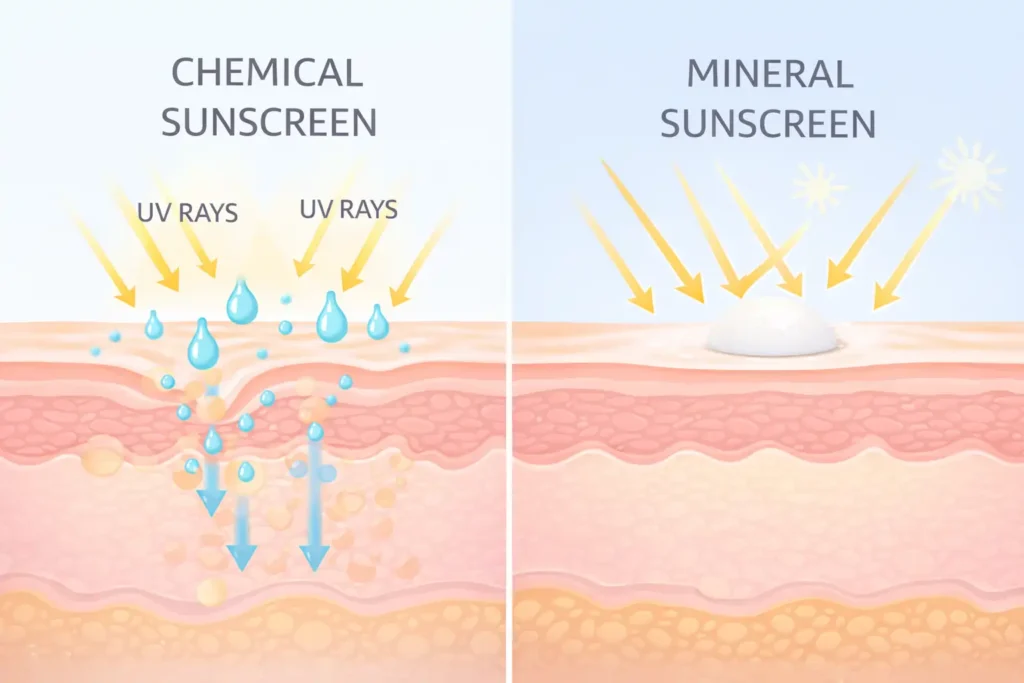
Chemical sunscreens work by absorbing UV radiation and converting it into heat within the skin’s tissue — a mechanism that requires active-ingredient penetration to function.
Mineral sunscreens, by contrast, use zinc oxide and titanium dioxide to sit on the skin’s surface and physically reflect UV rays before they’re absorbed. The difference in mechanism is precisely why mineral formulas are consistently preferred for sensitive skin; they don’t need to penetrate to work.
As U.S. News & World Report notes in its sunscreen guidance, chemical filters, including avobenzone, octinoxate, and oxybenzone, are more likely to cause irritation in sensitive skin, eczema, and inflammatory conditions, while zinc oxide and titanium dioxide offer the same broad-spectrum coverage with far less reactive risk.
The Best Sunscreen Ingredients for Sensitive Skin (Actives)
Active ingredients are the FDA-regulated UV filters listed at the top of every sunscreen label. For sensitive skin, the right active ingredient isn’t just about UV protection — it’s about choosing a compound that accomplishes that job without penetrating, irritating, or destabilizing an already-reactive skin barrier.
Zinc Oxide: The Gold Standard for Sensitive, Reactive, and Rosacea-Prone Skin
Zinc oxide is the single most versatile and well-tolerated active sunscreen ingredient for sensitive skin — and its clinical record reflects that. It provides genuine broad-spectrum coverage across UVA and UVB wavelengths, and unlike titanium dioxide, it more comprehensively covers the longer UVA-1 range (340–380 nm).
As Dr. Heather D. Rogers, MD, double board-certified dermatologist and co-founder of Modern Dermatology in Seattle, explains in her sunscreen guide, zinc oxide is GRASE-certified by the FDA — meaning it’s one of only two sunscreen actives recognized as Generally Recognized As Safe and Effective for daily use.
Critically, zinc also inhibits mast cell degranulation and reduces the secretion of histamine, a key mediator of skin inflammation and itch, according to a comprehensive dermatology review published in PMC.
Look for concentrations of 10–20% on the label; anything below that threshold delivers diminished UVA coverage. To help you find the right formulation, I’ve curated a list of the best zinc oxide sunscreens for rosacea that meet these clinical standards and won’t cause irritation.
Titanium Dioxide: Lightweight UVB Protection with Minimal Irritation
Titanium dioxide is the second FDA-GRASE sunscreen active and works as an excellent complement to zinc oxide in mineral formulas. While zinc oxide provides stronger UVA-1 coverage, titanium dioxide is more effective at blocking UVB rays — making the two a genuinely comprehensive broad-spectrum pair when combined.
From a skin-feel standpoint, titanium dioxide is lighter and less opaque than zinc oxide alone, which matters practically for daily wear compliance.
The American Academy of Dermatology explicitly recommends physical (mineral) sunscreens containing zinc oxide or titanium dioxide for sensitive skin types, citing their lower likelihood of triggering irritation compared to chemical alternatives.
One important caveat: the International Agency for Research on Cancer (IARC) has flagged inhaled titanium dioxide as a potential carcinogen — a concern specific to spray and powder formats, not lotions or creams. Sensitive skin users should stick exclusively to lotion, cream, or stick formulas.
Non-Nano vs. Nano Zinc Oxide and Titanium Dioxide: Does It Matter?
Nanoparticles are engineered to be extremely small — typically under 100 nanometers — which improves a mineral sunscreen’s cosmetic aesthetics, reducing white cast and improving spreadability.
The safety question has centered on whether nanoparticles can penetrate living skin tissue and enter systemic circulation.
Current evidence — reviewed by the EWG in their annual Sunscreen Guide — suggests that neither zinc nor titanium nanoparticles meaningfully penetrate intact, healthy skin. However, for individuals with severely compromised barrier function — as seen in active eczema, post-procedure skin, or rosacea — many dermatologists still prefer non-nano formulas as a precautionary measure.
The EWG formally recommends non-nano formulations as an additional safety layer. It isn’t a clinically settled requirement, but it’s a reasonable choice for the most reactive skin types, and products marketed specifically for sensitive skin or infants often already use non-nano particles by default.
Hybrid Sunscreens: Are They Safe for Sensitive Skin?
Hybrid sunscreens combine mineral actives (zinc oxide, titanium dioxide) with chemical UV filters in a single formula — an approach designed to reduce white cast while maintaining broad-spectrum efficacy.
For mildly sensitive skin that reacts more to texture than to ingredients, a carefully selected hybrid formula may be tolerable. However, for individuals with eczema, rosacea, seborrheic dermatitis, or strong reactions to chemical filters, hybrids introduce unnecessary risk.
The inclusion of even one problematic chemical, active oxybenzone, homosalate, or octinoxate — can negate the gentle properties of the mineral portion entirely. If you’re genuinely unsure about your triggers, opt for a pure mineral formula first.
Once your skin stabilizes, a patch test of a hybrid can tell you whether the chemical component is a problem. Assume it is until proven otherwise.
Best Supporting (Inactive) Ingredients in Sunscreen for Sensitive Skin
The active ingredients block UV rays. The inactive ingredients determine whether sensitive skin actually tolerates the formula. This section covers the supporting cast — the compounds that soothe, repair, and hydrate sensitive skin while the actives do their protective work.
Niacinamide (Vitamin B3): The Sensitive Skin Multitasker
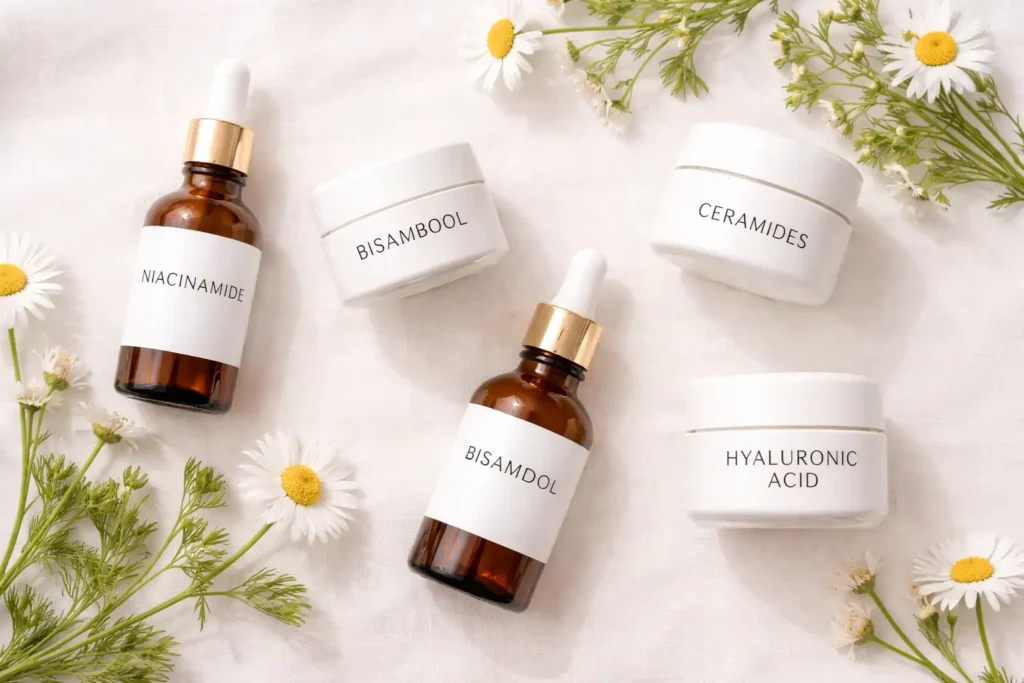
Niacinamide — also known as nicotinamide — is one of the most thoroughly researched supporting ingredients in sensitive skincare, and its inclusion in a mineral sunscreen formula is a genuine clinical benefit, not a marketing add-on. A 2024 study published in Scientific Reports confirmed that niacinamide measurably reduces transepidermal water loss (TEWL) and improves stratum corneum hydration and flexibility.
It also upregulates ceramide biosynthesis by stimulating serine palmitoyltransferase — the rate-limiting enzyme in sphingolipid synthesis — directly strengthening the skin barrier from within.
Beyond barrier repair, niacinamide demonstrates anti-inflammatory properties relevant to rosacea and atopic dermatitis, and it inhibits melanin transfer to keratinocytes — making it clinically useful for fading post-inflammatory hyperpigmentation over time.
Formulas containing niacinamide alongside bisabolol and allantoin are consistently highlighted by dermatologists in HealthCentral’s expert-reviewed roundup as especially suitable for eczema-prone, rosacea, and acne-reactive skin.
Ceramides: Repairing the Skin Barrier While You Protect It
Ceramides are lipid molecules that form the critical structural matrix of the stratum corneum, accounting for roughly 50% of the skin’s intercellular lipids. They regulate moisture retention and block irritant penetration; when their levels decline (through aging, active inflammatory conditions, or aggressive skincare), barrier function deteriorates and sensitivity climbs.
A clinical study published in the Journal of Cosmetic Dermatology found that ceramide-containing sunscreen used daily for four weeks produced a statistically significant 22.96% reduction in TEWL and a 21.96% increase in stratum corneum hydration, with 97% of subjects showing measurable improvement.
For skin compromised by isotretinoin (Accutane), retinoids, or eczema, the barrier-rebuilding action of ceramides in an SPF formula provides two protective functions in a single daily step.
CeraVe Mineral Sunscreen SPF 30 is the most widely cited example, combining zinc oxide and titanium dioxide with the proprietary three-ceramide complex (ceramides 1, 3, and 6-II) and niacinamide in a fragrance-free, dermatologist-developed formula.
Hyaluronic Acid: Hydration Without Clogging Pores
Hyaluronic acid is a naturally occurring glycosaminoglycan and one of the most effective humectants available in skincare. It works by binding water molecules in the upper layers of the skin — hyaluronic acid can hold up to 1,000 times its own weight in water, as noted in research published in Dermatoendocrinology — maintaining surface hydration without occlusion or pore-blocking.
For sensitive skin that’s dry or flaky due to barrier compromise, retinoid use, or Accutane, incorporating hyaluronic acid into a mineral sunscreen formula helps address that dryness while providing UV protection. It’s non-comedogenic, non-reactive, and well tolerated across all sensitive-skin subtypes, including eczema-prone and rosacea-prone skin.
Look for it paired with zinc oxide in lightweight lotion formulas for the most comfortable daily-wear experience.
Allantoin and Bisabolol: Underrated Soothing Superstars
Two of the most clinically reliable soothing ingredients in sunscreen formulas don’t get nearly the recognition they deserve. Allantoin — derived from the comfrey plant — promotes keratinocyte proliferation and accelerates cell renewal, making it valuable in formulas designed for post-procedure or UV-damaged sensitive skin.
Bisabolol, the primary active compound in chamomile (Matricaria chamomilla), has documented anti-inflammatory and skin-healing properties; research has shown it calms pruritus, improves eczema symptom scores, and supports epidermal repair.
According to HealthCentral’s dermatologist-reviewed SPF roundup, formulas combining niacinamide, bisabolol, and allantoin are among those most consistently praised by dermatologists for reactive skin tolerability. Both ingredients perform best when present alongside a mineral active base — their calming effects complement rather than replace the core UV-blocking function of zinc oxide or titanium dioxide.
Antioxidants (Vitamin C, Vitamin E, Green Tea Extract): UV Damage Defense Beyond SPF
SPF numbers measure a sunscreen’s ability to block UV radiation — but UV exposure also generates free radicals in skin tissue that continue causing oxidative damage even after UV exposure ends. This is where antioxidants earn their place in a mineral sunscreen formula.
Vitamin E (tocopherol) is a lipid-soluble antioxidant that neutralizes UV-generated reactive oxygen species (ROS) in the skin’s lipid layers; Vitamin C (ascorbic acid) does the same in the aqueous environment; and green tea extract (EGCG — epigallocatechin gallate) provides both antioxidant and anti-inflammatory activity.
As noted in reviews on antioxidant photoprotection, antioxidant-enhanced formulas address ROS-mediated damage that SPF alone cannot prevent. For sensitive skin already prone to redness and inflammation, this layer of free-radical defense is particularly relevant — and vitamin E, in particular, is well tolerated across reactive skin types without comedogenicity.
Panthenol (Pro-Vitamin B5) and Glycerin: Barrier-Loving Moisturizers
Panthenol (Pro-Vitamin B5) is converted to pantothenic acid in the skin, where it supports epidermal regeneration, improves skin hydration, and reduces inflammation — making it a practical addition to SPF formulas targeting sensitive or irritation-prone skin.
Dexpanthenol, its active derivative, has been specifically highlighted in dermatology research for improving barrier function and reducing the frequency of inflammatory flares in atopic dermatitis.
Glycerin, one of the most widely used humectants in cosmetics, draws water to the skin’s surface layers and holds it there — especially critical for sensitive skin prone to dryness. Both ingredients are non-reactive and non-comedogenic, suitable for even the most reactive skin types, including eczema and rosacea.
Finding either in the inactive ingredient list of your mineral SPF is a meaningful quality signal of the formulator’s intent.
Sunscreen Ingredients to Avoid If You Have Sensitive Skin
Knowing what to avoid is just as important as knowing what to seek out. Several common sunscreen ingredients carry both irritation risk and broader safety concerns — and for sensitive skin specifically, the case for avoiding them is clinical, not just precautionary.
Oxybenzone: The Most Problematic Chemical Filter for Sensitive Skin
Oxybenzone is the most scrutinized chemical UV filter in the U.S. sunscreen market — and for good reason. In a 2019 randomized clinical trial published in JAMA, oxybenzone was detected in participants’ blood plasma after a single day of application, at concentrations roughly 50–100 times higher than the FDA’s proposed safety threshold for requiring additional toxicological review.
A follow-up JAMA study in 2020 confirmed that oxybenzone remained detectable in plasma 21 days after last application. The EWG’s Sunscreen Guide cites mounting evidence of oxybenzone’s potential endocrine-disrupting effects and flags it as the most common cause of contact allergies among all sunscreen ingredients — a documented clinical concern for reactive skin, beyond regulatory debate.
Oxybenzone has also been banned in Hawaii and Key West due to its documented harm to coral reef ecosystems. For sensitive skin, this is a clear ingredient to remove from your SPF rotation entirely.
Octinoxate: A Common Irritant and Potential Allergen
Octinoxate (ethylhexyl methoxycinnamate) is one of the most widely used chemical UV filters in mainstream sunscreens — and one of the most frequently implicated in allergic contact dermatitis in sensitive skin patients.
In the 2020 FDA-sponsored JAMA study, octinoxate was detected in blood at levels exceeding the FDA’s proposed safety threshold, and the European Commission’s Scientific Committee on Consumer Safety has raised formal concerns about its potential for endocrine disruption and genotoxicity, as reviewed by the EWG.
For rosacea and eczema skin specifically, octinoxate’s skin-absorption behavior means it’s more likely than mineral filters to penetrate the compromised barrier and trigger inflammatory cascades. It joins oxybenzone on Hawaii and Key West’s banned sunscreen ingredients list for reef toxicity.
When evaluating any sunscreen label, octinoxate — sometimes listed as “octyl methoxycinnamate” — is a clear red flag for sensitive, reactive, or inflammatory-condition skin.
Homosalate: The Hormone Disruptor Hiding in “Light” Sunscreens
Homosalate doesn’t generate the same headlines as oxybenzone, but it deserves considerably more scrutiny — particularly for daily sensitive skin users. It appears frequently in “light,” “everyday,” and “cosmetically elegant” chemical sunscreen formulas because it improves texture without contributing significant white cast.
In the 2020 JAMA follow-up study, homosalate was one of only two ingredients still measurably present in blood plasma 21 days after last application. The EWG reports that the European Commission’s Scientific Committee on Consumer Safety formally concluded that homosalate is unsafe at the concentrations currently permitted in the U.S. sunscreen market — prompting the EU to lower allowable limits significantly, while U.S. regulations have not yet followed.
For someone applying SPF daily to reactive skin, the cumulative exposure concern with homosalate is meaningful — especially when straightforward mineral alternatives carry no comparable safety flags.
Synthetic Fragrance and Parfum: A Hidden Trigger for Sensitive Skin
Fragrance is not an active UV-filtering ingredient — but it ranks among the most clinically significant triggers of irritation for sensitive skin in sunscreen formulas, hiding in the inactive ingredient list where it often goes unnoticed. “Fragrance” or “parfum” on a cosmetic label is a legally protected catch-all term that can represent a blend of dozens of individual aromatic compounds, none of which are individually disclosed.
West Dermatology notes in its dermatologist-reviewed guide that fragrance, whether volatile or masking, is among the most common triggers of contact dermatitis in cosmetic formulations, and recommends strict avoidance for sensitive skin, whether or not it’s currently in an active flare.
Critically, “unscented” does not mean fragrance-free: unscented products may contain masking fragrances — compounds added specifically to neutralize a formula’s natural odor — that still pose an irritation risk. For sensitive skin, only “fragrance-free” on the label provides actual assurance.
Parabens, Alcohol (Denat.), and Artificial Dyes
Three additional inactive ingredients warrant attention for users with sensitive skin. Parabens — the most commonly used preservative class in cosmetics — can cause irritation or allergic reactions in individuals with inflammatory skin conditions, as noted in COOLA’s ingredient transparency documentation and the broader dermatology literature.
Denatured alcohol (listed as “alcohol denat.” or “SD alcohol”) is a well-established skin-barrier disruptor; it strips the stratum corneum’s lipid content on repeated use, progressively worsening the very barrier compromise that makes skin sensitive in the first place.
Artificial dyes — added purely for aesthetic appeal — provide no therapeutic benefit and introduce unnecessary reactivity risk.
None of these ingredients contributes to UV protection; all three introduce liability for a skin type with zero margin for unnecessary irritation triggers. Their presence in a mineral sunscreen formula is a reasonable reason to look elsewhere.
Retinyl Palmitate (Vitamin A) in SPF Formulas
Retinyl palmitate — a form of vitamin A ester — occasionally appears in sunscreen formulas as a purported anti-aging adjunct ingredient. The concern specific to SPF use is that retinyl palmitate may generate free radicals when exposed to UV light, potentially accelerating photo-oxidative stress to skin cells rather than protecting against it.
The EWG has specifically flagged retinyl palmitate in sun-care products as a safety concern, noting that the FDA has commissioned studies examining the issue. For sensitive skin, retinoids (tretinoin, adapalene) or photosensitizing medications compound the concern.
A UV-protective formula that may simultaneously generate pro-oxidant activity upon sun exposure is, at minimum, counterproductive for daily wear on reactive or photosensitized skin.
Best Sunscreen Ingredients for Specific Sensitive Skin Conditions
Sensitive skin isn’t a single, uniform experience. Rosacea, tretinoin sensitivity, isotretinoin use, seborrheic dermatitis, and hyperpigmentation all have distinct biological profiles — and the ideal SPF ingredient selection shifts meaningfully between them.
What Sunscreen Ingredients Work Best for Rosacea-Prone Skin?
Rosacea is defined clinically by chronic vascular reactivity, persistent facial redness, and a lowered threshold for inflammatory response to environmental triggers. For SPF selection, this means chemical UV filters — which generate heat energy in the skin’s tissue during UV absorption — are almost universally problematic; heat itself is a documented rosacea trigger.
Zinc oxide is the standout active here, not just for its UV-blocking efficacy but also for its clinically documented anti-inflammatory mechanism: it inhibits mast cell degranulation and histamine release, which are directly relevant to the inflammatory cascade underlying rosacea, as the PMC dermatology review notes.
According to the American Academy of Family Physicians, broad-spectrum SPF 30 or higher sunscreens are universally recommended for rosacea management, with dimethicone- and simethicone-based formulas containing titanium dioxide and zinc oxide among the best-tolerated options.
Tinted mineral formulas incorporating green iron oxide pigment provide dual benefit: UV protection and visible color correction for daytime redness management.
Ingredients to avoid categorically: all chemical UV filters, synthetic fragrance, denatured alcohol, menthol, and camphor.
Do You Need Sunscreen with Tretinoin — and Which Ingredients Are Best?
Yes — and this isn’t negotiable. Tretinoin accelerates epidermal cell turnover, thinning the stratum corneum and dramatically increasing photosensitivity. Without daily broad-spectrum SPF, UV exposure on tretinoin-treated skin causes compounding damage and actively undermines the clinical benefits tretinoin is intended to achieve.
U.S. News & World Report’s dermatologist-reviewed sunscreen guidance notes that individuals using alpha-hydroxy acids, beta-hydroxy acids, or retinoids should take extra care with UV protection precisely because these actives heighten photosensitivity.
The AAD specifically advises tretinoin users to apply sunscreen daily, even on cloudy days, as a non-negotiable adjunct to treatment. Ideal SPF ingredients for this context: zinc oxide plus titanium dioxide, with niacinamide for barrier support and ceramides to compensate for retinoid-induced barrier disruption.
The entire formula should be fragrance-free and alcohol-free.
What Sunscreen Ingredients Are Best for Accutane (Isotretinoin) Users?
Isotretinoin (Accutane) creates one of the most demanding SPF contexts in dermatology. The drug’s mechanism — reducing sebum production via sebaceous gland reduction — also produces significant epidermal thinning, profound dryness, and severe photosensitivity as direct side effects. The skin barrier is simultaneously compromised at multiple levels: reduced lipid content, thinner stratum corneum, and heightened inflammatory reactivity.
The AAD explicitly recommends an oil-free, broad-spectrum, SPF 30 or higher, non-comedogenic mineral sunscreen for isotretinoin users, with zinc oxide and titanium dioxide as the preferred active ingredients due to their non-penetrating, anti-inflammatory properties.
Supporting ingredients matter greatly in this context: ceramides directly address the barrier disruption caused by isotretinoin; hyaluronic acid and glycerin counteract severe dryness; and panthenol supports epidermal repair.
Heavy occlusives, including coconut oil, cocoa butter, and lanolin, should be avoided — they can block pores and counteract the treatment’s acne-clearing objectives. Reapply every two hours outdoors, without exception.
Which Sunscreen Ingredients Are Best for Seborrheic Dermatitis?
Seborrheic dermatitis involves chronic inflammation driven in part by an overgrowth of Malassezia yeast on the skin’s surface, and zinc oxide’s documented antifungal properties give it a particular advantage in this context that other sunscreen actives don’t share.
Board-certified dermatologist Dr. Cynthia Bailey, MD, specifically recommends zinc oxide sunscreens for facial seborrheic dermatitis, noting that they provide broad-spectrum protection and are non-irritating to sensitive, inflamed, and flaky skin.
Zinc pyrithione (a closely related zinc compound) is the active ingredient in most medicated dandruff and seborrheic dermatitis shampoos for this same antifungal reason. For facial seborrheic dermatitis, lightweight, fragrance-free, oil-free lotion formulas are the clear preference.
Avoid heavy occlusive bases, fatty alcohols (cetearyl alcohol, behenyl alcohol), and botanical oils — Malassezia ferments fatty acids and thrives in lipid-rich environments, making heavy formulas counterproductive.
What Sunscreen Ingredients Help with Hyperpigmentation on Sensitive Skin?
Standard broad-spectrum SPF blocks UVA and UVB — but there’s a third light category that significantly contributes to post-inflammatory hyperpigmentation (PIH): high-energy visible (HEV) light, or visible light in the 400–500 nm range.
Standard mineral and chemical sunscreens don’t protect against HEV; tinted mineral sunscreens containing iron oxides do. For medium and deeper skin tones specifically — those most affected by PIH — iron oxide-containing tinted SPF formulas are an evidence-backed recommendation from dermatologists treating hyperpigmentation.
Niacinamide is the other critical ingredient: it interrupts the transfer of melanosomes from melanocytes to keratinocytes, gradually lightening existing hyperpigmentation.
Vitamin C and vitamin E antioxidants provide additional free-radical neutralization of UV-triggered oxidative stress that worsens pigmentation. Zinc oxide, as the mineral active base, provides both broad-spectrum coverage and an anti-inflammatory effect that helps prevent new PIH from forming in reactive skin.
How to Read a Sunscreen Label If You Have Sensitive Skin
Sunscreen labels can feel intentionally confusing — loaded with regulatory language, marketing terminology, and ingredient names that mean nothing at first glance. Once you understand the architecture, though, reading them takes about 30 seconds and tells you almost everything you need to know.
Active Ingredients vs. Inactive Ingredients: What to Look for First
The active ingredient section is legally mandated to appear at the top of every sunscreen Drug Facts panel in the United States, listed separately from inactive ingredients with their percentage concentrations.
For sensitive skin, this section tells you the most important thing about any formula: which UV filters are present. You want to see only zinc oxide and/or titanium dioxide listed here — these are the two active ingredients the FDA has classified as GRASE (Generally Recognized As Safe and Effective) for sunscreen use, based on the FDA’s 2021 Final Order.
If you see oxybenzone, octinoxate, homosalate, or any other chemical filter in the active list, that’s your signal to evaluate whether the formula is appropriate for your skin. The inactive ingredients list — everything else in the formula — is where fragrance, parabens, and irritating alcohols tend to hide; scan it deliberately, not just the front label claims.
What Does “Broad-Spectrum” Actually Mean for Your Sensitive Skin?
“Broad-spectrum” is a regulated, testable claim on sunscreen labels — not a marketing phrase. It means the product has passed FDA-mandated Critical Wavelength testing, confirming that it provides meaningful protection against both UVA rays (315–400 nm — associated with aging, pigmentation, and deeper skin damage) and UVB rays (280–315 nm — associated with burning and surface damage).
For sensitive skin, broad-spectrum coverage matters beyond sunburn prevention: UVA exposure specifically worsens redness, vascular reactivity, and post-inflammatory hyperpigmentation.
A sunscreen that only blocks UVB protects against burning but leaves you exposed to the UV wavelengths most relevant to inflammatory skin conditions.
The AAD recommends broad-spectrum SPF 30 or higher for all skin types, with SPF 50 recommended for higher UV exposure.
Decoding Claims: “Fragrance-Free,” “Hypoallergenic,” “Non-Comedogenic,” and “Dermatologist-Tested”
Not all label claims carry equal regulatory weight — and several popular terms can mislead sensitive-skin shoppers into a false sense of security. “Fragrance-free” is the most meaningful claim here: it means the formula contains no added fragrant compounds.
“Unscented,” by contrast, may still contain masking fragrances — synthetic compounds specifically added to neutralize a product’s natural odor — which carry identical irritation risk to conventional fragrance. “Hypoallergenic” and “dermatologist-tested” are completely unregulated terms under U.S. law; any brand can print them on packaging without meeting any defined clinical standard.
“Non-comedogenic” is also unregulated but remains a useful signal for acne-prone sensitive skin — though it isn’t a guarantee. The only reliable way to evaluate a sensitive skin sunscreen is to read the full ingredient list, active and inactive, and apply the criteria outlined in the earlier sections of this guide.
The 3-Finger Rule for Sunscreen: How Much Is Enough?
Under-application is one of the most clinically significant real-world failures in sunscreen use — and research consistently documents it. Studies show that most people apply between 20–50% of the amount needed to achieve the SPF level stated on the label, dramatically reducing actual photoprotection.
The “3-finger rule” is a practical application guideline: squeeze a line of sunscreen along your index, middle, and ring fingers (approximately 1.5–2 mL) for the face and neck combined. Some clinicians simplify this to two full finger lengths for the face alone.
For the body, the AAD recommends approximately 1 ounce — a standard shot glass — to adequately cover all exposed skin. Apply 15–30 minutes before UV exposure and reapply every two hours. Getting the amount right matters as much as getting the formula right.
Dermatologist-Recommended Sunscreen Brands for Sensitive Skin (2026)
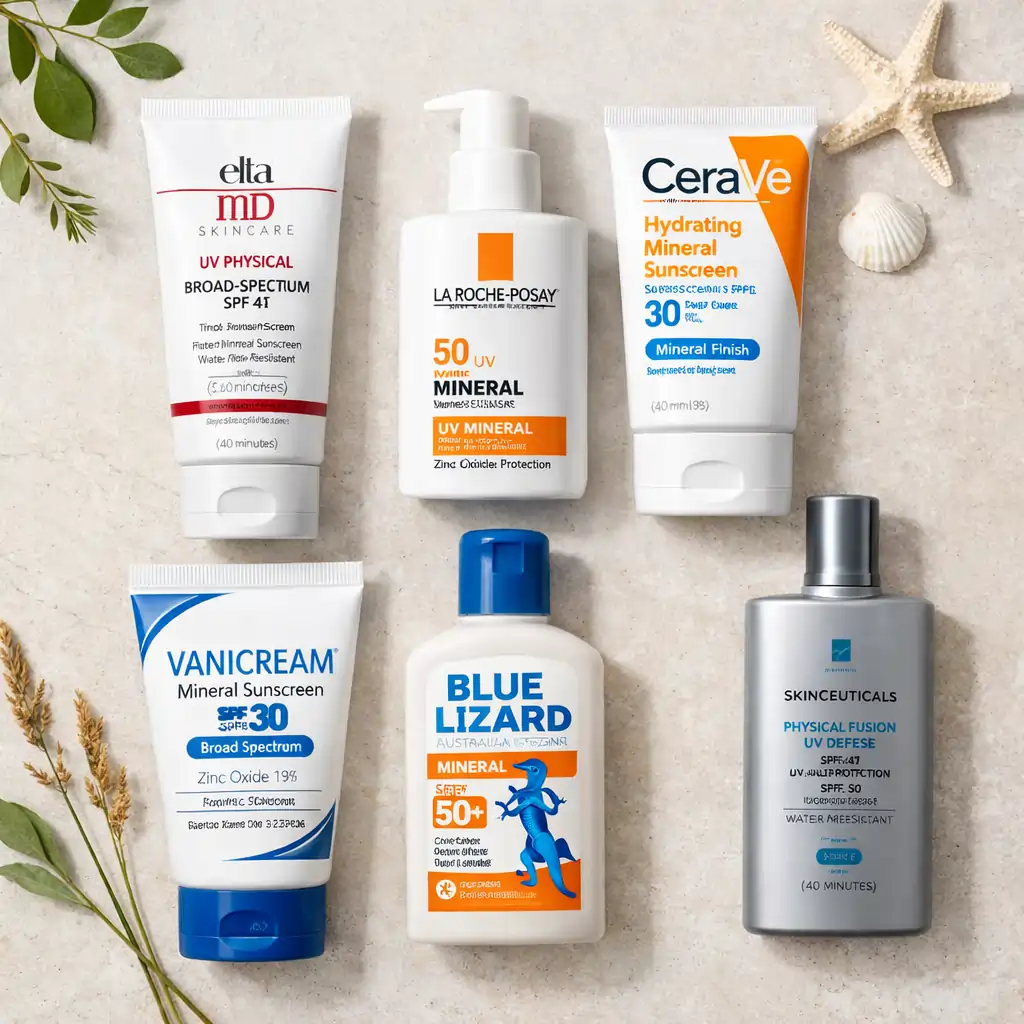
Below are six frequently recommended mineral SPF options with verified ingredient profiles matching the science covered in this guide. Always confirm current formulations before purchasing, as brands may reformulate products over time.
EltaMD UV Clear Broad-Spectrum SPF 46
EltaMD UV Clear has maintained its position as one of the most consistently recommended mineral SPFs for sensitive and acne-prone skin — and the formulation justifies that reputation. The active ingredient is zinc oxide at 9%; the formula also contains niacinamide and lactic acid, the latter at a low concentration, functioning as a mild humectant rather than an exfoliant at SPF use levels. It’s oil-free, non-comedogenic, fragrance-free, and paraben-free.
Dr. Blair Murphy-Rose, MD, board-certified dermatologist at Laser & Skin Surgery Center of New York, has specifically recommended EltaMD as a go-to brand for sensitive skin, citing their formulations’ sensitive-skin specificity. The lightweight texture makes daily compliance genuinely manageable — a practical consideration that matters for real-world SPF adherence.
La Roche-Posay Anthelios Mineral Tinted Sunscreen SPF 50
La Roche-Posay Anthelios Mineral Tinted SPF 50 combines zinc oxide and titanium dioxide in a lightweight fluid formula that disappears into most skin tones without a white cast — a common sticking point with pure mineral SPFs. It’s fragrance-free, formulated with the brand’s patented thermal spring water (shown to have soothing, antioxidant properties), and delivers SPF 50 broad-spectrum coverage.
Recommended by the Skin Cancer Foundation for daily use, it’s particularly suitable for oily and sensitive skin types that struggle with the heavy texture of many mineral formulas.
Dr. Marisa Garshick, MD, board-certified dermatologist and clinical assistant professor at Weill Cornell Medical College, has specifically referenced La Roche-Posay Anthelios Mineral as a strong pick for her sensitive-skin patients.
CeraVe Mineral Sunscreen SPF 30
CeraVe Mineral Sunscreen SPF 30 delivers two protective functions in one formula: broad-spectrum UV protection via zinc oxide and titanium dioxide, and active skin barrier repair through its ceramide complex (ceramides 1, 3, and 6-II) and niacinamide.
A clinical study in the Journal of Cosmetic Dermatology confirmed that ceramide-containing sunscreens produce statistically significant reductions in TEWL and measurable increases in stratum corneum hydration over four weeks of daily use. The formula is fragrance-free, paraben-free, and developed with dermatologists — making it a strong choice for dry, eczema-prone, and barrier-compromised sensitive skin that needs both UV protection and active repair support in a single daily step.
Listful’s dermatologist-reviewed roundup describes it as an excellent barrier-supporting choice that performs well despite its accessible price point.
Vanicream Sunscreen SPF 50 (Zinc Oxide 18.9%)
Vanicream Sunscreen SPF 50 is arguably the most stripped-down, high-tolerance mineral SPF on the mainstream market. The formula is free of dyes, synthetic fragrance, masking fragrance, lanolin, parabens, formaldehyde, and formaldehyde-releasing preservatives — making it one of the most viable options for extreme sensitivity, patch-test-confirmed allergic contact dermatitis, or skin that has responded to multiple prior product failures.
The active ingredient is zinc oxide at 18.9% — a high concentration ensuring genuine broad-spectrum UVA coverage.
Dr. Heather D. Rogers, MD, double board-certified dermatologist and co-founder of Modern Dermatology in Seattle, specifically cites Vanicream as a reliable sensitive skin SPF option in her dermatologist sunscreen guide. It’s the formula to reach for when everything else has failed.
Blue Lizard Sensitive Mineral Sunscreen SPF 50
Blue Lizard Sensitive Mineral Sunscreen was originally developed with dermatologist input for Australian sun conditions — among the harshest UV environments globally — using zinc oxide and titanium dioxide as its mineral active combination. It’s fragrance-free and paraben-free, and it includes an antioxidant blend to address UV-generated free-radical damage.
The brand’s distinctive smart-cap technology changes color in UV light — a practical feature for families with children who need a visual cue for UV exposure. As reviewed in multiple dermatologist-approved sensitive-skin roundups, it performs consistently well for very sensitive skin and pediatric use, and its formula contains no ingredients that conflict with the clinical guidance reviewed throughout this article.
SkinCeuticals Physical Fusion UV Defense SPF 50
SkinCeuticals Physical Fusion UV Defense SPF 50 represents the medical-grade end of the sensitive skin mineral SPF market. The active ingredient is zinc oxide; the formula incorporates a subtle, universal tint (based on iron oxides) that adapts to a range of skin tones while simultaneously providing the HEV light protection relevant to the hyperpigmentation discussed earlier.
Antioxidant compounds are incorporated to neutralize UV-generated free radicals, adding photoprotection beyond the SPF mechanism. At the price point SkinCeuticals commands, it’s positioned for post-procedure use — following chemical peels, laser resurfacing, or microneedling — and for rosacea patients who need a formula with maximum tolerability and zero margin for irritant exposure.
Applying Sunscreen Correctly on Sensitive Skin: Tips That Actually Matter
Choosing the right formula is step one. Applying it correctly — consistently, in the right amount, in the right order — is what actually delivers the protection that formula was designed to provide.
When to Apply Sunscreen in Your Routine (and Why Order Matters for Sensitive Skin)
Mineral sunscreen should be the final step of your skincare routine and the first step before any makeup application. This positioning isn’t arbitrary — mineral actives (zinc oxide and titanium dioxide) function as a physical barrier layer on the skin’s surface; placing them under a moisturizer disrupts that surface film, reduces even distribution, and dilutes UV coverage.
The correct AM sequence: cleanser → toner (if used) → treatment serums → moisturizer → mineral SPF → makeup. Allow each layer to fully absorb before applying the next; for mineral SPF specifically, a brief 30–60-second settling period before makeup application helps prevent pilling and ensures even film formation.
For sensitive skin, this layering order also prevents minor pH interactions or texture incompatibilities that can cause balling or reduced efficacy.
How Often to Reapply — and the Best Formats for Reapplication on Sensitive Skin
SPF protection degrades with time and UV exposure. The AAD’s guidance is clear: reapply every two hours during outdoor activity, and immediately after swimming or sweating, regardless of the product’s water-resistance rating. Water resistance is tested at either 40 or 80 minutes of water exposure, not all day.
For sensitive-skin users wearing makeup, directly applying SPF lotion over a full face of makeup is often impractical; here, mineral powder sunscreens or SPF-infused cushion compacts containing zinc oxide and titanium dioxide offer a practical alternative.
These formats allow midday reapplication without disrupting makeup and are generally well tolerated by reactive skin when the active ingredients are mineral-only and the formula is fragrance-free.
Patch Testing a New Sunscreen If You Have Reactive Skin
With reactive skin, the cost of a full-face reaction to a new sunscreen product is high — it can mean several days of redness, irritation, or breakouts while the skin calms down. A patch test eliminates that risk.
Apply a small amount of the new formula to the inner forearm or along the jawline, then leave it undisturbed for 24 hours; if you’re testing for delayed hypersensitivity, extend the observation to 48–72 hours. Look for redness, itching, stinging, small bumps, or any change from baseline.
An absence of reaction doesn’t guarantee the formula will be problem-free on the full face — but it rules out the most acute irritant and allergic responses before full commitment. This 30-second precaution is particularly valuable when trialing a product with any active ingredient or preservative you haven’t used before.
Sunscreen and Sensitive Skin Around the Eyes
The periorbital area is anatomically distinct — the skin is thinner, more vascular, and contains fewer sebaceous glands than the rest of the face, making it more reactive and more prone to both irritation and stinging from sunscreen ingredients.
Mineral formulas are the safest choice around the eyes: non-penetrating, non-stinging in the vast majority of cases, and unlikely to cause the milia that certain heavy inactive ingredients can produce when applied close to the orbital bone.
Spray sunscreens should never be used on or near the face — there’s a meaningful inhalation risk from titanium dioxide in spray form (consistent with IARC’s inhalation concern), and achieving even coverage on the face via spray is unreliable regardless.
Apply the lotion or cream formula to the hands first, then gently press into the periorbital region; avoid dragging or rubbing across this delicate area.
Layering Sunscreen with Other Sensitive Skin Actives (Retinol, AHAs, Niacinamide)
Sensitive skin routines often involve multiple active ingredients — retinoids, hydroxy acids, niacinamide — and understanding how SPF interacts with each prevents both product incompatibility and accidental photosensitization.
Retinoids (tretinoin, adapalene, retinol) are AM-routine contraindicated in most clinical protocols — they belong in the PM routine precisely because they increase photosensitivity; your morning mineral SPF is the corresponding AM protection.
AHAs and BHAs also increase photosensitivity and typically perform better in evening routines, again pairing with AM SPF. Niacinamide pairs well with mineral SPF and has no known incompatibility concerns.
The one consistent rule: sunscreen is always the outermost skincare layer before makeup, never under moisturizer. Placing SPF beneath any other leave-on product reduces its effective film-forming coverage on the skin’s surface and diminishes its photoprotective function.
Conclusion: Best Sunscreen Ingredients for Sensitive Skin
Finding the best sunscreen ingredients for sensitive skin doesn’t have to feel like a chemistry exam. The formula is actually pretty simple: reach for mineral actives like zinc oxide and titanium dioxide, look for soothing supporting ingredients like niacinamide, ceramides, and allantoin, and firmly step away from oxybenzone, octinoxate, synthetic fragrance, and parabens.
Your skin deserves protection that works with it, not against it. Whether you have rosacea, are navigating tretinoin sensitivity, or just have skin that reacts to everything, there is a mineral SPF out there that won’t make you dread sunscreen.
Start with a patch test. Read those labels. And if you’re still unsure, book a consult with a board-certified dermatologist — they can match the right SPF formula to your skin’s specific needs.
Your skin’s best defense starts with the right ingredients. Now go find your perfect match!
FAQs: Best Sunscreen Ingredients For Sensitive Skin
What Ingredients Should Be In Sunscreen For Sensitive Skin?
The best sunscreen for sensitive skin uses mineral UV filters like zinc oxide and titanium dioxide, which sit on the skin’s surface and reflect UV rays without causing irritation. Look for barrier-supporting ingredients such as niacinamide, ceramides, and hyaluronic acid, along with soothing agents like allantoin or bisabolol. Always choose fragrance-free, alcohol-free, and non-comedogenic formulas to minimize reactions and maintain skin balance.
What Is The Healthiest Sunscreen For Sensitive Skin?
The healthiest sunscreens for sensitive skin are mineral-based formulas with non-nano zinc oxide or titanium dioxide, both FDA-recognized as safe and effective. These options minimize absorption and irritation while providing broad-spectrum protection. Dermatologist-favorite brands like EltaMD, CeraVe, and La Roche-Posay offer clean, fragrance-free formulations without oxybenzone, parabens, or dyes, ensuring both safety and skin compatibility.
What Are The Two Ingredients To Avoid In Sunscreen?
Oxybenzone and octinoxate are two sunscreen ingredients widely avoided due to their potential to irritate sensitive skin and disrupt hormones. Studies show they can be absorbed into the bloodstream and may trigger allergic reactions. These chemicals are also banned in some regions due to environmental concerns, making mineral alternatives a safer and more skin-friendly choice.
What Sunscreen Do Dermatologists Recommend For Sensitive Skin?
Dermatologists consistently recommend mineral sunscreens containing zinc oxide or titanium dioxide for sensitive skin due to their low risk of irritation and effective UV protection. Trusted options include EltaMD UV Clear, La Roche-Posay Anthelios Mineral, and CeraVe Mineral SPF. These formulas are fragrance-free, non-comedogenic, and often enriched with calming ingredients like niacinamide to support the skin barrier.
Do You Need Sunscreen With Tretinoin?
Yes, sunscreen is essential when using tretinoin because it increases skin sensitivity to sunlight. Without protection, UV exposure can worsen irritation, redness, and long-term damage. Dermatologists strongly recommend applying a broad-spectrum SPF 30 or higher daily, preferably a gentle mineral sunscreen, to protect the skin barrier and enhance the effectiveness of tretinoin treatment.
What Kind Of Sunscreen Should I Use If I Have Rosacea?
For rosacea-prone skin, mineral sunscreens with zinc oxide are the safest choice because they help calm inflammation while protecting against UV damage. Avoid chemical filters, fragrance, and alcohol, which can trigger flare-ups. Tinted mineral sunscreens with iron oxides can also neutralize redness while providing additional protection against visible light that worsens rosacea symptoms.
What Is The 3-Finger Rule For Sunscreen?
The 3-finger rule is a simple way to ensure proper sunscreen application: apply sunscreen along the lengths of three fingers, which equals about 1.5–2 ml for the face and neck. Most people apply SPF too sparingly, reducing its effectiveness. Using this method helps achieve the labeled SPF protection and ensures even, adequate coverage.
What Type Of Sunscreen Is Best For Hyperpigmentation?
Mineral sunscreens with zinc oxide and titanium dioxide are best for hyperpigmentation, especially when combined with niacinamide and antioxidants like vitamin C. Tinted formulas with iron oxides are particularly effective because they block visible light, a major contributor to dark spots. Consistent daily use of SPF 30 or higher is critical for preventing and fading pigmentation.
What Sunscreen Is Best For Seborrheic Dermatitis?
Zinc oxide-based mineral sunscreens are ideal for seborrheic dermatitis because zinc has soothing and mild antifungal properties. Choose lightweight, fragrance-free, and non-greasy formulas to avoid triggering flare-ups. Avoid heavy oils and occlusive ingredients, as they can worsen symptoms. A gentle mineral sunscreen supports skin comfort while protecting against UV damage.
What Sunscreen Is Best For Accutane?
While on Accutane, skin becomes highly sensitive and prone to dryness, making sunscreen essential. Dermatologists recommend a gentle, non-comedogenic mineral sunscreen with SPF 30 or higher. Look for hydrating ingredients like ceramides and hyaluronic acid to support the skin barrier, and avoid fragrance, alcohol, and chemical filters that can increase irritation.
What Is The Least Toxic Sunscreen?
The least toxic sunscreens are mineral-based formulas made with non-nano zinc oxide and free of harmful additives such as oxybenzone, octinoxate, parabens, and synthetic fragrance. These sunscreens sit on the skin rather than being absorbed, reducing potential health risks. Brands verified by safety databases like EWG are often preferred for their clean, skin-friendly formulations.
📋 Medical Disclaimer
For Educational Purposes Only: This article is written by Kousar Subhan, a Medical Writer and Researcher, and is intended for informational and educational purposes only. The content provided is based on scientific research, peer-reviewed studies, and dermatological literature available as of December 2025.
Not Medical Advice: The information in this article does not constitute medical advice, diagnosis, or treatment recommendations. It should not be used as a substitute for professional medical consultation, diagnosis, or treatment from a board-certified dermatologist or qualified healthcare provider.
Individual Results May Vary: Skin conditions, including hyperpigmentation, melasma, and UV-induced pigmentation, vary significantly between individuals based on genetics, skin type, hormonal factors, and environmental exposure.
Consult Your Healthcare Provider: Before starting any new skincare regimen, especially if you are pregnant, breastfeeding, have diagnosed skin conditions, are taking medications, have sensitive skin, or are undergoing dermatological treatments.
Product Safety: Always perform a patch test before using new skincare products. Discontinue use and consult a healthcare professional if you experience irritation or adverse reactions.
🛍️ Affiliate Disclosure
Amazon Associates Program: Glow Guide Hub participates in the Amazon Services LLC Associates Program. When you purchase through our Amazon affiliate links, we may earn a small commission at no extra cost to you.
Editorial Independence: Our affiliate relationships do not influence our content or recommendations. We only recommend products based on scientific research, clinical evidence, and genuine quality assessment.
Supporting Our Mission: Your purchases through affiliate links help us maintain this free, evidence-based educational resource. Thank you for your trust!