
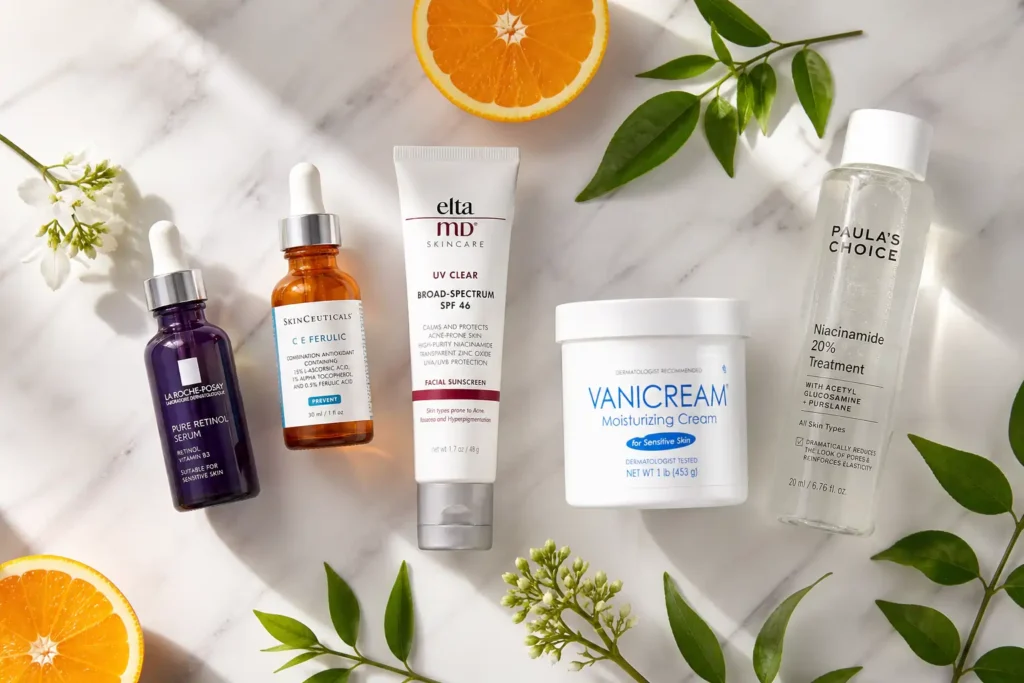
Top Skincare Ingredients That Actually Work in 2026
The skincare industry has never been louder — or more confusing. By 2026, the global skincare market is expected to surpass $756 billion, yet most people still struggle to answer one simple question: Which skincare ingredients actually work?
Every week, a new “miracle” ingredient takes over social media. One day it’s snail mucin, the next it’s exosomes, mushroom extracts, or overnight glass-skin hacks. Meanwhile, dermatologists continue recommending many of the same science-backed ingredients they’ve trusted for years. It’s no surprise so many routines end up overcrowded, expensive, and ineffective.
Here’s the truth: great skin rarely comes from using more products. It comes from using the right ingredients in the right formulations.
In this guide, we’re cutting through the marketing hype to uncover the top skincare ingredients that actually deliver results in 2026. These are the board-certified dermatologists, supported by peer-reviewed science, and proven to deliver visible results. Whether you’re battling hyperpigmentation, fine lines, acne, or just want healthier skin, this is the only guide you need.

Let’s get into the science — and the skincare glow-up — you’ve been waiting for.
Why Most Skincare Products Fail (And What Dermatologists Say Actually Works)
Walk down any beauty aisle, and you’re confronted with a wall of promises. “Clinically proven.” “Dermatologist-tested.” “Scientifically formulated.” But what do those claims actually mean — and why do so many products still underdeliver?
How Dermatologists Evaluate Skincare Ingredients for Safety and Efficacy
Dermatologists don’t evaluate ingredients the way a marketing team does. They look at the mechanism of action (how the ingredient physically interacts with skin cells), clinical trial data (controlled studies on real human subjects), evidence of long-term safety, and reproducibility across different skin types.
In one of the most comprehensive studies of its kind, 80 dermatologists from 43 institutions across the United States evaluated skincare ingredients on a rigorous 1–9 scale. The goal, as senior author Dr. Murad Alam, Vice Chair and Professor of Dermatology at Northwestern University Feinberg School of Medicine, explained, was to “help both doctors and everyday users understand which ingredients are backed by the most expert support.”
Only 23 ingredients made the final cut. The methodology — and the results — are documented at Northwestern Medicine.
“More Is Not Always Better” — Why a 3-Step Routine Often Outperforms a 12-Step Shelf
This one stings a little. Dr. Whitney Hovenic, a double board-certified dermatologist and Mohs micrographic surgeon, is straightforward about it: “As a dermatologist, I prioritize ingredients that are clinically proven, well-tolerated, and effective across a wide range of skin types,” she explains in a recent Yahoo Health feature.
Her recommended starting point is three pillars — a retinoid, a broad-spectrum SPF, and a quality moisturizer. Everything else layers in from there, based on individual skin needs. More products mean more potential interactions, more irritation risk, and more opportunities to compromise the very skin barrier you’re trying to support.
To understand how to restore and protect your skin barrier properly, read my complete guide here:
What Do the Labels “Dermatologist-Tested” and “Clinically Proven” Actually Mean?
Honestly? Less than most people assume. A product can be labeled “dermatologist-tested” based on evaluation by a single practitioner on a handful of participants, which is a far cry from a double-blind, controlled clinical trial.
As the team at The Method notes, “Dermatologist-recommended products are formulated with active ingredients at concentrations proven to work, not concentrations that look good on a label.”
That distinction — concentration vs. presence — is the most important thing you can learn about reading a skincare label.
Why 97% of Patients Prefer Dermatologist Recommendations Over Influencer Endorsements
When people are dealing with genuine skin concerns — acne, hyperpigmentation, premature aging — the data is clear.
According to research cited by The Method, 97% of patients facing real skin concerns prefer dermatologists’ recommendations over influencers’ endorsements. That gap between what trends and what actually works has never been more important to understand.
The Gold Standard — 4 Skincare Ingredients Proven to Work (Backed by Science)
These aren’t new. They’re not buzzing on social media this week. They’ve earned their place through decades of clinical research, peer-reviewed studies, and the unwavering endorsement of board-certified dermatologists worldwide. If you take one thing from this entire article, make it these four.
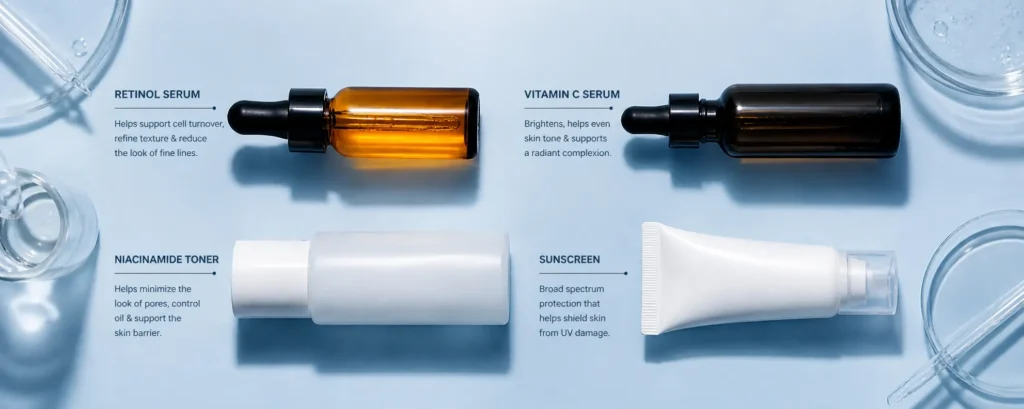
Retinoids (Vitamin A): The Undisputed #1 Anti-Aging Ingredient Dermatologists Swear By
“The gold standard,” says Dr. Angela Lamb, board-certified dermatologist. “The most research-backed anti-aging ingredient boosts cell turnover, smooths wrinkles, and improves texture.”
The American Academy of Dermatology cites retinoids as among the most rigorously studied topical ingredients in dermatological history — and for good reason.
Retinol vs. retinaldehyde vs. prescription tretinoin — what’s the difference?
Prescription tretinoin is the strongest form and is directly bioavailable to the skin. Retinaldehyde (retinal) sits one conversion step away from retinoic acid and is notably more potent than retinol while remaining available OTC. Retinol requires two conversion steps, making it gentler and slower-acting but still clinically effective with regular use.
How to introduce retinoids without irritation?
Dr. Lamb is clear — “start slowly. Many people cannot tolerate applying one every night.” Use it two to three nights per week on dry, cleansed skin and build frequency as your skin adapts. The “buffer method” (using a moisturizer before a retinoid) further reduces irritation in sensitive skin types.
Who should avoid retinoids?
Anyone pregnant or breastfeeding should skip retinoids entirely. They’re contraindicated due to potential effects on fetal development. Those with active rosacea or highly sensitized skin should consult a dermatologist before starting.
Broad-Spectrum SPF (Zinc Oxide / Titanium Dioxide): Your Best Anti-Aging Investment, Period
Sunscreen is arguably the single most impactful anti-aging product you can use — not a retinol serum, not a peptide, not an exosome treatment. UV radiation is responsible for roughly 80% of visible skin aging, including fine lines, dark spots, uneven texture, and laxity. This isn’t contested.
For a deeper breakdown of how sun protection prevents premature aging and how to choose the right SPF, read my full guide here.
Mineral vs. chemical sunscreen: which one wins in 2026?
Mineral sunscreens (zinc oxide, titanium dioxide) sit on the surface of skin and physically reflect UV rays; chemical sunscreens absorb UV energy and convert it to heat. Mineral options ranked highly in the Northwestern dermatologist study and are increasingly preferred for sensitive skin.
The American Academy of Dermatology recommends broad-spectrum SPF 30 or higher, applied daily — not just on beach days.
Why SPF prevents wrinkles, dark spots, AND redness — not just sunburn?
Chronic, cumulative UV exposure degrades collagen, triggers melanin overproduction, and generates persistent inflammation — all of which are visible as premature aging, hyperpigmentation, and redness. Daily SPF interrupts that process every single morning.
New-generation mineral sunscreens solving the white cast problem
Micronized zinc oxide formulations now sit invisibly on all skin tones. In 2026, the white cast excuse no longer holds. Lightweight, breathable, tinted mineral SPF options are widely available at every price point.
Vitamin C (L-Ascorbic Acid): The Brightening Antioxidant That Also Fights Aging
Vitamin C brightens skin, fades dark spots, stimulates collagen, and protects against free radicals. That sounds like marketing language — but it actually isn’t.
How Vitamin C stimulates collagen, fades dark spots, and neutralizes free radicals?
L-ascorbic acid is a cofactor for collagen-synthesizing enzymes, directly supporting collagen production. It simultaneously inhibits tyrosinase (the enzyme that triggers melanin production), making it effective against hyperpigmentation. Its antioxidant properties neutralize reactive oxygen species generated by UV exposure and pollution — making it a natural complement to SPF.
The stability problem — what to look for on the label
L-ascorbic acid oxidizes when exposed to air and light, turning yellow-orange and losing efficacy entirely. Look for opaque or airtight packaging; avoid products already discolored at purchase.
Best pairings: Vitamin C + Vitamin E + Ferulic Acid
According to Trilogy Laboratories, this trio remains one of the most synergistic combinations in skincare science — each ingredient stabilizes and amplifies the others.
Ideal concentration range
10–20% L-ascorbic acid is the clinically studied range for visible results. Below 10%, efficacy diminishes. Above 20%, irritation risk climbs without proportional benefit.
Niacinamide (Vitamin B3): The Quiet Multitasker That Makes Every Other Ingredient Work Better
Niacinamide doesn’t trend. It just works — quietly, reliably, and for nearly every skin type.
Regulating oil, minimizing pores, reducing hyperpigmentation, AND strengthening barrier
At 4–10% concentration, niacinamide regulates sebum production, visibly minimizes pore appearance, reduces surface hyperpigmentation, and increases ceramide production in the skin — strengthening the very barrier that makes other actives work better.
According to Trilogy Laboratories, it simultaneously reduces fine lines, evens skin tone, and prevents transepidermal water loss.
Why niacinamide is a hero for oily, acne-prone, and sensitive skin types
It addresses oil control and inflammation without drying or stripping — a balance most actives can’t achieve. Sensitive skin tolerates it well at lower concentrations (2–4%).
The niacinamide + retinol myth — busted
An older concern suggested these two ingredients shouldn’t be combined. Current formulation science has largely debunked this. At stable OTC concentrations, the interaction that triggers the “niacin flush” concern doesn’t occur meaningfully. You can use both — just apply in separate steps if you want to be cautious.
The Barrier Builders — Ceramides, Hyaluronic Acid & Peptides for Healthy Skin in 2026
Before your retinol can work. Before your Vitamin C can brighten. Before any active ingredient does anything useful, your skin barrier needs to be functioning properly.
What Is the Skin Barrier, and Why Is Everyone Suddenly Talking About It?
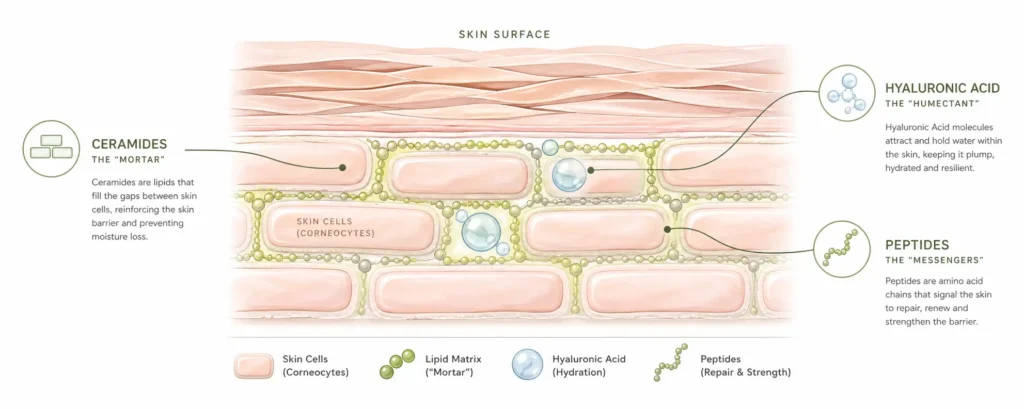
The skin barrier — the outermost layer of the epidermis — performs one critical function: it keeps moisture in and irritants out. When it’s compromised by over-exfoliation, harsh actives, pollution, or environmental stress, skin becomes reactive, dry, and increasingly resistant to the ingredients you apply.
As the Adore Eyes clinical skincare team notes, dermatological literature consistently confirms that “barrier-intact skin responds better to devices and procedures” — the same logic extends to every topical active in your routine. In 2026, barrier-first philosophy isn’t a trend. It’s the foundation.
Ceramides: The “Mortar” Your Skin Barrier Cannot Survive Without
Ceramides are lipids that make up roughly 50% of the skin’s natural barrier structure — think of them as the mortar between the “bricks” of your skin cells. Three specific types — ceramide NP, ceramide AP, and ceramide EOP — are critical for maintaining that structure. As ceramide levels deplete through age, over-exfoliation, or harsh cleansing, the result is dryness, sensitivity, eczema flare-ups, and accelerated aging.
CeraVe, one of the most consistently dermatologist-recommended brands globally, built its entire formulation philosophy around ceramide science — and it shows in clinical outcomes. Look for ceramide-containing moisturizers and barrier repair balms that also include fatty acids and cholesterol, which help recreate the full lipid profile of a healthy barrier.
Hyaluronic Acid: The Hydration Hero That Holds 1,000x Its Weight in Water — But Are You Using It Wrong?
Hyaluronic acid (HA) can hold up to 1,000 times its weight in water, making it one of the most effective humectants in modern skincare. But — and this is a critical nuance most people miss — it draws moisture from its environment. In a dry climate, apply HA to dry skin, and it can actually pull moisture upward from deeper skin layers, leaving skin feeling tighter than before.
The multi-molecular weight difference: Low-molecular-weight HA penetrates more deeply into the skin for structural hydration; high-molecular-weight HA forms a film on the surface for immediate plumping. The best formulations include both.
The #1 mistake people make with HA and how to fix it: Apply to slightly damp skin, then immediately layer a moisturizer or occlusive on top to seal that moisture in. That sequence makes all the difference.
Peptides: The Smartest Anti-Aging Ingredient in Your Routine (and Why Most Products Under-Dose Them)
Peptides are short chains of amino acids that function as cellular messengers — signaling skin to produce more collagen, improve elasticity, and repair structural damage.
Signal peptides (like Matrixyl/palmitoyl pentapeptide-4) stimulate collagen synthesis; carrier peptides (like copper peptides) deliver trace elements that support wound healing; neurotransmitter-inhibiting peptides (like Argireline/acetyl hexapeptide-3) soften expression lines by mildly relaxing facial muscle contractions.
According to Olga Lorencin, peptides “remain at the top of the skincare ingredient pyramid” in 2026 — but she’s direct about the catch: “Peptides must be used at clinically effective levels to deliver visible results. Many formulas only include small amounts for marketing appeal rather than performance.”
If a peptide appears near the bottom of a long ingredient list, it’s likely decorative rather than functional.
Exfoliants That Actually Clear Your Skin — AHAs, BHAs & PHAs Explained
Chemical exfoliation is genuinely exciting science. It’s also where most people cause the most unnecessary damage to their skin — usually by overdoing it.
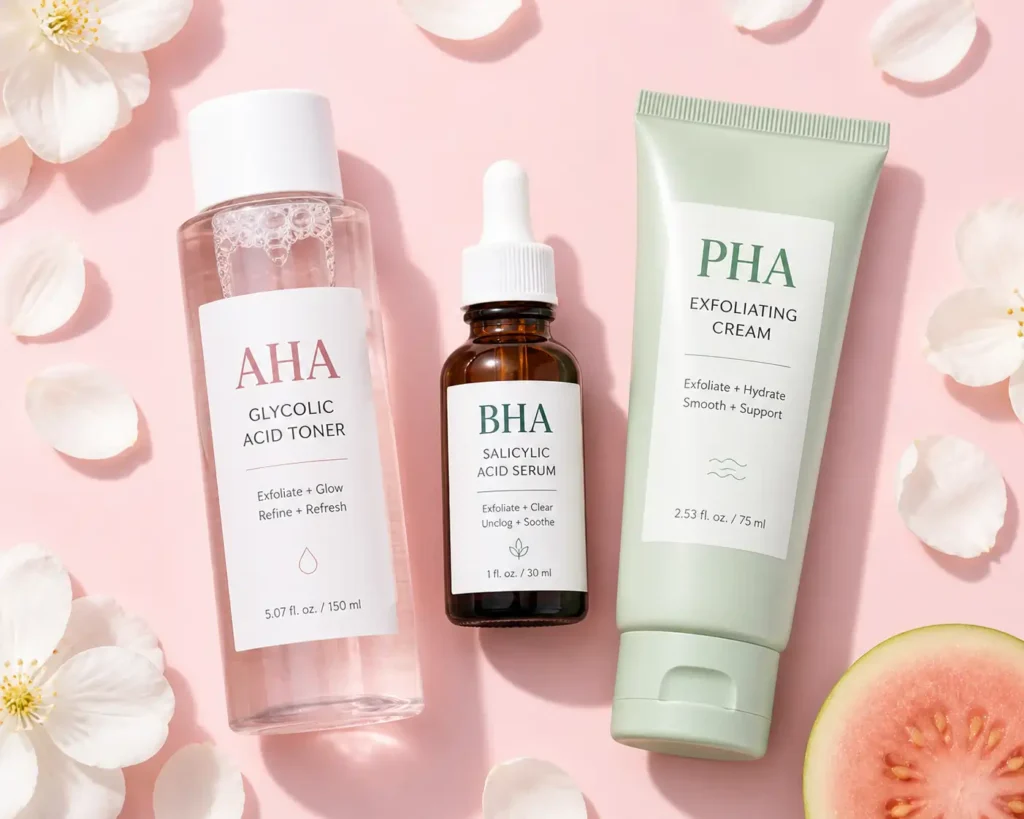
AHAs (Alpha Hydroxy Acids) — Glycolic Acid & Lactic Acid: Surface Exfoliation for Glow and Even Tone
AHAs dissolve the bonds between dead skin cells at the surface, accelerating natural cell turnover. Glycolic acid is the most potent — small molecular size allows deeper penetration, making it the most effective AHA for fine lines, texture improvement, and uneven tone. It’s best suited for normal to oily skin types.
Lactic acid has a larger molecular structure, meaning it works more gently at the surface — ideal for dry, sensitive, or AHA-new skin. Both improve hyperpigmentation over time through consistent use and pair well with SPF, since fresh post-exfoliation skin is more photosensitive.
BHAs (Beta Hydroxy Acids) — Salicylic Acid: The Only Acid That Goes Inside the Pore
Salicylic acid is oil-soluble — a property unique among exfoliating acids that allows it to penetrate the pore lining itself, dissolving the sebum and dead cell debris that cause blackheads and breakouts from the inside out.
At concentrations of 0.5–2% (the clinically supported range), it clears congestion, reduces active breakouts, and prevents future blemishes with regular use. Pairing salicylic acid with niacinamide is one of the most effective combinations for oily, acne-prone skin — the acid clears, the niacinamide regulates and soothes.
PHAs (Polyhydroxy Acids): The Gentlest Exfoliant — Ideal for Sensitive Skin in 2026
PHAs (gluconolactone and lactobionic acid) offer exfoliation benefits while simultaneously pulling moisture into the skin — making them genuinely unique in the acid family. Their large molecular size means slower surface penetration and a dramatically lower risk of irritation.
In 2026, PHAs are the smart choice for beginners, for anyone post-procedure, or for skin that wants exfoliation benefits without ever risking a compromised barrier.
Are You Over-Exfoliating? Signs Your Barrier Is Screaming for Help
This deserves to be said directly. If your skin feels tight, looks shiny-raw, reacts to products it used to tolerate, or experiences persistent redness — those are signs of a compromised barrier, not a sign you need stronger actives. The solution is always to strip the routine back.
As WildGlow notes, a recovery protocol of ceramides + hyaluronic acid + niacinamide — without any active exfoliation — typically restores barrier function within one to two weeks.
The 2026 Ingredient Frontier — New Actives Dermatologists Are Watching Closely
Some ingredients in 2026 genuinely deserve the excitement around them. Others are more interested in theory than they are in practice — at least for now. Here’s an honest breakdown.

Exosomes: The Most Futuristic Ingredient in Skincare — But Is the Science There Yet?
Exosomes are extracellular vesicles — tiny, bubble-like structures that cells use to communicate with each other, carrying proteins, lipids, and genetic instructions that direct neighboring cells to heal and regenerate. They’re “responsible for cell communication and regeneration, making them ideal for anti-aging and skin repair.”
In clinical settings — post-procedure recovery, wound healing — the evidence is compelling. In daily-use OTC products? As Olga Lorencin cautions, exosome skincare should “currently be viewed as innovative rather than fully proven” for consumer use. Worth watching; not worth paying a dramatic premium for quite yet.
Curious how exosomes compare to tried-and-tested ingredients like retinoids? Read our full guide on Exosomes vs Traditional Retinoids to see which ingredients are actually backed by stronger long-term evidence.
Your Skin’s Microbiome Is Having Its Glow-Up Moment — Postbiotics
Unlike probiotics (live bacteria that are notoriously unstable in a jar), postbiotics are the stable, beneficial byproducts created when bacteria break down nutrients during fermentation — enzymatic compounds, peptides, and fatty acids that support the skin’s microbial environment without the formulation challenges of live cultures. According to Trilogy Laboratories, postbiotics “help strengthen the skin barrier, balance the skin’s microbiome, reduce inflammation, and support overall skin resilience” — particularly useful for sensitive, acne-prone, or reactive skin. Unlike most “next generation” ingredients, the clinical evidence here is meaningfully growing.
👉 Want to understand how your skin microbiome affects acne, sensitivity, inflammation, and barrier health? Read our complete guide on the skin microbiome and how to protect it naturally.
PDRN (Polydeoxyribonucleotide): The K-Beauty-Inspired Ingredient Repairing Skin at a Cellular Level
PDRN — derived from salmon sperm DNA — is a DNA fragment that, once applied, supports cellular repair pathways and promotes tissue regeneration. It’s been used in clinical aesthetic medicine in South Korea for years and is now moving into mainstream skincare conversations globally. The evidence base is primarily from aesthetic medicine settings; more independent OTC data is still needed. That said, its trajectory from K-beauty clinical spaces to global mainstream is real, and it’s one to watch in 2026. Source: Trilogy Laboratories.
CoQ10 (Coenzyme Q10): A Proven Antioxidant That Gets Stronger When Paired With Vitamin C
CoQ10 is a naturally occurring antioxidant produced by the body — and like many cellular defense mechanisms, its levels decline with age. It fights oxidative stress, helps energize skin cells, and combats the dullness and fine lines associated with free radical accumulation. In 2026, skincare brands are pairing CoQ10 with Vitamin C for compounded antioxidant protection, and incorporating it into retinol formulas to buffer irritation while supporting anti-aging results. Source: Trilogy Laboratories.
Tranexamic Acid: The Hyperpigmentation Fighter Giving Vitamin C Some Serious Competition
Tranexamic acid inhibits melanin production at the enzymatic level — specifically by blocking the interaction between keratinocytes and melanocytes that triggers overproduction. It’s particularly effective for melasma and post-inflammatory hyperpigmentation (the dark marks left by acne), and unlike hydroquinone, it’s well tolerated across all skin tones without the associated risks of long-term hydroquinone use.
When combined with niacinamide or Vitamin C in a brightening serum, tranexamic acid becomes one of the most genuinely effective hyperpigmentation protocols available without a prescription.
Skincare Trends in 2026 — What the Biggest Shifts Mean for Your Routine
The skincare landscape is shifting — not just in which ingredients are trending, but in how people think about skincare entirely. Here are the forces reshaping what’s on people’s shelves in 2026.
Skinimalism Is Winning: Why the 10-Step Routine Is Officially Over
The 10-step routine had a good run. It’s done. According to MB Cosmetics Lab, consumers across all age groups are gravitating toward streamlined 3–5 step rituals built around multifunctional heroes that actually work. The philosophy is straightforward: fewer products reduce irritation risk, lower costs, and — crucially — produce better compliance. A routine you actually follow beats a complicated one you abandon.
Barrier-First Skincare: The Philosophy Reshaping Every Product Launch in 2026
“Anti-aging now starts with barrier normalization, not correction.” That observation from Adore Eyes’ 2026 clinical skincare analysis captures exactly where professional dermatology is heading.
Brands that previously led with aggressive actives are now reformulating around barrier integrity — ceramide-led moisturizers, lower-pH formulations, and recovery-focused protocols are defining the most respected launches of 2026.
Biotech Skincare: When Lab Science Meets Your Bathroom Shelf
Professional skincare is entering the biotech era. Bio-engineered peptides, fermentation-derived actives, and ingredient-level technologies that were clinical tools five years ago are finding their way into consumer products.
The personal care ingredients market is currently valued at approximately $14.0 billion and is projected to reach $19.08 billion by 2033, according to research cited by Tukkbook. The driving force? Consumers who want efficacy, clinical credibility, and transparency in every formula.
Clean, Transparent, Sustainable: The Non-Negotiable Checklist for 2026 Shoppers
Over 52.1% of consumers now actively look for “natural” claims on product labels; 41.4% seek “non-toxic” labeling specifically, according to Attest’s Gen Z beauty research.
Recyclable packaging, cruelty-free certification, and vegan formulations have moved from “nice to have” to expected standards. Brands that can’t articulate their sustainability credentials are increasingly losing the trust — and the purchases — of a growing, vocal, and influential consumer base.
What Is Gen Z Looking for in Skincare in 2026?
Something genuinely interesting is happening with the youngest skincare consumers. They’re not just buying products — they’re researching them. And the bar for what earns their trust is meaningfully higher than any previous generation.
Gen Z Is Fluent in Skincare Science — and Brands Can No Longer Bluff Them
There’s a clear trend emerging: ingredient literacy. Gen Z consumers read labels, cross-reference clinical studies, and make purchase decisions based on formula rather than packaging or endorsements.
According to Metro Private Label, “Brands are no longer rewarded simply for using popular ingredients; they are evaluated on how clearly and honestly those ingredients are explained.” Marketing language without substance is now actively distrusted.
The Top Skincare Ingredients Gen Z Is Gravitating Toward in 2026
The ingredients Gen Z reaches for most aren’t the flashiest ones — they’re the effective ones.
Hyaluronic acid, glycerin, and ceramides for barrier health and the “glass skin” hydration aesthetic.
Niacinamide for pore control and oil regulation. Salicylic acid for acne-prone skin. And increasingly, retinoids as a preventative anti-aging measure — starting in their early 20s, not their 40s.
According to Rixincosmetics, “these ingredients are celebrated for their scientifically backed abilities to combat various skin concerns such as aging, hyperpigmentation, and uneven skin tone.”
Prevention Over Correction: Why Gen Z Is Starting Retinoids and SPF Earlier Than Any Previous Generation
Gen Z has adopted a notably proactive stance toward skin health — not reactive. They’re wearing SPF daily in their teens and 20s because they understand that UV damage accumulates before it’s visible.
They’re starting low-concentration retinoids in their early 20s because they understand that collagen loss begins well before the first visible wrinkle appears.
As Pure Spa Direct notes, Gen Z “favors products with ingredients that support long-term skin health.”
Authenticity, Inclusivity, and Sustainability: The Three Things Gen Z Will Not Compromise On
Cruelty-free and vegan certifications aren’t optional for this demographic — they’re baseline. Over 67.7% of Gen Z consumers value sustainability when choosing beauty products, and more than half are willing to pay more for sustainably or ethically sourced formulations, per Attest data. Real-skin representation, inclusive shade ranges, and transparency in sourcing all factor into brand trust in ways that didn’t define previous generations of skincare shoppers.
Prevention-focused skincare is also becoming a major priority for Gen Z — especially daily SPF and early anti-aging habits.
Read our complete guide to sun protection and anti-aging skincare to learn how sunscreen protects skin health long-term.
Which Skincare Brand Do Dermatologists Recommend in 2026?
This question comes up constantly — and honestly, the answer is more nuanced than any single brand name.
What Makes a Brand “Dermatologist-Recommended” — and What That Label Doesn’t Always Guarantee
A product can carry “dermatologist-tested” language based on assessment by a single practitioner on a small group of participants. That’s a fundamentally different standard than a brand that’s been the subject of multiple controlled clinical trials, cited in peer-reviewed literature, and recommended consistently by board-certified dermatologists in clinical practice.
Always look for the substance behind the label — active ingredient concentrations, formulation transparency, and evidence base matter more than any marketing claim.
Dermatologist-Trusted Mass-Market Brands in 2026: Accessible, Affordable, Evidence-Backed
Among accessible brands, CeraVe is perhaps the most universally recommended — its ceramide-centric formulation was developed in collaboration with dermatologists and addresses barrier repair across price-accessible cleansers, moisturizers, and treatments.
La Roche-Posay draws on over 30 years of dermatological heritage, particularly for sensitive, acne-prone, and rosacea-prone skin.
Neutrogena has earned consistent clinical acknowledgment for its SPF lines and retinol formulations.
According to YouGov data reported by GCI Magazine, top cross-generational brand preferences include Dove (53.1%), Vaseline (38.5%), and Olay (34.9%) — though dermatologist endorsement patterns skew toward evidence-formulated clinical brands over heritage consumer names.
Want to know whether Dove products are actually good for sensitive skin? Read our in-depth guide to the Dove Sensitive Skin Beauty Bar, including ingredients, dermatologist insights, and who it’s best for.
Medical-Grade Skincare for Advanced Concerns: When OTC Isn’t Enough
For concerns like persistent melasma, significant photoaging, or post-procedure recovery, medical-grade options offer formulations with higher active concentrations and tighter quality controls.
SkinCeuticals, ZO Skin Health, Obagi Medical, and Revision Skincare are frequently cited by board-certified dermatologists for their clinical formulation standards and outcome data.
As The Method explains, the core distinction is straightforward: medical-grade products “undergo rigorous research, clinical trials, and peer-reviewed testing before reaching your bathroom shelf” in a way that many consumer products simply don’t.
The Bottom Line: The Best Skincare Brand Is the One Formulated With Proven Ingredients at Effective Concentrations — for Your Skin Type
No single brand is universally optimal. The right brand for you is the one whose formulations address your specific skin concerns, use active ingredients at clinically validated concentrations, and are well-tolerated by your skin over time.
A $12 CeraVe moisturizer with ceramides at effective concentrations will consistently outperform a $180 “luxury” cream that lists those same ingredients near the bottom of a 40-item ingredient deck.
How to Build a Skincare Routine Around Ingredients That Actually Work in 2026
Everything in this article is useful in theory. Here’s how it translates into actual daily practice.
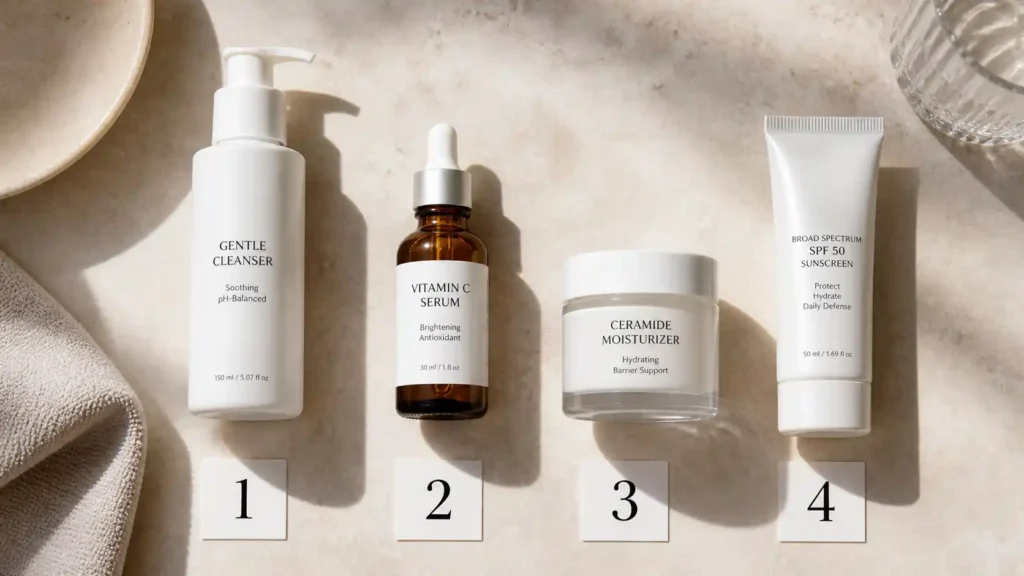
The 3-Pillar Foundation Every Dermatologist Agrees On: Retinoid + Broad-Spectrum SPF + Moisturizer
Dr. Whitney Hovenic recommends that “Most routines should start with three foundational pillars: a retinoid, a broad-spectrum SPF, and a quality moisturizer. From there, additional ingredients can be layered in depending on your skin’s needs.”
That’s the framework. Everything else — Vitamin C, niacinamide, exfoliants, peptides — layers into that structure based on individual concerns.
Morning Routine Ingredient Order: How to Layer for Maximum Absorption and Protection
Step 1 — Cleanser: Gentle, non-stripping, pH-balanced.
Step 2 — Vitamin C serum: Applied to clean, dry skin before anything else — it needs direct skin contact to work.
Step 3 — Niacinamide or hyaluronic acid: Applied to slightly damp skin; layer hyaluronic acid before niacinamide if using both.
Step 4 — Ceramide moisturizer: Seals in the previous layers and restores the lipid barrier.
Step 5 — Broad-spectrum SPF 30+: The final, non-negotiable layer. Never apply Vitamin C without following with SPF — their antioxidant and UV protection effects are synergistic, not redundant.
👉 Every skin type needs a slightly different routine strategy. Whether you’re dealing with oily skin, hyperpigmentation, post-swim dryness, teenage breakouts, or combination skin concerns, explore our expert skincare routine guides tailored to specific needs:
- Combination Skin Routine:
- Oily Skin Winter Routine:
- Post-Swim Skincare Routine:
- Hyperpigmentation Skincare Routine:
- Best Eye Care Routine:
- Korean Acne Skincare Routine (2026):
- Ultimate Teen Skincare Routine:
Night Routine Ingredient Order: When Retinoids and Repair Actives Do Their Best Work
Step 1 — Double cleanse (if wearing makeup/SPF): Oil-based cleanser first, then water-based.
Step 2 — Exfoliant (2–3 nights per week only): AHA or BHA appropriate for your skin type.
Step 3 — Retinoid (on non-exfoliant nights): Applied to dry, cleansed skin. Use the buffer method (moisturizer first) if you’re in the first four to six weeks.
Step 4 — Peptide serum: Supports overnight repair; layers well over retinoids without interference.
Step 5 — Ceramide moisturizer: Final seal; supports barrier repair while you sleep.
Ingredient Combinations to Avoid — and the Science Behind Why
Retinoids + AHAs/BHAs on the same night: Both increase cell turnover; when used together, they significantly increase the risk of irritation and can compromise the skin barrier. Use exfoliants on separate nights from your retinoid.
Benzoyl peroxide + retinol: Benzoyl peroxide can oxidize retinol, inactivating it before it can do its job. Keep these in separate routines or alternate nights. The Vitamin C + niacinamide concern — still occasionally cited — has been largely debunked at stable, modern OTC concentrations. You can use both; just apply them in separate steps.
👉 Wondering whether Vitamin C or niacinamide is better for your specific skin concerns? Read our detailed comparison guide on Vitamin C vs Niacinamide to learn how each ingredient works, who benefits most, and whether you should use them together.
How Many Active Ingredients Is Too Many? A Practical Guide for Real Skin
The honest answer is: fewer than you probably think. Layering four or five actives — retinoid, exfoliant, Vitamin C, tranexamic acid, and a peptide — nightly is a recipe for a compromised barrier, increased sensitivity, and ultimately worse skin.
A better approach: pick one or two primary concerns, choose the two or three ingredients best supported by evidence for those concerns, and use them consistently for three to four months before evaluating. Real skin improvement with proven ingredients is measured in weeks and months — not days.
Conclusion
The most important realization in skincare isn’t which ingredient is newest. It’s the ingredients that actually work that have largely been known for decades — retinoids, broad-spectrum SPF, Vitamin C, niacinamide, ceramides, hyaluronic acid, and a thoughtfully chosen exfoliant. The rest of the story is about using them correctly, consistently, and at effective concentrations.
New actives like postbiotics, tranexamic acid, and emerging biotech ingredients like exosomes are genuinely worth following. Some of them will earn their place in evidence-based routines over the next few years. But they don’t replace the foundation — they supplement it.
Build the foundation first. Give it time. And resist the pull of whatever’s going viral this week.
Remember: the best skincare routine is the one you actually follow — consistently. You don’t need 15 products. You need the right 4 or 5, formulated at effective concentrations, applied in the right order.
Ready to take your skincare seriously? Head over to GlowGuideHub.com for more science-backed guides, ingredient breakdowns, and expert advice — because your skin deserves a routine built on facts, not hype.

About Subhan Usafzai
Evidence-Based Skincare Educator & Formulation Specialist
I'm Subhan Usafzai (Fazli Subhan), an Evidence-Based Skincare Educator and Formulation Specialist. My background includes first-hand experience as a technician and research support in skin departments across tertiary military hospitals since 2006, and since 2008 I've focused on researching and translating clinical and formulation science into practical, evidence-based guidance. My formal training includes Coursera's Introduction to Cosmetic and Skincare Science and the four-course Introduction to Cosmetic Science and Ingredients specialization (Cosmetic Formulation Science, Cosmetic Product Development, and Quality Control and Regulatory in Cosmetic Science), authorized by Olay. Every article I write is checked against current research and reviewed by our medical team before publishing.
✅ Medically reviewed by Dr. Muhammad Khurram Ahmad, MD, Board-Certified Dermatologist · 📅 Last updated: May 2026
📋 Medical Disclaimer
For Educational Purposes Only: This article is written by Subhan Usafzai, an Evidence-Based Skincare Educator and Formulation Specialist, and is intended for informational and educational purposes only. The content provided is based on scientific research, peer-reviewed studies, and dermatological literature available as of May 2026.
Not Medical Advice: The information in this article does not constitute medical advice, diagnosis, or treatment recommendations. It should not be used as a substitute for professional medical consultation, diagnosis, or treatment from a board-certified dermatologist or qualified healthcare provider.
Individual Results May Vary: Skin conditions, including hyperpigmentation, melasma, and UV-induced pigmentation, vary significantly between individuals based on genetics, skin type, hormonal factors, and environmental exposure.
Consult Your Healthcare Provider: Before starting any new skincare regimen, especially if you are pregnant, breastfeeding, have diagnosed skin conditions, are taking medications, have sensitive skin, or are undergoing dermatological treatments.
Product Safety: Always perform a patch test before using new skincare products. Discontinue use and consult a healthcare professional if you experience irritation or adverse reactions.
🛍️ Affiliate Disclosure
Amazon Associates Program: Glow Guide Hub participates in the Amazon Services LLC Associates Program. When you purchase through our Amazon affiliate links, we may earn a small commission at no extra cost to you.
Editorial Independence: Our affiliate relationships do not influence our content or recommendations. We only recommend products based on scientific research, clinical evidence, and genuine quality assessment.
Supporting Our Mission: Your purchases through affiliate links help us maintain this free, evidence-based educational resource. Thank you for your trust!