

Top 10 Zinc Oxide Sunscreens for Rosacea 2026: Dermatologist-Recommended Picks
Let’s explore the best formulas on the market so you can face the sun with confidence and clarity.
Why Zinc Oxide Sunscreen is Ideal for Rosacea?
Zinc oxide sunscreen is ideal for rosacea because it provides gentle physical sun protection while actively reducing inflammation and redness without irritating sensitive skin.
Unlike chemical sunscreens, which can penetrate the skin and trigger flare-ups, zinc oxide creates a protective barrier on the surface. It delivers anti-inflammatory benefits that help calm rosacea symptoms.
Below, we explore why this mineral marvel is often the first recommendation from dermatologists.
Does Zinc Oxide Help Rosacea?
Yes, zinc oxide helps rosacea by calming inflammation, reflecting UV rays instead of absorbing them, and forming a barrier that reduces irritation and trans-epidermal water loss.
More details are provided below.
Calming properties
Zinc oxide isn’t just a sunblock—it’s a skin soother. This mineral ingredient has been shown to reduce the production of anti-inflammatory cytokines, calm flare-ups, and ease redness.
Unlike chemical actives that may sting or burn, zinc gently coats the skin, reducing irritation in sensitive skin prone to rosacea.
Reflective UV defense vs. chemical absorption
Rather than absorbing UV rays like chemical filters, zinc oxide reflects them, reducing the likelihood of triggering neurovascular dysregulation or worsening telangiectasia (visible blood vessels).
This broad-spectrum protection is particularly crucial for those managing erythematotelangiectatic rosacea.
Barrier protection for hyperreactive skin
Zinc oxide forms a physical barrier on the skin, reinforcing the epidermal barrier function and reducing trans-epidermal water loss —a key concern in hyperreactive, dehydrated rosacea skin.
It’s hypoallergenic, non-comedogenic, and rarely causes flare-ups.
How Does Zinc Oxide Protect Skin?
Let’s dive into the details below.
Blocks UVA/UVB and blue light
One of the few FDA-approved mineral UV filters, zinc oxide defends against UVA and UVB rays. It also helps block blue light, which may contribute to rosacea inflammation and pigmentation issues.
Products with zinc oxide SPF 30 or higher offer optimal defense for sensitive skin.
Oxidative stress markers and free radical neutralization
UV rays increase oxidative stress markers, which worsen inflammation in rosacea.
Zinc oxide, along with added antioxidants like green tea extract, SPF, and niacinamide, provides sunscreen benefits and neutralizes free radicals, protecting against environmental aggressors.
DNA damage prevention in rosacea flare-ups
Zinc oxide’s ability to shield skin from UV-induced DNA damage makes it crucial for managing chronic skin conditions. It may also support wound healing peptides and skin recovery post-flare-up.
Is Mineral Sunscreen Better for Rosacea?
Yes, mineral sunscreen is better for rosacea because it protects sensitive skin without irritating it.
Here is the detail.
Mineral vs. chemical filters
Chemical sunscreens use oxybenzone and avobenzone, which can irritate rosacea-prone or reactive skin. Mineral sunscreens, made with zinc oxide and titanium dioxide SPF, are generally better tolerated.
They offer photostable sunscreen protection without disrupting the skin microbiome and rosacea balance.
Titanium dioxide SPF, non-comedogenic SPF, phototoxicity test, cell viability assay in skincare
Many rosacea-friendly sunscreens pair zinc oxide with titanium dioxide nanoparticles for enhanced coverage. These formulas undergo phototoxicity tests and cell viability assays to ensure safety and non-irritation thresholds for even the most sensitive users.
Look for non-comedogenic SPF labels to avoid clogging pores or triggering acne rosacea.
Mineral-based sunscreens protect your skin and actively support its barrier function. They also reduce redness and defend against pollutants.
Understanding Rosacea: Know Your Subtype
Rosacea appears in different ways—here are the four most common subtypes:
Erythematotelangiectatic
Redness and visible blood vessels
May benefit from zinc oxide facial sunscreen
Papulopustular
Redness with bumps and pimples
May benefit from zinc oxide facial sunscreen
Phymatous
Thickened, enlarged skin—often on the nose
Ocular
Red, irritated eyes and eyelids
Choosing proper skincare, especially a gentle, mineral-based sunscreen, can make a big difference. Zinc oxide is particularly calming for sensitive, inflamed skin.
Speak with a dermatologist to understand your subtype and best treatment options.

Top 10 Zinc Oxide Sunscreens for Rosacea (2026 Picks)
Your choice of sunscreen can make or break your skincare routine, especially if you’re managing rosacea.
For this curated 2026 list, we evaluated over 50 mineral formulas based on dermatologist recommendations, consumer feedback, formulation quality, photostability testing, and skin compatibility.
Every pick below is reef-safe, cruelty-free, and specifically designed to calm and protect rosacea-prone skin.
1. EltaMD UV Clear SPF 46: Best Overall
Features
- Zinc oxide + niacinamide combo
- Oil-free zinc sunscreen
- Lightweight formula rosacea-friendly
Ideal For
All skin types, especially acne rosacea
2. La Roche-Posay Anthelios Mineral SPF 50: Best for Oily Rosacea
Features
- Matte finish, non-greasy sunscreen
- Broad spectrum protection + tinted zinc oxide sunscreen
Ideal For
Oily skin rosacea, sunscreen for reactive skin
3. CeraVe Hydrating Mineral Sunscreen SPF 30 with Sheer Tint: Best for Dry Skin
Features
- Zinc oxide moisturizer SPF
- Includes ceramide NP vs AP, squalane, jojoba oil sunscreen.
Ideal For
Dry rosacea, barrier repair
4. Blue Lizard Sensitive Mineral SPF 50: Best for Sensitive Skin
Features
- Fragrance-free, hypoallergenic sunscreen for sensitive skin
- Pediatric safe, non-irritating sunscreen
Ideal For
Sensitive skin sun protection, rosacea friendly sunscreen
5. Drunk Elephant Umbra Sheer SPF 30: Best for Combination Skin
Features
- Zinc oxide broad spectrum includes grapeseed oil sunscreen
- Micronized zinc oxide formula
Ideal For
Zinc oxide sunscreen for combination skin
6. Colorescience Sunforgettable Brush-On SPF 50: Best Tinted Option
Features
- Powder-based, setting powder SPF
- Makeup base sunscreen, reef safe certification
Ideal For
Daily use, reapplication over makeup, rosacea redness relief
7. Neutrogena Sheer Zinc SPF 50: Best Budget Pick
Features
- Drugstore favorite, oil-free zinc sunscreen for sensitive skin
Ideal For
Daily SPF protection, tight budgets
8. Babo Botanicals Sheer Zinc SPF 30: Best Vegan Formula
Features
- Vegan zinc sunscreen includes colloidal oatmeal sunscreen
Ideal For
Ethical shoppers, natural remedy for rosacea
9. Etude House Sunprise Mild SPF 50+: Best Korean Formula
Features
- Korean zinc sunscreen includes Centella asiatica SPF
Ideal For
Asian skincare lovers, calming peptide effect
10. ThinkSport SPF 50+: Best Sport-Friendly Option
Features
- Lifeguard zinc sunscreen,
- Water-resistant sunscreen,
- Reef-friendly sunscreens
Ideal For
Outdoor activities, SPF for redness, and exercise
How to Choose the Right Zinc Sunscreen for Your Rosacea Type
To choose the right zinc oxide sunscreen for rosacea, match the formula to your skin type—look for oil-free zinc oxide sunscreen for oily rosacea, a zinc oxide moisturizer SPF for dry or thin skin, and a gentle facial sunscreen with hypoallergenic certification and fragrance-free for sensitive or combination skin.
Below, we break it down by rosacea type using targeted treatments and essential tips to guide your next purchase.
Sunscreen for Oily Rosacea
If your skin produces excess oil, especially in the T-zone, you’ll need an oil-free zinc sunscreen that won’t clog pores or trigger breakouts.
Look for formulas labeled “non-comedogenic cream,” which are tested to avoid clogging pores.
Sebum regulation is crucial for oily rosacea sufferers. Lightweight mineral sunscreens help absorb excess oil without stripping the skin.
Products that support sebaceous regulation also calm overactive oil glands while delivering the anti-inflammatory benefits of zinc oxide.
Quick Tip: Choose matte-finish or gel-based zinc sunscreens designed for rosacea and acne. These products offer sun protection and oil control.
Sunscreen for Dry or Thin Skin
Dehydrated or thin skin is especially prone to UV rays and harsh skincare irritation.
The best defense?
A zinc oxide moisturizer SPF that blends hydration with barrier protection.
Look for mineral sunscreens with hydrating ingredients like squalane, hyaluronic acid, or jojoba oil sunscreen bases.
These ingredients restore moisture while enhancing the skin’s resilience, which is critical for those with fragile, rosacea-prone skin.
Quick Tip: A sunscreen for thin skin should have a creamy texture and occlusive agents that lock in moisture and reduce trans-epidermal water loss.
Sunscreen for Combination or Sensitive Skin
If your skin is oily and dry or tends to flare up easily, opt for a gentle facial sunscreen designed for balance. These products are often fragrance-free, cruelty-free, and clinically tested for tolerability.
Choose a fragrance-free sunscreen to avoid common rosacea triggers, and look for hypoallergenic certification on the label.
The goal is to prevent stinging, redness, or burning while offering full-spectrum protection.
Quick Tip: Physical sunscreens with zinc oxide and titanium dioxide are ideal for combination or sensitive skin because they sit on the skin’s surface and reflect UV rays rather than absorb them.
How to Apply Zinc Sunscreen on Face (Rosacea Safe Tips)
To apply sunscreen to your face, start with clean, dry skin. Use one teaspoon of zinc sunscreen 15-30 minutes before going outside. Place small dots on your forehead, cheeks, chin, and nose.
Cover your neck and the tops of your ears, too. Gently pat and spread until absorbed. Let it dry before adding makeup or moisturizer.

Below are rosacea-safe methods for applying sunscreen effectively, whether you wear makeup, use serums, or need to reapply throughout the day.
How to Apply Zinc Sunscreen on Face?
You can start by cleansing your face with a non-irritating cleanser and patting the skin dry. After that, follow these steps for a smooth, irritation-free sunscreen application:
-
Apply moisturizer: Layer your oil-free moisturizer first to buffer sensitive skin.
-
Use a nickel-sized amount: For the full face, apply evenly with light tapping motions.
-
Avoid rubbing: Gently press the sunscreen in instead of massaging it. This minimizes vasodilation mechanisms that can worsen rosacea.
-
Around eyes: To protect this delicate area, use or dab your regular zinc sunscreen carefully.
-
Layer with makeup: Let your makeup base sunscreen sit for 5 minutes before applying foundation or powder for even coverage.
Pro-Tip for Eyes
Use a gentle tapping motion to apply a zinc-based sunscreen around the eyes for safe, effective protection. For more, see our comprehensive guide here.
👉 Read Our Comprehensive Eye Care Guide
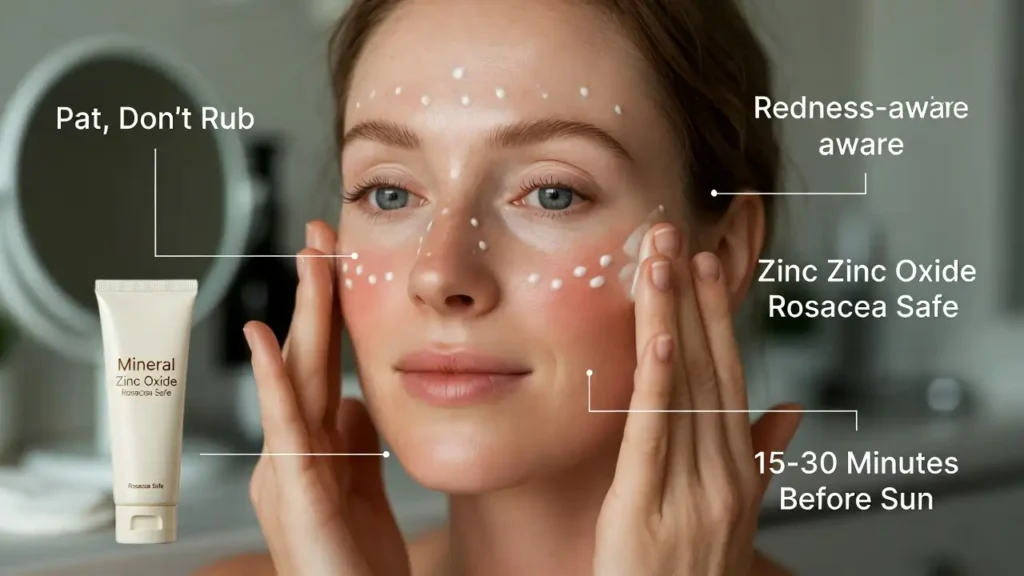
Pro Tip: Consider a tinted zinc oxide sunscreen for both sun protection and light makeup coverage—it blends well and reduces visible redness.
When to Apply SPF and Reapply?
Apply sunscreen 15-30 minutes before going outside. Reapply every 2 hours, regardless of SPF. Constantly reapply immediately after swimming, sweating, or toweling off, since water and sweat remove the protection.
Timing your sunscreen use matters, especially with rosacea-friendly sunscreen that prioritizes barrier repair and inflammation control.
-
Apply in the morning—even on cloudy days—as part of your daily sun protection.
-
Reapply every 2 hours when exposed to the sun, or immediately after sweating or swimming, even with water-resistant sunscreen.
-
If you wear makeup, use a setting powder SPF, or brush-on SPF 50 to top up protection without smudging your foundation.
-
Look for sunscreens with SPF boosters or antioxidant-lotion formulations for longer-lasting defense against oxidative stress and blue light exposure.
Reminder: Apply zinc sunscreen gently, generously, and consistently to the face, especially when managing neurovascular dysregulation and the erythema index associated with rosacea.
The Science Behind Mineral SPF and Rosacea Management

Rosacea isn’t just about surface redness—it’s a complex skin condition involving inflammation, immune response, and barrier dysfunction.
Mineral sunscreens, especially zinc oxide sunscreens for rosacea-prone skin, offer more than UV protection.
They actively support the skin’s defense mechanisms by reducing trans-epidermal water loss, calming cytokine responses, and protecting against neurogenic triggers.
Let’s break down the science.
Understanding Transepidermal Water Loss (TEWL)
TEWL means how much moisture escapes through the skin’s outer layer. In people with rosacea, this often leads to dryness, tightness, and flare-ups due to a compromised epidermal barrier.
-
Zinc oxide forms an occlusive layer that minimizes TEWL, making it ideal for sensitive skin sun protection.
-
Daily use of zinc oxide moisturizer SPF helps retain hydration and strengthen the barrier.
-
Ingredients like squalane, jojoba oil sunscreen, and ceramide NP vs AP further reduce TEWL while improving elasticity and comfort.
Zinc oxide sunscreen improves skin resilience and reduces sensitivity by targeting water loss, two essential factors in managing rosacea.
The Role of Cytokine Response in Rosacea
Rosacea flare-ups often stem from an overactive cytokine response, triggering the release of inflammatory messengers that disrupt the skin’s balance.
-
Anti-inflammatory cytokines help downregulate this response, calming redness and minimizing inflammation.
-
Mineral SPF supports this by creating a shield against UV-triggered cytokine release.
-
UV radiation can also activate oxidative stress markers, amplifying inflammation. Zinc oxide’s free radical-scavenging properties help neutralize these effects.
Additionally, photostable sunscreen prevents fluctuations in effectiveness throughout the day, ensuring constant protection against inflammatory UV triggers and vasodilation mechanisms that worsen rosacea.
What Is Neurogenic Rosacea?
Neurogenic rosacea is a subtype driven by the nervous system’s overreaction to environmental or internal stimuli, such as stress, temperature changes, or spicy food.
-
It’s tied to neurovascular dysregulation, meaning your nerves trigger excessive dilation of blood vessels (vasodilation), leading to flushing.
-
The erythema index, a scientific measure of redness, is often higher in these cases.
-
Using non-irritating, calming sunscreen with zinc oxide and natural ingredients like colloidal oatmeal or green tea extract SPF can soothe nerve-related inflammation.
The right broad-spectrum zinc oxide sunscreen helps manage UV exposure and these unique neurological triggers.
Quick Comparison Table: Best Zinc Oxide Sunscreens for Rosacea (2026)
It has always been overwhelming to choose the right zinc oxide sunscreen for rosacea-prone skin, given the many options.
So to simplify your search, here’s a quick glance at the top 10 dermatologist-recommended picks, tailored for different skin types and rosacea needs—whether you’re dealing with oily rosacea, dry or thin skin, or combination sensitivity.
| Brand | SPF | Skin Type | Finish | Key Ingredients | Buy |
|---|---|---|---|---|---|
| EltaMD UV Clear | 46 | All | Lightweight | Zinc, Niacinamide | Amazon |
| La Roche-Posay | 50 | Oily | Matte | Zinc, Antioxidants | Amazon |
| CeraVe Mineral SPF 30 | 30 | All, Especially Dry | Creamy | Zinc, Ceramides | Amazon |
| Blue Lizard Sensitive | 30 | Sensitive | Natural | Zinc, Fragrance-Free | Amazon |
| Drunk Elephant Umbra | 30 | Combination | Sheer | Zinc, Grapeseed, Jojoba | Amazon |
| Colorescience Brush-On | 50 | All | Powdered | Zinc, Iron Oxides | Amazon |
| Neutrogena Sheer Zinc | 50 | All / Budget | Lightweight | Zinc, Oil-Free Formula | Amazon |
| Babo Botanicals Clear | 30 | Natural / All | Creamy | Zinc, Colloidal Oatmeal | Amazon |
| Etude House Sunprise | 50+ | Sensitive / Combo | Lightweight | Zinc, Centella Asiatica | Amazon |
| Thinksport SPF 50+ | 50+ | Sport / All | Water-Resistant | Zinc, Aloe Vera, Vitamin E | Amazon |
This table shows each product’s SPF level, skin type suitability, finish, and key ingredients.
Whether you’re looking for a gentle facial sunscreen, tinted zinc oxide sunscreen, or vegan zinc sunscreen, this guide ensures you find the best fit for your skin concerns and lifestyle.
Skincare Tips to Maximize Sunscreen Effectiveness
For those managing rosacea-prone skin, simply applying sunscreen isn’t enough—layering it correctly and pairing it with compatible products ensures optimal performance and minimizes flare-ups.
How to Layer with Serums or Makeup
I recommend starting your skincare routine with a calming or anti-redness serum, followed by a noncomedogenic cream or an oil-free moisturizer. Then:
-
Apply zinc oxide sunscreen before makeup.
-
Choose a BB cream, zinc oxide, or CC cream mineral SPF for additional sun defense and tone correction.
-
Lock it in with setting powder SPF for long wear and shine control if desired.
These layering techniques enhance protection and help reduce redness without triggering rosacea.
Avoiding Irritation
To prevent stinging or redness:
-
Skip irritating actives (like AHA/BHA) right before applying sunscreen.
-
Always choose a low-pH, non-irritating, hypoallergenic sunscreen for sensitive skin.
-
Oil-free zinc sunscreen and fragrance-free sunscreen reduce the risk of reactivity, especially in cases of sensitive skin irritation.
Being gentle with your application technique and avoiding known triggers can help maintain calm, healthy skin.
Expert Insights: What Dermatologists Say About Zinc Oxide & Rosacea
Dermatologists (including those on the National Rosacea Society) overwhelmingly recommend zinc oxide sunscreen for rosacea as the safest and most effective form of sun protection for sensitive skin.
Dr. Leslie Baumann, a renowned dermatologist, states that zinc oxide facial sunscreen is “the least irritating of all sunscreen ingredients,” especially for those with neurogenic rosacea or ocular rosacea.
Another leading expert, Dr. Whitney Bowe, emphasizes the importance of managing trans-epidermal water loss in rosacea-prone individuals. She recommends pairing zinc oxide sunscreen with ceramide NP vs. AP-rich moisturizers to reinforce the skin barrier.
Recent studies published in the Journal of Clinical and Aesthetic Dermatology suggest that zinc oxide sunscreen helps lower oxidative stress markers and modulates cytokine response, reducing inflammation associated with rosacea flare-ups.
Final Thoughts: Best Zinc Sunscreen for Your Needs
When it comes to rosacea, not all sunscreens are created equal. Zinc oxide sunscreen for rosacea-prone skin remains a top dermatologist recommendation because of its:
-
Anti-inflammatory benefits that reduce cytokine response.
-
Excellent photostability to maintain broad-spectrum protection.
-
Gentle nature, making it suitable even for ocular rosacea and erythematotelangiectatic rosacea.
While DIY zinc oxide sunscreen may sound appealing, it’s best left to experienced formulators due to challenges with achieving formulation stability, meeting phototoxicity test requirements, and ensuring consistent SPF boosters.
Choosing the right product reduces redness, helps prevent erythema multiforme, strengthens the epidermal barrier, and prevents DNA damage during flare-ups.
Call-to-Action
Have you found a zinc oxide sunscreen that changed your skincare game? Share your thoughts in the comments below—we’d love to hear your story!
For more insights into rosacea skincare, acne, eczema, or best sunscreen spf50, explore our full range of articles at glowguidehub.com.
You might also enjoy:
- The Gentle Power of Organic Skincare
- Best Organic Face Wash for Sensitive Skin
- The Ultimate Anti-Aging Skincare Guide
- What Are the Best Fruits for Glowing Skin in 2026?
Stay protected, stay glowing—and don’t forget your sunscreen!
Sign up for skincare updates, product reviews, and exclusive tips to effectively manage your other skincare issues.
If this helped, share it with friends or fellow skincare enthusiasts—it might save someone from their next flare-up.
FAQs: Zinc Oxide Sunscreens for Rosacea
Is Mineral Sunscreen Better For Rosacea?
Mineral sunscreens, especially those with zinc oxide, are ideal for rosacea-prone skin. They form a physical barrier on the skin’s surface, reflecting UV rays without absorption, reducing irritation and flare-ups compared to chemical sunscreens, which may penetrate and trigger sensitivity.
How Often Should I Reapply Zinc Oxide Sunscreen?
Reapply zinc oxide sunscreen every two hours during sun exposure, or sooner after swimming, sweating, or toweling off. Water-resistant formulas provide extended protection but still require reapplication to maintain continuous UV protection, particularly in sensitive conditions like rosacea.
Can Zinc Oxide Sunscreen Prevent Aging?
Zinc oxide sunscreen helps prevent premature aging by providing broad-spectrum protection against UVA and UVB rays. It minimizes photoaging effects such as collagen degradation, fine lines, wrinkles, and hyperpigmentation, making it a key anti-aging tool when used daily.
Does Zinc Oxide Block Blue Light?
Zinc oxide provides some protection against blue light by reflecting high-energy visible (HEV) rays from digital devices and sunlight. For enhanced coverage, opt for tinted formulas with iron oxides, as standard zinc may not fully block all visible light wavelengths.
Does Zinc Oxide Reduce Redness?
Zinc oxide effectively reduces redness in rosacea due to its anti-inflammatory and cooling properties. It blocks UV-induced vasodilation, soothes irritation instantly, and supports skin barrier repair. Pairing it with zinc-based BB creams enhances all-day coverage and calming benefits.
Which Sunscreens Are Zinc Oxide Based?
Popular zinc oxide-based sunscreens include:
– Innisfree Daily UV Defense SPF 36
– Neutrogena Sheer Zinc Face SPF 50
– Blue Lizard Sensitive Mineral SPF 50
– Badger Clear Zinc SPF 30
These offer broad-spectrum protection and are suitable for sensitive skin types.
What Are The Disadvantages Of Zinc Oxide Cream?
Zinc oxide sunscreen can leave a white cast, especially on darker skin tones, and has a thicker texture that feels heavy. It may degrade after prolonged UV exposure, reducing effectiveness, and spray forms pose inhalation risks. Some formulas are pricier.
Which Sunscreen Is Best For Rosacea Skin?
Top sunscreens for rosacea include EltaMD UV Clear SPF 46, Biossance Squalane + Zinc Sheer Mineral SPF 30, and La Roche-Posay Anthelios Mineral Tinted SPF 50. These gentle, mineral-based options minimize irritation while providing broad-spectrum UV protection.
What Do Koreans Use For Rosacea?
Koreans commonly use Centella Asiatica, niacinamide, and azelaic acid for rosacea relief. Favored products include Beauty of Joseon Relief Sun SPF 50, Anua Heartleaf 77% Soothing Toner, and Dr. G Red Blemish Clear Soothing Cream, focusing on gentle, plant-based soothing.

About Subhan Usafzai
Evidence-Based Skincare Educator & Formulation Specialist
I'm Subhan Usafzai (Fazli Subhan), an Evidence-Based Skincare Educator and Formulation Specialist. My background includes first-hand experience as a technician and research support in skin departments across tertiary military hospitals since 2006, and since 2008 I've focused on researching and translating clinical and formulation science into practical, evidence-based guidance. My formal training includes Coursera's Introduction to Cosmetic and Skincare Science and the four-course Introduction to Cosmetic Science and Ingredients specialization (Cosmetic Formulation Science, Cosmetic Product Development, and Quality Control and Regulatory in Cosmetic Science), authorized by Olay. Every article I write is checked against current research and reviewed by our medical team before publishing.
✅ Medically reviewed by Dr. Muhammad Khurram Ahmad, MD, Board-Certified Dermatologist · 📅 Last updated: January 2026
Medical Disclaimer
For Educational Purposes Only: This article is written by Subhan Usafzai, an Evidence-Based Skincare Educator and Formulation Specialist, for educational and informational purposes only. The information draws on scientific research, peer-reviewed studies, and dermatological literature available as of January 2026.
Not Medical Advice: This content does not constitute medical advice, diagnosis, or treatment. It is not a substitute for consultation with a qualified healthcare professional or dermatologist.
Individual Results May Vary: Skin conditions and responses to skincare products vary according to individual characteristics, skin type, hormonal factors, and environmental exposure.
Consult Your Healthcare Provider: Seek professional guidance before changing your skincare regimen, particularly during pregnancy or breastfeeding, or if you have a diagnosed skin condition, take medication, have sensitive skin, or receive dermatological treatment.
Product Safety: Consider patch testing new products. Discontinue use if irritation or an adverse reaction occurs, and seek medical advice when needed.
Affiliate Disclosure
Amazon Associates Disclosure: As an Amazon Associate I earn from qualifying purchases.
Editorial Independence: Affiliate relationships do not determine our product reviews or recommendations. We aim to provide balanced, research-informed information to help readers make informed skincare choices.
Supporting Glow Guide Hub: Qualifying purchases through affiliate links may earn us a commission at no additional cost to you.