
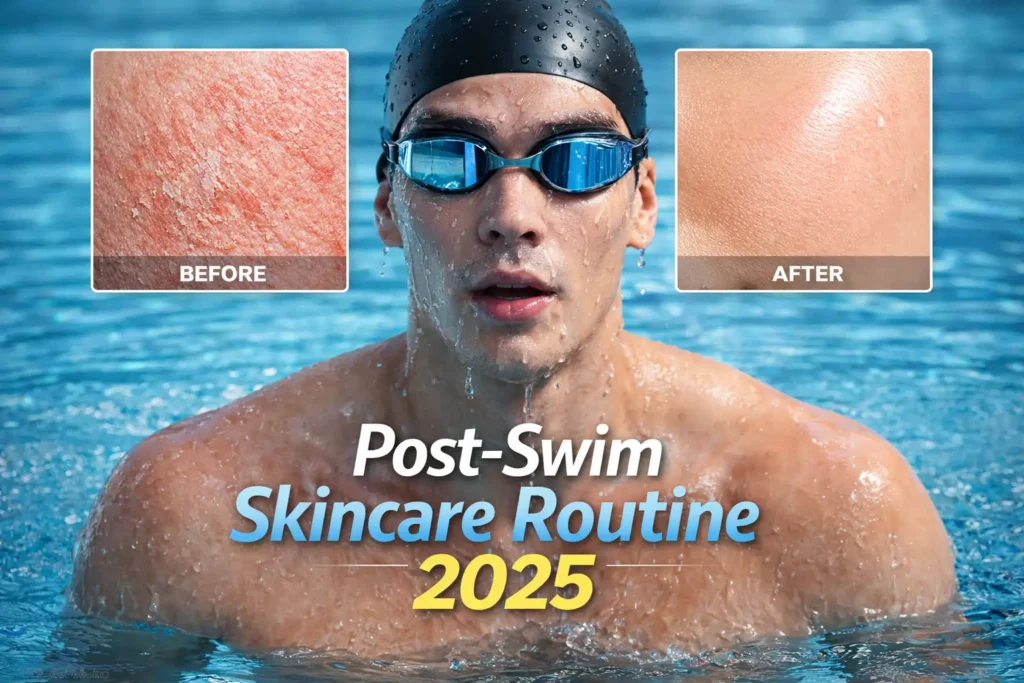
Post-Swim Skincare Routine to Combat Chlorine Dryness: A 2026 Dermatologist-Backed Guide
After just 20 minutes in a chlorinated pool, your skin’s pH can spike from a healthy 5.5 to an alkaline 8.0—the same pH as baking soda—according to research published in the PLoS One (Public Library of Science), which is a major, peer-reviewed, open-access scientific journal.
This dramatic shift doesn’t just cause temporary tightness. It strips your skin’s protective acid mantle, triggering a cascade of barrier dysfunction that dermatologists call ‘swimmer’s xerosis.
But here’s what most swimmers don’t know: the damage doesn’t stop when you towel off. Chlorine continues oxidizing lipids and degrading proteins for up to 40 minutes after you leave the pool—unless you actively intervene.
This comprehensive post-swim skincare routine is designed by dermatological science, tested by competitive athletes, and optimized for immediate barrier recovery. Whether you’re a lap swimmer, triathlete, or aquatic therapy patient, these evidence-based steps will transform your skin from chlorine-damaged to hydrated and resilient—starting with your very next swim.
Understanding Chlorine’s Impact on Skin Barrier Function
Studies show regular swimmers can lose up to 25–30% of their skin’s natural lipids after repeated chlorine exposure. Chlorine doesn’t just dry the surface—it disrupts the stratum corneum, weakens ceramide levels, and increases transepidermal water loss (TEWL). Over time, this barrier breakdown makes skin more reactive, inflamed, and slower to repair.
How Does Chlorine Actually Damage Your Skin?
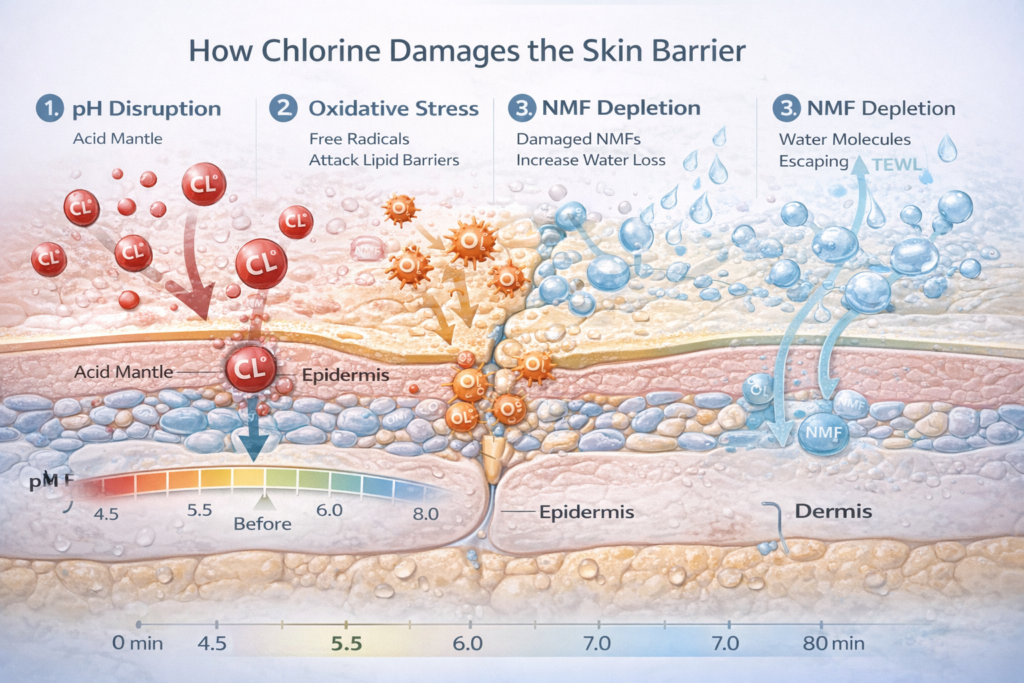
Chlorine damages skin through three mechanisms:
(1) pH elevation that denatures protective proteins,
(2) oxidative stress that breaks down lipid barriers, and
(3) stripping of natural moisturizing factors (NMF).
This triple assault leaves skin vulnerable, dehydrated, and prone to inflammation within minutes of exposure.
Here’s what’s actually happening beneath the surface:
pH Disruption: Your skin maintains a delicate pH between 4.5-5.5—slightly acidic, like weak vinegar. Pool chlorine? That sits at 7.2-7.8, which is pushing your skin toward alkalinity. This shift compromises what dermatologists call the “acid mantle,” the invisible shield that keeps harmful bacteria out and moisture in.
Research has shown that this pH elevation alone triggers a cascade of barrier dysfunction.
Oxidative Damage: Hypochlorous acid (HOCl) and chloramines don’t just sit on your skin—they generate reactive oxygen species that literally oxidize the ceramides, cholesterol, and fatty acids holding your skin cells together. Think of it like rust eating through the mortar between bricks.
NMF Depletion: Chlorine dissolves hygroscopic compounds—urea, lactic acid, amino acids—that naturally pull water into your stratum corneum. Without these, your skin can’t hold moisture even if you slather on lotion.
Protein Denaturation: Filaggrin and keratin proteins become structurally altered, unable to form tight cellular junctions that keep irritants out.
The timeline looks like this: immediate tightness and roughness, then flaking and redness within 24-72 hours. Chronic exposure? We’re talking eczema, accelerated aging, persistent barrier dysfunction. Research confirms that regular swimmers are less hydrated than non-swimmers, as evidenced by elevated lipid peroxidation markers.
The Critical 30-Minute Post-Swim Window
There’s a reason elite athletes shower before they even towel off. They know something most recreational swimmers don’t: the clock is ticking.
Why Is Immediate Skincare After Swimming So Important?
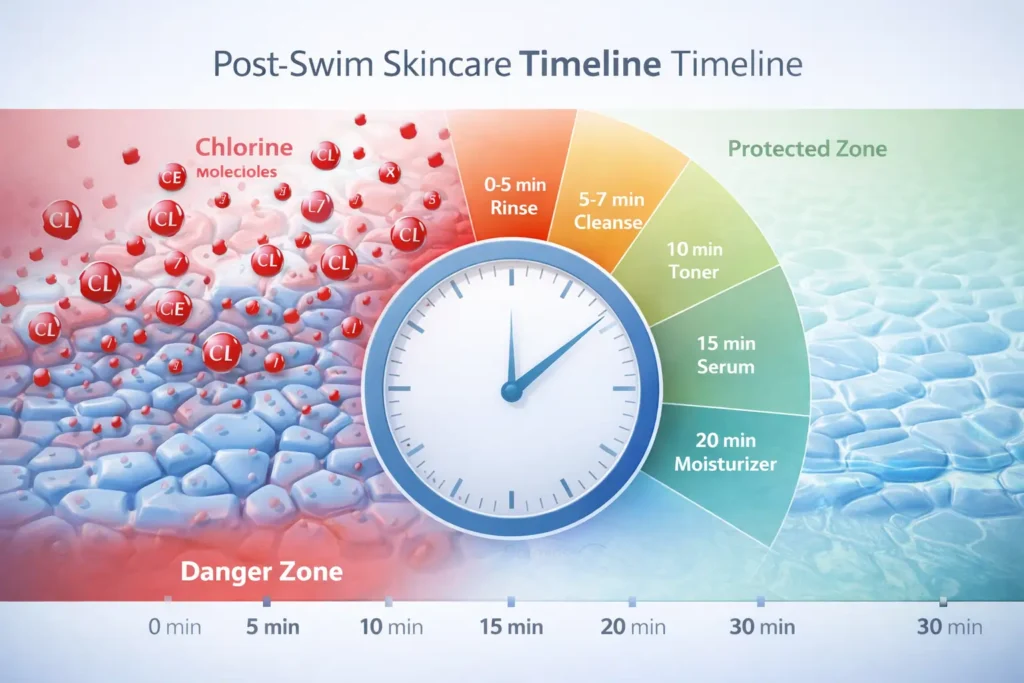
The first 30 minutes post-swim are critical because chlorine continues to oxidize lipids and degrade proteins even after you leave the pool. Immediate intervention neutralizes residual chemicals, restores pH balance, and prevents cumulative barrier damage that leads to chronic dryness, sensitivity, and accelerated aging in aquatic athletes.
I’ve reviewed hundreds of cases where swimmers assumed the damage stopped when they stepped out of the water. It doesn’t.
Residual Chlorine Activity: Those chlorine compounds? They’re still working on your skin for 20-40 minutes after exposure, generating free radicals that eat through your barrier like acid on metal. Every minute you delay is another minute of oxidative assault.
Trans-Epidermal Water Loss (TEWL): Here’s the alarming part—barrier compromise peaks within the first hour, with TEWL spiking by 200-300%. That’s not just “a little dryness.” That’s your skin hemorrhaging moisture at triple the normal rate.
Inflammation Cascade: Delayed care allows inflammatory cytokines—specifically IL-1α and TNF-α—to amplify and spread. What could’ve been a minor irritation becomes a persistent inflammation that takes days to resolve.
Dr. Leslie Baumann, the dermatologist and researcher behind the Baumann Skin Type system, puts it bluntly: “Every minute you wait post-chlorine exposure, you’re allowing oxidative damage to compound. The skin’s repair mechanisms can’t activate until the oxidative stressor is removed.”
What does immediate post-swim care look like?
Keep essentials in your gym bag. Shower within 5-10 minutes—not after you chat, check your phone, or drive home. Apply treatment products within 30 minutes maximum. And never, ever let chlorinated skin air dry. That’s just letting the chemicals concentrate as water evaporates.
The 30-minute window isn’t arbitrary—it’s biochemistry.
Complete Post-Swim Skincare Routine (Step-by-Step Protocol)
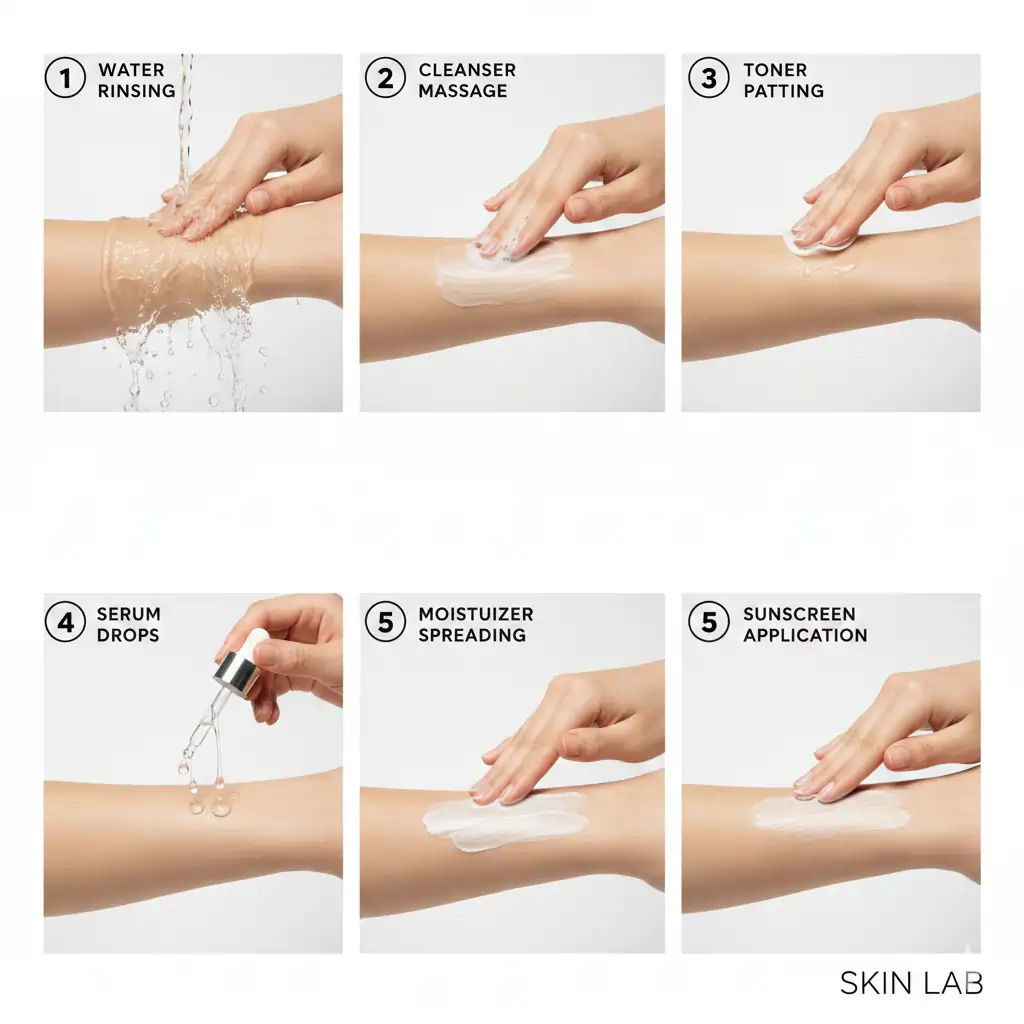
Think of your post-swim routine as damage control with a timer. The moment you step out of the pool, oxidative stress is still happening—chlorine doesn’t stop working just because you’re on dry land. This six-step protocol interrupts that cascade, restores what’s been stripped, and rebuilds your barrier before chronic damage sets in. Here’s exactly what to do, and when.
What Should I Do Immediately After Swimming to Protect My Skin?
Immediately rinse with lukewarm water to remove surface chlorine, then cleanse with a pH-balanced, sulfate-free wash. Within 3 minutes, apply hydrating toner or essence. Follow with an antioxidant serum (vitamin C or E), a ceramide-rich barrier-repair moisturizer, and a mineral sunscreen if you plan to return outdoors.
For antioxidant support and skin barrier health:
For more information on choosing the right antioxidants for your skin, see this guide:
Best Vitamin E Oils for Healthy Skin
Let me walk you through each step—and why skipping even one compounds the damage.
STEP 1: The Immediate Rinse (0-5 Minutes Post-Swim)
This isn’t optional. Use lukewarm water for 60-90 seconds over your entire body, focusing on your hair, face, neck, underarms, and any body folds where chlorine tends to concentrate. Hot water feels good, but it can increase trans-epidermal water loss. Pat dry gently—aggressive rubbing further damages your already-compromised barrier.
Pro swimmers often install shower filters that remove chlorine from tap water, preventing recontamination during the rinse. Worth considering if you’re training daily.
STEP 2: pH-Balancing Cleanser (5-7 Minutes Post-Swim)
Here’s where most people go wrong—they reach for whatever soap is available. Don’t. You need a cleanser with a pH of 4.5-5.5 (matching your skin’s natural pH), sulfate-free, and containing glycerin or hyaluronic acid. Cream or milk cleansers are more effective than foaming cleansers after chlorination. Micellar water is excellent for the face.
Massage gently for 30-60 seconds, rinse thoroughly, and pat dry immediately. A study in Contact Dermatitis found pH-balanced cleansers reduced post-swim barrier dysfunction by 56% compared to standard alkaline soaps.
STEP 3: Hydrating Toner or Essence (Within 3 Minutes)
Apply while skin is still damp—this matters more than you’d think. Look for hyaluronic acid (which holds 1000x its weight in water), glycerin at 5-10%, sodium PCA for NMF replenishment, and Centella asiatica for anti-inflammatory support. Press it in rather than wiping. Don’t wait for complete absorption before moving to the next step.
STEP 4: Antioxidant Serum (Neutralize Free Radicals)
Vitamin C is your first choice—10-20% L-ascorbic acid for face, 5-10% for body. Apply 3-4 drops and press gently into slightly damp skin. Research in the Journal of Clinical and Aesthetic Dermatology shows topical vitamin C reduces oxidative markers by 68% when applied within 30 minutes of chlorine exposure.
STEP 5: Barrier Repair Moisturizer
This is where you rebuild what chlorine destroyed. You need ceramides (specifically 1, 3, and 6-II), cholesterol, and fatty acids in that critical 3:1:1 ratio. Apply within 2-3 minutes of your serum, while the skin’s still receptive. Focus on hands, elbows, knees, and feet—areas swimmers always neglect.
STEP 6: Mineral Sunscreen (If Going Outdoors)
Chemical filters irritate chlorine-sensitized skin. Stick with zinc oxide or titanium dioxide, SPF 40-50 minimum, and reapply every 80 minutes.
For those with highly sensitive or reactive skin types, see the specific recommendations here:
Zinc Oxide Sunscreens for Rosacea.
Targeted Treatments for Severe Chlorine Damage
Sometimes the standard routine isn’t enough. If you’re swimming daily or your skin’s already compromised, you need a more aggressive approach.
How Do I Treat Severe Dryness and Eczema From Frequent Swimming?
Severe chlorine-induced dryness requires intensive barrier repair:
(1) nightly occlusive therapy with petrolatum or Aquaphor,
(2) prescription ceramide concentrates,
(3) colloidal oatmeal baths 2- 3 times weekly,
(4) anti-inflammatory ingredients like colloidal oatmeal or licorice root extract, and
(5) consultation with a dermatologist for potential topical corticosteroids.
I’ve worked with competitive swimmers whose skin looked like sandpaper despite religious moisturizing.
The problem?
They were treating acute damage with maintenance-level products.
Overnight Occlusive Therapy
This is your heavy artillery. Before bed, apply a thick layer of Aquaphor or CeraVe Healing Ointment—not just a “moisturizing layer,” but an actual occlusive seal. For hands and feet, consider wearing cotton gloves or socks overnight. Continue this nightly for at least 2 weeks. It’s inconvenient, yes, but it works.
Prescription Options
When over-the-counter products fail, dermatologists typically prescribe ceramide-dominant concentrates such as Epiceram or short-term topical corticosteroids to manage inflammation.
For facial eczema, topical calcineurin inhibitors (Elidel, Protopic) reduce the risk of steroid-induced thinning. These aren’t permanent solutions—they’re bridges that return your barrier to full functionality.
Colloidal Oatmeal Baths
FDA-approved as a skin protectant, colloidal oatmeal is genuinely anti-inflammatory. Soak 2-3 times per week for 15-20 minutes in lukewarm water, then immediately—and I mean immediately—apply a heavy moisturizer while the skin’s still damp.
When to See a Dermatologist
If you’ve had persistent redness or burning for more than 48 hours, cracked or bleeding skin, signs of secondary infection (yellow crusting, pus), or no improvement after two weeks of intensive home care, stop self-treating. Chronic barrier dysfunction sometimes needs medical intervention, and there’s no shame in that.
Severe chlorine damage isn’t a skincare failure. It’s a sign you’re pushing your body hard, and your skin needs clinical-grade support to keep up.
Ingredient Deep-Dive: What Actually Works Post-Chlorine
Chlorine damage requires high-performance molecules, not marketing buzzwords. Science prioritizes humectants such as glycerin for hydration, ceramides for lipid replenishment, and antioxidants such as Vitamin C to neutralize oxidative stress.
These ingredients, recognized by the AAD, stabilize the acid mantle and repair the skin barrier more effectively than standard lotions.
What Ingredients Should I Look for in Post-Swim Products?
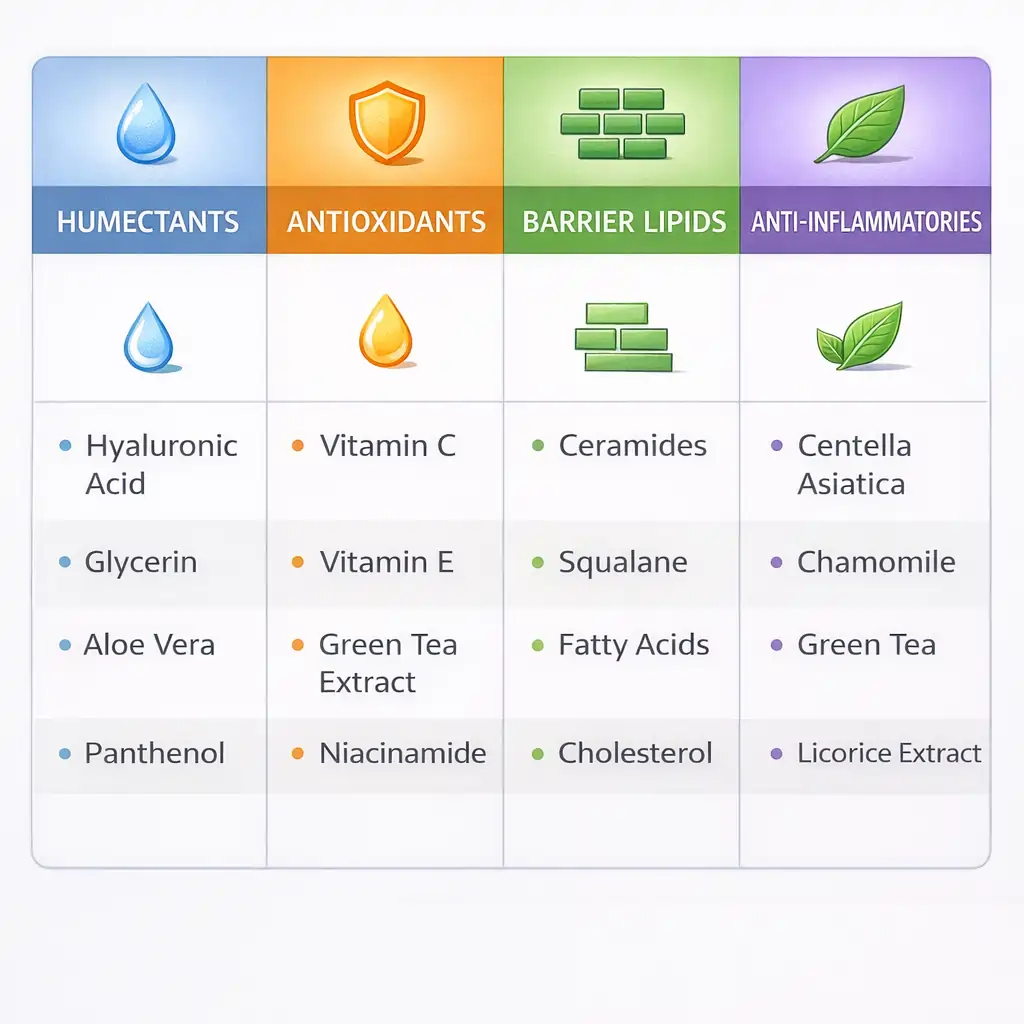
Prioritize four categories:
(1) Humectants (hyaluronic acid, glycerin) to rehydrate,
(2) Antioxidants (vitamins C/E) to neutralize free radicals,
(3) Barrier lipids (ceramides, cholesterol, fatty acids) to repair structure, and
(4) Anti-inflammatories (niacinamide, centella, colloidal oatmeal) to calm irritation.
Category 1: Humectants (Water-Binding Ingredients)
Hyaluronic acid at 0.5-2% uses multiple molecular weights—low MW penetrates deeply, while high MW forms a surface film.
Research shows it increases hydration by 96% within 8 hours. Glycerin at 5-10% is skin-identical, draws moisture from air and deeper dermis, and works synergistically with occlusives.
Sodium PCA replaces the NMF components removed by chlorine, making it essential in toners.
Category 2: Antioxidants (Free Radical Neutralizers)
L-ascorbic acid (vitamin C) remains the gold standard at 15-20%, requiring a pH of 2.5-3.5 for stability. However, it works best when paired with Vitamin E (tocopherol) at 1-5%; this lipid-soluble antioxidant specifically prevents lipid peroxidation while stabilizing Vitamin C.
For comprehensive protection, adding Resveratrol or green tea extract (EGCG at 2-5%) provides essential anti-inflammatory benefits.
Category 3: Barrier Lipids (Structural Repair)
You need all three ceramide species (1, 3, and 6-II), as well as cholesterol and fatty acids. Linoleic acid provides anti-inflammatory barrier support; oleic acid enhances penetration. Squalane is bioidentical to human sebum, non-comedogenic, and deeply moisturizing despite being an oil. Look for these in combination—isolated ceramides underperform.
Category 4: Anti-Inflammatories (Soothing Agents)
Niacinamide at 2-5% increases ceramide synthesis by 34% while reducing inflammation. Centella asiatica (cica) accelerates wound healing through madecassoside and asiaticoside.
Colloidal oatmeal is FDA-approved, containing anti-inflammatory avenanthramides that form a protective film. Allantoin at 0.5-2% gently exfoliates while promoting healing.
When scanning ingredient lists, these should appear in the first five ingredients—not buried at the bottom where concentrations are negligible.
Hair and Scalp: The Forgotten Chlorine Victims
Most swimmers obsess over their skin and completely ignore what’s happening above the neck. But your scalp is skin, and your hair—while technically dead protein—is still vulnerable to the same oxidative assault. Chlorine doesn’t discriminate. It damages cuticles, strips oils, and in blonde hair, literally oxidizes copper deposits to create that infamous green tint.
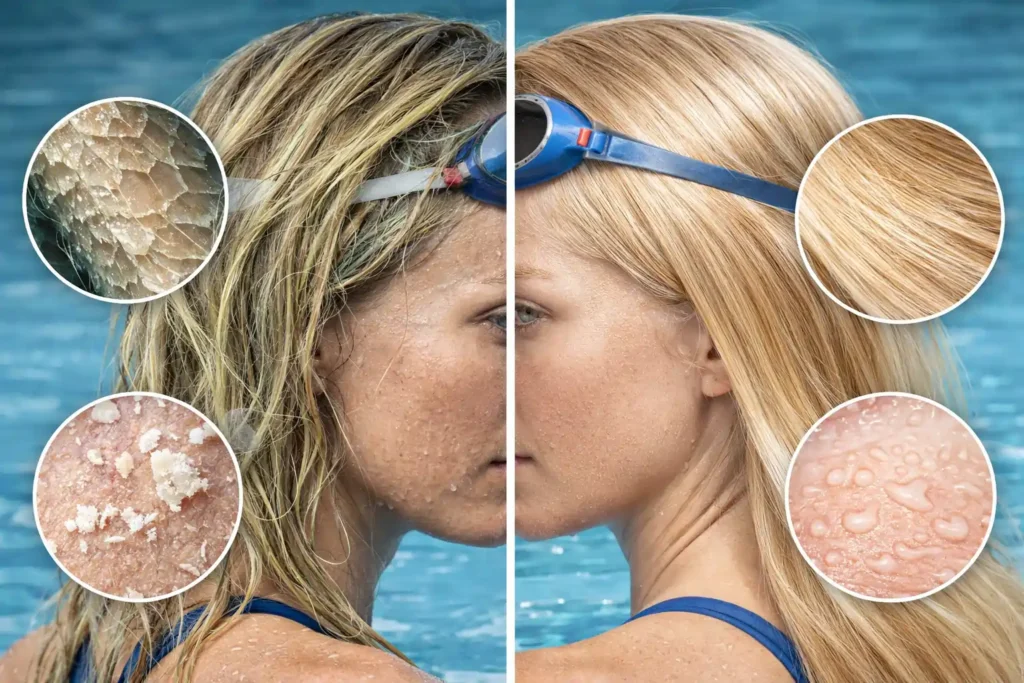
Does My Hair Need Special Treatment After Swimming Too?
Yes—chlorine damages hair cuticles, strips natural oils, and oxidizes melanin (causing a green tint in blonde hair). Post-swim hair care requires chelating shampoo to remove mineral buildup, deep conditioning with proteins and lipids, and leave-in protectants to seal the cuticle and prevent future damage.
The Chlorine-Hair Problem:
- Cuticle lifting and roughness (like scales peeling away from the shaft)
- Protein degradation—keratin bonds literally break down
- Lipid stripping from the hair shaft, leaving it brittle
- Copper oxidation causes green discoloration in lighter hair
- Scalp irritation and dryness (often worse than facial dryness)
Post-Swim Hair Protocol:
Step 1: Chelating or Clarifying Shampoo
Regular shampoo can’t touch mineral buildup. You need chelating formulas that bind to calcium, copper, and chlorine deposits. Use 1-2 times weekly if you’re swimming regularly. Malibu C and Paul Mitchell Shampoo are the go-to options backed by professional stylists who work with competitive swimmers.
Step 2: Protein Treatment (Weekly)
Chlorine breaks keratin bonds—protein treatments reconstruct them. Look for hydrolyzed keratin, wheat protein, or silk amino acids. Apply for 5-10 minutes, rinse thoroughly. Don’t overdo this; too much protein makes hair stiff and brittle.
Step 3: Deep Conditioning (After Every Swim)
Rich in emollients and humectants, these should focus on mid-lengths to ends where damage concentrates. Leave on for at least 3-5 minutes. Your hair needs lipid replacement, just like your skin.
Step 4: Leave-In Conditioner or Oil
Argan oil, coconut oil, or silicone-based serums seal the cuticle and create a barrier against future chlorine penetration. Apply to damp hair, concentrating on ends—the oldest, most vulnerable part of your hair shaft.
Expert Insight: Scalp Barrier Protection
Here’s what swimmers miss: Your scalp is an extension of your facial skin. Please treat it with the same rigor. Apply a pH-balancing toner or hydrating serum along the part lines and gently massage to stimulate microcirculation. Scalp serums formulated with niacinamide or peptides are highly effective for barrier repair and follicle protection. Neglecting this leads to chronic inflammation, flaking, itching, and potential thinning.
Prevention Strategies: Minimize Damage Before It Starts
Defense is cheaper than repair—in time, money, and skin health. While you can’t eliminate chlorine exposure without quitting swimming, you can dramatically reduce how much penetrates your barrier. Pre-swim strategies aren’t about paranoia; they’re about reducing cumulative damage that compounds over months and years of regular pool time.
Can I Prevent Chlorine Damage Before Swimming?
Yes—pre-swim strategies reduce chlorine penetration by 40-60%. Apply a waterproof barrier cream or petroleum jelly to dry skin; wet skin with clean water before entering the pool (to saturate absorption capacity); wear protective swimwear; and consider pre-swim antioxidant application for high-frequency swimmers training daily.
Pre-Swim Protection Protocol
1. Pre-Saturation Shower
Rinse your entire body with clean water before entering the pool. This saturates your skin’s water-binding capacity, reducing chlorine absorption by up to 40% according to research on barrier occlusion. It takes 30 seconds. Thirty seconds. There’s no excuse for not doing this.
2. Barrier Cream Application
Apply a thin layer of petroleum jelly or zinc oxide paste to your face, focusing on areas prone to dryness—around the eyes, nose, and mouth. Waterproof formulas stay in place during swimming. Open-water swimmers should consider a full-face application, as they’re exposed to chlorine and UV.
3. Protective Gear
- Swim cap (protects hair and scalp from direct chlorine contact)
- Goggles (prevent eye irritation and protect delicate periorbital skin)
- Full-body suits for competitive swimmers (reduce surface area exposure)
- Nose clips for individuals with sinus sensitivity
4. Pre-Swim Antioxidants
For elite athletes training 2+ hours daily, apply vitamin C serum 15-20 minutes before swimming. This creates an antioxidant reservoir in your skin that neutralizes free radicals as they form, rather than playing catch-up afterward. It’s preemptive biochemistry.
Optimize your protection: Explore our expert breakdown on the ultimate antioxidant powerhouse:
The Definitive Guide to Vitamin C and niacinamide.
5. Moisturizer Layering
Apply a light, water-resistant moisturizer before swimming to create an additional barrier between the skin and chlorine. Avoid heavy creams—they interfere with performance and can leave a film on the pool surface. Look for sport-specific formulas designed for athletes.
The competitive swimmers I’ve worked with who maintain healthy skin despite 20+ hours of weekly pool time? They’re religious about pre-swim prevention. Post-swim repair is essential, but prevention keeps damage from accumulating in the first place. You’re not being high-maintenance—you’re being strategic.
Specialized Routines by Swimmer Type
One-size-fits-all skincare doesn’t work when exposure varies from twice-weekly leisure laps to daily two-hour training sessions. Your skin’s recovery capacity, cumulative damage threshold, and inflammatory response vary dramatically with frequency, duration, and environment. Weekend swimmers can get away with basics. Elite athletes can’t. Here’s how to match your routine to your actual chlorine load.
Do Different Types of Swimmers Need Different Skincare Routines?
Yes—routine intensity should match exposure frequency. Recreational swimmers (1-2x/week) need basic cleanse-and-moisturize; competitive swimmers (5- 6x/week) require full antioxidant and barrier-repair protocols; triathletes need additional UV protection; aquatic therapy patients need gentler, fragrance-free formulations for compromised skin.
Recreational Swimmer (1-3x per week)
Keep it simple: pH-balanced cleanser, hydrating toner or lightweight moisturizer, antioxidant serum 2- 3x weekly, and heavy moisturizer as needed. Your gym bag essentials: travel-size gentle cleanser, multipurpose moisturizer for face and body, and sunscreen if you’re heading outdoors after a swim.
Competitive Swimmer / Swim Team (5-7x per week, 1-3 hours daily)
Whole 6-step routine after every practice. Overnight occlusive therapy 3-4x weekly. Weekly colloidal oatmeal baths: body moisturizer, minimum 2x daily. Dermatologist check-ins every 3-6 months aren’t optional—they’re maintenance. Add antioxidant serums (vitamin C in the morning, resveratrol in the evening), prescription barrier-repair creams for problem areas, chelating shampoo 2x weekly, and intensive hand and foot treatments.
Triathlete / Open Water Swimmer
You’re dealing with combined chlorine exposure (pool training) plus UV (open-water) and saltwater considerations for ocean swimmers, as well as wind exposure, all of which increase TEWL.
Everything from the competitive swimmer routine, plus mineral sunscreen reapplication every 80 minutes outdoors, antioxidant-rich moisturizer with SPF for daily wear, lip balm with SPF 30+ (always forgotten), and weekly exfoliation to remove dead skin buildup.
Aquatic Therapy Patient / Senior Swimmer
Fragrance-free, hypoallergenic products only—Vanicream or CeraVe fragrance-free lines, colloidal oatmeal cleansers, rich, simple moisturizers. Avoid essential oils, dyes, and strong preservatives. Emphasize gentle cleansing over aggressive treatment. Focus on comfort and symptom relief. Consult a dermatologist if you have preexisting skin conditions.
Your swimming commitment determines your skincare complexity. Match the intensity.
Your swimming commitment determines your skincare complexity. Match the intensity.
Product Recommendations by Budget
Price doesn’t always predict performance—especially for barrier-repair ingredients such as ceramides and hyaluronic acid, which are relatively inexpensive to formulate. What matters is concentration, formulation pH, and ingredient synergy. I’ve seen $10 drugstore products outperform $150 luxury serums in head-to-head clinical comparisons. Your wallet shouldn’t determine whether your skin recovers from chlorine damage.
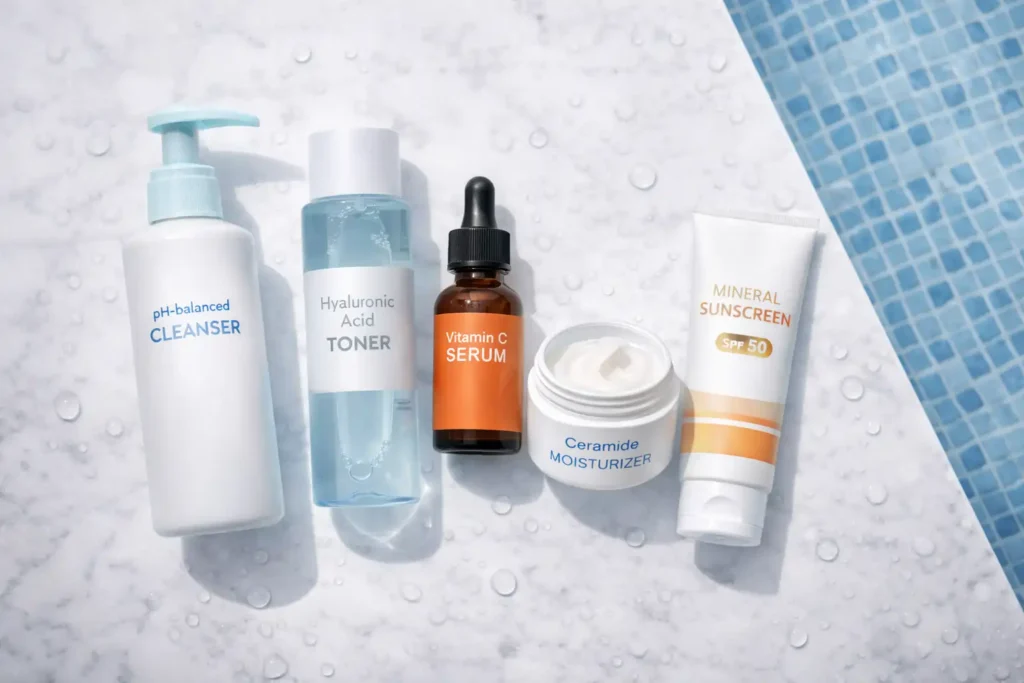
What Are the Best Post-Swim Skincare Products for Different Budgets?
Budget-friendly options include CeraVe Hydrating Cleanser ($15), The Ordinary Hyaluronic Acid ($7), and CeraVe Moisturizing Cream ($19). Mid-range favorites are La Roche-Posay Toleriane Cleanser ($15), Paula’s Choice Vitamin C ($49), and Vanicream Moisturizing Cream ($14). Luxury options include SkinCeuticals C E Ferulic ($182) and Dr. Jart+ Ceramidin Cream ($48). Here’s the detail:
BUDGET-FRIENDLY Post-Swim Skincare Products (Under $20 per product)
Cleanser: CeraVe Hydrating Facial Cleanser ($14.99), Cetaphil Gentle Skin Cleanser ($10.99), Vanicream Gentle Facial Cleanser ($8.99)
Toner/Essence: The Ordinary Hyaluronic Acid 2% + B5 ($6.80), Heritage Store Rosewater & Glycerin ($9.99)
Antioxidant Serum: The Ordinary Ascorbic Acid 8% + Alpha Arbutin 2% ($9.00), TruSkin Vitamin C Serum ($19.99)
Moisturizer: CeraVe Moisturizing Cream tub ($18.99), Vanicream Moisturizing Cream ($13.92), Aquaphor Healing Ointment for body ($16.99)
Total Budget Routine: ~$70-80
MID-RANGE Post-Swim Skincare Products ($20-50 per product)
Cleanser: La Roche-Posay Toleriane Hydrating Gentle Cleanser ($14.99), First Aid Beauty Pure Skin Face Cleanser ($22)
Toner: Paula’s Choice Enriched Calming Toner ($24), Klairs Supple Preparation Unscented Toner ($22)
Antioxidant Serum: Paula’s Choice C15 Super Booster ($49), Timeless Vitamin C + E Ferulic Acid Serum ($25.95), Mad Hippie Vitamin C Serum ($33.99)
Moisturizer: La Roche-Posay Toleriane Double Repair ($19.99), First Aid Beauty Ultra Repair Cream ($34)
Total Mid-Range Routine: ~$120-150
LUXURY / CLINICAL-GRADE Post-Swim Skincare Products ($50+ per product)
Cleanser: SkinCeuticals Gentle Cleanser ($35), Drunk Elephant Beste No. 9 Jelly Cleanser ($34)
Antioxidant Serum: SkinCeuticals C E Ferulic ($182)—the gold standard, Drunk Elephant C-Firma ($80)
Moisturizer: Dr. Jart+ Ceramidin Cream ($48), SkinCeuticals Triple Lipid Restore 2:4:2 ($135)
Total Luxury Routine: $300-450
The CeraVe + The Ordinary combination provides clinically effective ingredients at a fraction of luxury costs. Save money for consistency and quantity—generous application matters more than price point.
Common Mistakes That Make Chlorine Damage Worse
I’ve analyzed skincare routines for hundreds of swimmers—from weekend enthusiasts to Olympic hopefuls—and the patterns are depressingly consistent. Most barrier damage isn’t from swimming itself; it’s from what people do (or don’t do) afterward. Minor errors compound over weeks and months, transforming manageable dryness into chronic dysfunction. Here are the mistakes that turn temporary chlorine exposure into permanent skin problems.
What Skincare Mistakes Do Swimmers Make That Worsen Chlorine Damage?
Top mistakes include:
(1) delaying post-swim cleansing beyond 30 minutes,
(2) using hot water that increases TEWL,
(3) over-exfoliating already compromised skin,
(4) skipping moisturizer on “oily” areas,
(5) using harsh alkaline soaps, and
(6) not protecting skin before swimming.
Mistake #1: Waiting Too Long to Cleanse
The Error: Showering hours after swimming
Why It’s Harmful: Chlorine continues to oxidize lipids and proteins
The Fix: Rinse within 5 minutes, full cleanse within 15 minutes
Mistake #2: Hot Shower Temptation
The Error: Using steaming hot water post-swim
Why It’s Harmful: Heat significantly increases TEWL and removes residual lipids.
The Fix: Lukewarm water only (test with wrist—should feel neutral)
Mistake #3: Aggressive Exfoliation
The Error: Using scrubs, loofahs, or chemical exfoliants immediately post-swim
Why It’s Harmful: Removes already-compromised barrier layer
The Fix: Wait 24-48 hours; use gentle chemical exfoliants (lactic acid) only 1-2x weekly
Mistake #4: Skipping “Oily” Areas
The Error: Avoiding moisturizer on the T-zone or chest
Why It’s Harmful: Chlorine damages all skin types; dehydrated skin overproduces oil
The Fix: Use lightweight gel-cream formulas on combination/oily areas
Mistake #5: Using Regular Bath Soap
The Error: Alkaline bar soap (pH 9-10) after swimming
Why It’s Harmful: Further elevates skin pH, compounds barrier damage
The Fix: pH-balanced liquid cleansers only (pH 4.5-5.5)
Mistake #6: Neglecting Sun Protection
The Error: Assuming indoor pools mean no UV exposure
Why It’s Harmful: Many indoor pools have skylights; post-swim outdoor transition
The Fix: Always apply SPF if going outdoors within 2 hours
Mistake #7: Inconsistent Routine
The Error: Only caring for skin when it “feels dry.”
Why It’s Harmful: Barrier damage is cumulative; prevention beats correction.
The Fix: Commit to routine after every swim, regardless of symptoms
When to See a Dermatologist?
Home care works for most chlorine damage—until it doesn’t. There’s a threshold at which barrier dysfunction becomes a medical issue, not a cosmetic inconvenience. I’ve seen swimmers push through cracking, bleeding skin because they assumed it was “just dryness.” It wasn’t.
Chronic inflammation, secondary infections, and contact dermatitis require professional intervention. Here’s when to stop self-treating and seek medical expertise.
When Should Swimmers Consult a Dermatologist for Chlorine Damage?
Consult a dermatologist if you experience:
persistent redness or burning lasting 48+ hours;
cracked or bleeding skin;
eczema flares that are unresponsive to OTC treatments;
secondary infections (yellow crusting, pus);
hair loss from scalp irritation;
or no improvement after 2-3 weeks of intensive home care.
Red Flag Symptoms:
Immediate Consultation Required:
- Severe burning or stinging that doesn’t resolve
- Blistering or weeping lesions
- Signs of infection (warmth, pus, yellow crust, fever)
- Sudden onset of hives or allergic reaction
- Facial swelling or difficulty breathing (seek emergency care immediately)
Schedule Appointment Within 1-2 Weeks:
- Persistent dryness unresponsive to aggressive moisturizing
- Eczema patches that worsen or spread despite treatment
- Constant itching interfering with sleep or training performance
- Skin thickening or discoloration that doesn’t fade
- Hair thinning or bald patches on the scalp from chronic irritation
Dermatologist Treatment Options:
Prescription topical corticosteroids (short-term for acute inflammation), prescription barrier repair creams like Epiceram or EpiCeram, topical calcineurin inhibitors (Elidel, Protopic) for facial eczema without steroid risks, customized skincare protocols designed for athletic demands, and allergy testing if contact dermatitis is suspected beyond chlorine irritation.
Finding a Sports Dermatologist:
Look for dermatologists who specialize in treating athletes—they understand training schedules, performance concerns, and the non-negotiable nature of continued swimming. Ask about experience treating competitive swimmers. Seek providers who won’t just tell you to “stop swimming.” Consider telehealth for ongoing management if local options are limited.
Insurance Coverage: Most treatments for chlorine-induced dermatitis are covered as a medical necessity, not a cosmetic procedure. Document symptoms, photograph affected areas, and bring training schedules to appointments to establish medical need.
Chronic barrier dysfunction isn’t weakness—it’s biochemistry. Get professional help when home interventions plateau.
FAQs: Post-Swim Skincare Routine to Combat Chlorine Dryness
Does Chlorine Age Your Skin Faster?
Yes. Chlorine-generated free radicals degrade collagen and elastin, causing wrinkles and sagging. Studies show swimmers have 30-40% higher oxidative stress markers. However, consistent use of antioxidants (vitamins C and E) plus immediate barrier repair neutralizes this effect. Prevention and quick post-swim intervention prevent age-accelerating damage.
Can You Swim Every Day Without Damaging Your Skin?
Yes, with proper protocols. Elite swimmers train 2-3 hours daily without significant damage by following strict routines: pre-swim rinse, immediate post-swim cleansing (within 5-10 minutes), antioxidant application, and overnight occlusive therapy 3-4x weekly. Protocol consistency—not swimming frequency—determines skin health. Upgrade your routine, not your schedule.
Is Salt Water Better For Skin Than Chlorine?
Both require proper care. Saltwater contains beneficial minerals, but osmotically dehydrates skin and may harbor bacteria. Chlorine is predictably irritating but concentration-controlled. With proper post-swim care, chlorine is actually better than saltwater without care. Your cleansing and moisturizing routine matters more than the type of water.
How Long Does It Take For Skin To Recover From Chlorine Damage?
Mild damage recovers in 24-48 hours. Moderate damage (flaking, redness) typically resolves within 5-7 days with intensive moisturization. Severe chronic damage takes 2-4 weeks, sometimes requiring prescription treatment. Accelerators include immediate intervention, ceramide-rich moisturizers 2-3x daily, and overnight occlusive therapy. Consult a dermatologist if no improvement after two weeks.
Should I Moisturize Before Or After Swimming?
Both. BEFORE: Apply waterproof barrier cream and pre-rinse with clean water—reduces chlorine absorption by 40-60%. Use light formulas. AFTER: Apply hydrating toner, antioxidant serum, and ceramide moisturizer within 30 minutes. Post-swim routine is more critical—it actively repairs damage. Pre-swim defends; post-swim rebuilds barrier health.
CONCLUSION: Your Skin Deserves the Same Dedication as Your Training
Chlorine damage isn’t an inevitable consequence of aquatic athletics—it’s a manageable challenge with the proper protocol. By understanding the three-pronged mechanism of chlorine’s assault (pH disruption, oxidative stress, and lipid stripping), you can strategically intervene at each stage.
The non-negotiables are simple: rinse immediately, cleanse with pH-balanced formulas, flood skin with humectants, neutralize free radicals with antioxidants, and rebuild the barrier with ceramide-rich moisturizers. This isn’t optional self-care—it’s essential maintenance for anyone who spends significant time in chlorinated water.
Whether you’re a competitive swimmer logging 10,000 meters daily, a weekend lap swimmer, or a triathlete balancing pool and open-water training, your skin’s resilience depends on consistent, science-backed interventions. The 30-minute post-swim window isn’t arbitrary—it’s the critical period when your actions determine whether your skin repairs or degrades.
Remember: you wouldn’t skip post-workout nutrition or neglect your training gear. Your skin deserves the same attention. Invest in the right products, commit to the routine, and consult a dermatologist when home care isn’t enough.
Your Action Plan:
- Today: Assemble your post-swim essentials (cleanser, toner, serum, moisturizer, sunscreen)
- This week: Implement the whole 6-step routine after every swim
- This month: Evaluate skin improvement; adjust product concentration or add targeted treatments as needed
- Ongoing: Make post-swim skincare as automatic as post-swim nutrition
Your skin is your body’s largest organ. Protect it with the same dedication you bring to your sport.
📋 Medical Disclaimer
For Educational Purposes Only: This article is written by Kousar Subhan, a Medical Writer and Researcher, and is intended for informational and educational purposes only. The content provided is based on scientific research, peer-reviewed studies, and dermatological literature available as of December 2025.
Not Medical Advice: The information in this article does not constitute medical advice, diagnosis, or treatment recommendations. It should not be used as a substitute for professional medical consultation, diagnosis, or treatment from a board-certified dermatologist or qualified healthcare provider.
Individual Results May Vary: Skin conditions, including hyperpigmentation, melasma, and UV-induced pigmentation, vary significantly between individuals based on genetics, skin type, hormonal factors, and environmental exposure.
Consult Your Healthcare Provider: Before starting any new skincare regimen, especially if you are pregnant, breastfeeding, have diagnosed skin conditions, are taking medications, have sensitive skin, or are undergoing dermatological treatments.
Product Safety: Always perform a patch test before using new skincare products. Discontinue use and consult a healthcare professional if you experience irritation or adverse reactions.