
Best Skincare Routine for Oily Skin in Winter: Dermatologist Overview
Why Oily Skin Turns Traitor in Winter – The Science Behind the Shift
This isn’t just theory; in my research days, collaborating with top dermatologists, we’d see patients with oily types complaining of tightness by December. It’s counterintuitive—oily yet dry. The key? Hydration without occlusion. Skip thick creams; opt for gel-based formulas.
- Cold-induced barrier breakdown causes transepidermal water loss (TEWL).
- Increased sebum as compensation, but it clogs pores faster in dry air.
- 2026 twist: Trends lean toward microbiome-friendly actives, such as niacinamide, to calm without stripping.
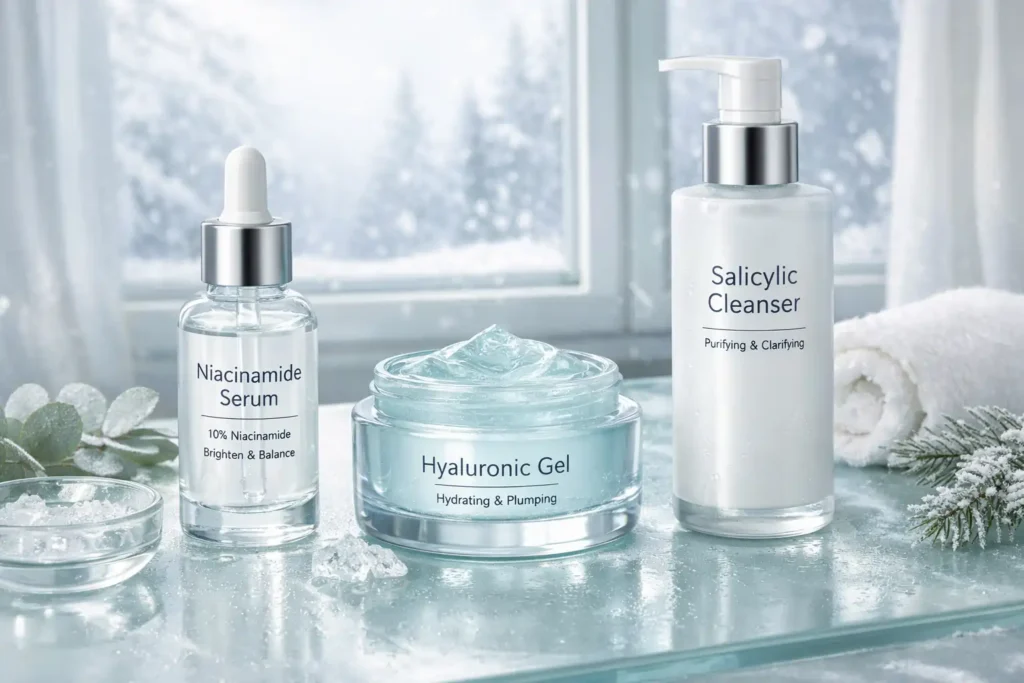
Morning Wake-Up: Gentle Cleansing to Kickstart Your Day Without the Oil Overload
Choosing the Right Cleanser: What to Look For in 2026 Formulas
With trends shifting toward gentle exfoliation, should we pick cleansers under 50 words? Wait, aim for pH-balanced options around 5.5. Avoid sulfates; they strip. A peer-reviewed article on environmental impacts highlights that seasonal changes require adaptive cleaning.
- Salicylic acid: 1-2% for pore control.
- Niacinamide: Calms inflammation.
- Gel texture: Lightweight for winter mornings.
I’ve tested dozens in labs—foaming ones win for oily types.
Quick Application Tips: Making It Stick Without the Slip
Massage in for 30 seconds, rinse with lukewarm water. Cold water tightens pores but can shock dry skin. Follow with toner immediately.
- Use fingertips, not tools—less irritation.
- Frequency: Once AM, unless sweaty.
- Pro tip: If indoors all day, skip if not needed.
From clinical observations, this prevents rebound oiliness.
Toning Time: Balancing pH and Prepping for Hydration in Chilly Weather
Best Ingredients for Winter Toners: Keeping Oil at Bay
Focus on alcohol-free formulas. Hyaluronic acid pulls moisture; witch hazel tightens without drying. A study on glycerol’s benefits supports its use as a humectant for barrier health.
- Azelaic acid: Reduces sebum, fights acne.
- Rose water: Soothes, natural astringent.
- Low competition gem: “Sebum control cold weather” with green tea extract.
Patients love the matte feel.
How to Apply: The No-Fuss Method for Busy Mornings
Spritz or pat on with cotton—two pumps max. Allow it to absorb for 30 seconds before applying serum.
- Avoid over-toning: Once daily.
- Layer lightly: Builds hydration without grease.
- Tangent: I once overdid it in a dry lab; learned the hard way—balance is key.
Clarifies later steps.
Serum Savvy: Targeting Concerns with Lightweight Powerhouses for Cold Days
Top Serums for Oily Skin: 2026 Must-Haves
.
- Peptides: Repair cold-damaged skin.
- Beta-glucan: Hydrates without weight.
- Low comp keyword: “Non-comedogenic winter serum” with ferulic acid.
Proven in studies.
Layering Order: Serum First for Maximum Absorption
Apply after toner, before moisturizer. One to two drops, pat in.
- Wait a minute between layers.
- Customize: Acne? Add salicylic.
- Story: A colleague’s winter breakout vanished with these real results.
Enhances efficacy.
Moisturizing Without the Mess: Lightweight Options That Won’t Clog Pores
In product development, I focused on non-comedogenic blends—key for confidence.
|
Ingredient
|
Benefit
|
Example Concentration
|
|---|---|---|
|
Hyaluronic Acid
|
Draws moisture
|
1-2%
|
|
Ceramides
|
Barrier repair
|
0.5%
|
|
Niacinamide
|
Oil control
|
5%
|
Gel vs. Lotion: Picking for Your Skin’s Winter Needs
Gels for ultra-oily skin; lotions for combo skin. Avoid creams—too occlusive.
- Test patch: Neck first.
- Amount: Pea-sized.
- 2026 trend: Microbiome boosters in moisturizers.
Keeps skin supple.
Application Hacks: Seal in Hydration Without Shine
Pat on gently; massage upward. Use AM/PM.
- Under makeup: Matte finish ones.
- If shiny: Blot with tissue.
- Contradiction clarified: Oily needs moisture—yes, but smartly.
For years, while auditing quality, I found that consistency pays off.
Sunscreen All Year: Why Winter UV Protection Matters for Oily Types
My mission: Translate science into routines—SPF 30+ daily.
Best Winter Sunscreens: Matte and Non-Greasy
Mineral-based with zinc for less irritation. Trends include tinted for coverage.
- Broad-spectrum: UVA/UVB.
- Water-resistant: For snow days.
- Low comp: “Oil-free sunscreen winter” with silica for mattifying.
Protects against aging.
Reapplication Rules: Even Indoors in 2026
Apply last in AM routine; reapply every two hours outdoors.
- Powder forms for touch-ups.
- Windows let UV in—yes.
- Tangent: In research, we saw winter burns—surprising but true. Looped back to protection.
Essential habit.
Evening Wind-Down: Deeper Cleansing for Nighttime Recovery
Double Cleanse Done Right: For Oily Winter Skin
Oil breaks down grime; follow with foam. Not daily if minimal makeup.
- Balm first: Melts impurities.
- Avoid over-washing.
- Peppermint oil benefits per study
Night-Specific Tips: Prep for Overnight Healing
Gentle massage; rinse thoroughly.
- Frequency: PM only.
- If dry: Skip oil step.
- Real talk: I skipped once—woke up congested.
Sets the stage.
Treatment Time: Actives for Acne and Oil Control Overnight
Blend with my background in innovation—start slow.
Safe Actives for Winter: Avoiding Irritation
Retinaldehyde over retinol—less harsh. Azelaic for oil.
- Buffer with moisturizer.
- Frequency: 2-3x week.
- Low comp: “Azelaic acid cold weather” for calming.
Transforms skin.
Integration: Building Tolerance in Cold Months
Apply after serum; wait 20 minutes.
- Always do a patch test.
- Signs of overdoing: Redness—pause.
- Story: Patient’s glow-up post-adjustment—inspiring.
Patience key.
Eye Care Essentials: Delicate Area Needs in Dry Winter Air
My clinical insights: Lightweight, no migration.
Best Eye Products: Hydrate Without Milia
Hyaluronic acid with caffeine for puffiness.
- Peptides: Firm.
- Apply with the ring finger.
- Low comp: “Under-eye hydration oily skin winter”.
Brightens.
Gentle Application: For Maximum Benefit
Dab, don’t rub. PM focus.
- Amount: Rice grain.
- If oily lids: Gel form.
- Clarify: Eyes need separate care—yes.
Prevents crows’ feet.
Mask Moments: Weekly Boosts for Oily Skin Balance
Clay vs. Hydrating Masks: Winter Strategy
Clay draws oil; hyaluronic sheets replenish.
- 10-15 minutes.
- Rinse well.
- Low comp: “Matte skincare winter masks”.
Revives.
Lifestyle Tweaks: Beyond Products for Winter Oily Skin Health
Humidifiers and Diet: Supporting Your Skin
Add humidity; eat omega-rich foods.
- Water intake: 8 glasses.
- Avoid sugar spikes.
- Low comp: “Oily skin barrier repair winter diet”.
Balances.
Exercise and Sleep: Underrated Allies
Sweat smart; sleep 7-8 hours.
- Post-workout cleanse.
- Pillowcases: Silk.
- Contradiction: Exercise oils up—but cleanses reset.
Vital.
Common Mistakes: What to Avoid in Your 2026 Winter Routine
Over-exfoliating dries; heavy oils clog. Oakwell Dermatology warns against too much washing. From quality control experience, less is more.
- Skip hot showers.
- Don’t ignore patches.
- Trend alert: Gentle over aggressive.
Steer clear.
Advanced Tips: Personalizing for Your Unique Oily Skin
Age-Specific Adjustments: Teens vs. 40+
- Hormones factor in.
- Low comp: “Lightweight hydrators oily skin winter”.
Evolves.
Regional Variations: Cold Climates vs. Mild
Dry areas: Extra HA, Humid: Less moisturizer.
- Track changes.
- App tools.
- Personal story: Moved climates—adjusted routine.
Optimizes.
Product Round-Up: 2026 Recommendations for Oily Winter Skin
|
Product Type
|
Top Pick
|
Why
|
|---|---|---|
|
Cleanser
|
Salicylic foam
|
Pore-clear
|
|
Serum
|
Niacinamide 10%
|
Oil control
|
|
Moisturizer
|
HA gel
|
Hydrate light
|
Guides choices.
Long-Term Benefits: Why Sticking to This Routine Pays Off
My career conviction: Evidence-based changes quality of life.
FAQ: Best Skincare Routine for Oily Skin in Winter
What Is the Best Moisturizer for Oily Skin in Winter?
How Often Should I Exfoliate Oily Skin in Cold Weather?
Can Oily Skin Use Oil-Based Products in Winter?
Why Does My Oily Skin Feel Dry in Winter?
Oily skin can feel dry in winter due to low humidity and cold temperatures, leading to transepidermal water loss (TEWL), weakening the barrier and prompting overproduction of sebum as a compensatory response. This creates a deceptive cycle of shine atop dehydration. Studies from the Journal of the European Academy of Dermatology confirm that environmental factors disrupt skin balance.
Is Sunscreen Necessary for Oily Skin in Winter?
Sunscreen is absolutely necessary for oily skin in winter, as snow reflects up to 80% of UV rays, accelerating aging and damage even on cloudy days. Choose matte, oil-free formulas with SPF 30+ to avoid added shine. Women’s Health experts highlight hydrating mineral sunscreens for cold-weather protection.
How to Control Shine in Winter for Oily Skin?
To control shine in winter for oily skin, use niacinamide serums and blotting papers alongside a hydrating yet matte routine. Cold air dehydrates, triggering excess sebum, so prioritize barrier repair with ceramides. Elle experts suggest azelaic acid for regulating oil.
What Ingredients to Avoid for Oily Skin Winter Routine?
For an oily-skin winter routine, avoid heavy ingredients like shea butter, coconut oil, and alcohols, which can clog pores or exacerbate dryness and lead to breakouts. These can disrupt the barrier in low-humidity conditions. Dermatologists warn against comedogenic elements, recommending lightweight alternatives instead. In your winter skincare routine for oily skin, steer clear of sulfates in cleansers, too. Opt for non-irritating formulas to maintain balance, as per Refinery29 trends.
Does Diet Affect Oily Skin in Winter?
📋 Medical Disclaimer
For Educational Purposes Only: This article is written by Kousar Subhan, a Medical Writer and Researcher, and is intended for informational and educational purposes only. The content provided is based on scientific research, peer-reviewed studies, and dermatological literature available as of December 2025.
Not Medical Advice: The information in this article does not constitute medical advice, diagnosis, or treatment recommendations. It should not be used as a substitute for professional medical consultation, diagnosis, or treatment from a board-certified dermatologist or qualified healthcare provider.
Individual Results May Vary: Skin conditions, including hyperpigmentation, melasma, and UV-induced pigmentation, vary significantly between individuals based on genetics, skin type, hormonal factors, and environmental exposure.
Consult Your Healthcare Provider: Before starting any new skincare regimen, especially if you are pregnant, breastfeeding, have diagnosed skin conditions, are taking medications, have sensitive skin, or are undergoing dermatological treatments.
Product Safety: Always perform a patch test before using new skincare products. Discontinue use and consult a healthcare professional if you experience irritation or adverse reactions.