
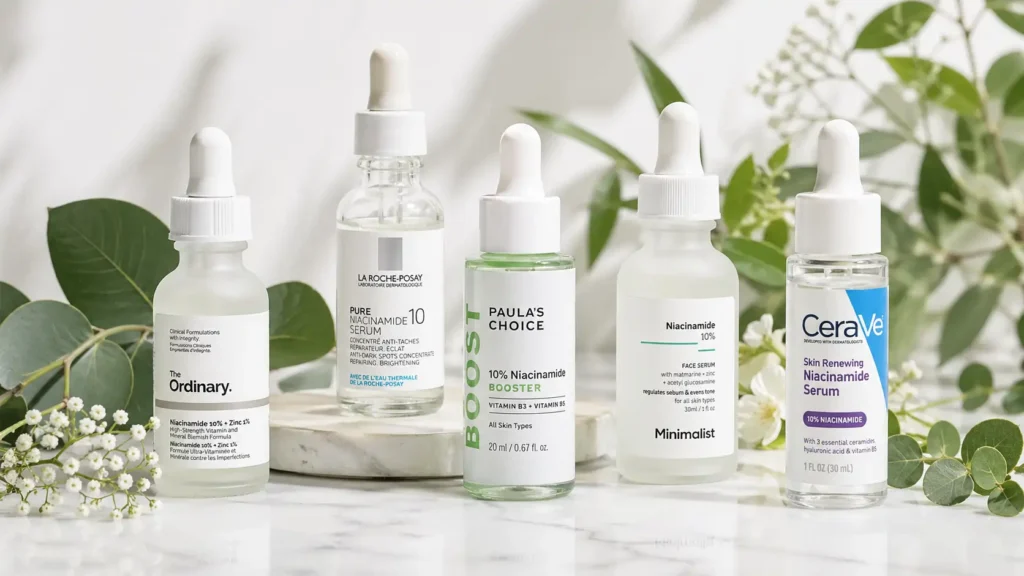
The Best Niacinamide Serums for Sensitive Skin in 2026
Did you know that niacinamide is now among the top-searched skincare ingredients in the United States, according to 2025 beauty trend data? And honestly — the obsession is completely warranted.
If you have sensitive skin, finding the right active serum can feel like navigating a minefield. One wrong move and you’re dealing with flare-ups, stinging, and redness that lasts for days. It’s exhausting!
That’s exactly why niacinamide — the water-soluble, skin-calming form of Vitamin B3 — has become the sensitive skin community’s quiet hero. It doesn’t peel. It doesn’t burn. It simply works.
As board-certified dermatologist Dr. Geeta Yadav, MD, founder of FACET Dermatology, puts it, niacinamide is one of the most versatile and well-tolerated active ingredients in modern skincare, delivering real, measurable improvements in barrier function, tone, hydration, and pore appearance — without the aggression of harsher actives like retinoids or AHAs.
In this guide, we’ve done the deep research for you. We’ve reviewed dermatologist recommendations, analyzed clinical studies from PubMed and the Cleveland Clinic, and tested real user feedback to bring you the most comprehensive, up-to-date resource on the best niacinamide serums for sensitive skin in 2026.
Whether you’re battling rosacea, reactive skin, post-acne marks, or just starting your skincare journey — there’s a formula on this list for you.
We’ll walk through the science, break down what to look for (and what to run from), and get to the actual best niacinamide serums for sensitive skin right now in 2026.
Let’s get into it!
What Is Niacinamide — and Why Is It a Game-Changer for Sensitive Skin?
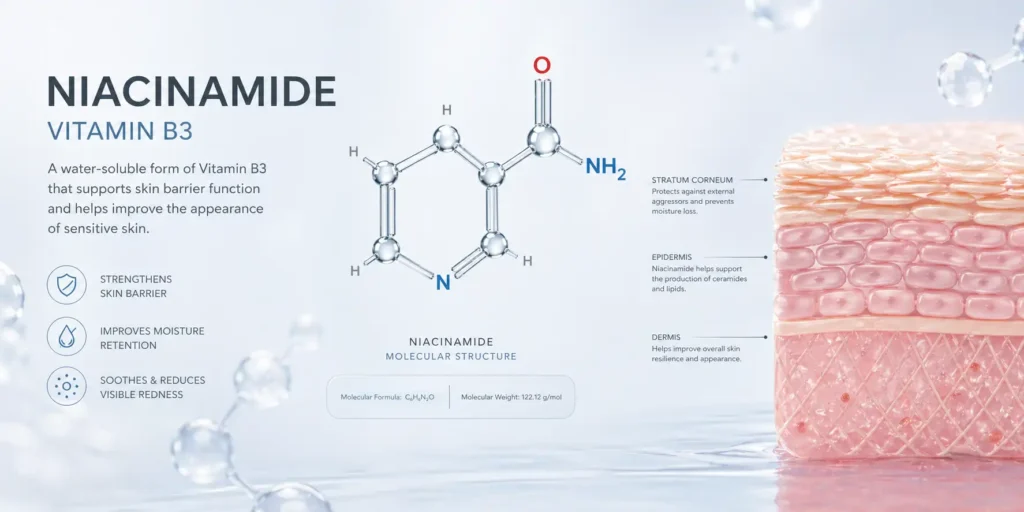
Niacinamide is the water-soluble amide form of Vitamin B3 (nicotinic acid). It’s a precursor to the coenzymes NAD and NADP — molecules that are absolutely central to cellular energy production, lipid synthesis, and DNA repair in the skin. And the thing is, these coenzymes naturally decline with age, which is part of why topical niacinamide has attracted so much interest from dermatologists: it essentially tops up what your skin starts losing.
What makes it genuinely special for sensitive skin, though, isn’t just what it does — it’s how it does it. Unlike most powerful actives, niacinamide supports your skin’s natural processes rather than overriding them. It doesn’t force accelerated cell turnover like retinol, doesn’t dissolve the surface layer like an acid, and doesn’t demand a weeks-long adjustment period.
Niacinamide vs. Niacin — Are They the Same Thing?
Short answer: no, and the distinction matters if you have reactive skin. Niacin (nicotinic acid) causes vasodilation — that flushing sensation some people experience. Niacinamide doesn’t. It lacks the carboxylic group that triggers vasodilation, which is precisely why formulators prefer it.
A mechanistic review published in PMC confirms that niacinamide is “well-tolerated by the skin” and does not cause cutaneous irritation or flushing commonly seen with nicotinic acid — even at concentrations up to 5%.
One practical note: on some product labels, niacinamide is listed as “nicotinamide.” Same ingredient, different name. Don’t let that throw you off.
How Does Niacinamide Actually Work on the Skin?
The mechanisms are genuinely fascinating — and they’re all happening at the cellular level.
Niacinamide increases ceramide and free fatty acid synthesis in keratinocytes, directly reinforcing the skin’s lipid barrier. It inhibits NF-kB, a key inflammatory signaling molecule, and reduces the production of pro-inflammatory cytokines like IL-1 and IL-12.
It blocks the transfer of melanosomes from melanocytes to keratinocytes — which is how it reduces dark spots without any harsh bleaching chemistry. And via its antioxidant activity (through NADH and NADPH), it helps neutralize reactive oxygen species that accelerate skin aging. All of this is detailed in the mechanistic review published in PMC.
That’s a lot doing a lot. Quietly.
Is Niacinamide Gentler Than Other Actives Like Retinol or AHAs?
Yes — and this is where most people get it wrong when building a sensitive skin routine. Retinoids and alpha-hydroxy acids work by accelerating cell turnover or exfoliating the surface; both carry real irritation risk, especially in the early weeks. Niacinamide doesn’t work that way.
According to Dermatology Times, niacinamide “can be used in formulations at concentrations up to 5% with a very low incidence of irritation” — a tolerance profile that simply doesn’t exist with retinoids or AHAs. It’s also remarkably pH-stable, meaning it plays well with most other skincare ingredients without losing effectiveness.
Top Benefits of Niacinamide Serums for Sensitive Skin
Niacinamide serums deliver multiple benefits for sensitive skin by strengthening the barrier, reducing redness, fading pigmentation, balancing oil, and improving early signs of aging. Backed by clinical research, it works gently without irritation, making it a reliable, dermatologist-recommended ingredient for improving overall skin resilience, clarity, and long-term health.
Strengthening the Skin Barrier — The #1 Priority for Sensitive Skin
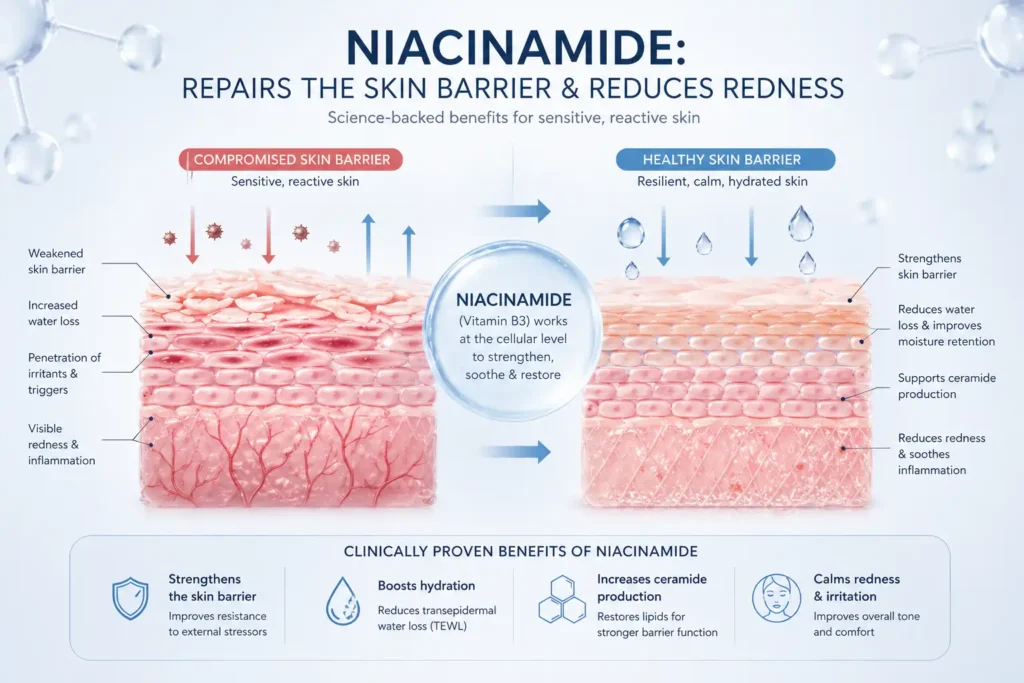
If you have sensitive skin, your barrier is most likely compromised — and a weak barrier is the root cause of almost every sensitivity symptom: stinging, redness, tightness, reactivity to products that should be fine. This is where niacinamide earns its place.
A randomized controlled trial conducted at the University of Split School of Medicine found statistically significant improvements in skin hydration at Week 4 when participants used a 5% niacinamide serum, alongside a significant reduction in erythema from baseline to Week 4.
The mechanism?
Niacinamide boosts ceramide production in the skin’s outer layers — ceramides are the “mortar” that holds the barrier’s cellular “bricks” together. Less transepidermal water loss, fewer environmental irritants getting in. A stronger barrier means your skin can actually tolerate other products better over time.
Calming Redness, Rosacea, and Inflammatory Skin Conditions
Redness in sensitive skin isn’t random — it’s driven by inflammation, mast cell activation, and an overactive immune response in the skin. Niacinamide addresses all three directly. By inhibiting NF-kB and reducing mast cell degranulation, it calms the inflammatory cascade before it becomes visible.
Clinically, dermatologists often recommend niacinamide as a first-line treatment for sensitive skin because clinical studies show excellent tolerance rates even among people with reactive complexions.
For rosacea-prone skin specifically, the key is starting at 2–5% concentrations and introducing the product gradually — higher percentages carry a slightly elevated risk of triggering sensitivity in already-compromised skin.
Still unsure about niacinamide for rosacea? Read our full guide here.
Fading Hyperpigmentation and Post-Acne Marks Without Irritation
This is one of niacinamide’s most clinically validated benefits — and it’s particularly meaningful for sensitive skin types, because most brightening actives (kojic acid, AHAs, high-dose Vitamin C) carry a real irritation trade-off that sensitive skin just can’t afford.
Niacinamide doesn’t bleach. It doesn’t inhibit tyrosinase. Instead, it interrupts the transfer of melanosomes from melanocytes to keratinocytes — meaning it addresses pigmentation at a cellular communication level, which is both gentler and surprisingly effective.
A landmark 12-week double-blind, placebo-controlled, split-face clinical trial involving 50 women (aged 40–60) showed that 5% niacinamide produced significant improvements in hyperpigmented spots, fine lines, texture, red blotchiness, and skin sallowness compared to a placebo moisturizer.
For a complete, irritation-safe approach to treating dark spots, read our full hyperpigmentation guide here.
Minimizing Pores and Regulating Oil for Acne-Prone Sensitive Skin
Oily-sensitive skin is a combination that confuses a lot of people. You’re shiny but reactive — harsh acne treatments strip you raw, and heavy moisturizers clog your pores. Niacinamide walks a line that most ingredients can’t.
Draelos et al. reported that use of 2% topical niacinamide resulted in a significant reduction in sebum excretion rate and pore size in a Japanese cohort and surface sebum levels in a Caucasian study group over four weeks.
That sebum reduction, crucially, doesn’t come with dryness. It’s not stripping — it’s regulation. Which is exactly what sensitive, breakout-prone skin needs.
Anti-Aging Benefits — Fighting Fine Lines Without Harsh Actives
A 12-week clinical study of a topical 5% niacinamide emulsion demonstrated a 21% improvement in fine lines along with a 14% skin tone clarity and 15% radiance improvement.
The mechanism involves both direct collagen stimulation (niacinamide promotes fibroblast secretion of collagen, elastin, and fibrillin) and indirect protection — by boosting NADH and NADPH levels, it helps neutralize the oxidative stress that degrades collagen in the first place.
For sensitive skin types who can’t tolerate retinoids, this is genuinely exciting. You can get meaningful anti-aging benefit without the flaking, dryness, and sensitivity that retinol notoriously demands.
What to Look for in a Niacinamide Serum If You Have Sensitive Skin
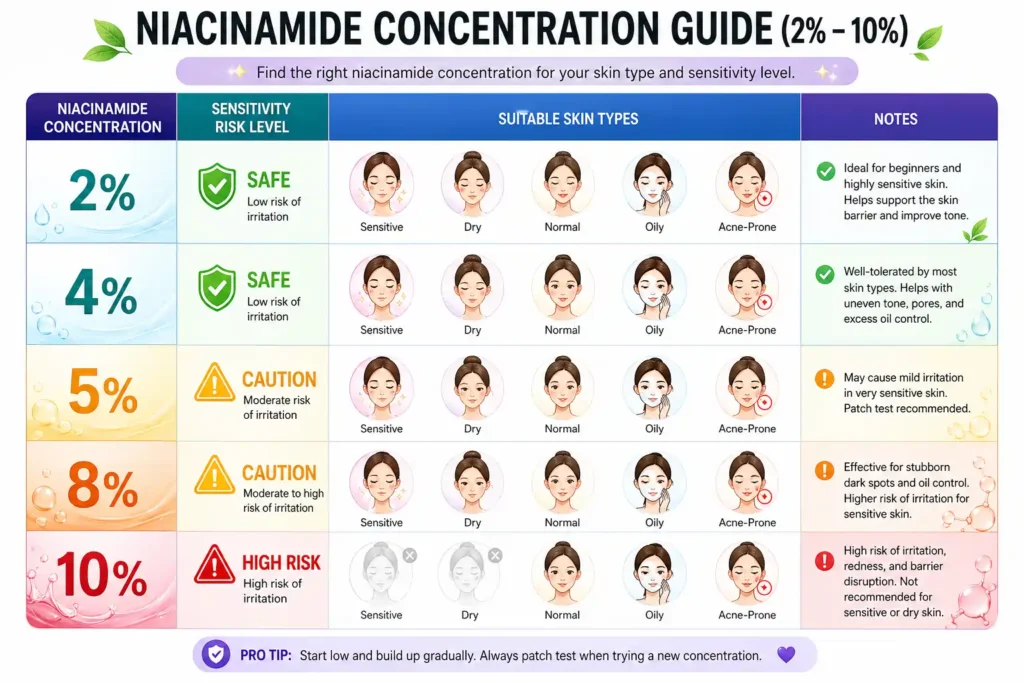
Choosing the right niacinamide serum for sensitive skin comes down to concentration, supportive ingredients, and formulation quality. Lower strengths (2–5%) minimize irritation while delivering results.
Pairing with hydrating and barrier-repair ingredients enhances tolerance, while avoiding common irritants ensures better outcomes. Texture also matters, helping match the serum to your skin type for optimal performance.
What Concentration Is Safest for Sensitive Skin?
For sensitive skin, niacinamide works best at 2–5%, a range widely recommended by dermatologists including Dr. Fayne Frey and Stanford’s Dr. Kilgour (via NBC Today). Studies show 5% delivers full benefits—barrier repair, oil control, and brightening—without added irritation. Beginners should start at 2–4% and gradually increase as tolerance improves.
Key Ingredients to Look For Alongside Niacinamide
The best niacinamide serums for sensitive skin don’t rely on niacinamide alone. Look for formulas that pair it with:
- Hyaluronic acid — hydrates at multiple skin depths; layers synergistically with niacinamide
- Ceramides — reinforces the lipid barrier alongside niacinamide’s ceramide-boosting mechanism
- Glycerin and squalane — gentle, non-comedogenic emollients that maintain moisture without heaviness
- Allantoin — soothing, skin-softening, ideal for reactive and inflamed skin
- Zinc PCA — enhances sebum regulation; beneficial for oily-sensitive combinations
- Peptides — complement niacinamide’s collagen support without additional irritation
Dr. Connie Yang, MD, FAAD, specifically recommends formulas that combine hyaluronic acid, ceramides, allantoin, and Vitamin C with niacinamide for maximum soothing and hydrating effect.
Ingredients and Red Flags to Avoid
But there’s a catch. Even a beautifully formulated niacinamide serum can trigger sensitive skin if the surrounding ingredients are problematic. Watch out for:
- Fragrance/parfum — the single most common cause of contact dermatitis in skincare; completely unnecessary in a serum
- Alcohol denat. — drying, barrier-disrupting, and particularly harsh on reactive skin
- Parabens and sulfates — potential irritants with no performance benefit for sensitive types
- Very high-dose pure L-ascorbic acid (Vitamin C) in the same formula — at very low pH, this can reduce niacinamide’s effectiveness; use them at separate times of day if both are in your routine
Texture and Formulation — What Format Works Best?
Texture affects both comfort and effectiveness. Dry or sensitive skin benefits from creamy or milky serums with ceramides and squalane that reinforce the barrier.
Oily-sensitive skin does better with lightweight, water-based gels, especially those with zinc PCA.
Across all types, fragrance-free and non-comedogenic formulas are essential for minimizing irritation.
The Best Niacinamide Serums for Sensitive Skin in 2026
| Serum | Niacinamide % | Best For | Key Co-Ingredients | Fragrance-Free? |
|---|---|---|---|---|
| The Ordinary Niacinamide 10% + Zinc 1% | 10% | Oily-sensitive, pores | Zinc PCA | ✅ Yes |
| Paula’s Choice 10% Niacinamide Booster | 10% | Layering, hyperpigmentation | Liquorice root | ✅ Yes |
| La Roche-Posay Effaclar Pore-Refining Serum | 5% | Redness, rosacea-prone | Glycerin, LHA | ✅ Yes |
| Cetaphil Bright Healthy Radiance Serum | 3% | Eczema-prone, ultra-sensitive | Niacinamide, hyaluronic acid | ✅ Yes |
| Good Molecules Niacinamide Serum | 10% | Budget, minimalist routine | Zinc PCA | ✅ Yes |
| CeraVe Resurfacing Retinol Serum (with Niacinamide) | 4% | Acne texture, anti-aging | Ceramides, retinol | ✅ Yes |
| Naturium Niacinamide Face Serum 12% + Zinc 2% | 12% | Pores, oiliness | Zinc, squalane | ✅ Yes |
| Neutrogena Rapid Tone Repair Niacinamide Serum | 5% | Tone evenness, drugstore | Vitamin C, retinol | ✅ Yes |
| Kiehl’s Clearly Corrective Dark Spot Solution | 5% | Luxury, dark spots | Activated C, white birch | ✅ Yes |
| SkinCeuticals Metacell Renewal B3 | 5% | Clinical-grade anti-aging | Tri-peptide, lipoic acid | ✅ Yes |
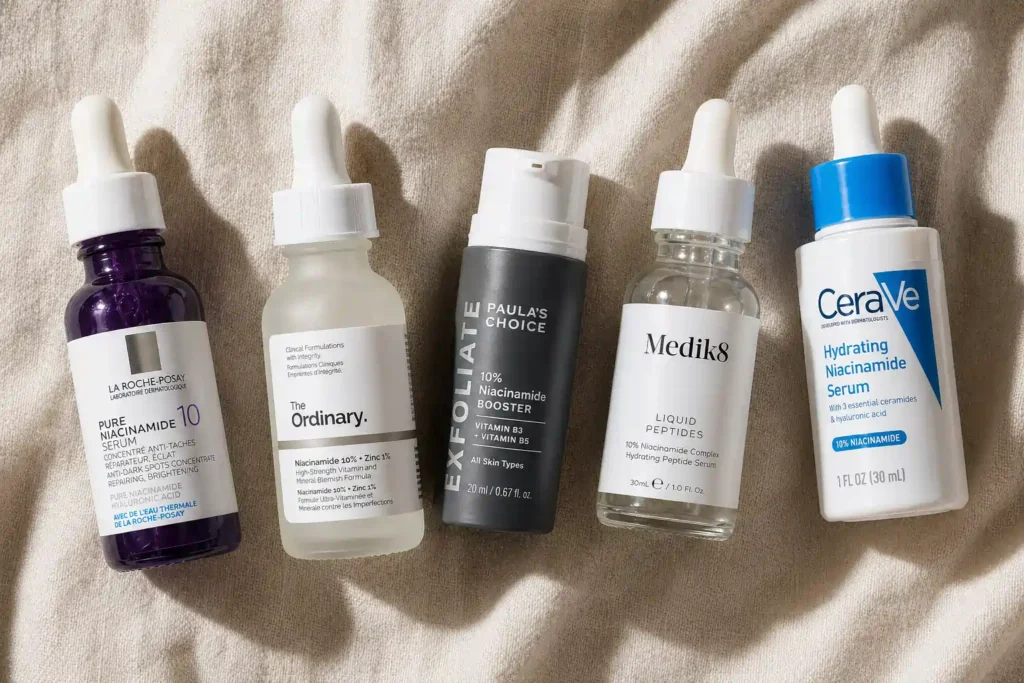
A word of honesty here: the “best” serum for your sensitive skin depends on your specific concern — redness, pores, dark spots, dryness, or all of the above. The table above is a starting map, not a verdict. If you’re brand-new to niacinamide, La Roche-Posay’s 5% formula or Cetaphil’s 3% formula is a consistently gentle first choice recommended by dermatologists for reactive skin types.
How to Use a Niacinamide Serum If You Have Sensitive Skin
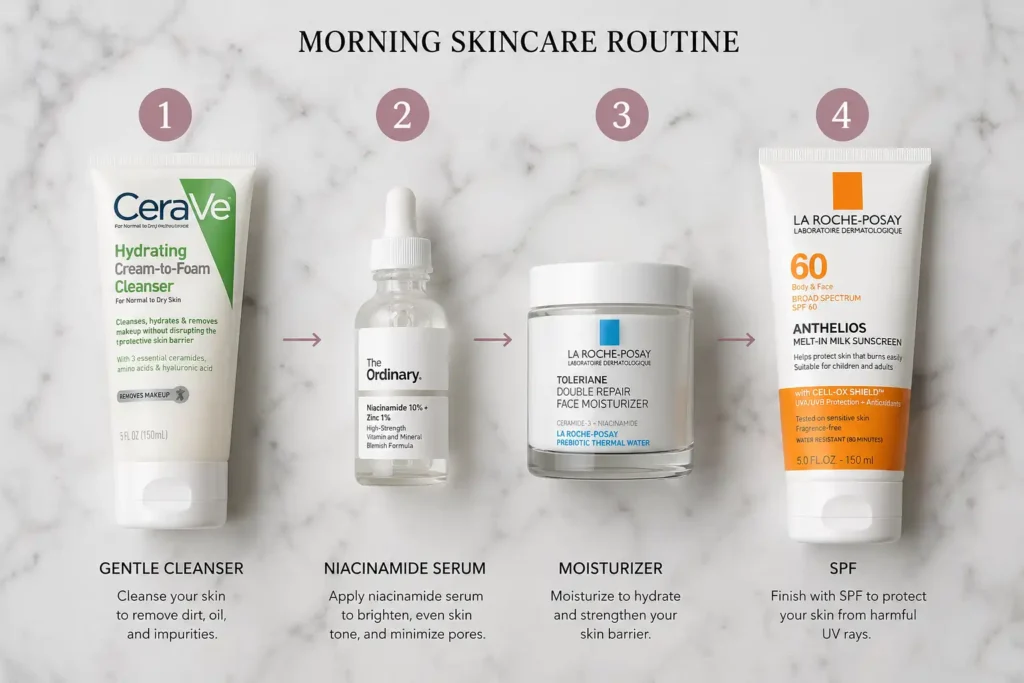
Use niacinamide after cleansing (and toner) and before moisturizer/SPF. Start every other day, then increase to daily if tolerated. Apply a thin layer on slightly damp skin. Pair with gentle hydrators and initially separate from strong actives. Expect visible results in 2–8 weeks with consistent use. Below is a more detailed breakdown.
Where Does Niacinamide Fit in Your Skincare Routine?
Niacinamide is water-soluble, which means it goes before your oil-based products. The standard order: cleanser → toner (if used) → niacinamide serum → moisturizer → SPF (AM only). Apply to slightly damp skin for best absorption.
According to the Cleveland Clinic, niacinamide can also be mixed with your moisturizer if a stand-alone serum step feels like too much — though a dedicated serum delivers more targeted, consistent dosing.
How Often Should Sensitive Skin Types Use It?
Start slowly. Not because niacinamide is harsh — it’s not — but because any new active ingredient can prompt a mild adjustment response in reactive skin, and you’ll want to identify that early before it becomes a full-face situation.
Week 1–2: Apply every other day, one thin layer, after cleansing.
Week 3 onward: if skin is calm and happy, move to daily use.
After 4–6 weeks of consistent daily use, some people tolerate twice daily application.
Most sensitive skin types find once daily is all they need — and that’s genuinely enough to see results.
The Right Way to Layer Niacinamide With Other Actives
Niacinamide pairs beautifully with: hyaluronic acid, ceramides, peptides, bakuchiol, azelaic acid, and SPF. It’s one of the few activites that play well with almost everything.
With retinol — use niacinamide in the AM and retinol in the PM, at least while you’re building tolerance. With Vitamin C (L-ascorbic acid) — same logic: C in the morning, niacinamide in the evening. This isn’t because they’re dangerous together; it’s because at very low pH, there’s a theoretical risk that niacinamide could convert slightly to nicotinic acid, reducing efficacy.
The Cleveland Clinic recommends avoiding using too many products with niacinamide at once to keep things clean and effective.
How Long Does It Take to Show Results on Sensitive Skin?
Real talk: skincare is slow. You won’t wake up on day three transformed.
Most users notice improvements in redness and hydration within 2–4 weeks — that’s the barrier-repairing mechanism kicking in first. Visible changes in hyperpigmentation, pore size, and oil balance typically appear at 4–8 weeks with consistent daily use.
Fine-line improvement, supported by collagen stimulation, appears in clinical studies at the 12-week mark with 5% niacinamide, as confirmed by a PubMed study. If you’re not seeing any change after 12 weeks, it’s time to talk to a board-certified dermatologist about whether a different concentration or formulation makes sense for you.
Niacinamide Serums vs. Other Treatments
Niacinamide is a gentle, multitasking option for sensitive skin, while azelaic acid targets inflammation and pigmentation but may cause irritation at higher concentrations. Vitamin C offers antioxidant benefits but can be less stable and more reactive. Hyaluronic acid pairs well with niacinamide to support hydration and the skin barrier.
Here’s a closer look at each comparison.
Niacinamide vs. Azelaic Acid — Which Is Better for Sensitive Skin?
Both are excellent — but they’re not identical tools. Azelaic acid brings strong anti-inflammatory and antibacterial activity, making it particularly effective at prescription strength (15–20%) for moderate rosacea and stubborn PIH. It can, however, cause tingling and mild irritation, especially at higher concentrations.
If you are specifically dealing with dark spots or uneven skin tone, learn how to maximize your results in our post on azelaic acid for hyperpigmentation.
Niacinamide, by comparison, is gentler, broader in its benefit profile (barrier repair, oil regulation, brightening, anti-aging), and essentially irritation-free at 5%. For most sensitive skin types just starting out, niacinamide is the safer entry point.
Once you’ve built tolerance, combining low-dose azelaic acid (10%) with niacinamide is something many dermatologists recommend for rosacea-prone or acne-prone sensitive skin — the two mechanisms complement each other without redundancy.
For a deeper dive into choosing the right treatment for breakouts, explore our guide on niacinamide vs. azelaic acid for acne.
Niacinamide vs. Vitamin C for Aging Sensitive Skin
Both are antioxidants. Both brighten. But they work differently, and their tolerability profiles couldn’t be further apart. Niacinamide demonstrates superior stability compared to most forms of Vitamin C, which are prone to oxidation and degradation.
While Vitamin C acts as a direct antioxidant, niacinamide supports cellular antioxidant systems and provides additional benefits, including barrier enhancement and anti-inflammatory effects. The two can be used together for comprehensive antioxidant protection.
To help you decide which antioxidant deserves a permanent spot in your morning routine, read our full analysis on Vitamin C vs. Niacinamide: which is best for skin.
For sensitive skin, a stable Vitamin C derivative — ethyl Vitamin C, ascorbyl glucoside, or 3-O-ethyl ascorbic acid — paired with niacinamide at different steps gives you the brightening power of both without the irritation that pure L-ascorbic acid can cause on reactive complexions.
Should You Use Niacinamide or Hyaluronic Acid First?
We recommend applying hyaluronic acid before niacinamide to maximize hydration. It draws water into the skin, while niacinamide helps retain that moisture by supporting ceramide production.
This combination creates a balanced routine that improves hydration, strengthens the skin barrier, and works well for sensitive or reactive skin types.
Who Should Be Cautious About Using Niacinamide?
Niacinamide is safe for most people, but certain individuals should use caution—especially those with allergies, histamine sensitivity, or highly reactive skin. Side effects are usually mild and linked to overuse or high concentrations. Understanding how your skin responds, starting slowly, and maintaining SPF use can help prevent irritation and ensure safe, effective results.
Can Everyone Use Niacinamide?
Most people can use niacinamide safely, but those with Vitamin B3 allergies, histamine sensitivity, or flushing-prone skin should proceed cautiously.
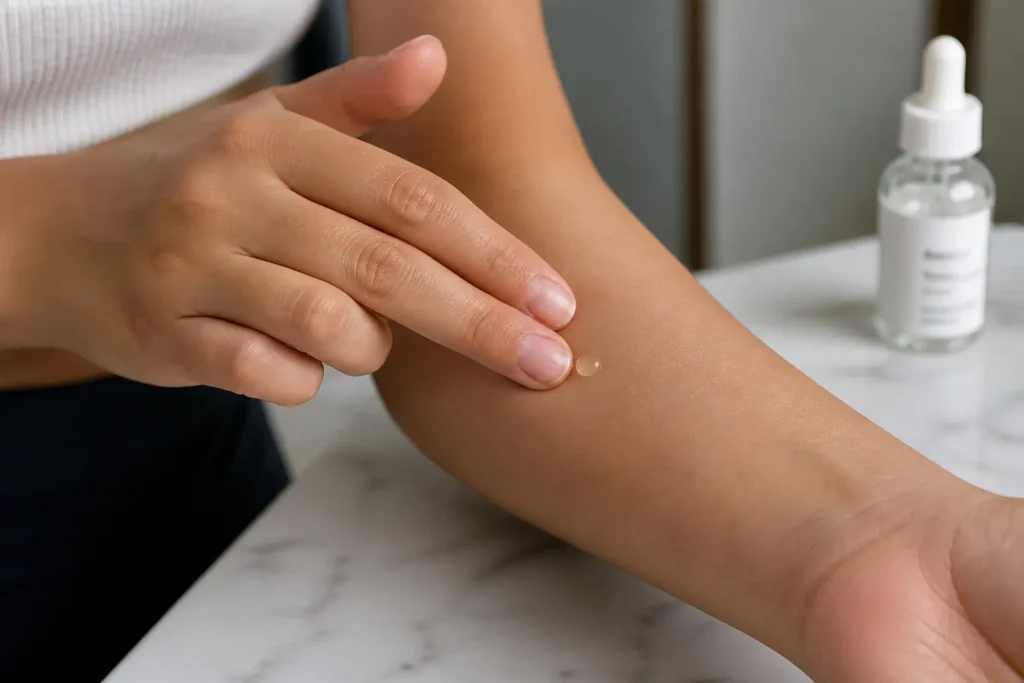
Niacinamide may trigger mild histamine release in rare cases. For rosacea or reactive skin, dermatologists recommend starting at 2–5% and patch testing first to minimize the risk of irritation or flare-ups.
What Happens If You Use Too Much Too Soon?
Using high concentrations of niacinamide too quickly can cause flushing, tingling, or dryness—signs of irritation, not purging. Reducing frequency or switching to a lower percentage usually resolves symptoms.
According to Health Insiders, mild warmth or redness may occur initially but should fade quickly; persistent reactions require discontinuation and guidance from a dermatologist.
Niacinamide and Skin Darkening — Is It a Real Risk?
Niacinamide does not darken skin—it reduces hyperpigmentation by inhibiting melanosome transfer, leading to a more even tone over time. Reports of darkening are usually due to other ingredients, irritation, or lack of daily sun protection. Without SPF, UV exposure can worsen pigmentation. For proper protection, see our essential guide to sun protection and anti-aging.
A Final Thought
Here’s something worth sitting with: the best skincare isn’t always the most aggressive skincare. Sensitive skin, in particular, tends to respond better to ingredients that support rather than override its natural processes. Niacinamide is, in that sense, a philosophy as much as an ingredient — patience, consistency, and gentleness over brute force.
If there’s one thing the clinical evidence keeps showing us, it’s that working with the skin’s biology produces more durable results than trying to outrun it. That’s not a particularly exciting message. But it’s a true one.

About Subhan Usafzai
Evidence-Based Skincare Educator & Formulation Specialist
I'm Subhan Usafzai (Fazli Subhan), an Evidence-Based Skincare Educator and Formulation Specialist. My background includes first-hand experience as a technician and research support in skin departments across tertiary military hospitals since 2006, and since 2008 I've focused on researching and translating clinical and formulation science into practical, evidence-based guidance. My formal training includes Coursera's Introduction to Cosmetic and Skincare Science and the four-course Introduction to Cosmetic Science and Ingredients specialization (Cosmetic Formulation Science, Cosmetic Product Development, and Quality Control and Regulatory in Cosmetic Science), authorized by Olay. Every article I write is checked against current research and reviewed by our medical team before publishing.
✅ Medically reviewed by Dr. Muhammad Khurram Ahmad, MD, Board-Certified Dermatologist · 📅 Last updated: May 2026
📋 Medical Disclaimer
For Educational Purposes Only: This article is written by Subhan Usafzai, an Evidence-Based Skincare Educator and Formulation Specialist, and is intended for informational and educational purposes only. The content provided is based on scientific research, peer-reviewed studies, and dermatological literature available as of May 2026.
Not Medical Advice: The information in this article does not constitute medical advice, diagnosis, or treatment recommendations. It should not be used as a substitute for professional medical consultation, diagnosis, or treatment from a board-certified dermatologist or qualified healthcare provider.
Individual Results May Vary: Skin conditions, including hyperpigmentation, melasma, and UV-induced pigmentation, vary significantly between individuals based on genetics, skin type, hormonal factors, and environmental exposure.
Consult Your Healthcare Provider: Before starting any new skincare regimen, especially if you are pregnant, breastfeeding, have diagnosed skin conditions, are taking medications, have sensitive skin, or are undergoing dermatological treatments.
Product Safety: Always perform a patch test before using new skincare products. Discontinue use and consult a healthcare professional if you experience irritation or adverse reactions.
🛍️ Affiliate Disclosure
Amazon Associates Program: Glow Guide Hub participates in the Amazon Services LLC Associates Program. When you purchase through our Amazon affiliate links, we may earn a small commission at no extra cost to you.
Editorial Independence: Our affiliate relationships do not influence our content or recommendations. We only recommend products based on scientific research, clinical evidence, and genuine quality assessment.
Supporting Our Mission: Your purchases through affiliate links help us maintain this free, evidence-based educational resource. Thank you for your trust!