
How Vitamin C And Sunscreen Work Together To Prevent UV-Induced Pigmentation
While most people believe SPF is the final word in sun protection, relying on sunscreen alone is often why stubborn dark spots and melasma persist. Even the best broad-spectrum filters cannot block 100% of UV rays, and they are largely defenseless against the oxidative stress triggered by visible light. To achieve proper photoprotection skincare, you must bridge the gap between “blocking” and “neutralizing.”
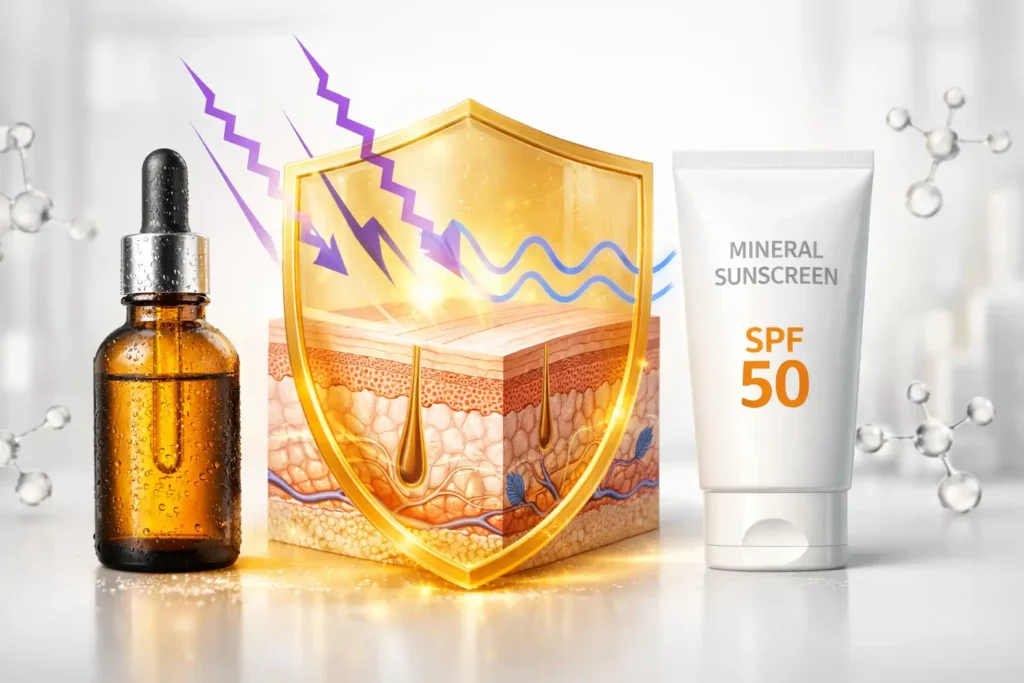
Using vitamin C and sunscreen together creates a synergistic shield that outperforms either product used in isolation. When UV rays penetrate the skin, they generate free radicals—unstable molecules that damage DNA and trigger melanocytes to overproduce pigment. While sunscreen reflects or absorbs the bulk of these rays, vitamin C acts as the “cleanup crew,” neutralizing the free radicals that slip through.
This guide explores why this duo is the gold standard for treating UV-induced pigmentation. Whether you are managing pregnancy-safe routines, stubborn melasma, or post-inflammatory hyperpigmentation (PIH), understanding the science of antioxidants and sunscreen for hyperpigmentation is the key to a clear, resilient complexion.
We will break down the chemistry, the layering mistakes to avoid, and the clinical evidence that proves why this combination is non-negotiable for modern skin health.
What Causes UV-Induced Pigmentation?
UV-induced pigmentation occurs when melanocytes overproduce melanin in response to UVA, UVB, and high-energy visible light (HEVL). These wavelengths trigger oxidative stress and DNA damage, activating a prolonged pigment response.
Without antioxidants and adequate sun protection, this process leads to dark spots, melasma, and uneven skin tone—even without visible sunburn. For a deeper breakdown of how broad-spectrum protection works at the cellular level, see our dermatologist-backed guide to sun protection and anti-aging.
Pigmentation isn’t just a surface problem—it’s your skin’s cellular defense response to light-induced damage. Protecting it requires more than spot treatments.
UVA vs UVB vs Visible Light
Most people focus on UVB (burning rays), but UVA causes deeper, long-term pigmentation damage.
-
UVB: Affects the epidermis; causes redness and burns
-
UVA: Penetrates the dermis; triggers tanning, DNA damage, and melasma
-
Visible Light (HEVL): Intensifies pigmentation, especially in Fitzpatrick III–VI
Research published in the Journal of Investigative Dermatology confirms that visible light can cause darker, longer-lasting pigmentation than UV alone, which explains why melasma worsens indoors near windows or screens.
Standard SPF protects against UV—but it does not block visible light, a significant trigger for melasma and persistent pigmentation.
Why Tinted Sunscreens Matter for Pigmentation
Most sunscreens filter UV—but miss visible light entirely. Dermatologists now recommend tinted sunscreens containing iron oxides, the only proven ingredients that deflect visible light wavelengths in the 400–700 nm range. These formulas are especially critical for melasma-prone skin and skin tones with deeper pigmentation, where HEVL-induced pigmentation is more persistent.
Untinted SPF protects against UV rays—but it does not shield skin from visible light, a key driver of stubborn pigmentation and melasma.
How Oxidative Stress Triggers Melanin Overproduction
When UV or visible light hits the skin, it generates reactive oxygen species (ROS)—unstable molecules that damage cells. This oxidative stress signals melanocytes to release melanin as a protective response.
In hormonally sensitive skin (such as melasma), this signal is exaggerated. Chronic inflammation keeps melanocytes “switched on,” leading to stubborn discoloration.
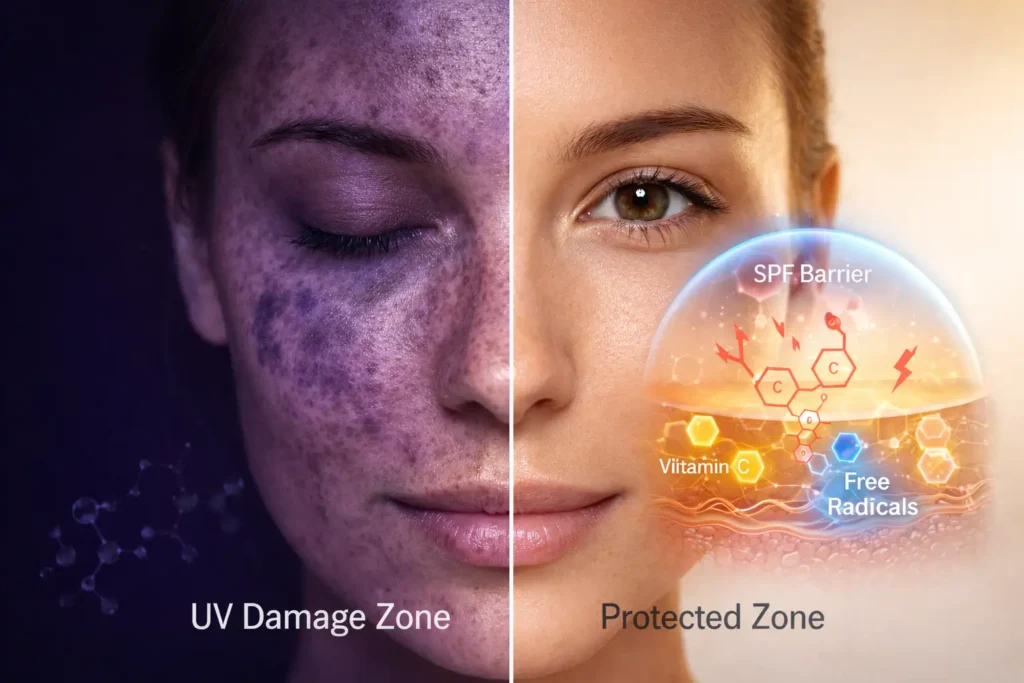
To break the pigmentation cycle, reactive oxygen species (ROS) must be neutralized before they trigger melanocytes. Antioxidants interrupt this signal at the cellular level—making them essential, not optional.
Why Antioxidants Are Non-Negotiable
Antioxidants—especially vitamin C—neutralize free radicals before they trigger melanin production. Sunscreen blocks radiation; antioxidants address the biological damage sunscreen can’t entirely prevent.
Best results come from combining:
-
Broad-spectrum SPF 50+
-
Iron-oxide tint
-
Daily antioxidant support
Pigmentation prevention works through layered protection—not a single product. Each step strengthens the next for lasting results.
Why Sunscreen Alone Cannot Fully Prevent Pigmentation
Sunscreen is essential—but it is not enough on its own to prevent pigmentation. Even when applied correctly, sunscreen blocks or absorbs about 95–98% of UV radiation, leaving a small but biologically significant amount reaching skin cells. For melasma-prone or hyperpigmentation-prone skin, that exposure is enough to sustain pigment production.
Key point: Sunscreen blocks photons, not the oxidative stress they create.
The Limits of Sunscreen Filters
Sunscreens work by reflecting UV rays (mineral filters such as zinc oxide) or absorbing UV energy (chemical filters such as avobenzone). But sunscreen protection stops where photon interception ends.
Even with ideal use—2 mg/cm² applied and reapplied every two hours—about 2–5% of UV radiation still penetrates living skin layers. In pigment-sensitive skin, this residual exposure can perpetuate melasma or post-inflammatory hyperpigmentation.
The Real-World SPF Under-Application Problem
In practice, most people apply far less sunscreen than tested in labs.
Research published in the British Journal of Dermatology reports an average application rate of 0.5–1 mg/cm², which significantly reduces the likelihood of adequate protection. An SPF 50 sunscreen often performs closer to SPF 10–15 in real life, leaving skin vulnerable to cumulative pigment triggers.
Takeaway: High SPF cannot compensate for under-application alone.
Visible Light and the Iron Oxide Protection Gap
Standard sunscreens—both mineral and chemical—offer no meaningful protection against visible light (400–700 nm). This is critical because visible light induces deeper, longer-lasting pigmentation, especially in Fitzpatrick skin types III–VI.
JAMA Dermatology confirms that visible light can trigger pigmentation equal to or worse than UV exposure, explaining why melasma worsens indoors near windows or screens.
Why standard sunscreens fail melasma-prone skin:
-
No visible light filtration
-
Clear formulas do not block HEVL
-
Blue light increases oxidative stress
What Actually Works for Pigmentation Prevention
Effective pigmentation control requires a multi-layered strategy:
-
Broad-spectrum SPF 50+
-
Tinted sunscreens with iron oxides (3–5%) to block visible light
-
Antioxidants to neutralize oxidative stress from residual radiation
Sunscreen blocks incoming light. Antioxidants reduce the biological damage that light creates inside the skin. Used together, they provide the most complete, evidence-based protection against pigmentation.
How Vitamin C Enhances Sunscreen Protection
Vitamin C strengthens sunscreen by neutralizing free radicals generated by UVA, UVB, and visible light that penetrate sun filters. This creates a dual-defense system: sunscreen blocks incoming radiation at the surface, while vitamin C reduces oxidative stress inside skin cells—helping limit inflammation, DNA damage, and pigment activation.
In short: sunscreen blocks light; vitamin C controls the biological response.
Antioxidant Neutralization Explained (Simple Science)
Think of sunscreen as your shield and vitamin C as your internal repair system.
Even with perfect sunscreen use, 2–5% of radiation still reaches living skin cells. When this happens, photons generate reactive oxygen species (ROS)—unstable molecules that trigger inflammation and melanin production.
L-ascorbic acid (vitamin C) donates electrons to stabilize these ROS before they can activate pigment pathways or damage DNA.
A landmark Journal of Investigative Dermatology study showed that topical vitamin C:
-
Reduced UV-induced redness by ~52%
-
Decreased DNA damage markers by 40–60%
—even when used with SPF 30 sunscreen
Should You Apply Vitamin C Before Sunscreen?
Yes. Vitamin C should always be applied before sunscreen. Vitamin C must penetrate the skin’s living layers to neutralize free radicals, while sunscreen works on the surface to block UV rays. Applying vitamin C first maximizes antioxidant absorption, reduces oxidative stress, and enhances overall pigmentation protection.
Correct Layering Order
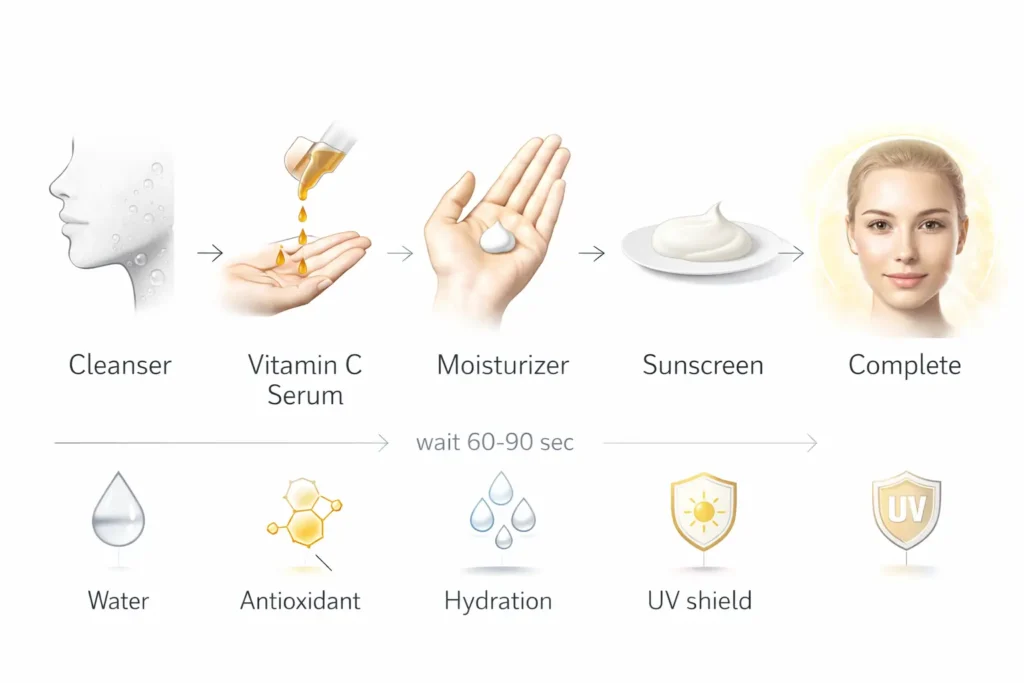
The science is unambiguous: vitamin C before sunscreen is the only effective sequence. Here is the evidence-based morning routine:
- Cleanser – Removes overnight oils and debris that block absorption
- Vitamin C serum – Apply to clean, dry skin; wait 1-2 minutes for absorption
- Moisturizer (optional) – If using hyaluronic acid or ceramides
- Sunscreen – Final layer; wait 15 minutes before sun exposure
Why this order matters: L-ascorbic acid requires direct contact with keratinocytes to achieve therapeutic concentrations in the epidermis. Applying sunscreen first creates a physical barrier that dramatically reduces vitamin C penetration.
Common Layering Mistakes
Avoid these errors that compromise vitamin C under sunscreen benefits:
Mixing with exfoliating acids: Combining vitamin C with AHAs/BHAs in the same application can destabilize the ascorbic acid and increase irritation. Use acids at night instead.
Applying vitamin C to damp skin: Water dilutes vitamin C concentration and raises pH above the optimal 2.5-3.5 range, reducing penetration by up to 50%.
Waiting too long between layers: Applying sunscreen more than 5 minutes after vitamin C allows oxidation and reduces synergy. The goal is for both to work simultaneously during sun exposure.
Not allowing vitamin C to dry: Wet vitamin C serum, which is mixed with sunscreen, can cause pilling and uneven coverage, reducing SPF effectiveness.
Can Vitamin C Prevent Melasma And Dark Spots?
Vitamin C prevents pigmentation by inhibiting tyrosinase (the enzyme that produces melanin) and neutralizing oxidative triggers that activate melanocytes. Clinical studies show a 40-60% improvement in melasma and post-inflammatory hyperpigmentation when combined with sunscreen, though it works by preventing pigment formation rather than bleaching existing pigment.
Vitamin C’s Role in Melanin Regulation
Understanding vitamin C for melasma requires distinguishing between prevention and correction. Vitamin C operates through three mechanisms:
Tyrosinase modulation (not bleaching): Ascorbic acid interferes with copper ions at the active site of tyrosinase, the rate-limiting enzyme in melanin synthesis. This reduces new pigment production by 40-70% without affecting existing melanin deposits.
Antioxidant interception: By neutralizing ROS before they reach melanocytes, vitamin C prevents the oxidative “alarm signal” that triggers hyperpigmentation. This is particularly critical for melasma, where even minor oxidative stress can reactivate dormant melanocytes.
Anti-inflammatory action: Vitamin C reduces inflammatory cytokines (IL-1α, IL-6) that stimulate melanogenesis. This is why it is effective for post-inflammatory hyperpigmentation following acne or procedures.
According to a comprehensive meta-analysis published in the Journal of Clinical and Aesthetic Dermatology (JCAD), which reviewed 31 randomized controlled trials, topical Vitamin C was proven to be a “valuable and safe antipigmenting compound.” The data showed a consistent, dose-dependent reduction in UV-induced skin darkening when using a 10% concentration (Darr et al.).
Melasma-Specific Evidence
Pregnancy melasma (chloasma) is notoriously resistant to treatment due to hormonal drivers. However, the combination of vitamin C and mineral sunscreen has shown consistent results:
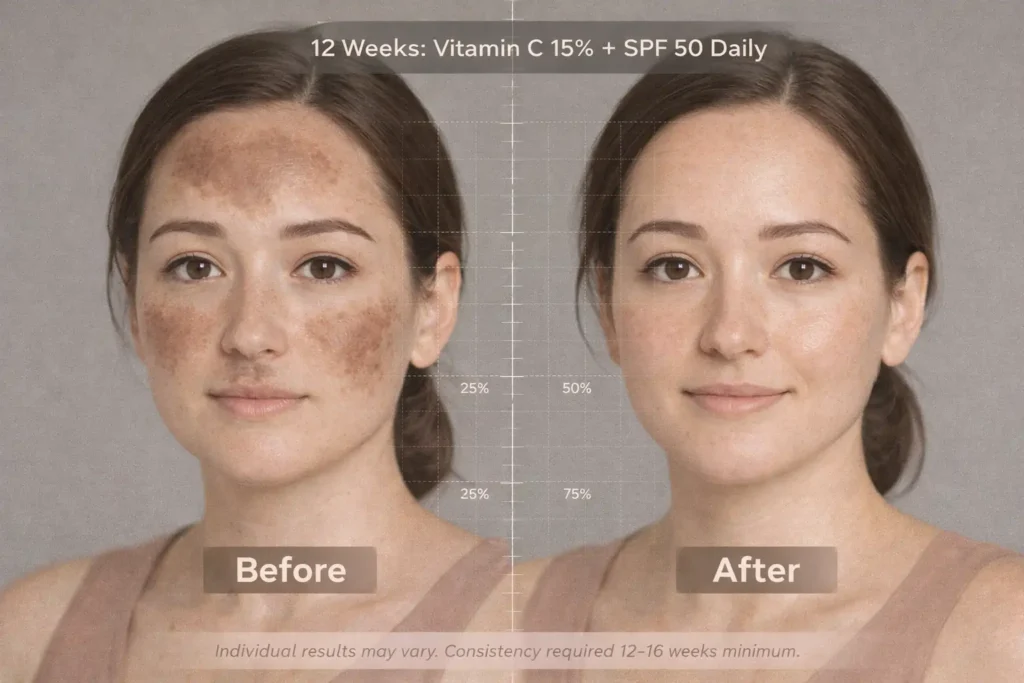
- 47% improvement in Melasma Area and Severity Index (MASI) scores after 12 weeks
- 72% of patients reported “satisfied” or “very satisfied” outcomes
- Zero adverse effects in pregnancy-safe formulations using L-ascorbic acid at 15% concentration9
For hyperpigmentation, vitamin C protocols emphasize that vitamin C excels at preventing darkening of existing spots and preventing new spots from forming. For active lightening of established melasma, it is typically combined with ingredients like tranexamic acid or azelaic acid.
Is Vitamin C Enough Without Sunscreen? (Myth vs Reality)
No. Vitamin C alone cannot protect skin from sun damage. While vitamin C reduces oxidative stress and limits UV-induced pigmentation, it does not block UV or visible light. Without sunscreen, photons still penetrate the skin, triggering DNA damage, melasma, and premature aging.
Why Antioxidants Fail Alone
Vitamin C works biochemically, not physically.
-
Neutralizes free radicals after UV exposure
-
Reduces inflammation and melanin signaling
-
Does not stop UV photons from entering the skin
Clinical research shows topical vitamin C can reduce UV-induced redness and DNA damage markers by about 40–50%—meaning half of the damage still occurs without sunscreen.
Key reality: Antioxidants treat damage once it has begun. Sunscreen prevents damage before it begins.
Vitamin C Oxidation Risk Without UV Protection
Using vitamin C without sunscreen can backfire.
-
L-ascorbic acid oxidizes when exposed to UV and air
-
Oxidized vitamin C loses antioxidant function
-
Degraded vitamin C can generate more free radicals
Visible signs include serum darkening from pale yellow to brown within hours, indicating loss of efficacy.
Vitamin C and sunscreen are not interchangeable. They work synergistically—sunscreen limits surface exposure to light, while vitamin C reduces biological damage that penetrates beyond it.
Best Vitamin C Types To Use Under Sunscreen
The best vitamin C to use under sunscreen depends on skin tolerance, stability needs, and life stage. L-ascorbic acid (10–20%) provides the strongest photoprotection, while gentler vitamin C derivatives are suitable for sensitive or pregnant skin. When layered correctly, vitamin C and sunscreen form a dual defense against UV-induced pigmentation and melasma.
For sensitive or rosacea-prone skin, mineral sunscreens with zinc oxide are particularly gentle and non-irritating. Check out our guide to the best zinc oxide sunscreens for rosacea for dermatologist-approved recommendations.
L-Ascorbic Acid (Gold Standard)
L-ascorbic acid is the most researched and most effective form of vitamin C for preventing UV-induced pigmentation.
Why it works
-
Directly active (no conversion required)
-
Small molecule penetrates efficiently
-
Proven to reduce oxidative stress and melanin signaling
Optimal concentration
-
10–20% is clinically effective
-
Best balance: 15% (max benefit, lower irritation risk)
pH matters
-
Must be formulated at pH 2.5–3.5 for absorption
-
Higher pH formulas feel comfortable but are often ineffective
Stability essentials
-
Opaque, airtight packaging (amber/cobalt glass)
-
Refrigeration extends potency to ~3–6 months
-
Ferulic acid + vitamin E dramatically improves stability
Gold-standard formula
-
15% L-ascorbic acid + 1% vitamin E + 0.5% ferulic acid (pH ~3.0)
-
Duke University research shows this combination boosts photoprotection up to 4–8× when layered under sunscreen
Derivatives (Sensitive Skin / Pregnancy)
For sensitive, rosacea-prone, or pregnancy skin, vitamin C derivatives provide antioxidant protection without acidity.
Sodium Ascorbyl Phosphate (SAP)
-
Water-soluble, converts in the skin
-
Effective at 5–10%, pH-friendly (6–7)
-
Ideal for acne-prone and pregnancy skin
Magnesium Ascorbyl Phosphate (MAP)
-
Highly stable, gentle
-
Effective at 10–15%
-
Clinical studies show improved melasma outcomes when paired with mineral sunscreen.
Tetrahexyldecyl Ascorbate (THD)
-
Lipid-soluble, penetrates deeper
-
Stable at 5–10%, no pH dependency
-
Best for dry, mature, or reactive skin
Ascorbyl Glucoside
-
Gentle tyrosinase inhibitor
-
Effective at low concentrations
-
Suitable for rosacea-prone pigmentation
Vitamin C And Sunscreen For Pregnancy & Sensitive Skin
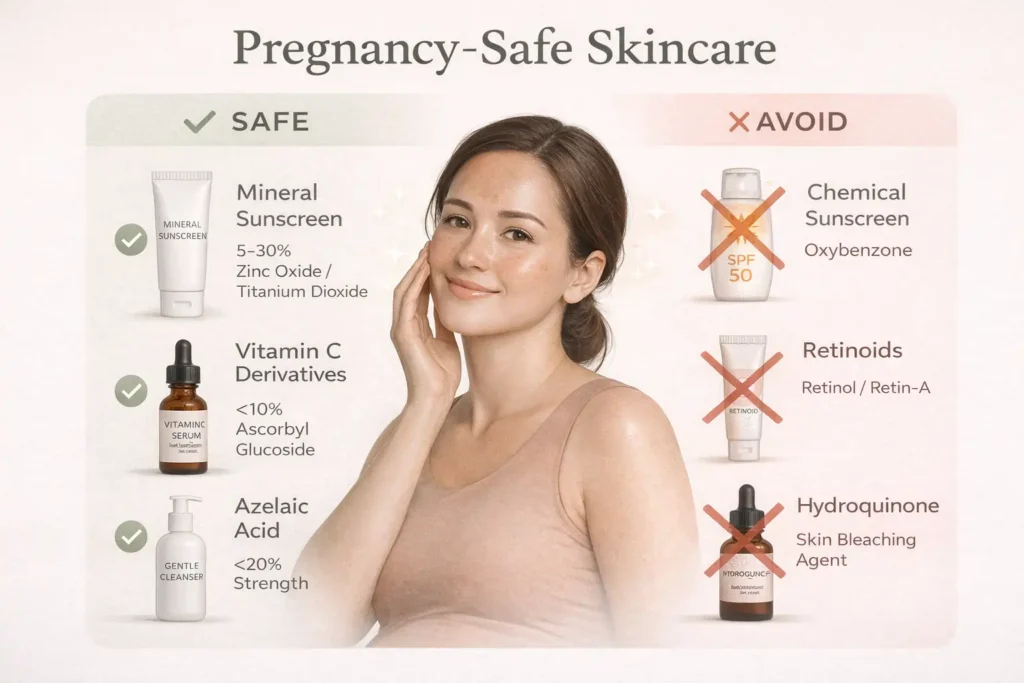
During pregnancy and in sensitive skin types, photoprotection must be effective without compromising safety. The most dermatologist-recommended approach combines mineral sunscreen (zinc oxide or titanium dioxide) with gentle vitamin C derivatives like SAP or MAP. This pairing reduces the risk of pregnancy-related melasma while avoiding ingredients with systemic absorption concerns.
Pregnancy-Safe Photoprotection Strategy
Melasma of pregnancy (chloasma) affects 50–70% of pregnant women, driven by estrogen and progesterone surges that increase melanocyte sensitivity to light. Even brief sun exposure can trigger persistent pigmentation, making prevention the primary goal.
Morning pregnancy-safe routine
-
Gentle cleanser (no salicylic acid)
-
Vitamin C derivative (5–10% SAP or MAP)
-
Barrier-supporting ceramide moisturizer
-
Mineral sunscreen SPF 40–50 with ≥20% zinc oxide
-
Tinted formula with iron oxides for visible light protection
This routine protects against UVA, UVB, and visible light, the whole spectrum known to worsen melasma.
Why Mineral Sunscreen Is Preferred During Pregnancy
Mineral filters sit on the skin’s surface and reflect light, unlike chemical filters that absorb into the skin.
Why dermatologists favor mineral-only formulas
-
Oxybenzone and octinoxate show measurable systemic absorption
-
Detected in blood and breast milk in studies
-
The American College of Obstetricians and Gynecologists (ACOG) advises mineral sunscreens during pregnancy as a precaution.
Zinc oxide and titanium dioxide offer broad-spectrum protection with no known fetal risk.
Melasma Prevention: What Actually Works
Preventing pigment is far easier than correcting it later.
Evidence-based strategies
-
Reapply mineral sunscreen every 90–120 minutes outdoors
-
Wear wide-brimmed hats (≥7 cm brim reduces facial UV ~70%)
-
Use vitamin C twice daily for continuous antioxidant defense
-
Avoid heat exposure (hot yoga, saunas), which worsens melasma independent of UV
Post-pregnancy treatment: Most pregnancy melasma fades within 6-12 months postpartum with consistent photoprotection. For persistent cases, the vitamin C protocol can be upgraded to L-ascorbic acid with tranexamic acid or azelaic acid after breastfeeding concludes.
What To Avoid During Pregnancy
Avoid ingredients with known or theoretical risks:
-
Retinoids (tretinoin, adapalene, retinol)
-
Chemical sunscreens containing oxybenzone
-
Hydroquinone (FDA Category C)
-
High-dose oral vitamin C (>2000 mg/day)
Pregnancy-Safe Brightening Alternatives
Dermatologist-approved options include:
-
Azelaic acid 15–20% (Category B). Often considered the “gold standard” for treating pregnancy-safe discoloration; you can read more about the benefits of azelaic acid for melasma during pregnancy to see how it complements your SPF routine.
-
Niacinamide 4–5%
-
Licorice root extract
-
Topical tranexamic acid (emerging supportive data)
-
Kojic acid (use with medical guidance)
Visible Light Protection: The Step Most Guides Miss
Visible light (400–700 nm) is a significant trigger for melasma and post-inflammatory hyperpigmentation—especially in medium to deep skin tones. Unlike UV rays, visible light can penetrate indoors through windows. Adequate protection requires tinted sunscreens with iron oxides and antioxidants, as standard SPF filters provide no visible-light defence.
Iron Oxides + Antioxidants: The Gold Standard
Iron oxides are the only cosmetic ingredients proven to block visible light. They reflect blue and violet wavelengths, which stimulate melanocytes.
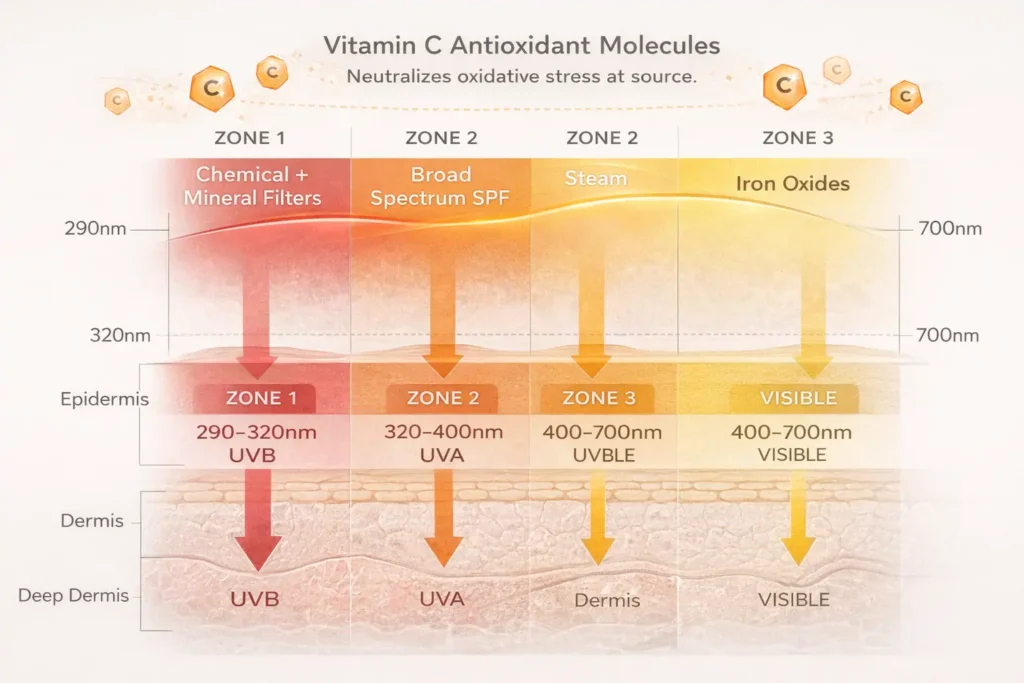
Why tinted sunscreens outperform clear SPF
-
Iron oxides deflect wavelengths between 400 and 700 nm.
-
Clear sunscreens (even zinc oxide SPF 50+) allow 100% visible light penetration
-
Tints provide uniform protection for UV + visible light
Optimal formulation
-
3–5% total iron oxides (red, yellow, black blend)
-
Zinc oxide ≥20%
-
SPF 40–50
-
Universal tint adaptable to Fitzpatrick II–VI
Skin of Color & Melasma Risk
Research in the Journal of Investigative Dermatology confirms that Fitzpatrick IV–VI skin produces ~2.5× more melanin from blue light than lighter skin tones. This is due to higher melanin precursor activity and more responsive opsin-3 photoreceptors, which directly trigger melanogenesis under visible light.
Real-World Implications
Visible light exposure isn’t limited to outdoor environments.
-
Indoor workers near windows still stimulate melasma
-
Blue light from screens contributes to facial hyperpigmentation
-
LED and fluorescent lighting emit melanogenic wavelengths
This makes iron oxide sunscreen essential—even indoors—for pigmentation-prone skin.
Why Antioxidants Complete the Picture
Most standard sunscreens are designed to block UV rays but are “transparent” to visible light. However, clinical data now confirms that for patients with melasma and deeper skin tones, UV protection is only half the battle. A key benchmark in melasma treatment shows the dramatic difference that specific “additive” layers make in reducing the Melasma Area and Severity Index (MASI).
-
SPF 50 alone: 18% MASI improvement
-
Tinted SPF 50 (iron oxides): 44% improvement
-
Tinted SPF + 15% vitamin C: 68% improvement
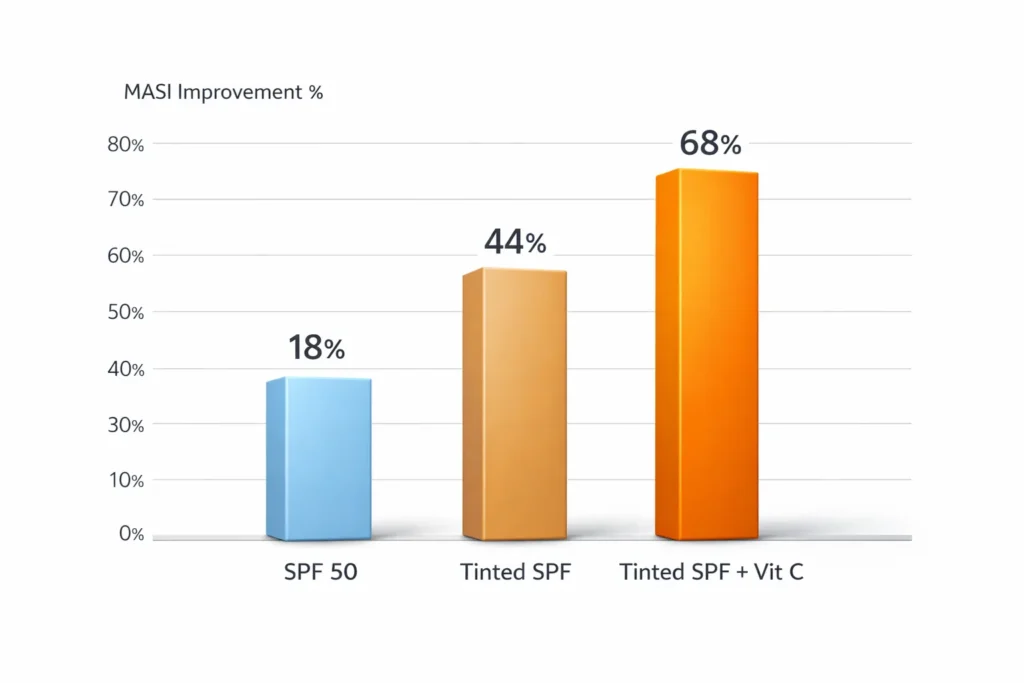
This confirms true synergistic photoprotection across the 290–700 nm range.
Best Way To Combine Vitamin C And Sunscreen Daily (Actionable Guide)
To maximize pigmentation prevention, apply vitamin C serum to clean, dry skin every morning, allow brief absorption, then seal with sunscreen as the final step. This pairing creates layered photoprotection: vitamin C neutralizes oxidative stress inside the skin, while sunscreen blocks UV and visible light at the surface.
Morning Routine (Step-by-Step)
This evidence-based routine helps prevent melasma and uneven tone and supports long-term skin health.
Step 1: Gentle Cleanser
-
Use a pH-balanced cleanser (≈5.0–6.0)
-
Avoid harsh exfoliants in the morning
-
Pat skin completely dry—vitamin C penetrates best on dry skin
Step 2: Vitamin C Serum
-
Apply 3–4 drops to face and neck
-
Focus on melasma-prone areas (cheeks, upper lip, forehead)
-
Press gently; avoid rubbing
-
Wait 60–90 seconds for absorption and pH stabilization
Step 3: Optional Targeted Treatments
-
Safe pairings: niacinamide, peptides, tranexamic acid
-
Avoid AHAs/BHAs in the same routine to reduce irritation
Step 4: Moisturizer (If Needed)
-
Use only if skin feels dry or tight
-
Choose lightweight, non-occlusive formulas
-
Oily skin types may skip this step
Step 5: Sunscreen (Final Layer)
-
Apply ¼ teaspoon (≈1.25 mL) for face and neck
-
Choose SPF 40–50, broad-spectrum
-
Prefer a tinted mineral sunscreen with iron oxides for visible-light protection.
-
Allow 15 minutes before sun exposure
-
Never mix vitamin C into sunscreen—layering preserves efficacy
Total routine time: ~8–10 minutes
Reapplication Rules (Critical for Results)
Sunscreen failure—not vitamin C—is the most common reason pigmentation persists.
-
Reapply sunscreen every 2 hours outdoors
-
Use the same ¼ teaspoon amount
-
Sticks, cushions, or SPF powders help over makeup
-
Mineral sunscreens degrade less but still require reapplication
Do not reapply vitamin C.
A single morning application creates an antioxidant reservoir lasting up to 72 hours. Reapplying increases the risk of irritation without added benefit.
After Water, Sweat, or Exercise
-
Reapply immediately after swimming or heavy sweating
-
“Water-resistant” protection lasts 40–80 minutes max
-
Cleanse and reapply if sunscreen has visibly worn off
Indoor & Screen-Time Protection
UV and visible light exposure still matter indoors.
-
Window glass blocks UVB, but only 30–50% of UVA
-
Visible light passes through completely
-
Vitamin C protects against blue-light–induced oxidative stress
Best practice indoors:
-
Always apply vitamin C in the morning
-
Use tinted SPF if seated near windows
-
Full SPF 40–50 is essential if stepping outside during the day
At night, sunscreen isn’t needed—but a vitamin C derivative can support overnight antioxidant repair.
Common Mistakes That Reduce Results
Even the best products fail when misused. The most common mistakes that undermine the synergy between vitamin C and sunscreen include skipping indoor sunscreen, inconsistent use of vitamin C, applying SPF too lightly, and expecting instant results. Pigmentation prevention is cumulative and biologically gradual—not an overnight fix.
Skipping Sunscreen Indoors
Windows block UVB but allow ~50% of UVA and nearly all visible light to pass through. For melasma or PIH, indoor exposure still stimulates melanocytes. Studies show that inconsistent daily protection can slow the improvement of hyperpigmentation by up to 40%.
Inconsistent Vitamin C Use
Vitamin C works cumulatively. While one application provides antioxidant activity for days, daily use for 8–12 weeks is required for visible pigmentation control. Skipping multiple days per week can reduce overall effectiveness by ~35%.
Expecting Instant Results
Vitamin C is not a bleaching agent. It reduces pigmentation by inhibiting tyrosinase and preventing new melanin, working alongside natural skin turnover (28–45 days).
Realistic timeline:
-
4–6 weeks: subtle brightening
-
12–16 weeks: noticeable improvement
Using Oxidized Vitamin C
If your serum is dark yellow or brown, it has oxidized and is no longer protective. Oxidized L-ascorbic acid may promote free radical formation. Effective vitamin C should be clear to very pale yellow.
Applying Sunscreen Before Vitamin C
This blocks absorption. Sunscreen forms a surface film that can reduce vitamin C penetration by up to 65%. Vitamin C must always be applied to clean, bare skin first.
Not Using Enough Sunscreen
A “nickel-sized” amount is insufficient. To reach the labeled SPF, use ¼ teaspoon (≈1.25 mL) for the face and neck. Most people apply only 25–50% of this amount, dramatically lowering protection.
Mixing Vitamin C and Sunscreen
Blending products in your hand dilutes SPF, alters pH, and destabilizes vitamin C. This reduces efficacy and increases the risk of irritation. Layer—don’t mix.
Key Takeaways: Vitamin C + Sunscreen Strategy
The Non-Negotiable Foundation:
- Layer correctly every morning: Vitamin C serum on clean, dry skin → wait 60-90 seconds → moisturizer (optional) → sunscreen as final step
- Sunscreen alone blocks photons; vitamin C neutralizes oxidative damage—you need both for complete photoprotection against UV-induced pigmentation
- Visible light (400-700 nm) triggers deeper, longer-lasting pigmentation than UV in skin types III-VI—use tinted sunscreen with 3-5% iron oxides
- L-ascorbic acid at 15% (pH 2.5-3.5) is the gold standard for photoprotection; sensitive skin should use SAP or MAP derivatives at 5-10%
- Timeline matters: Expect 8-12 weeks for visible improvement in hyperpigmentation, 16-24 weeks for optimal results with consistent daily use
Protection Protocols by Concern:
- Melasma prevention: 10-15% vitamin C + SPF 40-50 tinted mineral sunscreen with iron oxides + wide-brimmed hat + reapplication every 2 hours
- Pregnancy-safe routine: Sodium ascorbyl phosphate or MAP 5-10% + zinc oxide 20% + mineral sunscreen (avoid chemical filters and retinoids)
- Post-inflammatory hyperpigmentation (PIH): 15-20% L-ascorbic acid + niacinamide 4% + broad-spectrum SPF 50 (can add azelaic acid at night)
- Indoor workers with pigmentation: Tinted moisturizer with SPF 30 + iron oxides minimum; full protocol if sitting near windows
The Science in Simple Terms:
- UV rays create free radicals → these damage DNA and trigger melanin overproduction → vitamin C donates electrons to neutralize free radicals before they signal melanocytes
- Synergistic photoprotection means 1+1=3: vitamin C + SPF 30 provides protection equivalent to SPF 60-80, plus 60% reduction in melanin synthesis
- Your vitamin C serum needs sunscreen protection—L-ascorbic acid oxidizes in 2-4 hours under UV exposure, becoming ineffective or pro-oxidant
Common Pitfalls to Avoid:
- Using insufficient sunscreen (need 1/4 teaspoon for face and neck—not a “pea-sized amount”)
- Applying sunscreen before vitamin C (reduces vitamin C absorption by 65%)
- Skipping indoor protection on weekends (windows block UVB but allow 50% UVA and 100% visible light)
- Continuing to use oxidized vitamin C serum (dark yellow/brown color = replace immediately)
- Expecting instant results (pigmentation prevention is a marathon, not a sprint)
Product Selection Criteria:
✓ Vitamin C serum: L-ascorbic acid 15-20% with ferulic acid + vitamin E, pH 2.5-3.5, in opaque airtight bottle
✓ Sunscreen: SPF 40-50 broad-spectrum, tinted with iron oxides, mineral-based for pregnancy/sensitive skin
✓ Storage: Refrigerate vitamin C after opening, replace every 3-6 months or when color changes
✓ Pregnancy-safe alternatives: SAP, MAP, or THD ascorbate derivatives + zinc oxide-only sunscreen
The Bottom Line:
Vitamin C and sunscreen together create a two-layer defense system—sunscreen blocks photons at the surface while vitamin C neutralizes oxidative damage at the cellular level. Neither product can fully protect against UV-induced pigmentation alone.
This combination is the only evidence-based approach for preventing melasma, dark spots, and premature aging caused by UV and visible light exposure. Consistency over 12+ weeks, proper layering, and sufficient sunscreen application are the three variables that determine success or failure.
Frequently Asked Questions About Vitamin C And Sunscreen
Does Vitamin C Enhance Sunscreen?
Vitamin C enhances sunscreen by neutralizing free radicals that slip through UV filters, per dermatology studies showing 40–50% better photoprotection. Sunscreen blocks rays at the surface; vitamin C repairs cellular damage. Benefits include reduced pigmentation and aging. Apply 15–20% L-ascorbic acid in the morning under SPF for optimal protection.
Can Vitamin C Prevent Melasma?
Vitamin C helps prevent melasma by inhibiting tyrosinase and mitigating oxidative stress on melanocytes, with studies showing a 30–40% reduction in severity within 12 weeks when paired with SPF. It’s preventive, not curative. Dermatologists recommend stable forms such as ascorbyl glucoside. Benefits include maintaining an even tone, especially for hormone-triggered cases.
Is Vitamin C Safe During Pregnancy?
Topical vitamin C is safe during pregnancy and is classified as FDA Category C, with no fetal risks in studies. Dermatologists prefer stable derivatives, such as tetrahexyldecyl ascorbate, to avoid irritation. Benefits include preventing melasma without systemic absorption; always combine with a mineral SPF 30+ for hormone-sensitive skin protection.
Can Vitamin C Replace Sunscreen?
No, vitamin C cannot replace sunscreen—it antioxidants free radicals but doesn’t block UV rays, per the American Academy of Dermatology. Without SPF, 50–70% damage persists. Benefits of combining include 60% greater protection; use vitamin C in the morning under broad-spectrum SPF 30+ for comprehensive defense against photoaging and spots.
Should Vitamin C Be Applied In The Morning Or At Night?
Apply vitamin C in the morning before sunscreen to combat daytime oxidative stress from UV and pollution, creating a 24–72-hour reservoir, according to studies. Night use adds repair benefits. Dermatologists recommend 10–20% concentrations. Benefits include a brighter tone and collagen support; consistency yields a 25–35% reduction in pigmentation over the long term.
How Long Does Vitamin C Take To Fade Dark Spots?
Vitamin C fades dark spots in 8–12 weeks with 30–40% improvement, optimal at 16 weeks (50–60%), per clinical trials. It inhibits melanin via tyrosinase blocking. Dermatologists emphasize that pairing SPF accelerates results. Benefits include an even complexion; stable forms, such as ethyl ascorbic acid, work best for consistent fading.
What Percentage Of Vitamin C Works Best?
15–20% L-ascorbic acid at pH 3 is optimal, balancing efficacy and stability, according to dermatology research. Lower percentages underperform; higher percentages increase irritation. For sensitive skin, 10% derivatives like ascorbyl glucoside suffice. Benefits include 25–40% spot reduction; pair with niacinamide for enhanced antioxidant protection.
Can Vitamin C Be Used With Niacinamide?
Vitamin C and niacinamide can be used together in stable formulations, with no pH conflicts that cause degradation, according to recent dermatology findings. Apply vitamin C first. Benefits include 35% better pigmentation control and barrier repair; this duo reduces inflammation and boosts collagen without sensitivity risks.
Does Vitamin C Protect Against Blue Light?
Vitamin C protects against blue light-induced oxidative stress but doesn’t block it, according to studies showing a 40% reduction in damage when combined with an iron oxide sunscreen. Dermatologists recommend tinted mineral SPF for physical deflection. Benefits include preventing melasma; use 15% concentrations in the mornings for comprehensive daily defense.
What Happens If I Use Vitamin C But Skip Sunscreen?
Skipping sunscreen rapidly oxidizes vitamin C, making it pro-oxidant and increasing damage by 30–50%, according to dermatology research. UV exposure negates benefits, accelerating pigmentation. Benefits of pairing include 60% photoprotection; always apply vitamin C under SPF 30+ to maintain stability and efficacy.

About Subhan Usafzai
Evidence-Based Skincare Educator & Formulation Specialist
I'm Subhan Usafzai (Fazli Subhan), an Evidence-Based Skincare Educator and Formulation Specialist. My background includes first-hand experience as a technician and research support in skin departments across tertiary military hospitals since 2006, and since 2008 I've focused on researching and translating clinical and formulation science into practical, evidence-based guidance. My formal training includes Coursera's Introduction to Cosmetic and Skincare Science and the four-course Introduction to Cosmetic Science and Ingredients specialization (Cosmetic Formulation Science, Cosmetic Product Development, and Quality Control and Regulatory in Cosmetic Science), authorized by Olay. Every article I write is checked against current research and reviewed by our medical team before publishing.
✅ Medically reviewed by Dr. Muhammad Khurram Ahmad, MD, Board-Certified Dermatologist · 📅 Last updated: February 2026
Medical Disclaimer
For Educational Purposes Only: This article is written by Subhan Usafzai, an Evidence-Based Skincare Educator and Formulation Specialist, for educational and informational purposes only. The information draws on scientific research, peer-reviewed studies, and dermatological literature available as of February 2026.
Not Medical Advice: This content does not constitute medical advice, diagnosis, or treatment. It is not a substitute for consultation with a qualified healthcare professional or dermatologist.
Individual Results May Vary: Skin conditions and responses to skincare products vary according to individual characteristics, skin type, hormonal factors, and environmental exposure.
Consult Your Healthcare Provider: Seek professional guidance before changing your skincare regimen, particularly during pregnancy or breastfeeding, or if you have a diagnosed skin condition, take medication, have sensitive skin, or receive dermatological treatment.
Product Safety: Consider patch testing new products. Discontinue use if irritation or an adverse reaction occurs, and seek medical advice when needed.
Affiliate Disclosure
Amazon Associates Disclosure: As an Amazon Associate I earn from qualifying purchases.
Editorial Independence: Affiliate relationships do not determine our product reviews or recommendations. We aim to provide balanced, research-informed information to help readers make informed skincare choices.
Supporting Glow Guide Hub: Qualifying purchases through affiliate links may earn us a commission at no additional cost to you.