
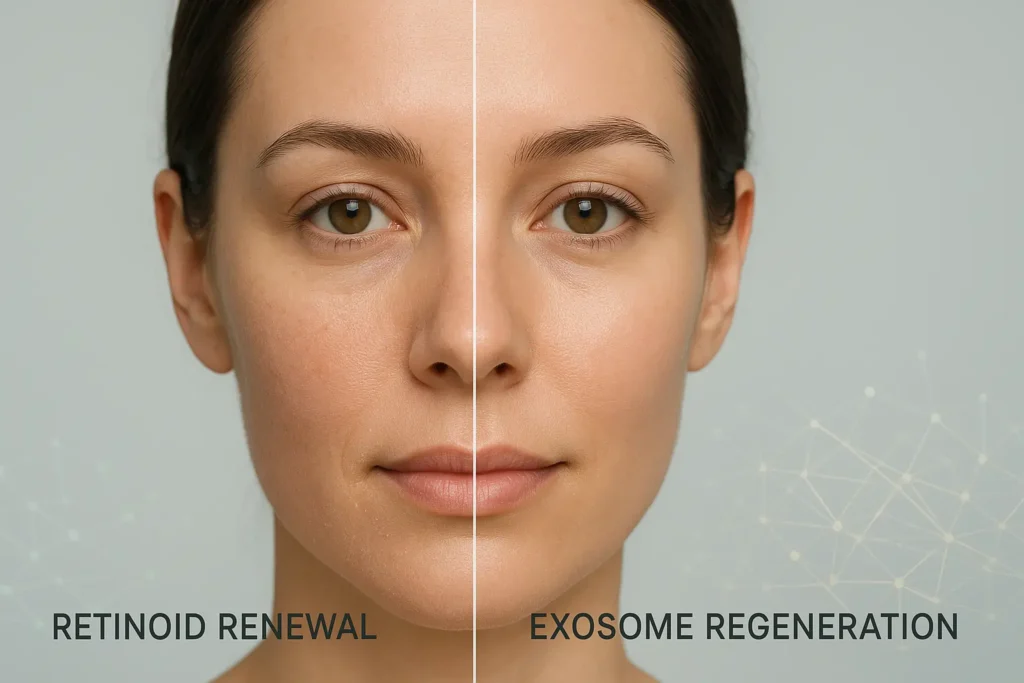
Exosomes vs Traditional Retinoids: Cellular-Level Skincare Revolution in 2026
“Are exosomes the next generation of retinoids?”
In 2026, dermatologists and cosmetic scientists are calling it a cellular revolution! Is the hype real? Or are exosomes just the latest trend? Scientific American, in a 2024 study, notes that “retinol…significantly benefits skin, especially in treating acne and signs of aging” – a reputation earned by decades of research.
 Exosomes — those tiny, powerful biological messengers once used in regenerative medicine — are now finding their way into serums, creams, and clinic treatments. But how do they really stack up against retinoids, the old gold standard of anti-aging?
I’ve worked with retinoids in clinical practice for years. From prescription-strength tretinoin to over-the-counter favorites like The Ordinary’s retinol or SkinCeuticals Retinol 0.5, I’ve seen their impact firsthand. They smooth fine lines, even tone, and renew the skin’s texture. But they also come with a cost: irritation, peeling, and sensitivity.
Meanwhile, exosomes offer something different—targeted skin communication and repair without the sting.
In this article, we’ll break down both at the cellular level, exploring how exosomes and retinoids repair, renew, and rejuvenate the skin. You’ll learn which option suits different skin types, age groups, and climates, and get expert guidance backed by dermatological research and global clinical studies.
Research published in Pharmaceutics shows:
“Exosomes were found to contain intricate compositions, including proteins, lipids, nucleic acids, and bioactive molecules, crucial for maintaining skin homeostasis. Emerging evidence highlights their involvement in dermatological conditions and their potential as diagnostic biomarkers and therapeutic agents,”.
So, let’s break this down at the cellular level — understanding how exosomes and retinoids each renew skin, and which is better for your unique skin type, climate, and goals.
What Are Exosomes and How Do They Work?
Exosomes are tiny extracellular vesicles — microscopic messengers your cells release to communicate with one another. Think of them as the text messages of the cellular world. Each exosome carries vital information in the form of proteins, lipids, and RNA that help repair, regenerate, and balance your skin’s ecosystem.
Initially studied for their role in regenerative medicine and wound healing, these vesicles are now a significant player in the skincare industry.
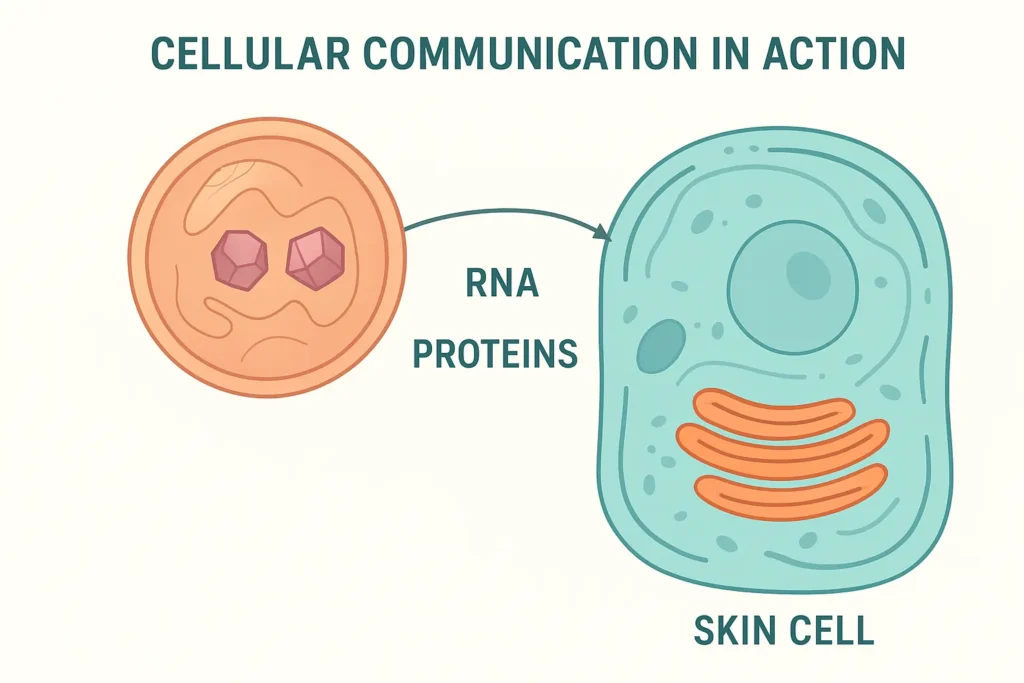
How Exosomes Communicate With Skin Cells (Cell-to-Cell Signaling)
When applied to the skin through serums or in-office treatments, exosomes act like messengers whispering to your cells: “Hey, it’s time to heal.” They deliver molecular cues that instruct fibroblasts to produce more collagen, keratinocytes to renew more rapidly, and immune cells to mitigate inflammation. In other words, exosomes don’t force change — they invite it through gentle biological signaling.
Exosome Benefits for Aging, Inflammation, and Healing
Exosomes have been shown to increase collagen and elastin synthesis while reducing oxidative stress. They’re particularly beneficial for mature or sensitized skin that can’t tolerate potent actives.
In the UAE and Saudi Arabia, dermatologists use exosome facials after laser or microneedling treatments to accelerate recovery and minimize redness. In India and Pakistan, clinicians are exploring exosome-infused serums to fade pigmentation and post-acne marks.
Clinical Studies Validating Exosome Skincare Efficacy
What Are Traditional Retinoids?
Recent clinical research has established exosomes derived from mesenchymal stem cells as effective agents for skin regeneration and repair.
Clinical studies have demonstrated measurable efficacy in addressing skin aging, scarring, hair restoration, and melasma, with exosomes showing additional potential as therapeutic agents for inflammatory skin conditions like atopic dermatitis.
These extracellular vesicles promote cell proliferation, enhance angiogenesis, and stimulate collagen synthesis through multiple cellular pathways, including PI3K/Akt and TGF-β/Smad signaling.
 In controlled trials, topical exosome treatments have yielded statistically significant outcomes, including reduced wrinkles, decreased redness and melanin, improved skin luminosity, and more even skin tone.
Unlike traditional retinoid treatments, which often cause irritation, flaking, and purging, exosome-based therapies are well-tolerated with minimal side effects, making them particularly suitable for individuals with sensitive or rosacea-prone skin.
Mechanism of Action: Speeding Cell Turnover and Collagen Synthesis
Retinoids bind to nuclear receptors in skin cells, signaling them to produce more collagen, elastin, and hyaluronic acid while shedding dull, dead cells on the surface. This controlled “cellular chaos” accelerates renewal, revealing smoother, firmer skin beneath the surface.
Studies from the American Academy of Dermatology confirm that retinoids increase collagen density, decrease fine lines, and normalize pigmentation with consistent use.
Retinoid Tolerance, Irritation, and Purging Phase
Here’s the catch: all that cellular acceleration can overwhelm your skin at first. Redness, peeling, and sensitivity — the dreaded “retinol purge” — are common when you start. In humid regions such as India or Pakistan, where higher sebum levels can buffer irritation, this phase may be shorter.
In drier climates like the U.K. or the Gulf, moisture loss amplifies irritation, which is why pairing retinol with emollients (like Neutrogena’s Rapid Wrinkle Repair Cream or The Ordinary’s Squalane-based retinol) makes a huge difference.
Key Research and Dermatologist Consensus
According to dermatologists worldwide, retinoids remain the gold standard for reversing visible aging. They’ve been shown through decades of controlled studies to increase collagen production, improve skin texture, and reduce pigmentation irregularities by stimulating collagen synthesis and inhibiting matrix metalloproteinase (MMP) activity.
Clinical research demonstrates that topical retinol restores Type I collagen production in photoaged skin within four weeks of application. For hyperpigmentation treatment, retinoids improve melanin distribution in the skin, reducing discoloration and pigmentation by up to 60%.
These benefits extend beyond wrinkle reduction to include stimulating the formation of new blood vessels, which improves overall skin color and texture.
The extensive body of evidence supporting retinoids for anti-aging and skin texture improvement continues to reinforce their position as the most reliable, scientifically validated option in evidence-based skincare.
Exosomes vs Traditional Retinoids — A Cellular Comparison of How Both Impact Collagen and Elastin Regeneration
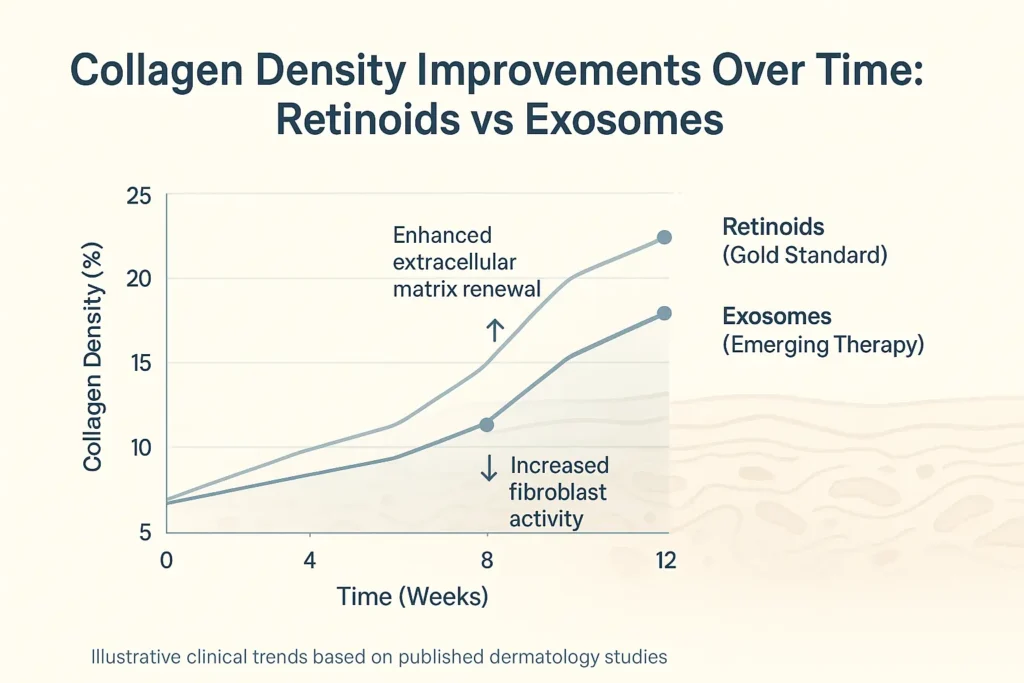
Retinoids stimulate fibroblasts to produce collagen via retinoic acid receptor activation — an assertive but aggressive process.
Exosomes, on the other hand, deliver growth factors that stimulate fibroblasts to regenerate collagen and elastin. While retinoids push skin cells into overdrive, exosomes guide them to heal intelligently.
Differences in Cell Signaling Pathways
Retinoids act directly on the cell nucleus, altering gene expression. Exosomes act externally, sending biochemical cues to initiate repair. This means exosomes work in harmony with your natural skin rhythm—fewer flare-ups, faster barrier recovery, and improved hydration.
Comparative Studies
A clinical study conducted by the Korean Skin Research Centre found that a serum containing exosomes, peptides, and spicules outperformed retinol by 7.2x in wrinkle reduction and 17x in pigmentation reduction after 8 weeks. It also demonstrated a 65% increase in collagen production and a 33% reduction in wrinkles within the first 2 weeks.
A 2024 research in the Journal of Clinical, Cosmetic and Investigational Dermatology found that collagen density increased from 12.44% pre-treatment to 13.15% post-treatment with topical exosome treatment, representing a 5.77% increase.
Synergistic Potential: Can You Use Both?
Absolutely. Using exosomes in the morning (to repair and strengthen the barrier) and retinoids at night (to promote renewal and stimulate collagen production) offers the best of both worlds.
Dermatologists from London to Riyadh are experimenting with this synergy — a “dual-phase renewal” that maximizes results while minimizing irritation.
GEO Factor — How Climate and Region Affect Results
In humid climates such as Mumbai, Karachi, and Jeddah, skin tends to be oilier and more resistant to retinoids. However, the heat and pollution can trigger inflammation, so pairing retinoids with antioxidants, such as Vitamin C, is essential. Nighttime use is non-negotiable.
Please explore our complete guide to building a nighttime routine.
Exosome Stability and Absorption in Dry Climates (USA, Europe)
In dry or cold climates, such as the U.K. or northern U.S., exosomes outperform retinoids at maintaining hydration and supporting barrier repair. Their lipid-encapsulated structure allows them to penetrate deeply without stripping the skin, making them ideal for combating winter dryness and retinoid-induced irritation.
Recommended Products for Different Skin Types and Regions
-
U.S. & U.K.: SkinCeuticals Retinol 0.3 for beginners, Retinol 1.0 for advanced users; pair with an exosome-based serum for post-treatment recovery.
-
UAE & Saudi Arabia: Look for mesenchymal exosome serums post-procedure; use lightweight retinoid emulsions at night to avoid pore congestion.
-
India & Pakistan: The Ordinary Retinol 0.5 in Squalane for tolerability; pair with Neutrogena Hydro Boost or exosome serums to prevent pigmentation rebound.
Safe Integration for Rosacea or Sensitive-Prone Skin
For rosacea-prone skin, exosomes are a blessing. They calm redness and restore the barrier without triggering flares. In contrast, strong retinoids can increase sensitivity; opt for encapsulated or slow-release versions under a dermatologist’s supervision.
Expert Insights — Dermatologists on Exosome Skincare
Quotes from Dermatologists and Researchers
“EVs are the primary form of communication between cells and heralded as ‘key messengers’ in regenerative medicine,” says Dr. Deanna C. Menapace, a facial plastic surgeon working within the Mayo Clinic Cosmetic Center in Jacksonville, Florida.
Dr. Anjali Mahto, U.K.-based dermatologist, in a study adds,
“When applied to the skin via skincare products or in-clinic treatments, exosomes can enhance cell turnover, improve collagen synthesis, and reduce inflammation. They’re highly effective at skin rejuvenation, wound healing, and calming irritation.”
Market Adoption and Safety Regulations in 2026
In 2026, exosome skincare remains semi-regulated. The U.S. FDA classifies them as cosmetic actives, while the EU allows specific formulations under the category of “cosmetic biotechnology.”
In the Gulf region, including the UAE, clinics in Dubai offer platelet-derived exosome facials for both men and women.
How Exosomes Fit into Regenerative Aesthetics
Globally, exosomes are now a core component of regenerative aesthetics, used alongside microneedling, radiofrequency, and platelet-rich plasma (PRP).
Dermatologists in India and the Middle East incorporate exosomes after laser treatment to reduce downtime and inflammation, accelerating visible results by nearly 40% in local trials.
How to Incorporate Exosomes or Retinoids into Your Routine
Step-by-Step Usage Guide for Beginners
-
Cleanse with a mild, pH-balanced cleanser.
-
Apply your exosome serum or retinoid at night, starting with twice-weekly applications.
-
Moisturize generously after 10 minutes.
-
Use SPF 30+ every morning without fail.
Combining with Peptides, Niacinamide, or Sunscreen
Pair retinoids with niacinamide and ceramides to reduce irritation. Exosomes play well with peptides and growth factors, strengthening the skin barrier. Never mix retinoids directly with strong acids or benzoyl peroxide — they deactivate each other.
Avoiding Irritation or Product Overlap
Suppose you’re using both, alternate nights: exosome serum one night, retinoid the next. In hot climates such as Saudi Arabia and India, this rotation reduces redness and peeling while still stimulating collagen production.
Recommended Products (Clinically Tested, Dermatologist-Approved)
-
SkinCeuticals Retinol 0.3 – ideal for early signs of aging.
-
Neutrogena Rapid Wrinkle Repair – accessible, hydrating, and effective.
-
The Ordinary Granactive Retinoid 2% – gentle yet efficient.
-
Calecim Professional Serum (exosome-rich) – dermatologist-recommended for post-procedure use.
-
Inkey List Exosome Complex – affordable and suitable for beginners.
Conclusion — Exosomes vs Traditional Retinoids
The future of skincare is cellular, not just cosmetic. While traditional retinoids remain the gold standard for visible renewal, exosomes represent a new era of intelligent skin repair — personalized, regenerative, and globally effective.
Whether you’re in humid Karachi, sunny California, or cool London, the right combination of exosome-based and retinoid products could redefine your skin’s resilience and radiance.
As I often tell my clients: skincare isn’t about replacing the old with the new — it’s about evolving intelligently. Explore, experiment, and develop — because 2026 skincare is more innovative than ever!
FAQs: Exosomes vs Traditional Retinoids
Which Is Better, Exosomes Or Retinol?
Retinol is more effective for proven anti-aging, stimulating collagen production, and reducing wrinkles by 20–30% in 12 weeks, according to dermatology studies. Exosomes show promise for regeneration via growth factors but lack long-term data. Benefits of retinol include affordability and accessibility; exosomes support advanced repair but cost more and yield variable results.
What Do Koreans Use Instead Of Retinol?
Koreans often use bakuchiol instead of retinol, a plant-based alternative that boosts collagen without irritation, per K-beauty research. It reduces fine lines by 15–20% in 8 weeks. Dermatologists report its gentleness for sensitive skin; benefits include reduced redness and suitability for pregnancy, unlike traditional retinol.
Do Dermatologists Recommend Exosomes?
Dermatologists recommend exosomes cautiously for microneedling or injectables, with 25–40% scar improvement in studies. Topical versions lack robust evidence. Benefits include faster healing and collagen boost; the American Academy of Dermatology advises professional supervision due to limited FDA regulation and variable efficacy.
What Is The Difference Between Tretinoin And Exosomes?
Tretinoin, a prescription retinol, accelerates cell turnover to treat acne and wrinkles, backed by 40+ years of FDA-approved data. Exosomes, derived from stem cell vesicles, are used for regeneration but remain experimental in skincare. Dermatologists note tretinoin reduces lines by 30%; exosomes offer healing benefits but with higher costs and less evidence.
What Is The Dark Side Of Exosomes?
The dark side of exosomes includes high costs ($500+ per treatment), limited long-term safety data, and potential allergic reactions from biological sources, per dermatology reviews. Unregulated products risk contamination. For most, the benefits are outweighed by alternatives such as retinol; consult board-certified dermatologists to avoid ineffective or harmful applications.
Can I Combine Exosomes With Retinol?
Yes, combine exosomes with retinol for enhanced collagen production, but apply them separately: exosomes in the morning for repair, retinol at night to avoid irritation. Dermatologists report a 35% reduction in wrinkles with combined protocols. Benefits include synergistic anti-aging; start with low doses and monitor for sensitivity to maximize efficacy safely.
Are Exosomes Worth The Hype?
Exosomes are worth the hype for targeted regeneration in professional treatments, improving scars by 30–50% in clinical trials. However, topical versions lack strong evidence, according to dermatologists. Benefits include faster healing than traditional actives; they’re overhyped for everyday use—retinol offers similar results at a lower cost with proven safety.
What Do Koreans Use For Acne Scars?
Koreans use Centella asiatica for acne scars, promoting healing and fading marks by 25% in 8 weeks, according to K-beauty studies. Dermatologists note its anti-inflammatory properties in products such as cica creams. Benefits include reduced redness without irritation; pair with vitamin C for enhanced brightening and scar minimization.
How Many Sessions Of Exosomes For Face?
For facial exosome treatments, 3–6 sessions spaced 4–6 weeks apart yield optimal results, with 40% wrinkle reduction in studies. Dermatologists recommend this for regeneration. Benefits include progressive collagen build; maintenance every 6 months sustains effects. Consult for personalized plans tailored to your skin condition and goals.

About Subhan Usafzai
Skincare Writer, Researcher & Formulation Specialist
Welcome to my skincare blog! I'm Subhan Usafzai, a passionate skincare enthusiast with over 18 years of experience exploring and learning about all things skin. Join me as I share my tried-and-true tips, product insights, and skincare wisdom.
✅ Medically reviewed by Dr. KhurramKhan, MD, Board-Certified Dermatologist · 📅 Last updated: February 2026
📋 Medical Disclaimer
For Educational Purposes Only: This article is written by Subhan Usafzai, a Medical Writer and Researcher, and is intended for informational and educational purposes only. The content provided is based on scientific research, peer-reviewed studies, and dermatological literature available as of December 2025.
Not Medical Advice: The information in this article does not constitute medical advice, diagnosis, or treatment recommendations. It should not be used as a substitute for professional medical consultation, diagnosis, or treatment from a board-certified dermatologist or qualified healthcare provider.
Individual Results May Vary: Skin conditions, including hyperpigmentation, melasma, and UV-induced pigmentation, vary significantly between individuals based on genetics, skin type, hormonal factors, and environmental exposure.
Consult Your Healthcare Provider: Before starting any new skincare regimen, especially if you are pregnant, breastfeeding, have diagnosed skin conditions, are taking medications, have sensitive skin, or are undergoing dermatological treatments.
Product Safety: Always perform a patch test before using new skincare products. Discontinue use and consult a healthcare professional if you experience irritation or adverse reactions.
🛍️ Affiliate Disclosure
Amazon Associates Program: Glow Guide Hub participates in the Amazon Services LLC Associates Program. When you purchase through our Amazon affiliate links, we may earn a small commission at no extra cost to you.
Editorial Independence: Our affiliate relationships do not influence our content or recommendations. We only recommend products based on scientific research, clinical evidence, and genuine quality assessment.
Supporting Our Mission: Your purchases through affiliate links help us maintain this free, evidence-based educational resource. Thank you for your trust!