
A Comprehensive Eye Care Guide in 2026: Everything You Need to Know
EYE CARE DIAGNOSTIC: FIND YOUR PROFILE
Identify your skin’s specific structural needs in 30 seconds.
1. What is your primary concern?
a) Dark circles or shadows
b) Puffiness and swelling
c) Fine lines and wrinkles
2. What is your skin type?
a) Oily or Combination
b) Sensitive
c) Dry or Mature
YOUR RESULTS:
- ✨ Mostly A’s: Targeting Dark Circles
- ☁️ Mostly B’s: Addressing Puffiness
- ⏳ Mostly C’s: Anti-Aging Strategies
Understanding When to Start Your Eye Care Journey
When to Start Eye Cream?
Key Reasons to Start Your Eye Care Journey Early
- The periorbital skin is approximately 40–60% thinner than the rest of facial skin, making it more vulnerable to dehydration, environmental damage, and early wrinkle formation
- Prevention is significantly easier and more effective than correction once visible signs of aging have developed
- Early hydration and barrier support help maintain skin elasticity and prevent premature collagen breakdown
- Fine lines and crow’s feet often begin to emerge in the mid-20s as collagen production naturally starts to decline
Age-specific recommendations
- Early 20s: Focus on lightweight, hydrating eye creams containing ceramides, hyaluronic acid, or peptides for barrier repair and prevention.
- Mid-20s onwards: Introduce targeted ingredients such as low-strength retinol, vitamin C, or peptides to address emerging fine lines and oxidative stress
- Any age: Starting an eye care routine remains beneficial regardless of your current skin condition
The fragile nature of the eye area makes consistent daily care essential for maintaining long-term skin health and minimizing visible signs of aging.
Application Techniques for Maximum Eye Care Benefits
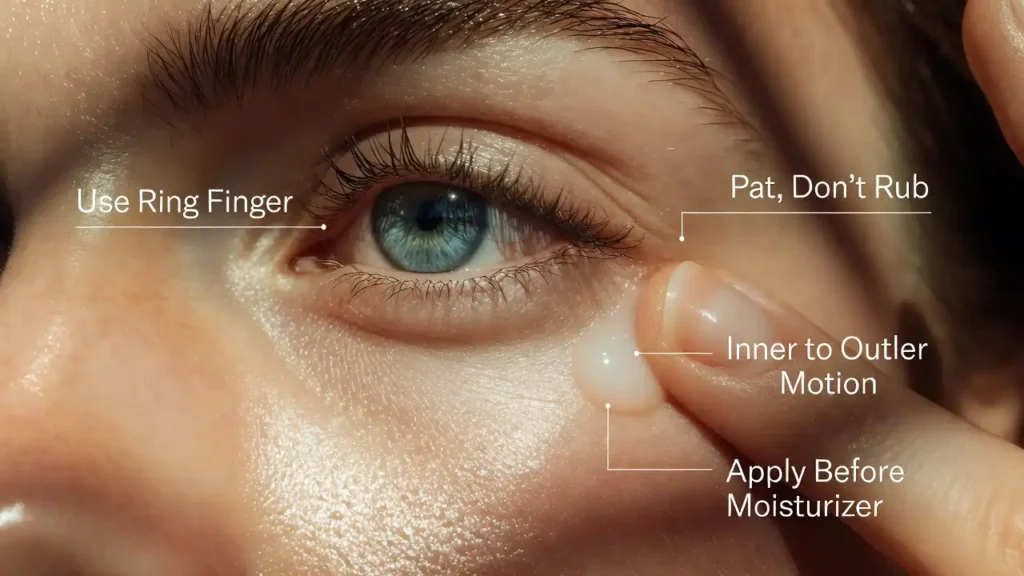
How to Apply Eye Serum?
Step-by-step application
- Use your ring finger to gently pat the serum: It exerts the least pressure on the ultra-thin periorbital skin
- Pat, don’t rub or drag: Prevents mechanical stretching, irritation, and potential milia formation
- Start at the inner corner and work outward: Ensures even distribution along the orbital rim
- Apply tiny dots instead of large amounts: Allows precise dosing and better control of absorption
- Wait for full absorption: Allow 30–60 seconds before layering moisturizer or sunscreen
Why does this Method Work?
- Protects the fragile eye area from trauma and barrier disruption
- Maximizes product effectiveness through improved penetration of actives
- Prevents product waste and reduces the risk of clogged pores
- Ensures optimal layering sequence in your skincare routine
This gentle technique optimizes the benefits of eye serum while respecting the unique anatomy of periorbital skin.
Can We Use Eye Cream Before Moisturizer?
Eye products should be applied after cleansing and toning, but before facial moisturizers. This sequence ensures that the concentrated active ingredients in your eye products penetrate effectively without being blocked by heavier formulations.
Targeting Specific Concerns
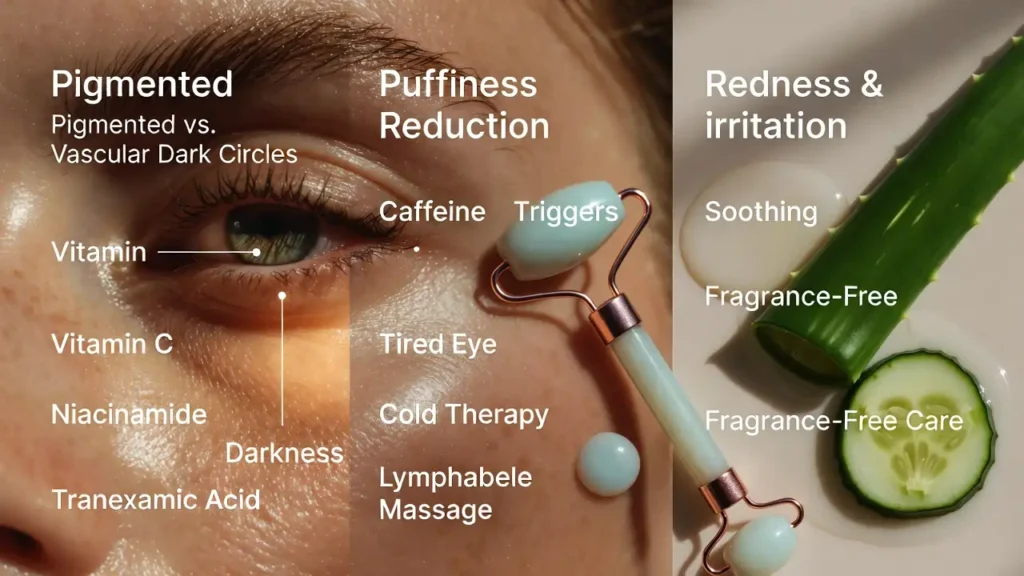
What Ingredients Help Reduce Dark Circles?
It depends on your specific type of dark circles — whether vascular (blue/purple), pigmented (brown), structural (shadowing from volume loss), or mixed — as each type responds best to different targeted ingredients.
- For pigmentation-related darkness (brown tones): Look for vitamin C, niacinamide, or tranexamic acid
- For vascular-related (bluish/purple) circles: Seek out vitamin K, caffeine, or hesperidin
- For structural shadows (hollowing/tear trough): Peptides and hyaluronic acid provide plumping effects to reduce shadowing
These recommendations are based on the underlying cause of your dark circles (Roh et al., 2016).
How to Reduce Puffiness?
We can address morning eye puffiness through:
- Caffeine-based products that temporarily constrict blood vessels
- Cold therapy using refrigerated eye tools or chilled spoons
- Gentle lymphatic drainage massage working from the inner to the outer corners
- Sleeping with your head slightly elevated to prevent fluid accumulation
Why Do Eyes Look Tired?
Tired-looking eyes can result from multiple factors, such as:
- Dehydration, which affects the thin skin around the eyes
- Poor lymphatic drainage causes fluid retention
- Lack of sleep: That impacts microcirculation
- Screen time: That increases eye strain and muscle tension
- Environmental stressors damage the delicate barrier
How to Reduce Redness?
To soothe irritated eyes, consider:
- Fragrance-free formulations to minimize irritation potential
- Cooling ingredients like aloe vera and cucumber extract
- Avoid rubbing the eye area, even when tired
- Staying hydrated throughout the day
- Using preservative-free eye drops if recommended by your eye doctor
Choosing the Right Products for a Comprehensive Eye Care Routine
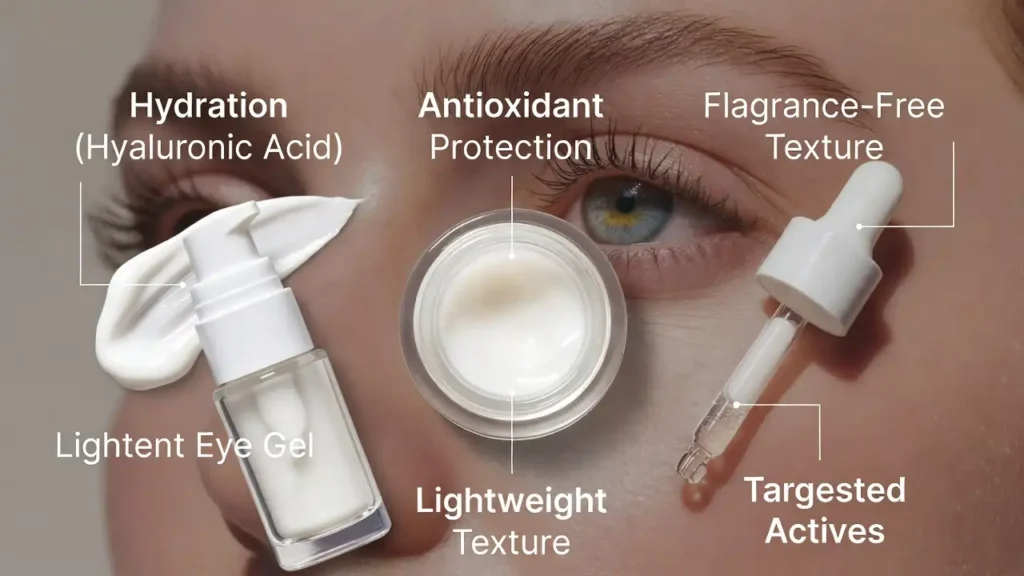
Best Eye Cream for Beginners?
When starting your eye care journey, look for:
- Hydrating formulas with hyaluronic acid
- Fragrance-free options to minimize irritation risk
- Products with antioxidant protection
- Lightweight textures that won’t overwhelm the delicate area
- Multi-purpose formulas that address hydration and protection simultaneously
How to Choose Eye Cream?
Consider these factors when choosing an eye cream:
- Your primary concern (dark circles, puffiness, fine lines, etc.)
- Your skin type (dry, oily, sensitive, combination)
- Your age and preventative needs
- Ingredients that target your specific issues
- Texture preferences (gel, cream, serum, balm)
- Budget and value considerations
How to Choose Eye Serum?
Eye serums typically contain higher concentrations of active ingredients in lighter formulations. When selecting an eye cream, keep these things in mind:
- Identify your primary concern (brightening, firming, hydrating)
- Look for stable, well-formulated active ingredients
- Consider molecular size for effective penetration
- Evaluate compatibility with your other skincare products
- Test for irritation potential before complete application
Advanced Techniques and Considerations for Eye Care
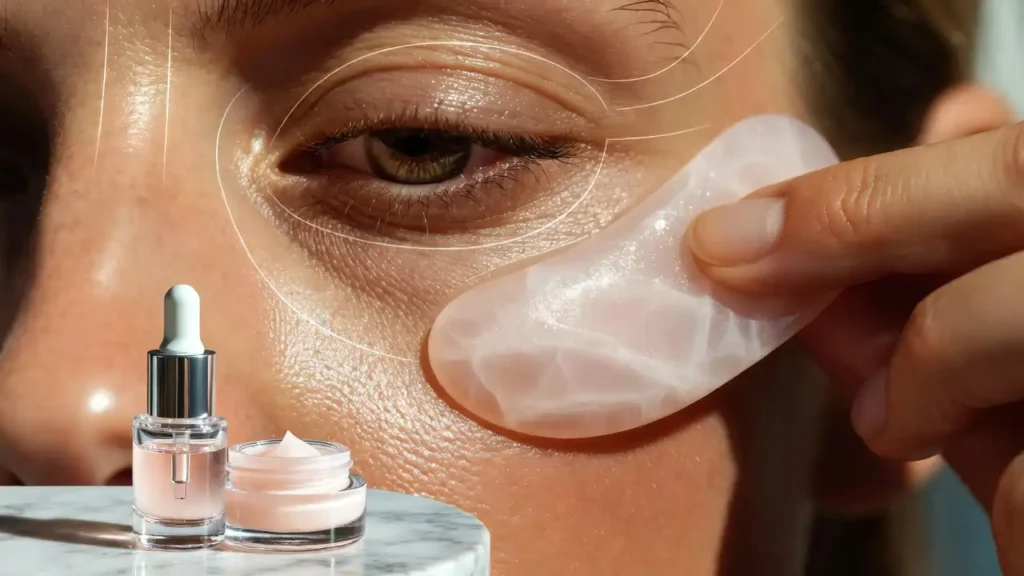
How to Massage the Eye Area?
Proper massage techniques can enhance product absorption and reduce puffiness:
- Use clean fingertips or specialized tools like gua sha stones
- Apply gentle pressure, moving from the inner corners outward
- Focus on pressure points at the inner corners, under the brow bone, and temples
- Never drag or pull the fragile skin
- Keep movements light and rhythmic for 1-2 minutes
How to Reduce Tear Throughs?
These hollows beneath the eyes can create shadows and an aging appearance:
- Use plumping ingredients like hyaluronic acid crosspolymers
- Apply products that stimulate collagen production
- Consider specialized peptide formulations
- Implement consistent massage techniques to improve circulation
- Address sleep position, which can contribute to fluid redistribution
Safety and Ingredient Questions for Eye Care Routine
Can Eye Cream Cause Milia?
Excessively rich or heavy eye creams can contribute to milia formation—those small white bumps around the eyes. To prevent this:
- Choose non-comedogenic formulations
- Avoid applying too much product
- Consider gel formulations if you’re prone to milia
- Don’t apply the product too close to the lash line
Can Retinol Damage Eyes?
When misused, retinol can irritate the eyes. To use it safely:
- Start with lower concentrations specifically formulated for the eye area (0.01-0.03%)
- Apply only every 2-3 nights initially
- Keep the product away from the waterline
- Discontinue if persistent irritation occurs
- Consider gentler alternatives like bakuchiol if sensitivity persists
Is Caffeine Good for Eyes?
Caffeine offers several benefits for the eye area:
- Temporarily constricts blood vessels to reduce puffiness
- Improves microcirculation to reduce the appearance of dark circles
- Provides antioxidant protection against environmental damage
- Delivers quick, visible results for morning puffiness
- Works well in combination with cooling application techniques
Can I Use Vitamin C?
Vitamin C is excellent for the eye area when properly formulated:
- Look for stable derivatives like THD ascorbate for sensitive eye skin
- Start with lower concentrations (5-10%) around the eyes
- Apply in the morning for antioxidant protection throughout the day
- Pair with sunscreen for enhanced photoprotection
- Discontinue if irritation occurs and try a different derivative
Is Snail Mucin Safe?
Snail mucin is generally considered safe for the eye area and offers multiple benefits:
- Contains glycoproteins that support barrier function
- Provides gentle hydration without heaviness
- Supports natural healing processes
- Rarely causes irritation or sensitivity
- Works well in combination with other hydrating ingredients
Specialized Approaches
Best Eye Care for Men?
Men often have different needs due to thicker skin and different aging patterns:
- Look for lighter gel formulations that absorb quickly
- Focus on cooling ingredients that address puffiness
- Consider fragrance-free options for sensitive skin
- Target specific concerns like stress-related dark circles
- Incorporate products that address razor irritation near the eyes
How to Treat Dark Circles?
We recommend this comprehensive approach to treat dark circles:
- Identify the cause (pigmentation, vascular issues, or structural)
- Use targeted ingredients for your specific type
- Incorporate a gentle massage to improve circulation
- Ensure consistent sun protection
- Address lifestyle factors like sleep, hydration, and diet
- Consider specialized treatments for severe cases
(Visual concept: Three vertical columns for each concern type)
| Pigmentation (Brown Tones) | Vascular (Blue/Purple Tones) | Structural (Hollow Shadows) |
|---|---|---|
| Cause: Melanin buildup | Cause: Thin skin + visible veins | Cause: Volume loss |
| Key Ingredients: | Key Ingredients: | Key Ingredients: |
| 🌟 Vitamin C (brightens) | 🌟 Caffeine (constricts vessels) | 🌟 Hyaluronic Acid (plumps) |
| 🌟 Niacinamide (blocks melanin) | 🌟 Vitamin K (strengthens veins) | 🌟 Peptides (stimulate collagen) |
| 🌟 Tranexamic Acid (fades spots) | 🌟 Hesperidin (improves flow) | 🌟 Retinol (thickens skin) |
| Product Types: | Product Types: | Product Types: |
| → Brightening serums | → Depuffing gels | → Plumping creams |
| → Vitamin C eye masks | → Cooling rollers | → Filler-like serums |
| Pro Tip: | Pro Tip: | Pro Tip: |
| Always follow with SPF! | Apply chilled products AM | Use a jade roller to massage |
Building Your Eye Care Routine
The most effective eye care routine combines proper products with consistent application techniques. Remember that results take time—typically 8-12 weeks for significant improvements in concerns like dark circles or fine lines.
For optimal results, combine your topical treatments with lifestyle approaches:
- Adequate hydration throughout the day
- Quality sleep with proper head elevation
- Nutritional support with antioxidant-rich foods
- Regular breaks from digital screens
- Sun protection every single day
Morning Routine
1. Gentle Cleanser
↓
2. Eye Serum (Caffeine + Vitamin C)
↓
3. Eye Cream (Hyaluronic Acid + SPF 30+)
↓
4. Sunscreen (Reapply every 2 hours)
Night Routine
1. Double Cleanser (Oil-based + Water-based)
↓
2. Eye Serum (Peptides + Retinol*)
↓
3. Eye Cream (Ceramides + Collagen)
↓
4. Night Moisturizer (Lock in hydration)
You can achieve healthier, more vibrant eyes at any age by addressing your specific concerns with targeted ingredients and techniques.
Conclusion: A Comprehensive Eye Care Guide
FAQs: A Comprehensive Eye Care Guide
Can Eye Cream Cause Milia, and How Can I Prevent Them?
Yes, rich or comedogenic eye creams can trap oil and dead skin cells, forming milia around the eyes. Prevent by choosing lightweight, non-comedogenic retinol or salicylic acid gels or serums for gentle cell turnover. Apply sparingly, avoid the lash line, and use once daily. Patch-test new formulas to ensure they are compatible with your skin type.
What Ingredients Help Dark Circles, and When Should I See Results?
Key ingredients include vitamin C and tranexamic acid for pigmentation, caffeine and vitamin K for vascular circles, and peptides plus hyaluronic acid for structural shadows. Results typically appear in 8–12 weeks with consistent use. Combine with lifestyle changes, such as sleep and hydration, for faster improvement and long-term reduction of dark circles.
How To Apply Eye Serum And Eye Cream In The Proper Order?
Apply eye serum first using your ring finger to gently pat small dots along the orbital bone from the inner to the outer corner. Allow 1–2 minutes for absorption, then layer eye cream with the same patting motion. Use after toner but before facial moisturizer. This order ensures actives penetrate effectively without dilution or pilling.
When To Start Eye Cream And What Should Beginners Look For?
Start eye cream in your mid-20s to prevent early lines and dehydration. Beginners should choose hydrating, fragrance-free formulas with hyaluronic acid, antioxidants, and lightweight textures. Focus on gentle hydration initially before adding peptides or retinol. This preventive approach builds healthy habits and protects the delicate eye area from premature aging.
Is Caffeine Good For The Eyes, And How Does It Reduce Puffiness?
Yes, caffeine is excellent for the eyes. It constricts blood vessels to reduce puffiness, improves circulation to minimize dark circles, and provides antioxidant protection. Store products in the fridge for enhanced depuffing. Apply with upward motions to stimulate lymphatic drainage. Morning use is ideal for bright, refreshed eyes throughout the day.
What Is A Good Eye Care Routine?
A good eye care routine includes gentle cleansing, applying a hyaluronic acid serum, patting on an eye cream with peptides or caffeine, and using a broad-spectrum SPF daily. At night, incorporate retinol 2–3 times weekly. Massage lightly to reduce puffiness. Consistency in hydration and sun protection helps prevent dark circles, wrinkles, and sagging around the eyes.

About Subhan Usafzai
Skincare Writer, Researcher & Formulation Specialist
Welcome to my skincare blog! I'm Subhan Usafzai, a passionate skincare enthusiast with over 18 years of experience exploring and learning about all things skin. Join me as I share my tried-and-true tips, product insights, and skincare wisdom.
✅ Medically reviewed by Dr. KhurramKhan, MD, Board-Certified Dermatologist · 📅 Last updated: January 2026
📋 Medical Disclaimer
For Educational Purposes Only: This article is written by Subhan Usafzai, a Medical Writer and Researcher, and is intended for informational and educational purposes only. The content provided is based on scientific research, peer-reviewed studies, and dermatological literature available as of December 2025.
Not Medical Advice: The information in this article does not constitute medical advice, diagnosis, or treatment recommendations. It should not be used as a substitute for professional medical consultation, diagnosis, or treatment from a board-certified dermatologist or qualified healthcare provider.
Individual Results May Vary: Skin conditions, including hyperpigmentation, melasma, and UV-induced pigmentation, vary significantly between individuals based on genetics, skin type, hormonal factors, and environmental exposure.
Consult Your Healthcare Provider: Before starting any new skincare regimen, especially if you are pregnant, breastfeeding, have diagnosed skin conditions, are taking medications, have sensitive skin, or are undergoing dermatological treatments.
Product Safety: Always perform a patch test before using new skincare products. Discontinue use and consult a healthcare professional if you experience irritation or adverse reactions.